
Others like god's law of attraction Features >>

God's Way Of Holiness

God's Master Plan For Your Life

God's Power To Change Your Life

God's Power: A Way Of Living Every Day
-160.webp)
God's Power Through Laying On Of Hands
-160.webp)
The Law Of Recognition (The Laws Of Life Series)
-160.webp)
The Spiritual Man
Life Overflowing

Victory And Dominion Over Fear

How To Live A Holy Life
About the Book
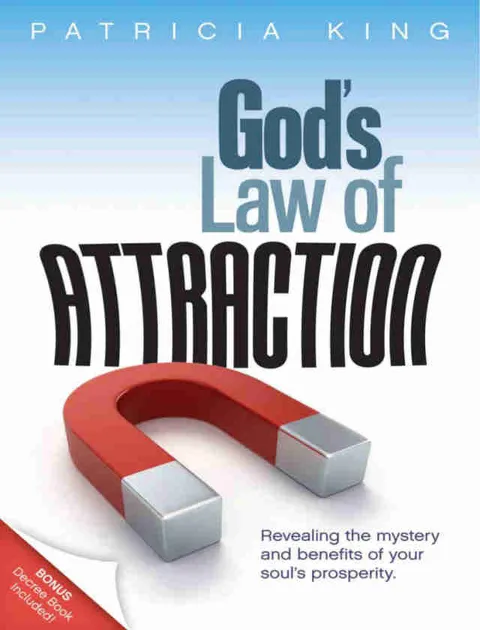
"God's Law of Attraction" by Patricia King explores how individuals can align themselves with God's principles to attract blessings, abundance, and favor into their lives. Through faith, prayer, and obedience to God's laws, readers can experience the fullness of God's promises and live a purposeful and fulfilling life.
Sophie Scholl

Can Anyone Really Be “Blameless”
When you read the Psalms, do you identify with the psalmist when he claims blamelessness and uprightness and integrity and righteousness? Blamelessness Blessed are those whose way is blameless! (Psalm 119:1) I was blameless before him, and I kept myself from my guilt. (Psalm 18:23) I shall be blameless, and innocent of great transgression. (Psalm 19:13) Uprightness My shield is with God, who saves the upright in heart. (Psalm 7:10) The upright shall behold his face. (Psalm 11:7) Let all the upright in heart exult! (Psalm 64:10) Integrity Judge me, O Lord, according to the integrity that is in me. (Psalm 7:8) Vindicate me, O Lord, for I have walked in my integrity. (Psalm 26:1) You have upheld me because of my integrity. (Psalm 41:12) Righteousness The Lord upholds the righteous. (Psalm 37:17) He will never permit the righteous to be moved. (Psalm 55:22) The Lord loves the righteous. (Psalm 146:8) Are you among the righteous, the upright, the blameless, and those who walk in integrity? If you are a Christian, you should answer Yes. Imputed Righteousness: Foundation, Not Summation I do not say this simply because in Christ we are counted righteous. The psalmist is not talking only about imputed righteousness. The justification of the ungodly on the basis of Christ alone by faith alone is a precious and magnificent truth. And, to be sure, it was already true for the psalmists in the Old Testament, because Christ’s death counted for them in the mind of God before it happened in history. That’s the point of Romans 3:25. “The psalmists were justified by faith alone. But their faith worked through love.” When Paul wanted to support his teaching about the “justification of the ungodly,” he quoted Psalm 32. God justifies the ungodly . . . just as David also speaks of the blessing of the one to whom God counts righteousness apart from works: “Blessed are those whose lawless deeds are forgiven, and whose sins are covered; blessed is the man against whom the Lord will not count his sin.” (Romans 4:5–8) But this imputed righteousness, based on Christ alone, is not the sum of what the psalmists refer to when they speak of their blamelessness and uprightness and integrity and righteousness. Forgiveness and imputation are the foundation, but not the summation of Christian righteousness. Justifying Faith Leads to Integrity and Uprightness That is true in the New Testament and the Old. The faith that unites us to Christ and his perfect uprightness is real only if it also produces new attitudes and behaviors in us. Here’s the way Paul put it: “In Christ Jesus neither circumcision nor uncircumcision counts for anything, but only faith working through love” (Galatians 5:6). The faith that links us to Christ for justification also leads to sanctification. That was true in the Old Testament as well. The psalmists were justified by faith alone. But their faith “worked through love.” It produced blamelessness and uprightness and integrity and righteousness. This was a work of the sanctifying Spirit of God. They knew it was God’s work not their own: Create in me a clean heart, O God, and renew a right spirit within me. Cast me not away from your presence, and take not your Holy Spirit from me. Restore to me the joy of your salvation, and uphold me with a willing spirit. (Psalm 51:10–12) The same dynamics of justification and sanctification at work in the godly psalmists are at work in Christians today, even though we have the privilege of knowing so much more about how the Lord purchased all this by his blood, and how it is working out in the power of the risen Christ. Psalmists Are Not Legalists Therefore, it is a mistake to read the Psalms and somehow think that these writers were legalists or egomaniacs or naïve when they referred to their blamelessness and uprightness and integrity and righteousness. Along with the psalmists, Christians must be blameless, upright, righteous persons of integrity. Example of Psalm 25 “He is not perfect. He is not without sin. He is not proud. He is the beneficiary of mighty mercy.” Consider Psalm 25 as an example of what this looks like. It is a beautiful psalm of deep humility and longing for God. Four times in these 22 verses David acknowledges his sin. His confession and his sense of need for grace is not just mentioned at the beginning of the psalm and then left behind as he moves on in triumph. Remember not the sins of my youth or my transgressions. (Psalm 25:7) Good and upright is the Lord; therefore he instructs sinners in the way. (Psalm 25:8) For your name’s sake, O Lord, pardon my guilt, for it is great. (Psalm 25:11) Consider my affliction and my trouble, and forgive all my sins. (Psalm 25:18) Since his sins are a constant reality to him, so is the mercy and love and grace and goodness of God. Remember your mercy, O Lord, and your steadfast love. (Psalm 25:6) According to your steadfast love remember me, for the sake of your goodness, O Lord! (Psalm 25:7) All the paths of the Lord are steadfast love. (Psalm 25:10) Turn to me and be gracious to me. (Psalm 25:16) David knew that if his guilt was to be pardoned, it would not be on the basis of his own virtue, but on the basis of God’s allegiance to his own name: “For your name’s sake, O Lord, pardon my guilt, for it is great” (Psalm 25:11). Sinner’s Response to God How then does David describe his response to God? Answer: trusting, waiting, humility, covenant keeping, fearing the Lord, and taking refuge in him. My God, in you I trust. (Psalm 25:2) For you I wait all the day long. (Psalm 25:5, 21) He leads the humble in what is right, and teaches the humble his way. (Psalm 25:9) All the paths of the Lord are steadfast love and faithfulness, for those who keep his covenant. (Psalm 25:10) Who is the man who fears the Lord? Him will he instruct in the way that he should choose. (Psalm 25:12, 14) Let me not be put to shame, for I take refuge in you. (Psalm 25:20) Most of us are thrilled with this kind of Psalm. It acknowledges sin. It ascribes mercy and grace to God. The psalmist trusts in that mercy and holds fast to the forgiving God. Integrity and Uprightness Preserve Me But then comes verse 21: “May integrity and uprightness preserve me, for I wait for you” (Psalm 25:21). What I am arguing is that his appeal to his own integrity and uprightness is not a lapse in humble, faith-filled godliness. I am arguing that this is a proper claim of the godly in every age. This is not pride. This is not self-reliance. This is not legalism. This is not salvation-by-works. This is a godly man, trusting the mercy of God, knowing his sins are forgiven, walking in the power of God’s sanctifying Spirit. He is a man of integrity and uprightness. He is not perfect. He is not without sin. He is not proud. He is the beneficiary of mighty mercy — transforming mercy. It was “for God’s name’s sake” that his great guilt was pardoned (Psalm 25:11). And it is “for God’s name’s sake” that he walks in integrity and uprightness. As Psalm 23:3 says, “He leads me in paths of righteousness for his name’s sake.” Don’t Stumble over Integrity “The faith that unites us to Christ’s perfect uprightness is real only if it produces new attitudes and behaviors.” We do not need to stumble over these protests of integrity in the Psalms. In both Old and New Testament times, God justifies the ungodly, sanctifies the faithful, and rewards their new Spirit-wrought righteousness. It is not legalism or works-righteousness to say with the psalmist, “You have upheld me because of my integrity” (Psalm 41:12). It is not pride or self-sufficiency to say, “The Lord has rewarded me according to my righteousness, according to the cleanness of my hands in his sight” (Psalm 18:23–24). The New Testament is just as strong that “doing good” in the power of God’s Spirit, from a heart of faith, will be rewarded with eternal life and all the varied benefits that belong to our varied faithfulness. The one who sows to his own flesh will from the flesh reap corruption, but the one who sows to the Spirit will from the Spirit reap eternal life. And let us not grow weary of doing good, for in due season we will reap, if we do not give up. (Galatians 6:8–9) Whatever good anyone does, this he will receive back from the Lord. (Ephesians 6:8) The one who receives a righteous person because he is a righteous person will receive a righteous person’s reward. (Matthew 10:41) Love your enemies, and do good, and lend, expecting nothing in return, and your reward will be great. (Luke 6:35) We must all appear before the judgment seat of Christ, so that each one may receive what is due for what he has done in the body, whether good or evil. (2 Corinthians 5:10) Whatever you do, work heartily, as for the Lord and not for men, knowing that from the Lord you will receive the inheritance as your reward. (Colossians 3:23–24) Trust in the Lord, and Do Good Therefore, when you read in the Psalms that the psalmists offer up their blamelessness and uprightness and integrity and righteousness to God, don’t over-spiritualize it. Don’t treat it as perfectionism. Don’t think of it as legalism. Don’t demean it as a defective part of the “old covenant.” Take it for what it is: a godly man, who knows he is a sinner, pardoned for God’s name’s sake, justified by grace, trusting God’s mercy, depending on God’s Spirit, taking refuge in God’s protection, delighting in God’s beauty, keeping God’s covenant, and therefore walking in integrity and honesty and uprightness. When viewed in this way, the Psalms become precious beyond measure as they help us “trust in the Lord, and do good” (Psalm 37:3). Article by John Piper Founder & Teacher, desiringGod.org