
Others like god's geater glory Features >>

I Believe In Visions

In Him
Knowing What Belongs To Us
.epub-160.webp)
The New Birth

God's Remedy For Rejection

Gods Greatest Gifts - His Word, His Name, His Blood
-160.webp)
A Father Who Keeps His Promise (God’s Covenant Love In Scripture)
-160.webp)
God's Love For You! (A Revelation Of The Eternal Heart Of God)

Loved By God
The Price Is Not Greater Than God's Grace
About the Book
"God's Greater Glory" by Kenneth Hagin explores the concept of experiencing God's power and glory in everyday life through a personal relationship with Him. The book emphasizes the importance of seeking intimacy with God, walking in faith, and allowing His glory to be manifested in our lives. Hagin shares practical insights and testimonies to inspire readers to pursue a deeper connection with God and to experience His greater glory.
John Alexander Dowie
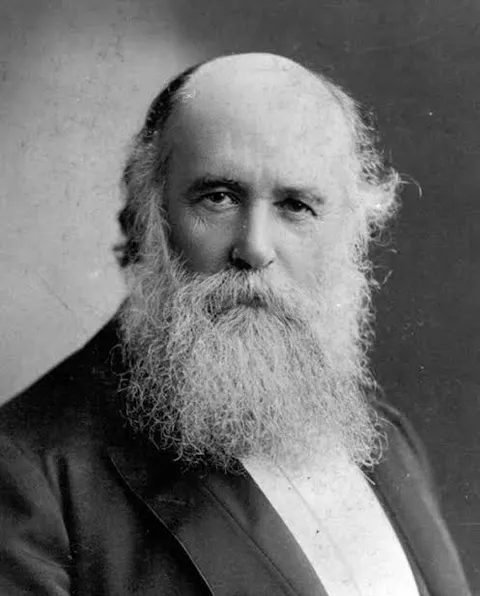 By John Alexander Dowie (1847 – 1907)
I sat in my study in the parsonage of the Congregational Church at Newtown, a suburb of the beautiful city of Sydney, Australia. My heart was very heavy, for I had visited the sick and dying beds of more than thirty of my flock, and I had cast the dust to its kindred dust into more than forty graves within a few weeks. Where, oh where, was He Who used to heal His suffering children? No prayer for healing seemed to reach His ear, and yet I knew His hand had not been shortened. Still it did not save from death even those for whom there was so much in life to live for God and others. Strong men, fathers, good citizens, and more than all, true Christians sickened with a putrid fever, suffered nameless agonies, passed into delirium, sometimes with convulsions, and then died.
Oh, what aching voids were left in many a widowed or orphaned heart. There were many homes where, one by one, the little children, the youths and the maidens lay stricken, and after a hard struggle with the foul disease, they too, lay cold and dead. It seemed sometimes as if I could almost hear the triumphant mockery of evil ringing in my ear whilst I spoke to the bereaved ones the words of Christian hope and consolation. Disease, the foul offspring of its father, Satan, and its mother Sin, was defiling and destroying the earthly temples of God’s children and there was no deliverance.
There I sat with sorrow-bowed head for my afflicted people, until the bitter tears came to relieve my burning heart. Then I prayed for some message, and oh, how I longed to hear some words from Him Who wept and sorrowed for the suffering long ago, a Man of Sorrows and Sympathies. The words of the Holy Ghost inspired In Acts 10:38, stood before me all radiant with light, revealing Satan as the Defiler, and Christ as the Healer. My tears were wiped away, my heart strong, I saw the way of healing, and the door thereto was opened wide, so I said, “God help me now to preach the Word to all the dying around, and tell them how Satan still defiles, and Jesus still delivers, for He is just the same today.”
A loud ring and several raps at the outer door, a rush of feet, and there at my door stood two panting messengers who said, “Oh, come at once, Mary is dying; come and pray. “With just a feeling as a shepherd has who hears that his sheep are being torn from the fold by a cruel wolf, I rushed from my house, ran without my hat down the street, and entered the room of the dying maiden. There she lay groaning and grinding her clenched teeth in the agony of the conflict with the destroyer. The white froth, mingled with her blood, oozing from her pale and distorted mouth. I looked at her and then my anger burned. “Oh,” I thought, “for some sharp sword of heavenly temper keen to slay this cruel foe who is strangling that lovely maiden like an invisible serpent, tightening his deadly coils for a final victory.”
In a strange way, It came to pass; I found the sword I needed was in my hands, and in my hand I hold it still and never will I lay It down. The doctor, a good Christian man, was quietly walking up and down the room, sharing the mother’s pain and grief. Presently he stood at my side and said, “Sir, are not God’s ways mysterious?” Instantly the sword was flashed in my hand, the Spirit’s sword, the Word of God. “God’s way?!” I said, pointing to the scene of conflict, “How dare you call that God’s way of bringing His children home from earth to Heaven? No sir, that is the devil’s work and it is time we called on Him Who came to destroy the work of the devil, to slay that deadly foul destroyer, and to save this child. Can you pray, Doctor, can you pray the prayer of faith that saves the sick?” At once, offended at my words, my friend was changed, and saying,” You are too much excited, sir, it is best to say ‘God’s will be done,’” and he left the room.
Excited?! The word was quite inadequate for I was almost frenzied with divinely imparted anger and hatred of that foul destroyer, disease, which was doing Satan’s will. “It is not so,” I exclaimed, “no will of God sends such cruelty, and I shall never say ‘God’s will be done’ to Satan’s works, which God’s own Son came to destroy, and this is one of them.” Oh, how the Word of God was burning in my heart: “Jesus of Nazareth went about doing good, and healing all that were oppressed of the devil; for God was with Him.” And was not God with me? And was not Jesus there and all His promises true? I felt that it was even so, and turning to the mother I inquired,” Why did you send for me?” To which she answered, “Do pray, oh pray for her that God may raise her up.” So we prayed.
What did I say? It may be that I cannot recall the words without mistake, but words are in themselves of small importance. The prayer of faith may be a voiceless prayer, a simple heartfelt look of confidence into the face of Christ. At such moment, words are few, but they mean much, for God is looking at the heart. Still, I can remember much of that prayer unto this day, and asking God to aid, I will attempt to recall it. I cried, “Our Father, help! and Holy Spirit, teach me how to pray. Plead Thou for us, oh, Jesus, Savior, Healer, Friend, our Advocate with God the Father. Hear and heal, Eternal One! From all disease and death, deliver this sweet child of yours. I rest upon the Word. We claim the promise now. The Word is true, ‘I am the Lord that heals thee.’ Then heal her now. The Word is true, ‘I am the Lord, I change not.’ Unchanging God, then prove Yourself the healer now. The Word is true. ‘These signs shall follow them that believe in My Name, they shall lay hands on the sick, and they shall recover.’ And I believe and I lay hands in Jesus’ Name on her and claim this promise now. Your Word is true. ‘The prayer of faith shall save the sick. Trusting in You alone. I cry. Oh, save her now, for Jesus’ sake. Amen!”
Then, the maid lay in sleep so deep and sweet that the mother asked in a low whisper, “Is she dead?” “No,” I answered, in a whisper lower still. “Mary will live; the fever is gone. She is perfectly well and sleeping as an infant sleeps.” I was smoothing the long dark hair from her now peaceful brow, and feeling the steady pulsation of her heart and cool moist hands. I saw that Christ had heard, and that once more, as long ago in Peter’s house, “He touched her and the fever left her.” Turning to the nurse, I said, “Get me at once, please, a cup of cocoa and several slices of bread and butter.” Beside the sleeping maid we sat quietly and almost silently until the nurse returned, and then I bent over her and snapping my fingers called, “Mary!”
Instantly she woke, smiled and said, “Oh, sir, when did you come? I have slept so long;” then stretching her arms out to meet her mother’s embrace, she said, “Mother, I feel so well.” “And hungry, too?” I asked, pouring some of the cocoa in a saucer and offering it to her when cooled by my breath. “Yes, hungry too,” she answered with a little laugh, and drank and ate again, and yet again until all was gone. In a few minutes, she fell asleep, breathing easily and softly. Quietly thanking God. We left her bed and went to the next room where her brother and sister also lay sick of the same fever. With these two, we prayed and they were healed too. The following day all three were well and in a week or so they brought me a little letter and a gift of gold, two sleeve links with my monogram, which I wore for many years. As I went away from the home where Christ as the Healer had been victorious, I could not but have somewhat in my heart of the triumphant song that rang through Heaven, and yet I was not a little amazed at my own strange doings, and still more at my discovery that He is just the same today.
Excerpt from the Sermons of John Alexander Dowie Champions of Faith by Gordon Lindsay
By John Alexander Dowie (1847 – 1907)
I sat in my study in the parsonage of the Congregational Church at Newtown, a suburb of the beautiful city of Sydney, Australia. My heart was very heavy, for I had visited the sick and dying beds of more than thirty of my flock, and I had cast the dust to its kindred dust into more than forty graves within a few weeks. Where, oh where, was He Who used to heal His suffering children? No prayer for healing seemed to reach His ear, and yet I knew His hand had not been shortened. Still it did not save from death even those for whom there was so much in life to live for God and others. Strong men, fathers, good citizens, and more than all, true Christians sickened with a putrid fever, suffered nameless agonies, passed into delirium, sometimes with convulsions, and then died.
Oh, what aching voids were left in many a widowed or orphaned heart. There were many homes where, one by one, the little children, the youths and the maidens lay stricken, and after a hard struggle with the foul disease, they too, lay cold and dead. It seemed sometimes as if I could almost hear the triumphant mockery of evil ringing in my ear whilst I spoke to the bereaved ones the words of Christian hope and consolation. Disease, the foul offspring of its father, Satan, and its mother Sin, was defiling and destroying the earthly temples of God’s children and there was no deliverance.
There I sat with sorrow-bowed head for my afflicted people, until the bitter tears came to relieve my burning heart. Then I prayed for some message, and oh, how I longed to hear some words from Him Who wept and sorrowed for the suffering long ago, a Man of Sorrows and Sympathies. The words of the Holy Ghost inspired In Acts 10:38, stood before me all radiant with light, revealing Satan as the Defiler, and Christ as the Healer. My tears were wiped away, my heart strong, I saw the way of healing, and the door thereto was opened wide, so I said, “God help me now to preach the Word to all the dying around, and tell them how Satan still defiles, and Jesus still delivers, for He is just the same today.”
A loud ring and several raps at the outer door, a rush of feet, and there at my door stood two panting messengers who said, “Oh, come at once, Mary is dying; come and pray. “With just a feeling as a shepherd has who hears that his sheep are being torn from the fold by a cruel wolf, I rushed from my house, ran without my hat down the street, and entered the room of the dying maiden. There she lay groaning and grinding her clenched teeth in the agony of the conflict with the destroyer. The white froth, mingled with her blood, oozing from her pale and distorted mouth. I looked at her and then my anger burned. “Oh,” I thought, “for some sharp sword of heavenly temper keen to slay this cruel foe who is strangling that lovely maiden like an invisible serpent, tightening his deadly coils for a final victory.”
In a strange way, It came to pass; I found the sword I needed was in my hands, and in my hand I hold it still and never will I lay It down. The doctor, a good Christian man, was quietly walking up and down the room, sharing the mother’s pain and grief. Presently he stood at my side and said, “Sir, are not God’s ways mysterious?” Instantly the sword was flashed in my hand, the Spirit’s sword, the Word of God. “God’s way?!” I said, pointing to the scene of conflict, “How dare you call that God’s way of bringing His children home from earth to Heaven? No sir, that is the devil’s work and it is time we called on Him Who came to destroy the work of the devil, to slay that deadly foul destroyer, and to save this child. Can you pray, Doctor, can you pray the prayer of faith that saves the sick?” At once, offended at my words, my friend was changed, and saying,” You are too much excited, sir, it is best to say ‘God’s will be done,’” and he left the room.
Excited?! The word was quite inadequate for I was almost frenzied with divinely imparted anger and hatred of that foul destroyer, disease, which was doing Satan’s will. “It is not so,” I exclaimed, “no will of God sends such cruelty, and I shall never say ‘God’s will be done’ to Satan’s works, which God’s own Son came to destroy, and this is one of them.” Oh, how the Word of God was burning in my heart: “Jesus of Nazareth went about doing good, and healing all that were oppressed of the devil; for God was with Him.” And was not God with me? And was not Jesus there and all His promises true? I felt that it was even so, and turning to the mother I inquired,” Why did you send for me?” To which she answered, “Do pray, oh pray for her that God may raise her up.” So we prayed.
What did I say? It may be that I cannot recall the words without mistake, but words are in themselves of small importance. The prayer of faith may be a voiceless prayer, a simple heartfelt look of confidence into the face of Christ. At such moment, words are few, but they mean much, for God is looking at the heart. Still, I can remember much of that prayer unto this day, and asking God to aid, I will attempt to recall it. I cried, “Our Father, help! and Holy Spirit, teach me how to pray. Plead Thou for us, oh, Jesus, Savior, Healer, Friend, our Advocate with God the Father. Hear and heal, Eternal One! From all disease and death, deliver this sweet child of yours. I rest upon the Word. We claim the promise now. The Word is true, ‘I am the Lord that heals thee.’ Then heal her now. The Word is true, ‘I am the Lord, I change not.’ Unchanging God, then prove Yourself the healer now. The Word is true. ‘These signs shall follow them that believe in My Name, they shall lay hands on the sick, and they shall recover.’ And I believe and I lay hands in Jesus’ Name on her and claim this promise now. Your Word is true. ‘The prayer of faith shall save the sick. Trusting in You alone. I cry. Oh, save her now, for Jesus’ sake. Amen!”
Then, the maid lay in sleep so deep and sweet that the mother asked in a low whisper, “Is she dead?” “No,” I answered, in a whisper lower still. “Mary will live; the fever is gone. She is perfectly well and sleeping as an infant sleeps.” I was smoothing the long dark hair from her now peaceful brow, and feeling the steady pulsation of her heart and cool moist hands. I saw that Christ had heard, and that once more, as long ago in Peter’s house, “He touched her and the fever left her.” Turning to the nurse, I said, “Get me at once, please, a cup of cocoa and several slices of bread and butter.” Beside the sleeping maid we sat quietly and almost silently until the nurse returned, and then I bent over her and snapping my fingers called, “Mary!”
Instantly she woke, smiled and said, “Oh, sir, when did you come? I have slept so long;” then stretching her arms out to meet her mother’s embrace, she said, “Mother, I feel so well.” “And hungry, too?” I asked, pouring some of the cocoa in a saucer and offering it to her when cooled by my breath. “Yes, hungry too,” she answered with a little laugh, and drank and ate again, and yet again until all was gone. In a few minutes, she fell asleep, breathing easily and softly. Quietly thanking God. We left her bed and went to the next room where her brother and sister also lay sick of the same fever. With these two, we prayed and they were healed too. The following day all three were well and in a week or so they brought me a little letter and a gift of gold, two sleeve links with my monogram, which I wore for many years. As I went away from the home where Christ as the Healer had been victorious, I could not but have somewhat in my heart of the triumphant song that rang through Heaven, and yet I was not a little amazed at my own strange doings, and still more at my discovery that He is just the same today.
Excerpt from the Sermons of John Alexander Dowie Champions of Faith by Gordon Lindsay
The Martyred Lover - The Story Behind Saint Valentine’s Day
Of the multitude of feasts celebrated in the popular culture of medieval Europe — wherein lie some of the key roots of the modern West — only two remain in popular North American culture today: Saint Patrick’s Day (March 17) and Saint Valentine’s Day (February 14). With Saint Patrick, we have two important texts by Patrick himself that reveal the true man. But who was Saint Valentine? The name was a popular one in the Roman world, for the adjective valens expressed the idea of being vigorous and robust. In fact, we know of about a dozen early Christians who bore this name. Our Saint Valentine was an Italian bishop who was martyred on February 14, 269, after a trial before the Roman emperor Claudius Gothicus (reign 268–270). According to the meager accounts that we have, Valentine’s body was hastily buried, but a few nights later some of his associates retrieved it and returned it to his home town of Terni in central Italy. Other accounts list him as an elder in Rome. One embellishment has him writing a letter before his death and signing it, “your Valentine.” “Saint Valentine was a martyr — yes, a lover, but one who loved the Lord Jesus to the point of giving his life.” What seems clear, though, from all that we can determine, is that Saint Valentine was a martyr — yes, a lover, but one who loved the Lord Jesus to the point of giving his life for his commitment to Christ. For Christians to adequately remember Saint Valentine, then, we would do well to consider what it meant to be a martyr in the early church. Witnesses and Martyrs Our word martyr is derived from the Greek martys, originally a juridical term that was used of a witness in a court of law. Such a person was one “who has direct knowledge or experience of certain persons, events or circumstances and is therefore in a position to speak out and does so.”1 In the New Testament, the term and its cognates are frequently applied to Christians, who bear witness to Christ, often in real courts of law, when his claims are disputed and their fidelity is tested by persecution. The transition of this word within the early Christian communities from witness to what the English term martyr” entails serves as an excellent gauge of what was happening to Christians as they bore witness to Christ. In Acts 1:8, Jesus tells the apostles that they are to be his “witnesses” (martyres) in Jerusalem, Judea, Samaria, and to the end of the earth. At this point, the word does not have the association of death, although in Acts 22:20 we do read of the “blood of Stephen,” the Lord’s “witness” (Greek martyros), being shed. But it is really not until the end of the writing of the New Testament canon that the term martys acquires the association with death.2 At the very close of the apostolic era, the risen Christ in Revelation 2 commends his servant Antipas, his “faithful witness,” who was slain for his faith at Pergamum, “where Satan dwells” (Revelation 2:12–13). Pergamum, it should be noted, was a key center of emperor worship in Asia Minor, and the first town in that area to build a temple to a Roman emperor, Augustus Caesar. It may well have been Antipas’s refusal to confess Caesar as Lord and worship him that led to his martyrdom.3 It has been estimated that by the mid-first century, eighty or so cities in Asia Minor had erected temples devoted to the cult of the emperor.4 The word martys seems thus to have acquired its future meaning first in the Christian communities in Asia Minor, where the violent encounter between church and empire was particularly intense.5 In this regard, it was certainly not fortuitous that Asia Minor was “unusually fond” of the violent entertainment of the gladiatorial shows. There was, in fact, a training school for gladiators at Pergamum. Along with fascination with such violence, there would have been a demand for victims over and above the requisite gladiators. Thus, recourse was had to Christians, among others.6 And so, the word martys became restricted in its usage to a single signification: bearing witness to the person and work of Christ to the point of death. Stephen and Antipas were the first of many such martyrs in the Roman Empire. Neronian Persecution One of the most memorable clashes between church and empire was what has come to be called the Neronian persecution. In mid-July 64, a fire began in the heart of Rome that raged out of control for nearly a week and gutted most of the city. After it had been extinguished, it was rumored that the emperor Nero (reign 54–68) himself had started it, for it was common knowledge that Nero wanted to level the capital of the empire in order to rebuild the city in a style in keeping with his conception of his own greatness. Conscious that he had to allay suspicions against him, Nero fixed the blame on the Christians. The fullest description that we have of this violence against the church is from the Roman historian Tacitus (about 55–117), who describes the execution of these Christians as follows: To scotch the rumour [that he had started the fire], Nero substituted as culprits, and punished with the utmost refinements of cruelty, a class of men, loathed for their vices, whom the crowd styled Christians. Christus, from whom they got their name, had been executed by sentence of the procurator Pontius Pilate when Tiberius was emperor; and the pernicious superstition was checked for a short time, only to break out afresh, not only in Judaea, the home of the plague, but in Rome itself, where all the horrible and shameful things in the world collect and find a home. First of all, those who confessed were arrested; then, on their information, a huge multitude was convicted, not so much on the ground of incendiarism as for hatred of the human race. Their execution was made a matter of sport: some were sewn up in the skins of wild beasts and savaged to death by dogs; others were fastened to crosses as living torches, to serve as lights when daylight failed. Nero made his gardens available for the show and held games in the Circus, mingling with the crowd or standing in his chariot in charioteer’s uniform. Hence, although the victims were criminals deserving the severest punishment, pity began to be felt for them because it seemed that they were being sacrificed to gratify one man’s lust for cruelty rather than for the public weal.7 A number of Christians — including the apostle Peter, according to an early Christian tradition that seems to be genuine8 — were arrested and executed. Their crime was ostensibly arson. Tacitus seems to doubt the reality of this accusation, though he does believe that Christians are rightly “loathed for their vices.” Tacitus’s text mentions only one vice explicitly: “hatred of the human race.” Why would Christians, who preached a message of divine love and who were commanded to love even their enemies, be accused of such a vice? Well, if one looks at it through the eyes of Roman paganism, the logic seems irrefutable. It was, after all, the Roman gods who kept the empire secure. But the Christians refused to worship these gods — thus the charge of “atheism” that was sometimes leveled at them.9 Therefore, many of their pagan neighbors reasoned, they cannot love the emperor or the empire’s inhabitants. Christians thus were viewed as fundamentally anti-Roman and so a positive danger to the empire.10 ‘Blood of Christians Is Seed’ This attack on the church was a turning-point in the relationship between the church and the Roman state in these early years. It set an important precedent. Christianity was now considered illegal, and over the next 140 years the Roman state had recourse to sporadic persecution of the church. It is noteworthy, though, that no emperor initiated an empire-wide persecution until the beginning of the third century, and that with Septimius Severus (reign 193–211).11 Nonetheless, martyrdom was a reality that believers had to constantly bear in mind during this period of the ancient church. “Instead of stamping out Christianity, persecution often caused it to flourish.” But persecution did not always have the effect the Romans hoped for. Instead of stamping out Christianity, persecution often caused it to flourish. As Tertullian (born about 155), the first Christian theologian to write in Latin, put it, “The more you mow us down, the more we grow: the blood of Christians is seed.”12 And as he said on another occasion: “whoever beholds such noble endurance [of the martyrs] will first, as though struck by some kind of uneasiness, be driven to enquire what is the matter in question, and, then, when he knows the truth, immediately follow the same way.”13 Surpassing All Earthly Loves It was during the Middle Ages that the various stories of Saint Valentine circulated and were embellished, solidifying the remembrance of him as a martyr. But it was a medieval writer, Geoffrey Chaucer (1340s–1400), who explicitly linked romantic love to Saint Valentine in a poem entitled “Parliament of Fowls” that described the gathering of a group of birds on “seynt valentynes day” to choose their mates. To what degree Chaucer influenced the later link between Saint Valentine’s Day and lovers is not exactly clear, but as early as the fifteenth century lovers were sending each other love notes on Saint Valentine’s Day. Of course, with the rise of the commercial cultures of the West in the eighteenth and nineteenth centuries, this practice was commodified and became an important part of the commercial world we see today. There is nothing inherently wrong with modern commercial traditions, but Saint Valentine’s Day is a good day to also remember that there is a love that surpasses all earthly loves: our love for our great God and our Savior, his dear divine Son, Jesus. Allison A. Trites, The New Testament Concept of Witness (Cambridge: Cambridge University Press, 1977), 9. ↩ G.W. Bowersock, Martyrdom and Rome (Cambridge: Cambridge University Press, 1995), 1–21. ↩ Paul Keresztes, “The Imperial Roman Government and the Christian Church. I. From Nero to the Severi” in Aufstieg und Niedergang der römischen Welt, ed. Hildegard Temporini and Wolfgang Haase (Berlin: Walter de Gruyter, 1979), II.23.1, 272; G.K. Beale, The Book of Revelation (Grand Rapids: Eerdmans, 1999), 246. ↩ Christopher A. Frilingos, Spectacles of Empire: Monsters, Martyrs, and the Book of Revelation (Philadelphia: University of Pennsylvania Press, 2004), 22–23. ↩ Theofried Baumeister, “Martyrdom and Persecution in Early Christianity,” trans. Robert Nowell, in Martyrdom Today, ed. Johannes-Baptist Metz and Edward Schillebeeckx (Edinburgh: T&T Clark, 1983), 4. ↩ Bowersock, Martyrdom and Rome, 17–18; Keresztes, “Imperial Roman Government and the Christian Church,” 272. ↩ Tacitus, Annals 15.44.3–8, trans. F.F. Bruce, Paul: Apostle of the Heart Set Free (Grand Rapids: Eerdmans, 1977), 442. ↩ See Tertullian, Scorpiace 15.3. ↩ See Justin Martyr, 2 Apology 3. ↩ W.H.C. Frend, “Persecutions,” in Encyclopedia of the Early Church, ed. Angelo Di Berardino, trans. Adrian Walford (New York: Oxford University Press, 1992), II, 673. Christians were also charged with incest, seemingly a misunderstanding of the common Christian statement about loving their brothers and sisters in Christ, and with cannibalism, a misunderstanding of the Lord’s Table. See, in this regard, Justin Martyr, 2 Apology 12; Theophilus, To Autolycus 3.4, 15; Minucius Felix, Octavius 9.2, 5; 28.2; 30–31. ↩ Some scholars see the first empire-wide persecution initiated by an emperor to be that of Decius (reign 249–251) in the late 240s. ↩ Tertullian, Apology 50.13. ↩ Tertullian, To Scapula 5, in Tertullian: Apologetical Works and Minucius Felix: Octavius, trans. Rudolph Arbesmann, Emily Joseph Daly, and Edwin A. Quain (New York: Fathers of the Church, Inc., 1950), 161. ↩ Article by Michael A.G. Haykin