

Others like god's law of attraction Features >>
God's Way Of Holiness

God's Master Plan For Your Life

God's Power To Change Your Life

God's Power: A Way Of Living Every Day
-160.webp)
God's Power Through Laying On Of Hands
-160.webp)
The Law Of Recognition (The Laws Of Life Series)
-160.webp)
The Spiritual Man
Life Overflowing

Victory And Dominion Over Fear
How To Live A Holy Life
About the Book
"God's Law of Attraction" by Patricia King explores how individuals can align themselves with God's principles to attract blessings, abundance, and favor into their lives. Through faith, prayer, and obedience to God's laws, readers can experience the fullness of God's promises and live a purposeful and fulfilling life.
Jim Elliot
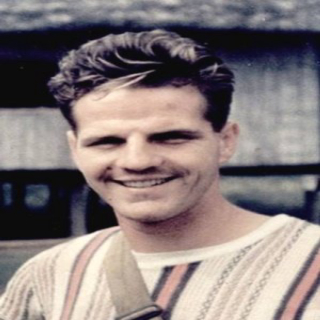 EARLY LIFE
Jim Elliot began his life in Portland, Oregon in the USA. His mother, Clara, was a chiropractor and his father, Fred, was a minister. They married and settled in Seattle, WA where they welcomed their first son, Robert in 1921.
Later they relocated the family to Portland where Herbert arrived in 1924, Jim in 1927, and Jane in 1932.
Jim knew Christ from an early age and was never afraid to speak about Him to his friends. At age six Jim told his mother, “Now, mama, the Lord Jesus can come whenever He wants. He could take our whole family because I’m saved now, and Jane is too young to know Him yet.”
THE YEARS THAT CEMENTED HIS DESIRE TO SERVE THE LORD IN MISSIONS
Jim entered Benson Polytechnic High School in 1941. He carried a small Bible with him and, an excellent speaker; he was often found speaking out for Christ. He and his friends were not afraid to step out and find adventure. One thing Jim didn’t have time for in those early years were girls. He was once quoted as telling a friend, “Domesticated males aren’t much use for adventure.”
In 1945 Jim traveled to Wheaton, IL to attend Wheaton College. His main goal while there was to devote himself to God. He recognized the importance of discipline in pursuing this goal. He would start each morning with prayer and Bible study. In his journal he wrote, “None of it gets to be ‘old stuff’ for it is Christ in print, the Living Word. We wouldn’t think of rising in the morning without a face-wash, but we often neglect the purgative cleansing of the Word of the Lord. It wakes us up to our responsibility.”
Jim’s desire to serve God by taking His gospel to unreached people of the world began to grow while at Wheaton. The summer of 1947 found him in Mexico and that time influenced his decision to minister in Central America after he finished college.
Jim met Elisabeth Howard during his third year at Wheaton. He did ask her for a date which she accepted and then later cancelled. They spent the next years as friends and after she finished at Wheaton they continued to correspond. As they came to know each other there was an attraction, but Jim felt he needed to unencumbered by worldly concerns in order to devote himself completely to God.
In addition to his hope to one day travel to a foreign country to share Christ with the unchurched of the world, he also felt the need to share with people in the United States. On Sundays while at Wheaton he would often ride the train into Chicago and talk to people in the train station about Christ. He often felt ineffective in his work as the times of knowingly leading people to Christ were few. He once wrote, “No fruit yet. Why is that I’m so unproductive? I cannot recall leading more than one or two into the kingdom. Surely this is not the manifestation of the power of the Resurrection. I feel as Rachel, ‘Give me children, or else I die.’”
After college with no clear answer as to working for the Lord in a foreign country, Jim returned home to Portland. He continued his disciplined Bible study as well as correspondence with Elisabeth Howard whom he called Betty.
They both felt a strong attraction to each other during this time, but also felt that the Lord may have been calling them to be unmarried as they served Him.
In June of 1950 he travelled to Oklahoma to attend the Summer Institute of Linguistics. There he learned how to study unwritten languages. He was able to work with a missionary to the Quichuas of the Ecuadorian jungle. Because of these lessons he began to pray for guidance about going to Ecuador and later felt compelled to answer the call there.
Elisabeth Elliot wrote in Shadow of the Almighty:
“The breadth of Jim’s vision is suggested in this entry from the journal:
August 9. “God just now gave me faith to ask for another young man to go, perhaps not this fall, but soon, to join the ranks in the lowlands of eastern Ecuador. There we must learn: 1) Spanish and Quichua, 2) each other, 3) the jungle and independence, and 4) God and God’s way of approach to the highland Quichua. From thence, by His great hand, we must move to the Ecuadorian highlands with several young Indians each, and begin work among the 800,000 highlanders. If God tarries, the natives must be taught to spread southward with the message of the reigning Christ, establishing New Testament groups as they go. Thence the Word must go south into Peru and Bolivia. The Quichuas must be reached for God! Enough for policy. Now for prayer and practice.
THE ECUADOR YEARS
In February 1952 Jim finally left America to travel to Ecuador with Pete Fleming. In May Elisabeth moved to Quito and though they didn’t feel the need to get engaged she and Jim did begin a courtship.
In August Jim left Elisabeth in Quito and travelled with Pete to Shell Mera. At the Mission Aviation Fellowship headquarters in Shell Mera, Jim and Pete learned more about the Acua Indians, a people group that was largely unreached and very savage.
Leaving Shell Mera, Pete and Jim moved on to Shandia where Jim was captivated by the Quichua. He felt very strongly that this was exactly where God intended for him to work to spread the Gospel.
While Jim was in Shandia, Elisabeth was working to learn more about the Colorado Indians near Santa Domingo. In January of 1953 he went to Quito and she met him there and they were finally engaged. They married in October of that year and their only child Valerie was born in 1955.
They settled in Shandia and continued their work with the Quichua Indians. It was Jim’s desire to be able to reach the Waodoni tribe that lived deep in the jungles and had little contact with the outside world. A Waodoni woman who had left the tribe was taken in by the missionaries and helped them to learn the language.
Jim, along with Pete, Ed McCully, Roger Youderian, and their pilot Nate Saint began to search by plane in hopes of finding a way to contact the Waodoni. The found a sandbar in the middle of the Curaray River that worked as a landing strip for the plane and it was there that they first made contact with the Waodoni. They were elated to be able to finally be able to attempt to share the love of Christ with this people group.
After their first meeting, one of the tribe, a man they called George lied to the tribe about the men’s intentions. This lie led the Waodoni warriors to plan an attack for when the missionaries returned. The men did return on January 8, 1956 and were surprised by ten members of the tribe who massacred the missionaries.
Jim’s short life that was filled with the desire to share God’s love can be summed up by a quote that is attributed to him. “He is no fool who gives that which he cannot keep, to gain what he cannot lose.”
EARLY LIFE
Jim Elliot began his life in Portland, Oregon in the USA. His mother, Clara, was a chiropractor and his father, Fred, was a minister. They married and settled in Seattle, WA where they welcomed their first son, Robert in 1921.
Later they relocated the family to Portland where Herbert arrived in 1924, Jim in 1927, and Jane in 1932.
Jim knew Christ from an early age and was never afraid to speak about Him to his friends. At age six Jim told his mother, “Now, mama, the Lord Jesus can come whenever He wants. He could take our whole family because I’m saved now, and Jane is too young to know Him yet.”
THE YEARS THAT CEMENTED HIS DESIRE TO SERVE THE LORD IN MISSIONS
Jim entered Benson Polytechnic High School in 1941. He carried a small Bible with him and, an excellent speaker; he was often found speaking out for Christ. He and his friends were not afraid to step out and find adventure. One thing Jim didn’t have time for in those early years were girls. He was once quoted as telling a friend, “Domesticated males aren’t much use for adventure.”
In 1945 Jim traveled to Wheaton, IL to attend Wheaton College. His main goal while there was to devote himself to God. He recognized the importance of discipline in pursuing this goal. He would start each morning with prayer and Bible study. In his journal he wrote, “None of it gets to be ‘old stuff’ for it is Christ in print, the Living Word. We wouldn’t think of rising in the morning without a face-wash, but we often neglect the purgative cleansing of the Word of the Lord. It wakes us up to our responsibility.”
Jim’s desire to serve God by taking His gospel to unreached people of the world began to grow while at Wheaton. The summer of 1947 found him in Mexico and that time influenced his decision to minister in Central America after he finished college.
Jim met Elisabeth Howard during his third year at Wheaton. He did ask her for a date which she accepted and then later cancelled. They spent the next years as friends and after she finished at Wheaton they continued to correspond. As they came to know each other there was an attraction, but Jim felt he needed to unencumbered by worldly concerns in order to devote himself completely to God.
In addition to his hope to one day travel to a foreign country to share Christ with the unchurched of the world, he also felt the need to share with people in the United States. On Sundays while at Wheaton he would often ride the train into Chicago and talk to people in the train station about Christ. He often felt ineffective in his work as the times of knowingly leading people to Christ were few. He once wrote, “No fruit yet. Why is that I’m so unproductive? I cannot recall leading more than one or two into the kingdom. Surely this is not the manifestation of the power of the Resurrection. I feel as Rachel, ‘Give me children, or else I die.’”
After college with no clear answer as to working for the Lord in a foreign country, Jim returned home to Portland. He continued his disciplined Bible study as well as correspondence with Elisabeth Howard whom he called Betty.
They both felt a strong attraction to each other during this time, but also felt that the Lord may have been calling them to be unmarried as they served Him.
In June of 1950 he travelled to Oklahoma to attend the Summer Institute of Linguistics. There he learned how to study unwritten languages. He was able to work with a missionary to the Quichuas of the Ecuadorian jungle. Because of these lessons he began to pray for guidance about going to Ecuador and later felt compelled to answer the call there.
Elisabeth Elliot wrote in Shadow of the Almighty:
“The breadth of Jim’s vision is suggested in this entry from the journal:
August 9. “God just now gave me faith to ask for another young man to go, perhaps not this fall, but soon, to join the ranks in the lowlands of eastern Ecuador. There we must learn: 1) Spanish and Quichua, 2) each other, 3) the jungle and independence, and 4) God and God’s way of approach to the highland Quichua. From thence, by His great hand, we must move to the Ecuadorian highlands with several young Indians each, and begin work among the 800,000 highlanders. If God tarries, the natives must be taught to spread southward with the message of the reigning Christ, establishing New Testament groups as they go. Thence the Word must go south into Peru and Bolivia. The Quichuas must be reached for God! Enough for policy. Now for prayer and practice.
THE ECUADOR YEARS
In February 1952 Jim finally left America to travel to Ecuador with Pete Fleming. In May Elisabeth moved to Quito and though they didn’t feel the need to get engaged she and Jim did begin a courtship.
In August Jim left Elisabeth in Quito and travelled with Pete to Shell Mera. At the Mission Aviation Fellowship headquarters in Shell Mera, Jim and Pete learned more about the Acua Indians, a people group that was largely unreached and very savage.
Leaving Shell Mera, Pete and Jim moved on to Shandia where Jim was captivated by the Quichua. He felt very strongly that this was exactly where God intended for him to work to spread the Gospel.
While Jim was in Shandia, Elisabeth was working to learn more about the Colorado Indians near Santa Domingo. In January of 1953 he went to Quito and she met him there and they were finally engaged. They married in October of that year and their only child Valerie was born in 1955.
They settled in Shandia and continued their work with the Quichua Indians. It was Jim’s desire to be able to reach the Waodoni tribe that lived deep in the jungles and had little contact with the outside world. A Waodoni woman who had left the tribe was taken in by the missionaries and helped them to learn the language.
Jim, along with Pete, Ed McCully, Roger Youderian, and their pilot Nate Saint began to search by plane in hopes of finding a way to contact the Waodoni. The found a sandbar in the middle of the Curaray River that worked as a landing strip for the plane and it was there that they first made contact with the Waodoni. They were elated to be able to finally be able to attempt to share the love of Christ with this people group.
After their first meeting, one of the tribe, a man they called George lied to the tribe about the men’s intentions. This lie led the Waodoni warriors to plan an attack for when the missionaries returned. The men did return on January 8, 1956 and were surprised by ten members of the tribe who massacred the missionaries.
Jim’s short life that was filled with the desire to share God’s love can be summed up by a quote that is attributed to him. “He is no fool who gives that which he cannot keep, to gain what he cannot lose.”
God So Loved the World, He Sent You
Long before he made the world, God the Father prepared to send his one and only Son to earth. He loved him “before the foundation of the world” (John 17:24), and yet even then he knew how much the baby born in Bethlehem would suffer. We know the Father knew because our names were “written before the foundation of the world in the book of life of the Lamb who was slain” (Revelation 13:8). Before God planted the first pine tree, the Christmas story had already been planned. Before he lit the sun with fire, he had already begun digging the ground where the cross would one day stand. He always knew that Jesus would one day take on flesh and, eventually, shed his own blood. Can you imagine the all-wise, all-powerful author of life and history preparing his Son to live as one of us — and to die a uniquely horrible death? Even our wildest dreams would look like scratch drawings on a napkin compared with the intimacy they shared in divinity for an eternity before history — before there was even time to count. God So Loved His Son But the sent one himself gives us stunning glimpses into how the Father had prepared him: “I lay down my life for the sheep. And I have other sheep that are not of this fold. I must bring them also, and they will listen to my voice. . . . For this reason the Father loves me, because I lay down my life that I may take it up again. No one takes it from me, but I lay it down of my own accord. I have authority to lay it down, and I have authority to take it up again. This charge I have received from my Father.” (John 10:15–18) When the Son came to earth, he came covered in his Father’s love. When the Father set his love on us, at the excruciating expense of his Son, he did not love his Son less. He loved him more for his sacrifice. Jesus says, “For this reason the Father loves me, because I lay down my life that I may take it up again” (John 10:17). God’s love for his Son didn’t keep him from sending his Son to save us. Love for his Son prompted God to send him. The Father sent Jesus with unparalleled love, and with unrivaled authority. Jesus says, “No one takes it from me, but I lay it down of my own accord. I have authority to lay it down, and I have authority to take it up again” (John 10:18). The Father harnessed all the power of heaven for this mission, and entrusted it to the humble child from Nazareth. He held nothing back. Jesus, who was human in every way that we are, could say the scandalous and unfathomable: “All that the Father has is mine” (John 16:15). As much as he suffered as man, he did not come to earth empty-handed; he came bearing the universe. He came as God. But with the limitless love and unassailable authority of his Father, he was sent to die. Feel the awful heaviness of the full meaning of Christmas in his words: “I lay down my life for the sheep. . . . I lay down my life. . . . This charge I have received from my Father” (John 10:15, 17–18). The Father did not merely send Jesus to take on flesh, but to lay it down. The Spirit conceived a Christ to be crucified. For lost and wandering and helpless sheep — for you and me. Jesus was sent to lose everything that we might gain everything. He became poor — in birth, in life, and in death — that we might inherit his heavenly wealth (2 Corinthians 8:9). Sent in love, sent with authority, sent to die — and to save. As the Father Sent Me The wonder and weight of Christmas — a sending conceived in the mind of God before the foundation of the world, a sending on which every event in history turns and hangs — fills one sentence from Jesus with staggering significance. He prays to the Father, “As you sent me into the world, so I have sent them into the world.” (John 17:18) Nothing compares to the Creator of the universe sending the radiance of his own glory, the exact imprint of his nature into his creation. Until Jesus sends you. After he rises from the dead, he says it again, before he ascends into heaven, “Peace be with you. As the Father has sent me, even so I am sending you” (John 20:21). As the Father sent the Son — planned before the foundation of the world, demonstrating God’s infinite beauty, strength, and worth, paying for the sins of people from every tribe, tongue, people, and nation, with billions and billions of destinies hanging in the balance — so the Son now sends us. As the Father sent his Son on a specific and spectacular mission, so the Son has set us loose on a world in need of hope (John 17:21, 23). As the Father sent his Son with precious words to proclaim, so the Son has given us something to say, a Lord to adore, and a commission to obey (John 17:14; Matthew 28:19–20). As the Father sent the Son to suffer for love, so the Son sends his sheep into the wolf pack (Matthew 10:16). As the Father set joy before his Son, so the Son has promised us his very own joy (John 17:13), now in part, forever in full. As the Father sent his Son with love, so the Son has loved us (John 15:13). And so he has sent us into the world. God So Loved the World We have not descended from heaven, but in Christ we are not of this world. Jesus says of you and me, “They are not of the world, just as I am not of the world” (John 17:16). But while neither he nor we are of this world, he has stationed us here for now. Jesus prays, “I am no longer in the world, but they are in the world” (John 17:11). He is not in the world anymore, but we are. Instead of staying to bring in by himself all the sheep who are not yet of this fold, he ascended to mission control — the throne of the universe — and sent us in after him. Having completed his once-for-all mission of securing redemption — the work only he could do — he entrusted us with telling the whole world what he had done. He says to his disciples, “All authority in heaven and on earth has been given to me. Go therefore and make disciples of all nations” (Matthew 28:18–19). As he had heard the Father say, “Go,” he now sends us into the world — with his authority, his words, his help, his joy, and his own presence: “Behold, I am with you always, to the end of the age” (Matthew 28:20). To whom has God sent you? The people in your family, on your street, near your office are not the offspring of chance. God lovingly placed them within arm’s reach of forgiveness, hope, and joy — by placing you near them. They were not alive a hundred years ago, but they are now. They will not live where they do in a hundred years, but they do now. God arranged and orchestrated every person in your life for his glory (Acts 17:26–27), just as he guided all of human history for thousands of years before Christ came — and then he sent you precisely where you are — with words and joy, in love, to suffer and say and save. As you celebrate the greatest sending again this Christmas, remember God so loved the world, that he also sent you. Article by Marshall Segal