
George Muller - The Guardian Of Bristols Orphans Order Printed Copy
- Author: Janet, Geoff Benge
- Size: 378KB
- |
Others like george muller - the guardian of bristols orphans Features >>
George Muller - Man Of Faith And Miracles
George Fox - Autobiography

God's Generals: The Roaring Reformers

Jerusalem In The Time Of Jesus
-160.webp)
Son Of The Underground (The Life Of Issac Liu, Son Of Brother Yun, The Heavenly Man)

The Collected Letters Of C.S. Lewis Volume 2

Paul - A Biography
-160.webp)
God's Generals (Aimee Semple Mcpherson)

Junia - The First Woman Apostle
-160.webp)
Foxes Book Of Martyrs (History Of The Lives, Sufferings, And Triumphant Deaths Of The Primitive Protestant Martyrs)
About the Book
"George Muller - The Guardian of Bristol's Orphans" tells the inspiring true story of George Muller, a man who dedicated his life to caring for and providing for orphaned children in 19th century England. Through faith and prayer, Muller was able to build orphanages and support thousands of children, demonstrating the power of trust in God and the importance of helping others in need.
William Chalmers Burns
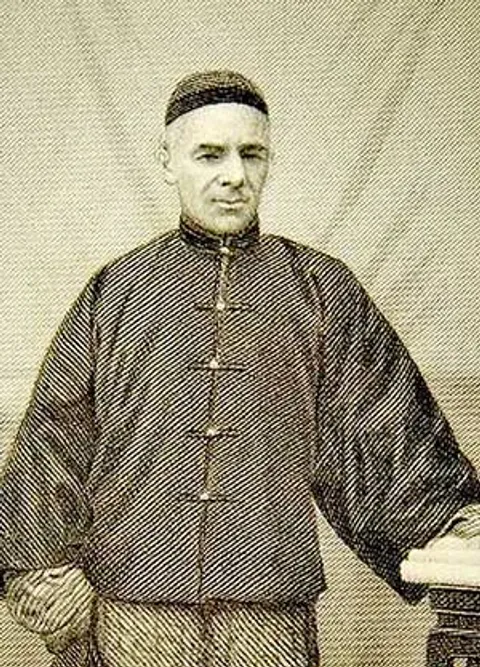 William Chalmers Burns was born in the Manse of Dun, in Angus, on April Ist, 1815. He was the third son of the Parish Church minister there. After leaving school, he went to Edinburgh to be apprenticed with an uncle to the legal profession. His eldest sister, a gay young lady, was converted to God, and became a bright witness for the Lord Jesus in 1831, and it was by means of her decided testimony that William was first awakened to a sense of his need of salvation, and led to put his trust in the Son of God, as his Redeemer and Saviour.
It was shortly after his conversion that he walked into the manse of Kilsyth, where the family then resided, having walked on foot the thirty-six miles from Edinburgh, to tell his mother and his sisters the glad news of his conversion, and to say that his desire now was to relinquish his study of law, and devote himself entirely to the preaching of the Gospel of God’s grace to his fellowmen.
And this he did heartily and with all his might, first in the neglected Parts of Scotland, and latterly among many heathen millions of the great Chinese Empire, then scarcely touched by the feet of God’s messengers of peace.
Mr. Burns’s name came into prominence in connection with a wonderful work of grace in Dundee, while he was preaching for Robert Murray M’Cheyne, then on a visit to Palestine, for the evangelization of the Jews. During Mr. Burns’s preaching in Dundee, a remarkable awakening took place; thousands were aroused to their condition in the sight of God, truly converted, and set on the heavenward way.
Remarkable scenes were witnessed in the old church of St. Peter’s, near to which M’Cheyne’s body now lies, awaiting the first resurrection. It was on the evening of a Lord’s Day in Kilsyth, after preaching to a crowded congregation, that Mr. Burns felt constrained to intimate to the people that he would preach to the people in the open air, before returning to Dundee the following day.
Deeply burdened with the souls of the people, he went into the village and invited the people, who thronged into the old church, until every seat and passage was filled. And the Lord helped His servant to preach straight to the people with great power, with the result that the whole congregation became melted under the message, many weeping aloud and crying to God for mercy. A glorious work of conversion followed.
Meetings for prayer and preaching of the Gospel continued in the churchyard, the market-place and elsewhere for weeks, while Mr. Burns returned to Dundee to resume his ministry. The work progressed in Dundee with increased interest, until the return of Mr. M’Cheyne, who greatly rejoiced in all that the Lord had done during his absence, through the ministry of His servant.
There was no jealousy, but the deepest gratitude, and these two true ministers of Christ rejoiced together over the Lord’s doings, which were indeed marvellous in their eyes.
From that time onward, until the Lord’s call came to go to China, Mr. Burns gave himself almost wholly to itinerant Gospel preaching, through Perthshire, up as far north as Aberdeen, preaching in barns, on market-places, and wherever the people could be gathered together to hear the Word. His message was plain, and to the point; thousands were awakened and many saved. But the adversary opposed. Time and again Mr. Burns was stoned, and bore the marks of these brands of the enemy for many days.
Believing it to be the call of the Lord, he went forth to China as the first missionary of the Presbyterian Church of England, in June, 1847. When questioned by those interested in his out-going, how long it would take him to prepare for the voyage, he replied with all simplicity, “I will be ready to go to-morrow.”
On a brief visit to his home, to take farewell of his sister, he silently wrung her hand, took a last glance around their old home, and with a small bag in his hand and his mother’s plaid across his arm, went forth, in the Name of the Lord with the Gospel to China’s benighted people, of whom it was said “a million a month” were dying without having once heard the Gospel.
For years this solitary witness toiled alone, at times with a few helpers, in the great heathen land, amid overwhelming hindrances, but his faith in God never faltered. On and on he went, sowing the seed which others would reap, until he reached the borders of the great kingdom of Manchuria, where, in a small, comfortless room in Nieu-chang, wearied and worn in labours abundant, he fell asleep on April 4th, 1868, his last audible words being, “For Thine is the Kingdom and the Power and the Glory.”
It is of this great land that the story of grace related in the following pages is told, and those who saw and shared in its joyful results, say that it was no doubt part of the result of William Burns’s sowing, in his earlier years in China.
William Chalmers Burns was born in the Manse of Dun, in Angus, on April Ist, 1815. He was the third son of the Parish Church minister there. After leaving school, he went to Edinburgh to be apprenticed with an uncle to the legal profession. His eldest sister, a gay young lady, was converted to God, and became a bright witness for the Lord Jesus in 1831, and it was by means of her decided testimony that William was first awakened to a sense of his need of salvation, and led to put his trust in the Son of God, as his Redeemer and Saviour.
It was shortly after his conversion that he walked into the manse of Kilsyth, where the family then resided, having walked on foot the thirty-six miles from Edinburgh, to tell his mother and his sisters the glad news of his conversion, and to say that his desire now was to relinquish his study of law, and devote himself entirely to the preaching of the Gospel of God’s grace to his fellowmen.
And this he did heartily and with all his might, first in the neglected Parts of Scotland, and latterly among many heathen millions of the great Chinese Empire, then scarcely touched by the feet of God’s messengers of peace.
Mr. Burns’s name came into prominence in connection with a wonderful work of grace in Dundee, while he was preaching for Robert Murray M’Cheyne, then on a visit to Palestine, for the evangelization of the Jews. During Mr. Burns’s preaching in Dundee, a remarkable awakening took place; thousands were aroused to their condition in the sight of God, truly converted, and set on the heavenward way.
Remarkable scenes were witnessed in the old church of St. Peter’s, near to which M’Cheyne’s body now lies, awaiting the first resurrection. It was on the evening of a Lord’s Day in Kilsyth, after preaching to a crowded congregation, that Mr. Burns felt constrained to intimate to the people that he would preach to the people in the open air, before returning to Dundee the following day.
Deeply burdened with the souls of the people, he went into the village and invited the people, who thronged into the old church, until every seat and passage was filled. And the Lord helped His servant to preach straight to the people with great power, with the result that the whole congregation became melted under the message, many weeping aloud and crying to God for mercy. A glorious work of conversion followed.
Meetings for prayer and preaching of the Gospel continued in the churchyard, the market-place and elsewhere for weeks, while Mr. Burns returned to Dundee to resume his ministry. The work progressed in Dundee with increased interest, until the return of Mr. M’Cheyne, who greatly rejoiced in all that the Lord had done during his absence, through the ministry of His servant.
There was no jealousy, but the deepest gratitude, and these two true ministers of Christ rejoiced together over the Lord’s doings, which were indeed marvellous in their eyes.
From that time onward, until the Lord’s call came to go to China, Mr. Burns gave himself almost wholly to itinerant Gospel preaching, through Perthshire, up as far north as Aberdeen, preaching in barns, on market-places, and wherever the people could be gathered together to hear the Word. His message was plain, and to the point; thousands were awakened and many saved. But the adversary opposed. Time and again Mr. Burns was stoned, and bore the marks of these brands of the enemy for many days.
Believing it to be the call of the Lord, he went forth to China as the first missionary of the Presbyterian Church of England, in June, 1847. When questioned by those interested in his out-going, how long it would take him to prepare for the voyage, he replied with all simplicity, “I will be ready to go to-morrow.”
On a brief visit to his home, to take farewell of his sister, he silently wrung her hand, took a last glance around their old home, and with a small bag in his hand and his mother’s plaid across his arm, went forth, in the Name of the Lord with the Gospel to China’s benighted people, of whom it was said “a million a month” were dying without having once heard the Gospel.
For years this solitary witness toiled alone, at times with a few helpers, in the great heathen land, amid overwhelming hindrances, but his faith in God never faltered. On and on he went, sowing the seed which others would reap, until he reached the borders of the great kingdom of Manchuria, where, in a small, comfortless room in Nieu-chang, wearied and worn in labours abundant, he fell asleep on April 4th, 1868, his last audible words being, “For Thine is the Kingdom and the Power and the Glory.”
It is of this great land that the story of grace related in the following pages is told, and those who saw and shared in its joyful results, say that it was no doubt part of the result of William Burns’s sowing, in his earlier years in China.
Did God Hear Me - Where Was He When My Sister Died
The ancient Hebrew songwriter of Psalm 116 sings with joy, I love the Lord, because he has heard my voice and my pleas for mercy. . . . The snares of death encompassed me; the pangs of Sheol laid hold on me; I suffered distress and anguish. Then I called on the name of the Lord: “O Lord, I pray, deliver my soul!” Gracious is the Lord, and righteous; our God is merciful. . . . For you have delivered my soul from death, my eyes from tears, my feet from stumbling. (Psalm 116:1–8) This is the collective testimony of God’s people — he loves us, and we love him. And because he loves us, our Savior has promised that when we pray for anything according to his will, he will answer us (John 14:13–14). In two previous articles, I wrote about how I prayed for my daughter’s life when she was diagnosed with a terminal form of cancer and how Jesus answered my prayer. In nothing short of a miracle, Jesus healed her and delivered me and my wife from inconsolable sorrows (Philippians 2:27). God is good, and he is merciful, and, yes, he hears our cries for help. Then March of this year happened. My sister was diagnosed with a terminal form of cancer. My family was still grieving her 40-year-old son who, just months earlier, died tragically and unexpectedly from a heart attack. The news of my sister’s cancer emotionally overwhelmed us. We prayed for a miracle. Trusting in her Lord with whether she lived or died, my sister breathed her last breath on June 3rd. My heart is broken, and I’m still grieving. There have been days when I didn’t think I would be able to get out of bed. Everything is harder. Writing an article about death is harder. “God hears the prayers of the righteous — and he is still righteous and good when he answers no.” After praying with me for my sister’s life and then mourning with me over her death, Desiring God gave me an opportunity to share from our mourning. So I want to try to comfort others with the comfort of God that I am seeking. I want to help Christians see how enduring suffering rests on an important truth. Our comfort comes from embracing the truth that God hears the prayers of the righteous — and that he is still righteous and good when he answers no. What We Don’t Understand Yet The Bible teaches that when God’s children are in despair, he wants us to pray, knowing that he will answer (1 Peter 5:7). But the Bible doesn’t promise to limit the infinite answers of God to our finite understandings. While God’s answers are always consistent with who he is (good, all-wise, righteous, and merciful), his thoughts and ways are incalculably higher than ours. So sometimes when we pray for God to keep us from the sorrows that fill this broken world, his perfect answer will be, “No, my grace is sufficient for you” (2 Corinthians 12:9). Consider the agony of seeing your miraculously born, perfectly just, and sinless son hanging from a wickedly unjust, cruel Roman cross. Mary didn’t knowingly pray for that. Wasn’t the horror of the cross crushing to her? Yet God ordained the cross, and for the joy set before him, Jesus willingly submitted to the Father and endured it. Before we see him on the cross, we see him alone in the garden. And there, we see him in agony, trembling and pleading with his Father three times to take his cup of wrath away (Matthew 26:39–44). Yes, God is good, and whenever he allows suffering, he has good purposes behind it, even when we don’t understand (Genesis 50:20). Jesus knew that and surrendered to his Father’s perfect will and drank the full cup of God’s wrath. He endured the greatest suffering of all, and by doing so, brought about the greatest good of all, redemption — the overthrow of death, sin, and all that is evil. The Real Problem with Death When we pray for our dying loved ones, what are we really asking for? Like Hezekiah, are we asking God to give them more years (2 Kings 20:1, 5–6)? God heard his prayers and saw his tears and extended his life by fifteen years. When we pray, and our loved ones are with us for another day, or month, or year, we should give thanks through tears. I treasured the three months that God gave us with my sister. She was able to say her final goodbyes, see her grandchildren, and express her unwavering faith in Jesus. She glorified God in her death (Philippians 1:20). However, we should also remember eternity in our prayers. In our pleading with God, we should first pray for our loved one’s salvation — that whether they live or die, they make their calling and election sure. For even if God extends their lives, what are years in light of eternity? All our lives are just a vapor. The real problem with death isn’t when we die . The real problem is that we will die . The sage of Ecclesiastes bluntly writes, “No man has power to retain the spirit, or power over the day of death” (Ecclesiastes 8:8). Jesus came for that reason. He came to abolish death and bring life and immortality to light (2 Timothy 1:10). Because the wages of sin is death, the Son of God became man, so that he could live a sinless life and then give that life as the payment for our sin (1 Peter 3:18). Prayer for Your Mourning Jesus’s resurrection validated his victory and authority over death. He is the resurrection and the life. Our loved ones who die in Christ go directly into his presence. We can comfort ourselves with that truth. No one has to mourn without hope when their loved ones die in Christ (1 Thessalonians 4:13–14). In the end, Christ will remove death from creation when he makes a new heaven and a new earth (1 Corinthians 15:26; Revelation 21:4). Until then, we do deeply mourn (Philippians 2:27), but because of Christ we have a balm to heal our broken hearts. In a confession of desperation, when facing an insurmountable enemy, Judah’s King Jehoshaphat cried out to the Lord, “We are powerless against this great horde that is coming against us. We do not know what to do, but our eyes are on you” (2 Chronicles 20:12). May I encourage you to make this your prayer as you mourn? “You won’t always understand why you suffer, but you must believe that God does.” Perhaps you have prayed and asked God to heal your loved one. Instead, you’ve been struck like Job by the cruelty of our mortal enemy — death (Job 1:4–5, 18–19). Your songs aren’t songs of joy. They are laments from a heart that is reeling from the jarring pain that comes with the death of a spouse, a child, a sibling, a best friend, or someone whom you’ve deeply loved. You won’t always understand why you suffer, but you must believe that God does. You can, therefore, pray and ask God to comfort you, knowing that he is good even when he ordains that you suffer. How I Comfort My Soul As you mourn, perhaps your prayer can sound like this: Jesus, I believe that you love me. You went to the cross for me and saved me. Fill my heart with the light of your love when the darkness of sorrow encompasses me. Jesus, you are the infinite, all-powerful Son of God, and you became man so that you could be my sympathetic High Priest, who feels all my weaknesses and pains (Hebrews 4:15). Help me to mourn. You know the pain of death. You wept over your friend Lazarus, and you mourned with his sisters. Remind me that you are bottling up every tear that falls from my eyes (Psalm 56:8). Jesus, you are not indifferent to death nor to my struggle with it. You hate death (John 11:33; Ezekiel 18:32) and came to put death to death. When you rose from the dead, you conquered death, and you shared your victory over death with all who believe in you. Comfort me with the reality that you are the resurrection and the life, and because of this, my believing loved one has eternal life in your presence. Lord, you appoint the day when everyone dies and stands before you in judgment (Hebrews 9:27). I can’t put people into heaven or hell. You are the judge of all the earth, and you always do what is right even when I can’t comprehend it (Genesis 18:25). You mourned over an unbelieving Israel (Matthew 23:37). Help me to know that you are good even when I mourn the death of unbelieving loved ones. Father, all good gifts come from you. Through my tears, I thank you for giving me my loved one, and for the time that you gave me as I mourn the years that I won’t have. This is how I am comforting my soul. I thank God for making my sister to be our family evangelist. She brought me to church when I was twenty. I heard the gospel, and God saved me. I thank God for giving her eternal life so that she never saw death (John 8:51). When she breathed her last breath here, she opened her eyes looking into the radiance of the glory that shines from his face. And I thank God for his word that teaches all of us that Jesus is the ultimate gift, and God is enough to satisfy our souls (Psalms 73:25–26). Until Christ comes or brings us home, I pray that God will comfort our hearts with these precious truths so that we can comfort others who are mourning.