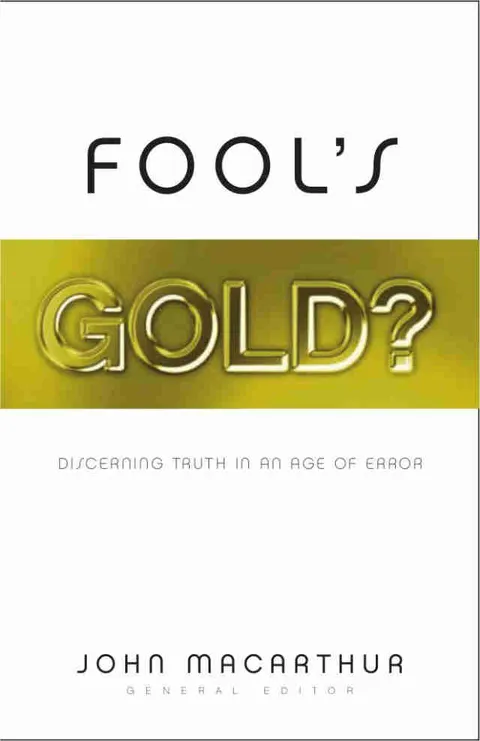

Others like fool's gold Features >>
%20(Library%20of%20Christian%20Classics)%20by%20John%20Calvin-160.webp)

About the Book
"Fool's Gold" by John Macarthur is a book that explores the dangers of pursuing wealth and material possessions over spiritual growth and character development. The author uses biblical teachings to highlight the fleeting nature of earthly treasures and the importance of investing in eternal values. The book offers insights and practical advice for readers to avoid falling into the trap of pursuing "fool's gold" and instead focus on building a lasting legacy.
Brother Yun
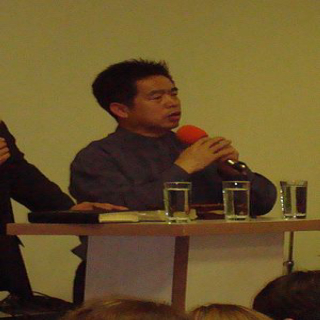 Brother Yun was born in February 1958 in the province of Henan. His original name was Liu Zhenying (刘振营).
Brother Yun became a believer at the age of 16. Soon after he became a Christian, God called him to be His witness in the west and south. As he was obedient to the calling, he eventually became a witness of Christ not just in the western and southern parts of China, but throughout China and in the nations beyond China as well.
Brother Yun was born into a poor family. His family’s financial situation took a turn for the worst when his father became ill with an asthmatic condition that led to lung cancer eventually. His life got worse when he became a Christian as he suffered severe trials and persecutions. In the midst of suffering for the Lord, however, he experienced miracle after miracle, which helped to strengthen his faith.
HOW BROTHER YUN BECAME A BELIEVER
In 1974, Brother Yun’s father became ill with lung cancer. His mother, who had been a Christian for many years but had become spiritually cold after the expulsion of Western missionaries during the Cultural Revolution, felt a deep sense of desperation because if her husband had died then, it would leave the family in dire straits. She thought of committing suicide. One evening, as she was lying in bed, she heard a voice saying to her that Jesus loved her. In tears and in repentance, she rededicated her life to God and gathered her family to pray for her husband. The next morning, her husband got better and as a result, everyone in the family, including Brother Yun, put their faith in God.
HIS HUNGER FOR THE WORD OF GOD
Brother Yun was 16 when he became a Christian. Soon after, he started hungering for the Word of God. However, his family did not have a Bible. He began asking his mother who Jesus was. In response, his mother would tell him that Jesus was the Son of God and that He had recorded all His teachings in the Bible.
Brother Yun wanted a Bible and his mother recalled that there was a man in another village who had one. So she brought him to see the man. The man was too afraid to show Brother Yun his Bible. So he suggested to the latter that he could pray and ask God for one.
Brother Yun decided to fast and pray for a Bible. For the next 100 days, he ate only one bowl of steamed rice everyday. One day at 4am, after fasting for 100 days, he saw a vision. In the vision, he was walking up a steep hill and trying to push a heavy cart at the same time. He was heading towards a village where he intended to beg for food for his family. He struggled greatly as he continued his climb uphill. The cart was about to roll back and fall on him when he saw three men walking down the hill in the opposite direction. One of them was a kind old man and he was pulling a large cart of fresh bread. When the old man saw Brother Yun, he asked him if he was hungry. He said ‘yes’ and started crying. The old man then took a red bag of bread from his cart and asked his two servants to give it to Brother Yun. As he put the bread into his mouth, it immediately turned into a Bible.
Upon waking up, Brother Yun began to search for the Bible. His search, however, was in vain. All of a sudden, he heard a faint knock on the door and someone was calling out his name. Immediately, he recognised the voice – it was the same voice he had heard in the vision. He quickly opened the door and standing before him were the two servants he had seen in the vision. One of them held a red bag in his hand. In this red bag was a Bible.
It was later that Brother Yun found out the names of the two men. One was Brother Wang while the other was Brother Sung. They were sent by an evangelist to give Brother Yun the Bible. The evangelist, who had suffered terribly during the Cultural Revolution and had nearly died while being tortured, had received a vision from God. In the vision, God showed him Brother Yun’s house and the location of his village. He was asked to give his Bible to Brother Yun. However, he did not obey God until three months later.
Brother Yun began to devour the Word of God. Even though he could hardly read, this did not deter him at all. When he had finished reading the entire Bible, he started to memorise one chapter per day. In 28 days, he had memorised the Gospel of Matthew. Then he went on to memorise the Book of Acts and so forth.
OBEDIENT TO THE CALL OF GOD
One morning at 4am, Brother Yun had a dream. In the dream, God asked him to be His witness in the west and south. In the same dream, he saw a young man from the south coming to his house. And so at daybreak, he told his mother to expect the young man’s visit and to ask him to wait for him. Then he sat off to a village he had never heard of in the west. The people in this village had been praying for him to visit as they had heard about how he had prayed for a Bible and got it.
When the meeting at the village concluded and Brother Yun got ready to leave, the villagers refused to let him go. So he stayed on and recited to them the first twelve chapters from the Book of Acts. After that, the villagers finally let him go. From the village to his house, it could take up to 2 hours to walk. Because he did not want to make the young man from the south wait too long, he decided to run home. All of a sudden, he found himself entering his village without any apparent time lapse. What should have taken him a few hours took him just a few moments. It was as if God had supernaturally transported him back to his village.
PERSECUTIONS AND MIRACLES IN HIS LIFE
Brother Yun was arrested by security police numerous times and was thrown into prison three times for sharing the gospel in communist China.
When Brother Yun was arrested the first time, he was only 17 years old. At that time, he was ministering at a meeting far away from home. After he was caught, he was thrown into a freezing cold prison cell. There was no heat in the cell and his winter coat had been thrown into the snow by the security police who had caught him. He began to sing Psalm 150 aloud. The more he sang, the more he was filled with joy. Gradually, his frozen hands and feet regained feeling and he no longer felt cold.
During his first imprisonment in Nanyang, Brother Yun felt that God wanted him to fast without food and water until he could see his family again. This fast lasted 74 days, which was humanly impossible but yet was made possible because he chose to obey God.
During those times when Brother Yun was in the hands of government officials, he was repeatedly beaten and tortured with electric batons. He was also kicked and trampled upon. Furthermore, he had needles being jabbed underneath his fingernails.
Once, Brother Yun was paraded through the streets with a red cross tied behind him for half a day. When night fell, he was locked and left alone inside a large interrogation room. The wooden cross was taken off his back but his hands were still tied up. All of a sudden, the rope that was used to tie his hands snapped by itself. He immediately walked out of the interrogation room and walked through the courtyard in the midst of onlookers. Nobody stopped him or said anything to him. It was as if God had blinded their eyes and they did not even recognise who he was.
Because the front gate was locked, the only way Brother Yun could get out was to climb over an eight-foot high cement wall. He climbed up as much as he could manage. Then he looked over the wall and saw that there was a ten-foot wide open tank directly below. Suddenly, he felt as if someone had lifted him up and thrown him over. He was thrown so far that he did not land in the tank.
Brother Yun’s 3rd imprisonment was a very dark period in his life as the prison guards in the maximum security prison were determined to prevent his escape. So they beat his legs to cripple him permanently. They had him beaten up everyday, even in his crippled state. One day, God instructed him to escape from the prison. This was confirmed by a brother-in-Christ. Thus, on May 5, 1997, he miraculously walked past dozens of prison guards and out of the maximum security prison. It was as if he had become invisible to the guards. He did not realise that his legs had been miraculously healed until later.
Throughout all the horrendous and painful experiences that Brother Yun went through, the word of the Lord kept coming to him, encouraging him and strengthening his faith.
BROTHER YUN’S MINISTRY
Brother Yun eventually escaped China and sought asylum in Germany in 2001. Since then, he has been continuing his ministry from there and has spoken to congregations internationally. He has founded “Back to Jerusalem” Movement and has been sending missionaries out from China to share the gospel in the least-reached nations.
Brother Yun’s life and ministry have impacted many lives. Thousands of people have become Christians through his ministry. It is thus inevitable that fellow Christians have allowed themselves to be used as instruments of wickedness to attack his reputation. The co-author of The Heavenly Man, Paul Hattaway has aptly put it this way, “Many of the great Christian leaders throughout history have been the subject of brutal attacks from other Christians.”
AFTERTHOUGHT
Brother Yun’s childlike faith and his prompt obedience to God’s call are exemplary. It is incredible that he has remained faithful to God despite the tremendous suffering and persecutions he has gone through.
Brother Yun was born in February 1958 in the province of Henan. His original name was Liu Zhenying (刘振营).
Brother Yun became a believer at the age of 16. Soon after he became a Christian, God called him to be His witness in the west and south. As he was obedient to the calling, he eventually became a witness of Christ not just in the western and southern parts of China, but throughout China and in the nations beyond China as well.
Brother Yun was born into a poor family. His family’s financial situation took a turn for the worst when his father became ill with an asthmatic condition that led to lung cancer eventually. His life got worse when he became a Christian as he suffered severe trials and persecutions. In the midst of suffering for the Lord, however, he experienced miracle after miracle, which helped to strengthen his faith.
HOW BROTHER YUN BECAME A BELIEVER
In 1974, Brother Yun’s father became ill with lung cancer. His mother, who had been a Christian for many years but had become spiritually cold after the expulsion of Western missionaries during the Cultural Revolution, felt a deep sense of desperation because if her husband had died then, it would leave the family in dire straits. She thought of committing suicide. One evening, as she was lying in bed, she heard a voice saying to her that Jesus loved her. In tears and in repentance, she rededicated her life to God and gathered her family to pray for her husband. The next morning, her husband got better and as a result, everyone in the family, including Brother Yun, put their faith in God.
HIS HUNGER FOR THE WORD OF GOD
Brother Yun was 16 when he became a Christian. Soon after, he started hungering for the Word of God. However, his family did not have a Bible. He began asking his mother who Jesus was. In response, his mother would tell him that Jesus was the Son of God and that He had recorded all His teachings in the Bible.
Brother Yun wanted a Bible and his mother recalled that there was a man in another village who had one. So she brought him to see the man. The man was too afraid to show Brother Yun his Bible. So he suggested to the latter that he could pray and ask God for one.
Brother Yun decided to fast and pray for a Bible. For the next 100 days, he ate only one bowl of steamed rice everyday. One day at 4am, after fasting for 100 days, he saw a vision. In the vision, he was walking up a steep hill and trying to push a heavy cart at the same time. He was heading towards a village where he intended to beg for food for his family. He struggled greatly as he continued his climb uphill. The cart was about to roll back and fall on him when he saw three men walking down the hill in the opposite direction. One of them was a kind old man and he was pulling a large cart of fresh bread. When the old man saw Brother Yun, he asked him if he was hungry. He said ‘yes’ and started crying. The old man then took a red bag of bread from his cart and asked his two servants to give it to Brother Yun. As he put the bread into his mouth, it immediately turned into a Bible.
Upon waking up, Brother Yun began to search for the Bible. His search, however, was in vain. All of a sudden, he heard a faint knock on the door and someone was calling out his name. Immediately, he recognised the voice – it was the same voice he had heard in the vision. He quickly opened the door and standing before him were the two servants he had seen in the vision. One of them held a red bag in his hand. In this red bag was a Bible.
It was later that Brother Yun found out the names of the two men. One was Brother Wang while the other was Brother Sung. They were sent by an evangelist to give Brother Yun the Bible. The evangelist, who had suffered terribly during the Cultural Revolution and had nearly died while being tortured, had received a vision from God. In the vision, God showed him Brother Yun’s house and the location of his village. He was asked to give his Bible to Brother Yun. However, he did not obey God until three months later.
Brother Yun began to devour the Word of God. Even though he could hardly read, this did not deter him at all. When he had finished reading the entire Bible, he started to memorise one chapter per day. In 28 days, he had memorised the Gospel of Matthew. Then he went on to memorise the Book of Acts and so forth.
OBEDIENT TO THE CALL OF GOD
One morning at 4am, Brother Yun had a dream. In the dream, God asked him to be His witness in the west and south. In the same dream, he saw a young man from the south coming to his house. And so at daybreak, he told his mother to expect the young man’s visit and to ask him to wait for him. Then he sat off to a village he had never heard of in the west. The people in this village had been praying for him to visit as they had heard about how he had prayed for a Bible and got it.
When the meeting at the village concluded and Brother Yun got ready to leave, the villagers refused to let him go. So he stayed on and recited to them the first twelve chapters from the Book of Acts. After that, the villagers finally let him go. From the village to his house, it could take up to 2 hours to walk. Because he did not want to make the young man from the south wait too long, he decided to run home. All of a sudden, he found himself entering his village without any apparent time lapse. What should have taken him a few hours took him just a few moments. It was as if God had supernaturally transported him back to his village.
PERSECUTIONS AND MIRACLES IN HIS LIFE
Brother Yun was arrested by security police numerous times and was thrown into prison three times for sharing the gospel in communist China.
When Brother Yun was arrested the first time, he was only 17 years old. At that time, he was ministering at a meeting far away from home. After he was caught, he was thrown into a freezing cold prison cell. There was no heat in the cell and his winter coat had been thrown into the snow by the security police who had caught him. He began to sing Psalm 150 aloud. The more he sang, the more he was filled with joy. Gradually, his frozen hands and feet regained feeling and he no longer felt cold.
During his first imprisonment in Nanyang, Brother Yun felt that God wanted him to fast without food and water until he could see his family again. This fast lasted 74 days, which was humanly impossible but yet was made possible because he chose to obey God.
During those times when Brother Yun was in the hands of government officials, he was repeatedly beaten and tortured with electric batons. He was also kicked and trampled upon. Furthermore, he had needles being jabbed underneath his fingernails.
Once, Brother Yun was paraded through the streets with a red cross tied behind him for half a day. When night fell, he was locked and left alone inside a large interrogation room. The wooden cross was taken off his back but his hands were still tied up. All of a sudden, the rope that was used to tie his hands snapped by itself. He immediately walked out of the interrogation room and walked through the courtyard in the midst of onlookers. Nobody stopped him or said anything to him. It was as if God had blinded their eyes and they did not even recognise who he was.
Because the front gate was locked, the only way Brother Yun could get out was to climb over an eight-foot high cement wall. He climbed up as much as he could manage. Then he looked over the wall and saw that there was a ten-foot wide open tank directly below. Suddenly, he felt as if someone had lifted him up and thrown him over. He was thrown so far that he did not land in the tank.
Brother Yun’s 3rd imprisonment was a very dark period in his life as the prison guards in the maximum security prison were determined to prevent his escape. So they beat his legs to cripple him permanently. They had him beaten up everyday, even in his crippled state. One day, God instructed him to escape from the prison. This was confirmed by a brother-in-Christ. Thus, on May 5, 1997, he miraculously walked past dozens of prison guards and out of the maximum security prison. It was as if he had become invisible to the guards. He did not realise that his legs had been miraculously healed until later.
Throughout all the horrendous and painful experiences that Brother Yun went through, the word of the Lord kept coming to him, encouraging him and strengthening his faith.
BROTHER YUN’S MINISTRY
Brother Yun eventually escaped China and sought asylum in Germany in 2001. Since then, he has been continuing his ministry from there and has spoken to congregations internationally. He has founded “Back to Jerusalem” Movement and has been sending missionaries out from China to share the gospel in the least-reached nations.
Brother Yun’s life and ministry have impacted many lives. Thousands of people have become Christians through his ministry. It is thus inevitable that fellow Christians have allowed themselves to be used as instruments of wickedness to attack his reputation. The co-author of The Heavenly Man, Paul Hattaway has aptly put it this way, “Many of the great Christian leaders throughout history have been the subject of brutal attacks from other Christians.”
AFTERTHOUGHT
Brother Yun’s childlike faith and his prompt obedience to God’s call are exemplary. It is incredible that he has remained faithful to God despite the tremendous suffering and persecutions he has gone through.
I Lay My Life in Your Hands
Down through church history, Christians have referred to the seven statements Jesus spoke from the cross as the “last words” of Christ. According to tradition, the very last of these last words, which Jesus cried out before giving himself over to death, were these: “Father, into your hands I commit my spirit” (Luke 23:46). It was a powerful, heartbreaking, poetic moment. God prayed to his God by quoting God-breathed Scripture. The Word of God died with the word of God on his lips. And it was a word of poetry, the first half of Psalm 31:5. Most of those gathered on Golgotha that dark afternoon likely knew these words well. They were nearly a lullaby, a prayer Jewish parents taught their children to pray just before giving themselves over to sleep for the night. So, in Jesus’s cry, they likely heard a dying man’s last prayer of committal before his final “falling asleep.” And, of course, it was that. But that’s not all it was. And every Jewish religious leader present would have recognized this if he were paying attention. For these men would have known this psalm of David very well. All of it. They would have known this prayer was uttered by a persecuted king of the Jews, pleading with God for rescue from his enemies. They also would have known it as a declaration of faith-fueled confidence that God would, in fact, deliver him. For when Jesus had recited the first half of Psalm 31:5, they would have been able to finish the second half from memory: “You have redeemed me, O Lord, faithful God.” What Was Jesus Thinking? The most maddening thing for the Jewish rulers had always been trying to get inside Jesus’s head. What was he thinking? Who was he making himself out to be (John 8:53)? “The Word of God died with the word of God on his lips.” Well, he had finally confirmed their suspicions at his trial: he believed himself to be Israel’s long-awaited Messiah (Matthew 26:63–64). It was true: he really did see himself as “the son of David” (Matthew 22:41–45). Now here he was, brutalized beyond recognition, quoting David with his last breath — a quote that, in context, seemed to make no sense in this moment: You are my rock and my fortress; and for your name’s sake you lead me and guide me; you take me out of the net they have hidden for me, for you are my refuge. Into your hand I commit my spirit; you have redeemed me, O Lord, faithful God. (Psalm 31:3–5) What had Jesus been thinking? This should have been a moment of utter despair for him. David had prayed, “Let me never be put to shame” (Psalm 31:1), but there Jesus was, covered in nothing but shame. David had prayed, “In your righteousness deliver me!” (Psalm 31:1) But Jesus was dying a brutal death. In what possible way could he have believed at that moment that God was his refuge? David proved to be the Lord’s anointed because God had delivered him “out of the net” of death. David committed his spirit into God’s hand, and God had been faithful to him by redeeming him. But this so-called “son of David” received no such deliverance, no such redemption. King Who Became a Reproach Yet, as they looked at that wasted body hanging on the cross, with a sign posted above it that read, “This is Jesus, the King of the Jews” (Matthew 27:37), and pondered his final words, might some of them have perceived possible foreshadows of messianic suffering in this song of David? Be gracious to me, O Lord, for I am in distress; my eye is wasted from grief; my soul and my body also. For my life is spent with sorrow, and my years with sighing; my strength fails because of my iniquity, and my bones waste away. Because of all my adversaries I have become a reproach, especially to my neighbors, and an object of dread to my acquaintances; those who see me in the street flee from me. (Psalm 31:9–11) This psalm recorded a moment when David, the most beloved king of the Jews in Israel’s history, had become a reproach. He had been accused, blamed, censured, charged. He had become an “object of dread” to all who knew him; people had wanted nothing to do with him. He had “been forgotten like one who is dead”; he had “become like a broken vessel” (Psalm 31:12). Had this at all been in Jesus’s mind as he uttered his last prayer? David, of course, hadn’t died. God delivered him and honored him. Surely he would do the same, and more, for the Messiah! After Death, Life Yet, there were those haunting words of the prophet Isaiah: “We esteemed him stricken, smitten by God, and afflicted. But he was pierced for our transgressions; he was crushed for our iniquities” (Isaiah 53:4–5). Pierced. Crushed. Indeed, It was the will of the Lord to crush him; he has put him to grief; when his soul makes an offering for guilt, he shall see his offspring; he shall prolong his days; the will of the Lord shall prosper in his hand. (Isaiah 53:10) It would have been unnerving to recall that Isaiah’s “suffering servant” is first “slaughtered” like a sacrificial lamb (Isaiah 53:7) and then afterward “prolong[s] his days.” After death, life. Not only that, but God himself commends and promises to glorify him for his sacrifice: “Behold, my servant shall act wisely; he shall be high and lifted up, and shall be exalted” (Isaiah 52:13). Had Jesus really believed, even as his life drained away, that he was the King of the Jews bearing reproach, the Suffering Servant? Was this woven into the fabric of his final cry? ‘My Times Are in Your Hand’ This self-understanding would make sense of Jesus’s physically agonizing yet spiritually peaceful resignation to the will of God as he died. Even more, it also would fit with his previous foretelling of his death and resurrection — something these leaders were quite cognizant of at that moment (Matthew 27:62–64). All this again aligned with the childlike faith and hope David had expressed in Psalm 31: I trust in you, O Lord; I say, “You are my God.” My times are in your hand; rescue me from the hand of my enemies and from my persecutors! Make your face shine on your servant; save me in your steadfast love! Oh, how abundant is your goodness, which you have stored up for those who fear you and worked for those who take refuge in you, in the sight of the children of mankind! (Psalm 31:14–16, 19) If any of the Jewish leaders (and others) had been paying careful attention to where Jesus’s words were drawn from, they would have heard more than a desperate man’s prayer before falling into deathly sleep. They also would have heard a faithful man’s expression of trust that his God held all his times in his hands, including that most terrible of times, and that his God had stored up abundant goodness for him, despite how circumstances appeared in the moment. Let Your Heart Take Courage I can only speculate what may have passed through the minds of the Jewish leaders as they heard the very last of Jesus’s last words. But I have no doubt that the words, “Father, into your hands I commit my spirit,” were pregnant with meaning from the entire psalm when the Word cried them out. “God can be acting most faithfully in the very moments when it appears he’s not being faithful at all.” Which makes Jesus’s quotation of half of Psalm 31:5 the most profound and powerful commentary on this psalm ever made. We now read it through the lens of the crucified and risen Christ. And one crucial dimension we must not miss is this: at that moment of his death, no one but Jesus perceived the faithfulness of God at work. He shows us that God can be acting most faithfully in the very moments when it appears he’s not being faithful at all. We all experience such moments when we must, like Jesus, sit in the first half of Psalm 31:5 (“Into your hand I commit my spirit”). As we sit, we can lean into the faithfulness of God to keep his word, trusting that he who holds all our times will bring to pass the second half of the verse when the time is right (“You have redeemed me, O Lord, faithful God”). We can also, with David, sing the psalm all the way to the end: Love the Lord, all you his saints! The Lord preserves the faithful but abundantly repays the one who acts in pride. Be strong, and let your heart take courage, all you who wait for the Lord! (Psalm 31:23–24) Article by Jon Bloom
-%20Karen%20Kingsbury-480.webp)