-by-vera-bouteneff.webp)

Father Arseny, 1893-1973 (Priest, Prisoner, Spiritual Father) Order Printed Copy
- Author: Vera Bouteneff
- Size: 10.96MB | 293 pages
- |
Others like father arseny, 1893-1973 (priest, prisoner, spiritual father) Features >>





-160.webp)
About the Book
"Father Arseny, 1893-1973" is a biography of Father Arseny, a Russian Orthodox priest who endured imprisonment and persecution under Soviet rule. Despite facing harsh conditions, Father Arseny maintained his faith and served as a spiritual mentor to his fellow prisoners. The book chronicles his life, teachings, and the impact he had on those around him.
Martin and Gracia Burnham
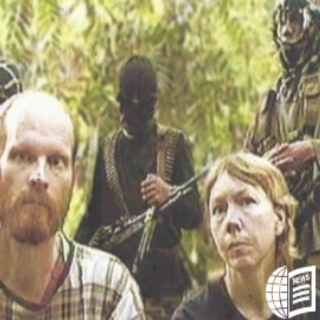 Martin Burnham and Gracia were missionaries who served for 17 years in the Philippines. After their marriage, they underwent hard training in the jungle to prepare themselves to serve in jungle parts. Martin, being a pilot missionary, supported other missionaries who were working among the tribals in jungles. He delivered groceries and medicines to missionaries and tribals and transported sick people to medical facilities. He always had a big heart for tribals and missionaries. Gracia supported him well in the work.
On May 29, 2001, while relaxing at a resort after Martin’s one overseas mission, a Muslim militant group called the Abu Sayyaf Group attacked the resort and abducted the missionary couple and few others for ransom. The missionaries were kept captive for more than a year.
During that one year, the couple went through terrible experiences. They suffered starvation, sleeplessness and sickness, witnessed atrocities of militants and experienced gun battles between militants and the military. Amidst suffering, God was their only hope and strength.
At some point, Gracia was so depressed that although she believed that Christ died for her, she felt God doesn’t love her anymore. Martin said to her “either you believe it all or don’t believe it at all.” They encouraged one another to stand firm in the faith.
Martin Burnham and Gracia ministry in Philippines
Finally, on June 7, 2002, in a rescue operation by the Philippine military, wounded Gracia was rescued. But 42 years old Martin died in the gunfight during the rescue. Later, Gracia went back to America and joined her children.
Gracia did not let her painful experiences depress her and move her away from God. But she used those experiences to encourage others who are going through hardships. She founded the Martin and Gracia Burnham Foundation, which supports missionary aviation and tribal mission work around the world. It also focuses on ministries among Muslims. She forgave who abducted them, visited them in jail and shared Christ’s love. Some of them accepted Christ. Gracia believes that this may be God’s great purpose behind their suffering.
Martin Burnham and Gracia were missionaries who served for 17 years in the Philippines. After their marriage, they underwent hard training in the jungle to prepare themselves to serve in jungle parts. Martin, being a pilot missionary, supported other missionaries who were working among the tribals in jungles. He delivered groceries and medicines to missionaries and tribals and transported sick people to medical facilities. He always had a big heart for tribals and missionaries. Gracia supported him well in the work.
On May 29, 2001, while relaxing at a resort after Martin’s one overseas mission, a Muslim militant group called the Abu Sayyaf Group attacked the resort and abducted the missionary couple and few others for ransom. The missionaries were kept captive for more than a year.
During that one year, the couple went through terrible experiences. They suffered starvation, sleeplessness and sickness, witnessed atrocities of militants and experienced gun battles between militants and the military. Amidst suffering, God was their only hope and strength.
At some point, Gracia was so depressed that although she believed that Christ died for her, she felt God doesn’t love her anymore. Martin said to her “either you believe it all or don’t believe it at all.” They encouraged one another to stand firm in the faith.
Martin Burnham and Gracia ministry in Philippines
Finally, on June 7, 2002, in a rescue operation by the Philippine military, wounded Gracia was rescued. But 42 years old Martin died in the gunfight during the rescue. Later, Gracia went back to America and joined her children.
Gracia did not let her painful experiences depress her and move her away from God. But she used those experiences to encourage others who are going through hardships. She founded the Martin and Gracia Burnham Foundation, which supports missionary aviation and tribal mission work around the world. It also focuses on ministries among Muslims. She forgave who abducted them, visited them in jail and shared Christ’s love. Some of them accepted Christ. Gracia believes that this may be God’s great purpose behind their suffering.
To Heaven and Back with No Fanfare
Suppose you had an absolutely stunning supernatural experience, like being in a car accident and having an out-of-body experience so that you were sure you had died and gone to heaven for a few minutes before returning to your body and being brought back to life. How would you handle that experience? Most of us would be consumed with telling others about it. We might even write a book about it, and go on a speaking circuit. It’s just too amazing to keep to ourselves. And more than likely we would feel empowered to use that very experience to authorize our views of heaven. We might feel as if this extraordinary experience gave us extraordinary influence. Who could contradict us? We had been there! To Heaven and Back Paul did have an experience something like that. But here’s the amazing thing: He mentions it only one time in his thirteen letters, and he never once makes it the warrant for believing anything he says. In fact, the only reason he brings it up is to say that this kind of privilege is precisely not what he will boast in. Rather, he will boast in his weaknesses. Here’s the experience — he even describes it as if it were another person so as not to exalt himself: I must go on boasting. Though there is nothing to be gained by it, I will go on to visions and revelations of the Lord. I know a man in Christ who fourteen years ago was caught up to the third heaven — whether in the body or out of the body I do not know, God knows. And I know that this man was caught up into paradise — whether in the body or out of the body I do not know, God knows — and he heard things that cannot be told, which man may not utter. On behalf of this man I will boast, but on my own behalf I will not boast, except of my weaknesses. (2 Corinthians 12:1–5) We know he is talking about himself, even though he says, “I know a man . . .” because two verses later he says, “To keep me from becoming conceited because of the surpassing greatness of the revelations, a thorn was given me in the flesh” (2 Corinthians 12:7). So he himself is the one who had this extraordinary experience. It is astonishing that Paul introduces this absolutely stunning experience of being “caught up into paradise” only to give it a passing “boast” and then turn all his attention to the real marks of an apostle — namely, suffering for Christ’s sake. Why Minimize the Marvelous? Paul never mentions this experience again. He does not use it to pull rank. He shifts all the focus off of the dramatic and onto the painful reality of suffering with joy. Why? Because it is merely human to boast about extraordinary experiences like visions and out-of-body encounters with God. It requires no great grace or power of God to boast in things that seem to set you apart as privileged. But to boast about weaknesses, and to be content with insults and hardships and persecutions and calamities — that is not what ordinary sinful humans are like. That requires supernatural grace. This is what Paul wants to focus on as the evidence of his apostleship. In fact, he says that the Lord Jesus gave him a thorn in the flesh (we never know what it is) precisely so that he would be hindered from boasting as a superhero of spiritual experience. When Paul pleaded that Jesus would take the thorn away, the Lord answered, “My grace is sufficient for you, for my power is made perfect in weakness” (2 Corinthians 12:9). So Paul concluded, Therefore I will boast all the more gladly of my weaknesses, so that the power of Christ may rest upon me. For the sake of Christ, then, I am content with weaknesses, insults, hardships, persecutions, and calamities. For when I am weak, then I am strong. (2 Corinthians 12:9–10) Instead of circling back again and again to his once-in-a-lifetime out-of-body experience, Paul mentions it once, and then shifts all the focus onto the truths that people can see and think about and test in his writing and his life. Rooted in Public Reality In other words, the truth of Christianity is not rooted in mystical experiences that only a few people have. It is rooted in God-given revelation through writings that are open for all to see and study and test. It is validated in real lives that others can see and examine. So, instead of directing people to his private experience, Paul says, We behaved in the world with simplicity and godly sincerity, not by earthly wisdom but by the grace of God, and supremely so toward you. For we are not writing to you anything other than what you read and understand and I hope you will fully understand. (2 Corinthians 1:12–13) “The truth of Christianity is not rooted in mystical experiences that only a few people have.” If you were to ask Paul, “How can we share your insight into the mystery of Christ?” he would not answer, “I’m sorry. Those mysteries are reserved for the select few who have rare mystical experiences.” What he would say is this: “When you read this, you can perceive my insight into the mystery of Christ” (Ephesians 3:4). His way of opening heaven was not by appealing to unsharable experiences. His way was by appealing to shareable truths written for all to see and understand and experience. Life on Display Behind these writings he put his own life as evidence of reality. Not his life in the rare moments of mystical experience, but his life as a flesh-and-blood man who had to deal with all the hardships of life and ministry. What you have learned and received and heard and seen in me — practice these things, and the God of peace will be with you. (Philippians 4:9) Brothers, join in imitating me, and keep your eyes on those who walk according to the example you have in us. (Philippians 3:17) Be imitators of me, as I am of Christ. (1 Corinthians 11:1) In other words, Paul’s way of leading us into the truth and glory of Christ was not to talk about his privilege of an out-of-body experience of paradise. Instead, his way was to live an open life of total devotion to Jesus, through much suffering, and to write Spirit-given words (1 Corinthians 2:13) that are open to all — readable, public, ready for all to examine. This is a mark of humble, serious, personal reality. It is unusual, contrary to ordinary human proclivities, attractive. It has won my heart. Article by John Piper