

William Carey
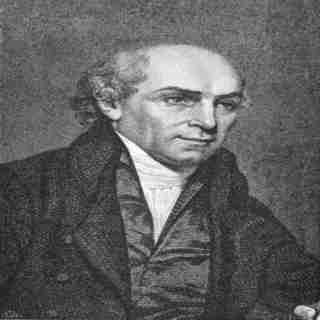 "Expect great things; attempt great things."
At a meeting of Baptist leaders in the late 1700s, a newly ordained minister stood to argue for the value of overseas missions. He was abruptly interrupted by an older minister who said, "Young man, sit down! You are an enthusiast. When God pleases to convert the heathen, he'll do it without consulting you or me."
That such an attitude is inconceivable today is largely due to the subsequent efforts of that young man, William Carey.
Plodder Carey was raised in the obscure, rural village of Paulerpury, in the middle of England. He apprenticed in a local cobbler's shop, where the nominal Anglican was converted. He enthusiastically took up the faith, and though little educated, the young convert borrowed a Greek grammar and proceeded to teach himself New Testament Greek.
When his master died, he took up shoemaking in nearby Hackleton, where he met and married Dorothy Plackett, who soon gave birth to a daughter. But the apprentice cobbler's life was hard—the child died at age 2—and his pay was insufficient. Carey's family sunk into poverty and stayed there even after he took over the business.
"I can plod," he wrote later, "I can persevere to any definite pursuit." All the while, he continued his language studies, adding Hebrew and Latin, and became a preacher with the Particular Baptists. He also continued pursuing his lifelong interest in international affairs, especially the religious life of other cultures.
Carey was impressed with early Moravian missionaries and was increasingly dismayed at his fellow Protestants' lack of missions interest. In response, he penned An Enquiry into the Obligations of Christians to Use Means for the Conversion of the Heathens. He argued that Jesus' Great Commission applied to all Christians of all times, and he castigated fellow believers of his day for ignoring it: "Multitudes sit at ease and give themselves no concern about the far greater part of their fellow sinners, who to this day, are lost in ignorance and idolatry."
Carey didn't stop there: in 1792 he organized a missionary society, and at its inaugural meeting preached a sermon with the call, "Expect great things from God; attempt great things for God!" Within a year, Carey, John Thomas (a former surgeon), and Carey's family (which now included three boys, and another child on the way) were on a ship headed for India.
Stranger in a strange land
Thomas and Carey had grossly underestimated what it would cost to live in India, and Carey's early years there were miserable. When Thomas deserted the enterprise, Carey was forced to move his family repeatedly as he sought employment that could sustain them. Illness racked the family, and loneliness and regret set it: "I am in a strange land," he wrote, "no Christian friend, a large family, and nothing to supply their wants." But he also retained hope: "Well, I have God, and his word is sure."
He learned Bengali with the help of a pundit, and in a few weeks began translating the Bible into Bengali and preaching to small gatherings.
When Carey himself contracted malaria, and then his 5-year-old Peter died of dysentery, it became too much for his wife, Dorothy, whose mental health deteriorated rapidly. She suffered delusions, accusing Carey of adultery and threatening him with a knife. She eventually had to be confined to a room and physically restrained.
"This is indeed the valley of the shadow of death to me," Carey wrote, though characteristically added, "But I rejoice that I am here notwithstanding; and God is here."
Gift of tongues
In October 1799, things finally turned. He was invited to locate in a Danish settlement in Serampore, near Calcutta. He was now under the protection of the Danes, who permitted him to preach legally (in the British-controlled areas of India, all of Carey's missionary work had been illegal).
Carey was joined by William Ward, a printer, and Joshua and Hanna Marshman, teachers. Mission finances increased considerably as Ward began securing government printing contracts, the Marshmans opened schools for children, and Carey began teaching at Fort William College in Calcutta.
In December 1800, after seven years of missionary labor, Carey baptized his first convert, Krishna Pal, and two months later, he published his first Bengali New Testament. With this and subsequent editions, Carey and his colleagues laid the foundation for the study of modern Bengali, which up to this time had been an "unsettled dialect."
Carey continued to expect great things; over the next 28 years, he and his pundits translated the entire Bible into India's major languages: Bengali, Oriya, Marathi, Hindi, Assamese, and Sanskrit and parts of 209 other languages and dialects.
He also sought social reform in India, including the abolition of infanticide, widow burning (sati), and assisted suicide. He and the Marshmans founded Serampore College in 1818, a divinity school for Indians, which today offers theological and liberal arts education for some 2,500 students.
By the time Carey died, he had spent 41 years in India without a furlough. His mission could count only some 700 converts in a nation of millions, but he had laid an impressive foundation of Bible translations, education, and social reform.
His greatest legacy was in the worldwide missionary movement of the nineteenth century that he inspired. Missionaries like Adoniram Judson, Hudson Taylor, and David Livingstone, among thousands of others, were impressed not only by Carey's example, but by his words "Expect great things; attempt great things." The history of nineteenth-century Protestant missions is in many ways an extended commentary on the phrase.
"Expect great things; attempt great things."
At a meeting of Baptist leaders in the late 1700s, a newly ordained minister stood to argue for the value of overseas missions. He was abruptly interrupted by an older minister who said, "Young man, sit down! You are an enthusiast. When God pleases to convert the heathen, he'll do it without consulting you or me."
That such an attitude is inconceivable today is largely due to the subsequent efforts of that young man, William Carey.
Plodder Carey was raised in the obscure, rural village of Paulerpury, in the middle of England. He apprenticed in a local cobbler's shop, where the nominal Anglican was converted. He enthusiastically took up the faith, and though little educated, the young convert borrowed a Greek grammar and proceeded to teach himself New Testament Greek.
When his master died, he took up shoemaking in nearby Hackleton, where he met and married Dorothy Plackett, who soon gave birth to a daughter. But the apprentice cobbler's life was hard—the child died at age 2—and his pay was insufficient. Carey's family sunk into poverty and stayed there even after he took over the business.
"I can plod," he wrote later, "I can persevere to any definite pursuit." All the while, he continued his language studies, adding Hebrew and Latin, and became a preacher with the Particular Baptists. He also continued pursuing his lifelong interest in international affairs, especially the religious life of other cultures.
Carey was impressed with early Moravian missionaries and was increasingly dismayed at his fellow Protestants' lack of missions interest. In response, he penned An Enquiry into the Obligations of Christians to Use Means for the Conversion of the Heathens. He argued that Jesus' Great Commission applied to all Christians of all times, and he castigated fellow believers of his day for ignoring it: "Multitudes sit at ease and give themselves no concern about the far greater part of their fellow sinners, who to this day, are lost in ignorance and idolatry."
Carey didn't stop there: in 1792 he organized a missionary society, and at its inaugural meeting preached a sermon with the call, "Expect great things from God; attempt great things for God!" Within a year, Carey, John Thomas (a former surgeon), and Carey's family (which now included three boys, and another child on the way) were on a ship headed for India.
Stranger in a strange land
Thomas and Carey had grossly underestimated what it would cost to live in India, and Carey's early years there were miserable. When Thomas deserted the enterprise, Carey was forced to move his family repeatedly as he sought employment that could sustain them. Illness racked the family, and loneliness and regret set it: "I am in a strange land," he wrote, "no Christian friend, a large family, and nothing to supply their wants." But he also retained hope: "Well, I have God, and his word is sure."
He learned Bengali with the help of a pundit, and in a few weeks began translating the Bible into Bengali and preaching to small gatherings.
When Carey himself contracted malaria, and then his 5-year-old Peter died of dysentery, it became too much for his wife, Dorothy, whose mental health deteriorated rapidly. She suffered delusions, accusing Carey of adultery and threatening him with a knife. She eventually had to be confined to a room and physically restrained.
"This is indeed the valley of the shadow of death to me," Carey wrote, though characteristically added, "But I rejoice that I am here notwithstanding; and God is here."
Gift of tongues
In October 1799, things finally turned. He was invited to locate in a Danish settlement in Serampore, near Calcutta. He was now under the protection of the Danes, who permitted him to preach legally (in the British-controlled areas of India, all of Carey's missionary work had been illegal).
Carey was joined by William Ward, a printer, and Joshua and Hanna Marshman, teachers. Mission finances increased considerably as Ward began securing government printing contracts, the Marshmans opened schools for children, and Carey began teaching at Fort William College in Calcutta.
In December 1800, after seven years of missionary labor, Carey baptized his first convert, Krishna Pal, and two months later, he published his first Bengali New Testament. With this and subsequent editions, Carey and his colleagues laid the foundation for the study of modern Bengali, which up to this time had been an "unsettled dialect."
Carey continued to expect great things; over the next 28 years, he and his pundits translated the entire Bible into India's major languages: Bengali, Oriya, Marathi, Hindi, Assamese, and Sanskrit and parts of 209 other languages and dialects.
He also sought social reform in India, including the abolition of infanticide, widow burning (sati), and assisted suicide. He and the Marshmans founded Serampore College in 1818, a divinity school for Indians, which today offers theological and liberal arts education for some 2,500 students.
By the time Carey died, he had spent 41 years in India without a furlough. His mission could count only some 700 converts in a nation of millions, but he had laid an impressive foundation of Bible translations, education, and social reform.
His greatest legacy was in the worldwide missionary movement of the nineteenth century that he inspired. Missionaries like Adoniram Judson, Hudson Taylor, and David Livingstone, among thousands of others, were impressed not only by Carey's example, but by his words "Expect great things; attempt great things." The history of nineteenth-century Protestant missions is in many ways an extended commentary on the phrase.
the bride satan loves to insult
My Dear Globdrop, I’ve had the misfortune of receiving the protestation you called a letter. My favorite line was when you asked how we (your superiors) could expect you (a mere afterthought) to damn souls with all those bombs exploding night and day outside your barracks? You assume Glubgore and our Cannon Battalion are engaged in endless target practice. This, your great error, is somewhat understandable. Headquarters may have, I admit, exaggerated our current position in the war. They did not want to unsettle morale, you see, and thus their reports these past centuries make it perhaps unthinkable that the unpleasant tremor at our gates could be, in reality, the Enemy’s troops firing upon us. But so it is. The humans, though mostly harmless, can make a great deal of noise. They press at the door; their cannons knock. Now, you mustn’t lose your nerve, nephew. I remember my initial discomfort when Screwtape allowed me my first gaze over the wall, writing, “we see her spread out through all time and space and rooted in eternity, terrible as an army with banners .” “That,” Screwtape confessed, “is a spectacle which makes our boldest tempters uneasy .” Although you might assume that we stand in a defensive position, two thousand years have passed, nephew, and our flag still flies firmly overhead. And firm overhead it shall always fly. The Enemy shall not advance; noise is all we need fear. Why? Screwtape alluded to one of the main reasons in his very next sentence: “But fortunately it is quite invisible to these humans.” They cannot see themselves as we do. Where might we be if they did? The Church (Invisible) When the humans look about them in the pews, what do they see? Do they see what we see: handfuls of saints dressed in their Enemy’s blinding armor — golden helmets, shields, and swords — a horror which makes even our boldest tempters tense? When they gather, what do they hear? You complain of all the blasts and screams of warfare — but do they? Do they hear that cloud of witnesses behind them, the living saints beside them, their dreadful Commander before them urging them onwards? May it never be! They mean to take up that barren banner, The Church Triumphant , but we must show them other, more accurate, slogans. The Church Insignificant Even their best soldiers can be deceived into looking at his clumsy comrades with unimpressed glances. As he looks about the congregation at our bitterest foes, show him the Arnett family sneaking into church late (once again); let him catch a whiff of silly Mr. Jones who always smells of his cats; amplify the joyful noise of always-out-of-tune Mrs. Johnson upon him; extinguish any belief that he could possibly be in the presence of anything grand. Wonder loud enough for him to overhear: How could this group possibly be a threat to all that is wrong with the world? The Enemy, in his matchless arrogance, helps us on this point by choosing mostly the weak, lowly, despised of the world. He wages his warfare with the ducks and squirrels, leaving us the lions and bears. By fighting with these blunt spoons, of course, he means to make fools of us. The Church Impotent Periodically, place upon your man’s mind doubt as to how these people’s bumbling prayers, their simple faith, their small acts of love, and ordinary obedience — spurred on somehow by something like that man’s preaching — could really make any difference at all in the world. Ask him how could this ragtag assembly of misfit toys really be the grand temple of the Spirit of the living God? Is this really God’s great response to evil? Old widow Ortiz cannot even see the words in her Bible anymore — should she have anything to do with our undoing? Highlight all the real (worldly) movements for change happening outside the narrow confines of the so-called “buttress of truth.” Enflame the itch to bring about real change, and allow him to recognize the impotence of the church to engage in anything of real importance. Make him clamor to combat the earthly darkness with more of the same, never the cosmic powers behind it. The Church Dying Next, you must show the church severely wounded. Show her dying out. Of course, to our shame, she has been “dying” now for centuries, and yet never “dead.” The humans, unversed in history, do not consider how vexing this has been to us. The more we have mauled her in the Roman Coliseum, or burned her to light the streets, or cut off heads on foreign beaches, the larger she grew. When we persecute her most violently, our gates begin to shake most forcefully. She is never fiercer, we almost discovered too late, than when covered in her own blood. We contend with a warrior, nephew, who gains more arms, ears, and eyes with each swipe at her. Even when the age of our persecution is bloodiest, she seems the healthier for it in the end. Who is this that grows stronger when wounded? The humans must never know. The Church Hideous Make it sport — especially among the most spiritual — to insult the church. Call her a whore in as many ways as you can devise. The Enemy, as pointless as it was, claims to have given himself up for her to dress her in the finest clothes and beautify her completely. He claims her as his family , his own body, his bride, and boasts to have “filled her with his Spirit,” “reformed her ways of life,” and “made her precious to him” (all Enemy propaganda, of course). We cannot allow these lies to take hold. Don’t let them think well of her. The church, with all her reported crusades, abuses, divorces, racism, pornography, adultery, and deformity (this among the “professed” church, of course) is to be apologized for profusely. Suggest, and this constantly, that there is not an actual difference from those who belong to the Enemy and those who belong to us. Don’t let them see that sickening splendor, that horrid stateliness, that perverse potency, that actual transformation in them that has stood despite all our missiles throughout the ages. Play the Devil Globdrop, though this army has proven an inconvenience for us, though it may appear we fight with our backs temporarily against the wall, to guarantee our campaign, we must keep their blood from stirring at a sight of themselves as eternity sees them. Veil who they are and the effect of what they accomplish while continuing to unveil the oddities, the annoyances, the awful mundaneness of the day-to-day and the week-to-week. Assure your man that this mission is small, the stakes smaller, and those with him the smallest of all — hardly anything to take too seriously. Nothing of value transpires during their prayers, their sermons, their evangelism, their gatherings — at least, nothing to outweigh the afternoon sports game. Your Concerned Uncle, Grimgod