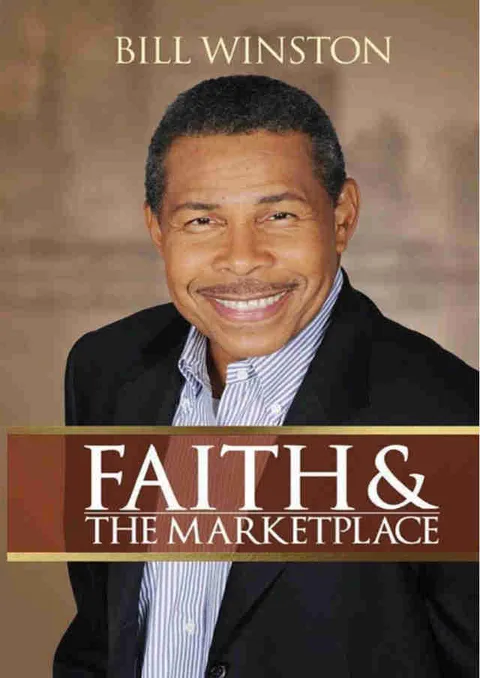

Others like faith and the marketplace Features >>
Awakening The Entrepreneur Within

Counsel On Food And Diet

Words That Change Minds - The 14 Patterns For Mastering The Language Of Influence
Raising Capital

Make Your Bed

The Crossroads Of Should And Must
The 100 Absolutely Unbreakable Laws Of Business Success
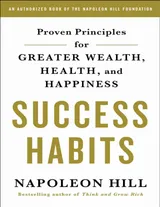
Success Habits

Personal Development All-In-One For Dummies
The Essential Guide To Leadership
About the Book
"Faith and the Marketplace" by Bill Winston explores how faith can be applied in the business world to achieve success and prosperity. The book emphasizes the importance of aligning one's beliefs with one's actions in order to see positive outcomes in the marketplace. Winston discusses how faith can transform businesses and lead to abundance and fulfillment in all aspects of life.
Emerson Andrews
His Early life
Emerson Andrews was born in Mansfield, Bristol County, Massachusetts in 1806 to godly parents, James and Mercy Andrews. They were from English stock and were strict Puritans in faith and lifestyle. Although young Emerson was raised in the Congregational Church he was far from God in his teens and twenties.
Nevertheless, periodically, he experienced intense conviction, usually through his parents’ counsels and prayers but particularly through two unforgettable sermons delivered by the eccentric revivalist, Lorenzo Dow. Soon after this he was converted under the ministry of another revival preacher, Asahel Nettleton.
He was a very educated man formerly studying at Chesterfield Academy and, at the time of his conversion, at Plainfield Kimball Union Academy, in New Hampshire. In the spring of 1832 whilst studying further at Union College in Schenectady, New York, he was baptised by immersion in the Mohawk River. It was his convictions about the Bible’s teaching on water baptism that caused him to join the Baptist’s instead of the Congregationalists or Presbyterians.
A Lover of Revival
He wrote “Many revivals and protracted meetings of one, two, or more days, and some for weeks and months, have been held, in New England and elsewhere, within, my personal remembrance. These have sent out their hallowed influences, as the light of the world and salt of the earth. Just before and at the time of my second birth, many sweeping and glorious revivals, under the celebrated Dr. Netteton, John Leland, Jedediah Burchard, C. G. Finney, were hailed, enjoyed, and sounded all around and over the country.
As soon as I was converted I cherished the good news of revivals; and I sought a place and portion with live Christians, that I might speak for Christ and win souls to salvation. I asked God for direction and help, and was answered.
His first visit to a Revival
He describes his first visit to a Revival “The first meeting that I attended after my regeneration was held in the town of Windsor, Vt. It was called a “four days’ meeting.” But many such were held in different places about that time. This came off in the summer of l830. I was much delighted, fed, and strengthened by such a sight, experience, exercise, and spiritual supper. It was a precious banquet, adapted to develop and enlarge the young convert’s soul.
The four pastors of the town, with their respective churches and congregations, and some from neighboring towns, met with the Baptist church, of which Elder Leland Howard was the long-honored pastor. Some twenty other pastors also came in from adjacent towns, and a few Lawyers and teachers, who took leading parts in the services. Large congregations were constantly in attendance, and all the various exercises and meetings were interesting and profitable.
Some of the sermons and prayers were most powerful, melting, and effective. Sinners often arose, requesting prayers, or sent up short petitions to be read. A lawyer by the name of Shepherd, from New York, was found to be very able, pointed, and specific in prayer, and so effective and precise in noting each different request more perfectly than the ministers, that he was often invited to lead in prayer — especially when there were some ten or twenty different, or some difficult requests presented.
He seemed to be full of the Spirit, and was especially gifted and successful. Ministers learned something valuable from his wisdom and tact. I confess that his pointedness made a powerful and lasting impression on my mind and practice.
The professors and ministers were much blessed, and many sinners were converted in the meetings. The gospel was preached and the Spirit poured out, prayer and sacrifices made. Novelty and wonder attracted many. Here God crowned the effort.”
Mentored by Jacob Knapp
He writes. ” ROCHESTER, N.Y. 1839. Here I assisted in a powerful meeting, under the preaching of the celebrated Elder Jacob Knapp, for three weeks. Marvellous things were done. The wicked raged, the Spirit worked, grace prevailed, and hundreds were converted — a glorious triumph over rum, gambling, and infidelity. Jesus reigned.” This exposure to revival power whetted his appetite for an evangelistic ministry.
His first revival efforts
“WHITE DEER, PENN. 1839. In this rich farming district I had a revival meeting of five weeks, with a feeble Baptist church. We began at the close of the Association; but, with all the eloquent pastoral preaching in it, the brethren were not aroused, nor sinners much convicted.
Here my first sermon was from the text, “O Lord, revive thy work!” And he did so immediately. Some half a dozen persons were convicted and converted, and the church was revived by the power of God on that evening’s effort. The whole region, then, for seven miles around, was awakened, and some forty converts were immersed by Elder Spratt, D.D.
Here, too, we experienced severe opposition and much persecution from outside professors and sinners, but God strengthened our hands for a triumphant work. This was a blessed era with the church, and it is fragrant still.
“CLINTON, PENN. I had a revival meeting in this township. It was very great and powerful. Satan and sinners raged, at times, terribly, but the cross was triumphant. Many were immersed by the beloved pastor, Elder Spratt, D.D.
Hugh Donelly, the postmaster, rum-selling merchant, and an avowed infidel, who had slandered me and ridiculed the meeting, crept in away back, then into the middle seats; then, after a few nights, fell on his knees groaning and crying for mercy. I soon aided him in coming forward.
Then out came his wife and sister. We all prayed, and soon the three rejoiced in hope, and spoke boldly for Jesus. Brother Donelly has made a noble record in Pennsylvania and Indiana for Jesus and his cause…..
PARMA, N.Y. In this western village, in mid-winter, I preached night and day, for three weeks, to overflowing houses and attentive hearers. Christians renewed their “first love and vows,” and many sinners were converted and baptized.
An infidel, hearing a few sermons, was struck under conviction, and fled away thirty miles for comfort; but, feeling worse and worse, returned like the prodigal, feeling wretched and lost. He came forward, prayer was offered, and he soon yielded and believed, giving glory to God. Then he told his experience, and exhorted his old Universalist and infidel friends to repent and be saved from hell.
Emerson Andrews Preaching
His preaching zeal and effectiveness were quickly recognised and he was soon licensed to preach and for a four year period served brief pastorates in New York State – Waterford, West Troy, Lansingburg and Rome (1834-1838)
In 1838 began an itinerant evangelist for thirty-five years, mainly in America, but also in Europe, Africa, Asia and Canada. His estimates were that 40,000 were converted through his ministry.
lord, all i have is yours
Jesus’s encounter with the rich young man has always unsettled me. I’m an American. I’m as middle-class as Americans go, which means I live in a level of affluence and abundance unknown by most of my co-inhabitants of this world today, and by a far, far lower percentage of people in history. In global and historical terms, I am that man. The most disturbing thing about the young man is that he seemed so familiar with his affluence-shaped religious and cultural assumptions that he didn’t realize how out of touch with spiritual reality he was. I doubt that many around him discerned how out of touch he was. From the very brief glimpses of him we catch in the synoptics, and by Jesus’s response to him in Mark’s account, this man doesn’t seem to match the arrogant rich oppressor  we envision when we read James 5:4–6. Those around him might have assumed his prosperity was God’s affirmative blessing. After all, this man was spiritually  earnest — running to Jesus and kneeling before him to ask him if there was more he needed to do to be saved (Mark 10:17). He had all the appearance of piety  — having kept (or believed he did) the commandments Jesus listed since he was young (Mark 10:19–20). And he was sincere  — Mark records that “Jesus, looking at him, loved him” (Mark 10:21). He was all these things, yet he lacked the kind of faith that saves. Spiritually earnest, sincere, apparently pious — perhaps more than most around him. Isn’t that what faith looks like? No, not necessarily. Faith looks like trusting . And when it comes to what we really believe, trusting looks like treasuring . For when it’s all on the line for us, we always trust in what we truly treasure. Show Me What I Trust The most loving thing Jesus could do for this earnest, sincere young man was show him the god he trusted: “You lack one thing: go, sell all that you have and give to the poor, and you will have treasure in heaven; and come, follow me” (Mark 10:21). Then the man saw his real god, and he walked away from Jesus’s incredible invitation “sorrowful.” Why? “He had great possessions”  (Mark 10:22). This led to Jesus’s devastating observation: And Jesus looked around and said to his disciples, “How difficult it will be for those who have wealth to enter the kingdom of God! . . . It is easier for a camel to go through the eye of a needle than for a rich person to enter the kingdom of God.” (Mark 10:23–25) When it was all on the line for the young man, he trusted his wealth , his possessions , more than God. His wealth was his god, and that kept him from entering the kingdom. The thing is, he didn’t see this until he really had to choose. Do you find that disconcerting? The disciples did: “Then who can be saved?” (Mark 10:26). As an affluent American living in the midst of unprecedented historical abundance, I do. I don’t trust my faith self-assessment (1 Corinthians 4:3). I can trust only God’s assessment (1 Corinthians 4:4). And since faith is really proven genuine only when it is tried (1 Peter 1:6–7; James 1:2–4; 2 Corinthians 13:5), we must be willing, like the young man, to say to Jesus, Search me, O God, and know my heart! Try me and know my thoughts! And see if there be any grievous way in me, and lead me in the way everlasting! (Psalm 139:23–24) And if Jesus doesn’t call us to leave our abundance, but to continue living faithfully in it — if we are to really trust God and not our abundance — then we need the faith to abound. Faith to Abound Paul said he had learned to be content in whatever situation he found himself: I know how to be brought low, and I know how to abound. In any and every circumstance, I have learned the secret of facing plenty and hunger, abundance and need. I can do all things through him who strengthens me. (Philippians 4:12–13) If given the choice, most of us likely would prefer to be given the faith to abound rather than the faith to be brought low. I think that’s because we aren’t fully cognizant of the dangerous nature of material prosperity. Paul meant it when he said it requires God’s strength to “face plenty.” “Abundance” (prosperity) and “need” (scarcity) are very different circumstances. They both  require faith in order to handle them in ways that glorify God. But they demand the exercising of different sets of faith muscles. Scarcity requires faith muscles for trusting God in a place of needy desperation. Prosperity requires faith muscles for trusting God in place of bountiful material security. Exercising faith in scarcity is not easy by any means. Most of us fear scarcity more than prosperity because the threat is clearly seen. But ironically, that’s one reason it can be easier to exercise faith in scarcity than in prosperity. Because in scarcity, our need is clear and our options are typically few. We feel desperate for God to provide for us and so we are driven to seek him — to exercise our faith. But exercising faith in prosperity is different. It’s a more complex and deceptive spiritual and psychological environment. It requires that we truly trust — truly treasure  — God when we don’t feel desperate for his provision, when we feel materially secure, when nothing external is demanding that we feel urgency. When we have lots of options that look innocuous and we can spend precious time and money on all sorts of pursuits and enjoyments. This environment is so dangerous that Jesus warns it is harder for people in it to enter God’s kingdom than for a camel to climb through the eye of a needle. Test yourself. When have you sought God most earnestly: in need or abundance? When God Is Our Option Christians have always found it harder to voluntarily give away security than to desperately plead for it. It requires different faith muscles to trust God in divesting ourselves of prosperity for his sake than to trust God to meet our scarcity for his sake. In some ways, it takes greater faith to trust God when you have other options than when he is our only option. That’s why the laborers are so few when the harvest is so plenty (Luke 10:2). Few want to face worldly need in order to experience kingdom plenty. It makes the kind of faith that saints like George Müller and Hudson Taylor exercised so remarkable. Yes, they trusted in God in scarcity. But what made this all the more remarkable was that they could have raised money in other legitimate ways to support their work and avoid many of those needy moments. But they voluntarily  chose (which is different from being circumstantially forced) to place themselves in a position of desperation to demonstrate that God exists and rewards those who seek him (Hebrews 11:6). They, like Paul, learned the secret of facing abundance and need: fully trusting God, their Treasure. Whatever It Takes We Christians who live in abundance need to heed the story of the rich young man. We need him to unnerve us. For the whole history of the church bears witness to the general trend that the wealthier she grows, the more corrupt, indulgent, and apathetic she grows. And the less urgent over lost souls she feels. It’s harder for people in our environment to be real Christians than for camels to pass through a needle’s eye. But Jesus does not leave us without great hope. He announces, “With man [handling material abundance faithfully] is impossible, but not with God. For all things are possible with God” (Mark 10:27). So, let us run to Jesus — who has power to do what is impossible for us — kneel before him, and plead: Whatever it takes, Lord, help me to truly trust you as my greatest treasure. I would rather lose my material security and gain the kingdom than gain the world and lose my soul. All I have is yours — my life, my family, my time, my money, my possessions, my future — and I will steward them as you wish, even if it means losing them (Philippians 3:8). And I invite you to search my heart and put my faith to the test.