

Others like expect a new miracle every day Features >>
-160.webp)

About the Book
"Expect A New Miracle Every Day" by Oral Roberts is a book that encourages readers to expect and believe in the power of miracles in their daily lives. Roberts shares personal stories and insights on how miracles can manifest in various forms, such as healing, financial provision, and spiritual transformation. The book emphasizes the importance of faith, prayer, and gratitude in receiving miracles and experiencing God's abundant blessings.
Steven Curtis Chapman
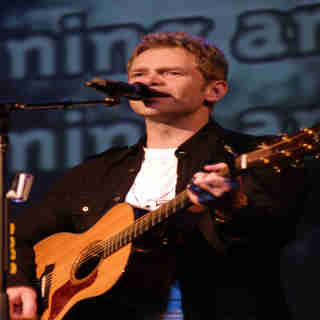 Steven Curtis Chapman is an American Christian musician, singer, song writer, record producer, actor, author and social activist. He is the only artist in the history of music to have won 56 Gospel Music Association Dove Awards and is also a proud receiver of 5 Grammy Awards. His music is known for being a unique cross between country music, soft rock and orchestrated pop, which made him a prominent artist in the contemporary Christian music circuit of the 1980s. Chapman grew up in a humble environment where he found his calling for music, owing to his father’s inclination towards country music. He learnt to play instruments like guitar and piano just by hanging around in his father’s music store, listening to him play along with his friends. He took up music seriously when he moved to Nashville and got recognized by Sparrow Records, a company he stayed with for a long period in his career. He has released 19 studio albums and has sold over 10 million albums until now. Chapman is a family oriented person just like his father and has a big family comprising of his wife Mary Beth and 3 biological and 2 adopted children. He is a vocal advocate for adoption and has worked socially to eradicate the problem of youth violence.
Childhood & Early Life
Steven Curtis Chapman was born on November 21, 1962 in Paducah, Kentucky, to Herb and Judy Chapman. His father was a country singer and songwriter, who turned down opportunities to become a successful singer to concentrate on his family. His mother was a stay-at-home mom.
His father owned a music store, a business he managed from his basement and used to play music with his friends. Such creative environment at home influenced Chapman’s life from very early on and he bought his first guitar at 6.
Chapman joined as a pre-med student at Georgetown College in Kentucky but after few semesters he moved to Anderson College, Indiana. But he ultimately dropped the idea of studying and went to Nashville to pursue his first love, music.
During 1980s, he wrote a song ‘Built to Last’, which gained huge popularity after getting recorded by a gospel group ‘The Imperials’. The success of the song fetched Chapman a songwriting deal with Sparrow Records.
Career
Chapman’s first official album ‘First Hand’ was released in 1987. The album was an instant hit with singles like ‘Weak Days’ and topped at number 2 on the Contemporary Christian Music chart. The album had a mix of country music with soft rock and pop.
In 1988, following the success of his first album, Chapman released ‘Real Life Conversations’. Its hit single ‘His Eyes’ received the ‘Contemporary Recorded Song of the Year’ award from the ‘Gospel Music Association’. He co-wrote it with James Isaac Elliot.
After a few years, he made a swift turn to mainstream music with his album ‘The Great Adventure’ in 1992. It earned him two Grammy awards for the album and for the title song of the album.
After gaining consistent success with albums like ‘Heaven in the Real World (1994), ‘Signs of Life (1996) and ‘Speechless (1999), Chapman’s next great album ‘Declaration’ came out in 2001, for which he toured 70 cities.
In 2003, ‘All About Love’ was released and it ranked at Top 15 on the Christian Music charts. It was released under Sparrow Records and Chapman very humbly credited his wife Mary Beth for being the inspiration for his album.
‘All Things New’ was released in 2004 and the album added another Grammy to Chapman’s proud award collection. This time he received it in the category of Best Pop/Contemporary Gospel Album. It was also nominated for the Dove Award.
In 2005, ‘All I Really Want for Christmas’ was released, which was Chapman’s another successful Christmas album after ‘The Music of Christmas’. It had traditional holiday tunes and favorites like ‘Go Tell It on the Mountain’ and Silver Bells’.
Chapman took his music to greater levels by taking his concert to South Korea for the U.S. troops who were serving there in 2006. It was the first Christian concert that ever performed for the American army in that country.
In 2007, he released ‘This Moment’ which included hit singles like ‘Cinderella’, for which he was chosen for WOW Hits 2009. He also went on his ‘Winter Jam’ tour and took his sons’, Caleb and Will’s band along.
‘Beauty Will Rise’, Chapman’s seventeenth album, was released in 2009. It is said that he wrote the songs of the album after getting inspired by his daughter Maria Sue’s sad and untimely demise. It included songs like ‘Meant to Be’ and ‘Re:creation’.
In 2012, Chapman finally parted ways with Sparrow Records, the record company that he remained loyal to for so many years. He was signed on by Sony’s Provident Label Group and came out with a Christmas album called ‘JOY’.
‘The Glorious Unfolding’ was released in 2013 under Reunion Records and it peaked on number 27 on the Billboard 200 and was number 1 Top Christian Album. The album was produced by Chapman himself and Brent Milligan.
Major Works
Chapman’s ‘The Great Adventure’ in 1992 was a turning point in his musical career because until now he was making soft and contemporary country music but with ‘The Great Adventure’ he targeted the mainstream audience and tasted huge commercial success for the first time.
Awards & Achievements
Chapman is the winner of five Grammy awards for albums like ‘For the Sake of the Call’ ‘The Great Adventure’ ‘The Live Adventure’, ‘Speechless’ and ‘All Things New’. He has also received 56 Gospel Music Association Dove Awards, more than any other artist.
Personal Life & Legacy
Chapman got married to Mary Beth in 1984 after they first met at Anderson University in Indiana. They have three biological children: Emily, Caleb and Will and three adopted children: Shaohannah, Stevey and Maria, together.
In 2008, Chapman’s youngest son Will ran over his car by accident on his adopted daughter Maria Sue Chunxi Chapman. She was running towards him to meet him but he did not see her and she was pronounced dead on arrival at the hospital.
Trivia
Chapman’s wife Mary Beth Chapman has written and released a book about losing her youngest daughter called ‘Choosing to SEE: A Journey of Struggle and Hope’.
Chapman and his wife have written three children's books with adoption themes: ‘Shaoey And Dot: Bug Meets Bundle’ (2004), ‘Shaoey and Dot: The Christmas Miracle’ (2005), and ‘Shaoey and Dot: A Thunder and Lightning Bug Story’ (2006).
He has received an Honorary Doctorate of Music from Anderson University.
Steven Curtis Chapman is an American Christian musician, singer, song writer, record producer, actor, author and social activist. He is the only artist in the history of music to have won 56 Gospel Music Association Dove Awards and is also a proud receiver of 5 Grammy Awards. His music is known for being a unique cross between country music, soft rock and orchestrated pop, which made him a prominent artist in the contemporary Christian music circuit of the 1980s. Chapman grew up in a humble environment where he found his calling for music, owing to his father’s inclination towards country music. He learnt to play instruments like guitar and piano just by hanging around in his father’s music store, listening to him play along with his friends. He took up music seriously when he moved to Nashville and got recognized by Sparrow Records, a company he stayed with for a long period in his career. He has released 19 studio albums and has sold over 10 million albums until now. Chapman is a family oriented person just like his father and has a big family comprising of his wife Mary Beth and 3 biological and 2 adopted children. He is a vocal advocate for adoption and has worked socially to eradicate the problem of youth violence.
Childhood & Early Life
Steven Curtis Chapman was born on November 21, 1962 in Paducah, Kentucky, to Herb and Judy Chapman. His father was a country singer and songwriter, who turned down opportunities to become a successful singer to concentrate on his family. His mother was a stay-at-home mom.
His father owned a music store, a business he managed from his basement and used to play music with his friends. Such creative environment at home influenced Chapman’s life from very early on and he bought his first guitar at 6.
Chapman joined as a pre-med student at Georgetown College in Kentucky but after few semesters he moved to Anderson College, Indiana. But he ultimately dropped the idea of studying and went to Nashville to pursue his first love, music.
During 1980s, he wrote a song ‘Built to Last’, which gained huge popularity after getting recorded by a gospel group ‘The Imperials’. The success of the song fetched Chapman a songwriting deal with Sparrow Records.
Career
Chapman’s first official album ‘First Hand’ was released in 1987. The album was an instant hit with singles like ‘Weak Days’ and topped at number 2 on the Contemporary Christian Music chart. The album had a mix of country music with soft rock and pop.
In 1988, following the success of his first album, Chapman released ‘Real Life Conversations’. Its hit single ‘His Eyes’ received the ‘Contemporary Recorded Song of the Year’ award from the ‘Gospel Music Association’. He co-wrote it with James Isaac Elliot.
After a few years, he made a swift turn to mainstream music with his album ‘The Great Adventure’ in 1992. It earned him two Grammy awards for the album and for the title song of the album.
After gaining consistent success with albums like ‘Heaven in the Real World (1994), ‘Signs of Life (1996) and ‘Speechless (1999), Chapman’s next great album ‘Declaration’ came out in 2001, for which he toured 70 cities.
In 2003, ‘All About Love’ was released and it ranked at Top 15 on the Christian Music charts. It was released under Sparrow Records and Chapman very humbly credited his wife Mary Beth for being the inspiration for his album.
‘All Things New’ was released in 2004 and the album added another Grammy to Chapman’s proud award collection. This time he received it in the category of Best Pop/Contemporary Gospel Album. It was also nominated for the Dove Award.
In 2005, ‘All I Really Want for Christmas’ was released, which was Chapman’s another successful Christmas album after ‘The Music of Christmas’. It had traditional holiday tunes and favorites like ‘Go Tell It on the Mountain’ and Silver Bells’.
Chapman took his music to greater levels by taking his concert to South Korea for the U.S. troops who were serving there in 2006. It was the first Christian concert that ever performed for the American army in that country.
In 2007, he released ‘This Moment’ which included hit singles like ‘Cinderella’, for which he was chosen for WOW Hits 2009. He also went on his ‘Winter Jam’ tour and took his sons’, Caleb and Will’s band along.
‘Beauty Will Rise’, Chapman’s seventeenth album, was released in 2009. It is said that he wrote the songs of the album after getting inspired by his daughter Maria Sue’s sad and untimely demise. It included songs like ‘Meant to Be’ and ‘Re:creation’.
In 2012, Chapman finally parted ways with Sparrow Records, the record company that he remained loyal to for so many years. He was signed on by Sony’s Provident Label Group and came out with a Christmas album called ‘JOY’.
‘The Glorious Unfolding’ was released in 2013 under Reunion Records and it peaked on number 27 on the Billboard 200 and was number 1 Top Christian Album. The album was produced by Chapman himself and Brent Milligan.
Major Works
Chapman’s ‘The Great Adventure’ in 1992 was a turning point in his musical career because until now he was making soft and contemporary country music but with ‘The Great Adventure’ he targeted the mainstream audience and tasted huge commercial success for the first time.
Awards & Achievements
Chapman is the winner of five Grammy awards for albums like ‘For the Sake of the Call’ ‘The Great Adventure’ ‘The Live Adventure’, ‘Speechless’ and ‘All Things New’. He has also received 56 Gospel Music Association Dove Awards, more than any other artist.
Personal Life & Legacy
Chapman got married to Mary Beth in 1984 after they first met at Anderson University in Indiana. They have three biological children: Emily, Caleb and Will and three adopted children: Shaohannah, Stevey and Maria, together.
In 2008, Chapman’s youngest son Will ran over his car by accident on his adopted daughter Maria Sue Chunxi Chapman. She was running towards him to meet him but he did not see her and she was pronounced dead on arrival at the hospital.
Trivia
Chapman’s wife Mary Beth Chapman has written and released a book about losing her youngest daughter called ‘Choosing to SEE: A Journey of Struggle and Hope’.
Chapman and his wife have written three children's books with adoption themes: ‘Shaoey And Dot: Bug Meets Bundle’ (2004), ‘Shaoey and Dot: The Christmas Miracle’ (2005), and ‘Shaoey and Dot: A Thunder and Lightning Bug Story’ (2006).
He has received an Honorary Doctorate of Music from Anderson University.
do not fear to leave this world
Perhaps you will feel the same discomfort I felt overhearing saints of old speak of death. “He who does not prepare for death is more than an ordinary fool. He is a madman,” began Charles Spurgeon. “Agreed,” said the good Doctor Martyn Lloyd-Jones. Men seem to ignore the plain fact that “the moment you come into this world you are beginning to go out of it.” But this fact need not spell doom and gloom for the Christian, Spurgeon responded. “The best moment of a Christian’s life is his last one, because it is the one that is nearest heaven.” “I concur fully,” Richard Sibbes chimed in. “Death is not now the death of me, but death will be the death of my misery, the death of my sins; it will be the death of my corruptions. But death will be my birthday in regard of happiness.” “When Christ calls me home,” Adoniram Judson added, “I shall go with the gladness of a boy bounding away from school.” “May I also interject?” asked Calvin. “We may positively state that nobody has made any progress in the school of Christ, unless he cheerfully looks forward towards the day of his death, and towards the day of the final resurrection.” “This strikes me as true,” said Thomas Brooks. “It is no credit to your heavenly Father for you to be loath to go home.” “And why should we hesitate?” Samuel Bolton questioned. It is the “privilege of saints, that they shall not die until the best time, not until when, if they were but rightly informed, they would desire to die.” “Exactly.” For the child of God, “death is the funeral of all our sorrows,” reasoned Thomas Watson. “Death will set a true saint out of the gunshot and free him from sin and trouble.” “Indeed,” John Bunyan added, “death is but a passage out of a prison into a palace.” As I listened, I overheard the most disquieting questions. “Has this world been so kind to you that you would leave it with regret?” C.S. Lewis posed. “If we really believe that home is elsewhere and that this life is a ‘wandering to find home,’ why should we not look forward to the arrival?” “Hear! Hear!” exclaimed William Gurnall. “Let thy hope of heaven master thy fear of death. Why shouldest thou be afraid to die, who hopest to live by dying?” “I am packed, sealed, and waiting for the post,” cried John Newton. “Who would live always in such a world as this?” Even snippets of their prayers issued a subtle rebuke. I could not help but hear one George Whitefield plead, “Lord, keep me from a sinful and too eager desire after death. I desire not to be impatient. I wish quietly to wait till my blessed change comes.” This proved the final blow. These men anticipated death, viewed an early departure as a “promotion.” I lowered my gaze. I rarely think this way, rarely feel this way. Do I really believe in heaven? Do I really love my Lord? Snuggled in This Life My squeamishness, flipping through an anthology of Christian quotes, helped me realize that my discipleship has slanted too American, too shortsighted, too this-worldly. “Are you packed and ready to go?” Well, I was hoping to set sail several decades from now, so — “Has this world been so kind to you that you would leave it with regret?” Well, I wouldn’t give it a ten-star rating, but it certainly hasn’t been half that bad (yet). So yeah, maybe — “Nobody has made any progress in the school of Christ, unless he cheerfully looks forward towards the day of his death, and towards the day of the final resurrection.” Well, that’s intense. “It is no credit to your heavenly Father for you to be loath to go home.” I see — worthy point. No credit to Jesus either, I imagine. “These men daily lived awake to the truths I daily profess to believe.” These men daily lived awake to the truths I daily profess to believe; they inhabited them, longing to fly away and be with Christ. Although they loved families, enjoyed things of earth, and did good in this world, they nevertheless were unafraid to dive headfirst into those cold waters of death at the first moment their Master allowed. They believed, with Paul, that “to depart and be with Christ . . . is far better” (Philippians 1:23). I discovered then just how snuggled by the fireside I had become in this world. A place I too readily felt to be home . Epitaphs of Exiles My heart can live too much here , too little there . “My life is hidden with Christ,” I must remind myself (Colossians 3:3). As this world seeks to entice my affections to linger in its marketplace, I desire to be more of a heavenly disciple. And if you love Jesus but think too little of the life to come, I know you will agree. Oh, that this might be a true inscription over our graves, and all the more since we live after the coming of Christ, and the down payment of the Spirit: These all died in faith, not having received the things promised, but having seen them and greeted them from afar, and having acknowledged that they were strangers and exiles on the earth. For people who speak thus make it clear that they are seeking a homeland. If they had been thinking of that land from which they had gone out, they would have had opportunity to return. But as it is, they desire a better country, that is, a heavenly one. Therefore God is not ashamed to be called their God, for he has prepared for them a city. (Hebrews 11:13–16) Abraham, by faith, left his home in Mesopotamia, not even knowing where God was leading him (Hebrews 11:8). He lived in the promised land before he could call it home, dwelling there as a foreigner. Isaac and Jacob, heirs with Abraham of God’s promise, lived in tents of temporality; their home was not yet (Hebrews 11:9). “Once God saved them, they refused to unpack their hopes again in this world.” Abraham’s eyes were elsewhere. “He was looking forward to the city that has foundations, whose designer and builder is God” (Hebrews 11:10). And he and his sons bore the heavenly insignia in their speech: they acknowledged, to anyone who cared to know, that they would live and die on this earth as exiles and sojourners (Genesis 23:4; 47:9). Once God saved them, they refused to unpack their hopes again in this world. The land far-off — big as God’s promise, sure as God’s word — held their allegiance. They made it clear that they sought a homeland not built by human hands. As the world tried to tempt them back, the bait remained on the hook. Better to live in a tent in this world with a heavenly city before them than to dwell in the tottering kingdoms of men. They desired a better country, a heavenly one. And God is not ashamed to be called “the God of Abraham, the God of Isaac, the God of Jacob” (Exodus 3:6). He is not ashamed in the least to be the one they so hoped in, for he has prepared for them a city . Still at Sea So, is your mind mainly set on this world or the next? This world is not our home, precious saint. We are not yet in our element. We fling open the window and send our dove about this earth, finding that it returns to us having found no homeland within this watery grave. But this world will be drained soon enough. The swells of judgment shall intensify and then subside. The new heavens and new earth shall arrive, and our Mighty Dove shall descend with a sword in his mouth for his enemies and an olive branch for us. Until then, keep waiting, keep hoping, keep acknowledging, keep living in tents, longing for that moment when we can bound away from this world as the Father calls us home.
-by-vera-bouteneff.webp)