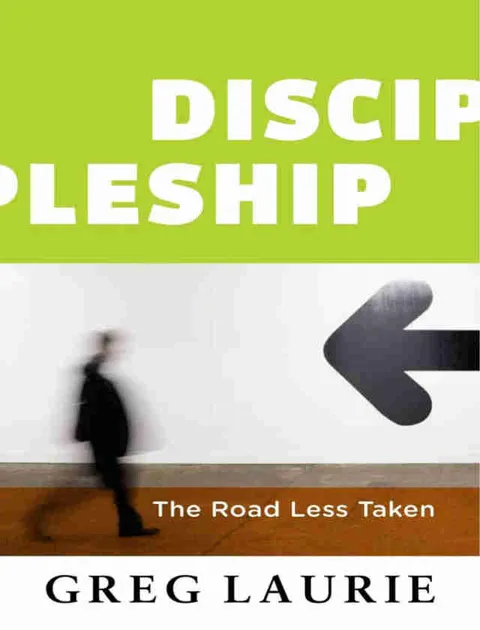

Others like discipleship: the road less taken Features >>

The Disciple Whom Jesus Loved
The Authority Of The Bible And The Rise Of The Modern World

The Fundamentals - A Testimony To The Truth Volume 4
Resolving Scientific Difficulties In Scripture
Strange Fire
-160.webp)
The Pursuit Of Titus
The Kingdom Of The Occult
Supremacy Of Christ In A Post Modern World

After Its Kind
The Preacher And His Preaching
About the Book
"Discipleship: The Road Less Taken" by Greg Laurie explores the challenges and rewards of following Jesus as a true disciple. Laurie draws on biblical teachings and personal experiences to provide practical advice on how to deepen one's faith, grow in spiritual maturity, and live out the calling of a disciple of Christ. The book encourages readers to embrace the road less taken, to seek a closer relationship with God, and to become true followers of Jesus.
Keith Green
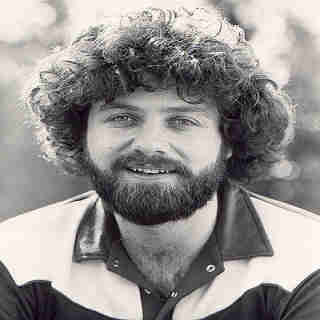 Born on October 21, 1953, in Sheepshead Bay, NY; died on July 28, 1982, in Lindale, TX; married Melody Steiner, 1973; children: Josiah (deceased), Keith, Bethany (deceased), Rebekah. Addresses: Record company--Sparrow Records, P.O. Box 5085, Brentwood, TN 37024. Website--Keith Green Official Website: http://www.lastdaysministries.org.
Known for his uncompromising approach to both his faith and his music, Keith Green has become a legendary figure in Contemporary Christian music since his death in 1982. Taking on the role of a modern-day prophet, he earned a fervent following thanks to his explicit evangelical message and buoyant brand of pop-rock. Green was a critic both of secular society and of commercial tendencies within the Christian community. Since his passing, he has been the subject of several tribute albums and was inducted into the Gospel Music Hall of Fame in 2001.
From early childhood onward, it seemed certain that Green would become a musician. Born in New York, he relocated to the San Fernando Valley area of California with his family not long after. At age eight, he began to perform in stage musicals, appearing in such notable roles as Kurt Von Trapp in a local production of The Sound of Music. In 1965 he published his first song, "The Way I Used to Be," and became the youngest member of the American Society of Composers, Authors, and Publishers. That same year he signed a five-year recording contract with Decca Records and released his first single, "Cheese and Crackers."
Though Green was groomed to be a teenage idol, he never quite achieved success. The late 1960s found him experimenting with drugs and dabbling in various Eastern religions. His life began to turn around after he met (and eventually married) songwriter Melody Steiner in the early 1970s. Under Steiner's guidance, Green began to explore fundamentalist Christianity. Before fully embracing the faith, he began keeping company with singer/songwriters Larry Norman and Randy Stonehill, two of Southern California's best-known Christian rock artists. His skills as a singer and composer began to develop as he edged closer to religious conversion. Finally, in 1975 he became a committed Christian after becoming involved with the Vineyard, a well-known San Fernando Valley church. With a convert's fervor, Green became involved in a series of Christian music projects, including the band Good News and the stage musical Firewind. He also began writing spiritually themed songs, among them "Your Love Broke Through," which went on to become a Christian pop standard recorded by Randy Stonehill, Phil Keaggy, and others.
Dedicating his reawakened creativity to glorifying God, Green founded Last Days Ministries in 1977. He and his followers evangelized to young rock music fans, street people, and others not being reached by conventional churches. At the same time, he made his debut as a Christian recording artist, signing with Sparrow Records and releasing the album For Him Who Has Ears to Hear. This song collection displays the essentials of Green's musical style: exuberant singing, piano-based melodies, and well-crafted pop/rock production. Among the best-known tracks on Green's first album are "You Put This Love in My Heart," "No One Believes Me Anymore," and "Your Love Broke Through." Balancing the warm-hearted testimony of these tunes are some humorous moments, including "No One Believes Me Anymore," a mock lament sung from the Devil's point of view. Overall, For Him Who Has Ears to Hear introduced Green to the Christian music market as a gifted musical evangelist of enormous potential.
As his audience grew, Green made clear that his focus was on spreading Christian teaching rather than providing entertainment. He sought to challenge the assumptions of his fellow believers, criticizing Christians who took their faith for granted. Some compared him with the Old Testament prophet Ezekiel, who decried the loose morals and weak faith of his generation. A number of the songs on Green's 1978 album No Compromise were addressed to the spiritually lazy. Most important among these is "Asleep at the Light," a ringing call for Christian activism sung by Green with palpable emotion. Less intense but still effective is the playful "Dear John (Letter to the Devil)" and the country-tinged "Soften Your Heart." All three of these songs received considerable airplay on Christian music stations.
Green was uneasy in his role as an emerging celebrity. He spoke out against the Christian music industry's increasing tendency to imitate secular show business ways. "Why do we idolize Christian singers and speakers?," he asked in a statement issued through Last Days Ministries. "We go from glorifying musicians in the world, to glorifying Christian musicians. It's all idolatry! ... It's true that there are many men and women of God who are greatly anointed to call down the Spirit of God on His people and the unsaved. But Satan is getting a great victory as we seem to worship these ministers on tapes and records...."
Turning away from the California Christian music scene, Green relocated to Lindale, a small east Texas community, in 1978. In addition to maintaining Last Days Ministries, he decided to launch his own record company, Pretty Good Records. Through this label, he released his next album, So You Wanna Go Back to Egypt, in 1980. This eclectic effort pokes fun at weak-spirited believers in its title track and offers a personal confession of need in "I Want to Be More Like Jesus." The most enduringly popular track proved to be "Oh Lord You're Beautiful," a powerful hymn that became a favorite at Christian worship services. In a bold move, Green announced that So You Wanna Go Back to Egypt would be sold for a variable price, even given away for free to those unable to pay. This decision sent shock waves through the Christian music industry, causing other artists to reconsider their album and concert pricing policies. An estimated 200,000 copies of the album were eventually distributed on a "pay what you can afford" basis.
Unlike some of his Christian music peers, Green showed little desire to dilute his message in hopes of reaching a wider audience. His 1982 album Songs to the Shepherd concentrates on worshipful material, praising the Lord in musical settings ranging from uplifting pop ("You Are the One") to blues-seasoned rock ("O God Our Lord") to old-fashioned country ("Draw Me"). While these songs were little-heard outside the Christian community, they helped fire Green's already-committed audience to a greater level of devotion. Fusing his work as a performer and evangelist, he toured actively during the early 1980s, mixing personal testimonials and heartfelt exhortations in between his musical numbers.
Green's life was cut short just as he began to hit his stride as a musician and minister. On July 28, 1982, he boarded a small Cessna aircraft for a brief sightseeing flight around his property in Lindale. Also on board were his son Josiah and daughter Bethany, along with the pilot and eight other passengers. Overloaded, the plane crashed shortly after takeoff, killing everyone on board. Recovering from her loss, Melody Green decided to carry on with Last Days Ministries and Pretty Good Records. Recordings of her husband's music were released posthumously, beginning with Prodigal Son and Jesus Commands Us to Go in 1983. Though lacking the cohesiveness of the albums released during his lifetime, both these song collections capture Green in strong creative moments. Prodigal Son's dramatic title track is a particular highpoint.
Melody Green continued to guide Last Days Ministries through the coming years and, in 1985, also took on the directorship of Americans against Abortion. Green's musical legacy remained vital as well, with many of his best-known recordings repackaged in compilation albums by Sparrow during the 1980s and 1990s. Multi-artist tribute albums also began to appear, starting with 1992's No Compromise: Remembering the Music of Keith Green. 2001 saw the release of Start Right Here: Remembering the Life of Keith Green, featuring spirited interpretations of his songs by such notable Christian rock acts as MxPx, Joy Electric, and Starflyer 59. Your Love Broke Through: The Worship Songs of Keith Greencontains covers of Green tunes by Michael W. Smith, Twila Paris, Rebecca St. James, and other top-rank Christian pop/rock talents.
On November 27, 2001, Green was inducted into the Gospel Music Hall of Fame. The honor served as an acknowledgment of his continuing influence in Contemporary Christian music some 20 years after his death. Green's intensity and dedication have continued to make him a role model for younger Christian performers, such as Rebecca St. James, who paid tribute to him in a Sparrow Records press biography. "I think what touches me most about him was that he was so committed to loving God and living for Him," she said of Green. "I know he was very strong-willed and people were sometimes offended at what he did and said, but it all came out of a pure motive of trying to be committed to Him in every part of his life. He wasn't going to back down just because of what people thought of him. That, to me, says that he was more focused on pleasing God than on pleasing man, something I think we should all try to focus on."
Keith Green's Career
Began career as child stage actor and composer, early 1960s; signed with Decca, released debut single, "Cheese and Crackers," 1965; began writing Christian songs, mid-1970s; founded Last Days Ministries, released first album, For Him Who Has Ears to Hear, 1977; founded Pretty Good Records, released album So You Wanna Go Back to Egypt, 1980.
Keith Green's Awards
Induction (posthumous), Gospel Music Hall of Fame, 2001.
Famous Works
For Him Who Has Ears To Hear , Sparrow, 1977.
No Compromise , Sparrow, 1978.
So You Wanna Go Back to Egypt , Pretty Good, 1980.
The Keith Green Collection , Sparrow, 1981.
Songs for the Shepherd , Pretty Good, 1982.
The Prodigal Son , Pretty Good, 1983.
Jesus Commands Us to Go , Pretty Good, 1984.
Because of You--Songs of Testimony , Sparrow, 1998.
Here I Am, Send Me--Songs of Evangelism , Sparrow, 1998.
Oh Lord, You're Beautiful--Songs of Worship , Sparrow, 1998.
Make My Life a Prayer to You--Songs of Devotion , Sparrow, 1998.
Born on October 21, 1953, in Sheepshead Bay, NY; died on July 28, 1982, in Lindale, TX; married Melody Steiner, 1973; children: Josiah (deceased), Keith, Bethany (deceased), Rebekah. Addresses: Record company--Sparrow Records, P.O. Box 5085, Brentwood, TN 37024. Website--Keith Green Official Website: http://www.lastdaysministries.org.
Known for his uncompromising approach to both his faith and his music, Keith Green has become a legendary figure in Contemporary Christian music since his death in 1982. Taking on the role of a modern-day prophet, he earned a fervent following thanks to his explicit evangelical message and buoyant brand of pop-rock. Green was a critic both of secular society and of commercial tendencies within the Christian community. Since his passing, he has been the subject of several tribute albums and was inducted into the Gospel Music Hall of Fame in 2001.
From early childhood onward, it seemed certain that Green would become a musician. Born in New York, he relocated to the San Fernando Valley area of California with his family not long after. At age eight, he began to perform in stage musicals, appearing in such notable roles as Kurt Von Trapp in a local production of The Sound of Music. In 1965 he published his first song, "The Way I Used to Be," and became the youngest member of the American Society of Composers, Authors, and Publishers. That same year he signed a five-year recording contract with Decca Records and released his first single, "Cheese and Crackers."
Though Green was groomed to be a teenage idol, he never quite achieved success. The late 1960s found him experimenting with drugs and dabbling in various Eastern religions. His life began to turn around after he met (and eventually married) songwriter Melody Steiner in the early 1970s. Under Steiner's guidance, Green began to explore fundamentalist Christianity. Before fully embracing the faith, he began keeping company with singer/songwriters Larry Norman and Randy Stonehill, two of Southern California's best-known Christian rock artists. His skills as a singer and composer began to develop as he edged closer to religious conversion. Finally, in 1975 he became a committed Christian after becoming involved with the Vineyard, a well-known San Fernando Valley church. With a convert's fervor, Green became involved in a series of Christian music projects, including the band Good News and the stage musical Firewind. He also began writing spiritually themed songs, among them "Your Love Broke Through," which went on to become a Christian pop standard recorded by Randy Stonehill, Phil Keaggy, and others.
Dedicating his reawakened creativity to glorifying God, Green founded Last Days Ministries in 1977. He and his followers evangelized to young rock music fans, street people, and others not being reached by conventional churches. At the same time, he made his debut as a Christian recording artist, signing with Sparrow Records and releasing the album For Him Who Has Ears to Hear. This song collection displays the essentials of Green's musical style: exuberant singing, piano-based melodies, and well-crafted pop/rock production. Among the best-known tracks on Green's first album are "You Put This Love in My Heart," "No One Believes Me Anymore," and "Your Love Broke Through." Balancing the warm-hearted testimony of these tunes are some humorous moments, including "No One Believes Me Anymore," a mock lament sung from the Devil's point of view. Overall, For Him Who Has Ears to Hear introduced Green to the Christian music market as a gifted musical evangelist of enormous potential.
As his audience grew, Green made clear that his focus was on spreading Christian teaching rather than providing entertainment. He sought to challenge the assumptions of his fellow believers, criticizing Christians who took their faith for granted. Some compared him with the Old Testament prophet Ezekiel, who decried the loose morals and weak faith of his generation. A number of the songs on Green's 1978 album No Compromise were addressed to the spiritually lazy. Most important among these is "Asleep at the Light," a ringing call for Christian activism sung by Green with palpable emotion. Less intense but still effective is the playful "Dear John (Letter to the Devil)" and the country-tinged "Soften Your Heart." All three of these songs received considerable airplay on Christian music stations.
Green was uneasy in his role as an emerging celebrity. He spoke out against the Christian music industry's increasing tendency to imitate secular show business ways. "Why do we idolize Christian singers and speakers?," he asked in a statement issued through Last Days Ministries. "We go from glorifying musicians in the world, to glorifying Christian musicians. It's all idolatry! ... It's true that there are many men and women of God who are greatly anointed to call down the Spirit of God on His people and the unsaved. But Satan is getting a great victory as we seem to worship these ministers on tapes and records...."
Turning away from the California Christian music scene, Green relocated to Lindale, a small east Texas community, in 1978. In addition to maintaining Last Days Ministries, he decided to launch his own record company, Pretty Good Records. Through this label, he released his next album, So You Wanna Go Back to Egypt, in 1980. This eclectic effort pokes fun at weak-spirited believers in its title track and offers a personal confession of need in "I Want to Be More Like Jesus." The most enduringly popular track proved to be "Oh Lord You're Beautiful," a powerful hymn that became a favorite at Christian worship services. In a bold move, Green announced that So You Wanna Go Back to Egypt would be sold for a variable price, even given away for free to those unable to pay. This decision sent shock waves through the Christian music industry, causing other artists to reconsider their album and concert pricing policies. An estimated 200,000 copies of the album were eventually distributed on a "pay what you can afford" basis.
Unlike some of his Christian music peers, Green showed little desire to dilute his message in hopes of reaching a wider audience. His 1982 album Songs to the Shepherd concentrates on worshipful material, praising the Lord in musical settings ranging from uplifting pop ("You Are the One") to blues-seasoned rock ("O God Our Lord") to old-fashioned country ("Draw Me"). While these songs were little-heard outside the Christian community, they helped fire Green's already-committed audience to a greater level of devotion. Fusing his work as a performer and evangelist, he toured actively during the early 1980s, mixing personal testimonials and heartfelt exhortations in between his musical numbers.
Green's life was cut short just as he began to hit his stride as a musician and minister. On July 28, 1982, he boarded a small Cessna aircraft for a brief sightseeing flight around his property in Lindale. Also on board were his son Josiah and daughter Bethany, along with the pilot and eight other passengers. Overloaded, the plane crashed shortly after takeoff, killing everyone on board. Recovering from her loss, Melody Green decided to carry on with Last Days Ministries and Pretty Good Records. Recordings of her husband's music were released posthumously, beginning with Prodigal Son and Jesus Commands Us to Go in 1983. Though lacking the cohesiveness of the albums released during his lifetime, both these song collections capture Green in strong creative moments. Prodigal Son's dramatic title track is a particular highpoint.
Melody Green continued to guide Last Days Ministries through the coming years and, in 1985, also took on the directorship of Americans against Abortion. Green's musical legacy remained vital as well, with many of his best-known recordings repackaged in compilation albums by Sparrow during the 1980s and 1990s. Multi-artist tribute albums also began to appear, starting with 1992's No Compromise: Remembering the Music of Keith Green. 2001 saw the release of Start Right Here: Remembering the Life of Keith Green, featuring spirited interpretations of his songs by such notable Christian rock acts as MxPx, Joy Electric, and Starflyer 59. Your Love Broke Through: The Worship Songs of Keith Greencontains covers of Green tunes by Michael W. Smith, Twila Paris, Rebecca St. James, and other top-rank Christian pop/rock talents.
On November 27, 2001, Green was inducted into the Gospel Music Hall of Fame. The honor served as an acknowledgment of his continuing influence in Contemporary Christian music some 20 years after his death. Green's intensity and dedication have continued to make him a role model for younger Christian performers, such as Rebecca St. James, who paid tribute to him in a Sparrow Records press biography. "I think what touches me most about him was that he was so committed to loving God and living for Him," she said of Green. "I know he was very strong-willed and people were sometimes offended at what he did and said, but it all came out of a pure motive of trying to be committed to Him in every part of his life. He wasn't going to back down just because of what people thought of him. That, to me, says that he was more focused on pleasing God than on pleasing man, something I think we should all try to focus on."
Keith Green's Career
Began career as child stage actor and composer, early 1960s; signed with Decca, released debut single, "Cheese and Crackers," 1965; began writing Christian songs, mid-1970s; founded Last Days Ministries, released first album, For Him Who Has Ears to Hear, 1977; founded Pretty Good Records, released album So You Wanna Go Back to Egypt, 1980.
Keith Green's Awards
Induction (posthumous), Gospel Music Hall of Fame, 2001.
Famous Works
For Him Who Has Ears To Hear , Sparrow, 1977.
No Compromise , Sparrow, 1978.
So You Wanna Go Back to Egypt , Pretty Good, 1980.
The Keith Green Collection , Sparrow, 1981.
Songs for the Shepherd , Pretty Good, 1982.
The Prodigal Son , Pretty Good, 1983.
Jesus Commands Us to Go , Pretty Good, 1984.
Because of You--Songs of Testimony , Sparrow, 1998.
Here I Am, Send Me--Songs of Evangelism , Sparrow, 1998.
Oh Lord, You're Beautiful--Songs of Worship , Sparrow, 1998.
Make My Life a Prayer to You--Songs of Devotion , Sparrow, 1998.
single is never second best: enjoying god’s gift at midlife
Marriage is good — it was God’s idea, after all! So, why doesn’t he bring me a spouse? That question, so perplexing in our twenties and thirties, can become downright painful as the decades march us into middle age and our marital prospects diminish. After all, we know the statistics — there’s a better chance of [insert extraordinary random occurrence] than of getting married after [insert any age over 39]. “A solitary life is not his plan for us whether we get married or not.” Does that mean we over-40 singles are doomed to lives of miserable loneliness? Most definitely not. First of all, we can forget about the statistics because, ultimately, only God determines who marries and who doesn’t. If marriage is God’s plan for us, sooner or later we’re going to get married. Even more importantly, we can be sure that a solitary life is not his plan for us whether we get married or not. God has designed us to live in community, in a family of believers, and his work in our lives aims to get us there: “God settles the solitary in a home” (Psalm 68:6). The real question, therefore, isn’t whether we will wind up alone; it’s whether we’re willing for God’s provision of companionship to be something other than marriage. Do We Trust Him? Trusting God’s provision doesn’t mean, of course, that we won’t ever feel lonely. Just as there is a loneliness unique to marriage — in fact, the loneliest people I know aren’t the single ones, but those in a difficult marriage — there are aspects of loneliness unique to singleness: It’s what a young, single woman feels among friends whose conversations revolve around wedding plans. It’s what a 30-something single feels when his maturity is measured by his marital status. It’s what 40-year-olds feel when others make an erroneous link between their singleness and their sexual orientation. Singles’ loneliness is also fueled by the marital happiness we perceive (or imagine) others are enjoying. Trusting God in the midst of all this pain isn’t about looking harder for a mate or even praying for greater patience. It’s about leaning more deeply into Christ and finding in the process all the blessings of union with him — a deeper, more joy-filled union than that of any human marriage. That’s why relief from the pain of unwanted singleness begins as we ask, Do I trust God ? We won’t trust him if we don’t believe he is good in the way he governs the details of our individual lives — including our marital status. If we are single today, that is God’s goodness to us today. Singleness Showcases What Marriage Can’t As we rest in Christ and trust in the goodness of God, the loneliness of being single is transformed into an opportunity to build up the whole body of Christ. In other words, we can serve and glorify God not despite our singleness, but by virtue of it. “The loneliest people I know aren’t the single ones, but those in a difficult marriage.” As we trust God’s good plans for us, we demonstrate, both to ourselves and to the people around us, that singles aren’t to be pitied. And as we abide in Christ, we stop viewing singleness as a problem to be solved. Since there will be no marriage in heaven except the marriage between Christ and the church (Matthew 22:30; Revelation 19:7), singles are uniquely equipped to show others a preview of what heaven will be like. This is why singleness is actually a sign of hope rather than despair. We can showcase this hope to our married brothers and sisters by how we handle our singleness, and we can also display the compassion of Christ to other people who feel lonely. Part of a Greater Family As we watch our friends raise families, there is no need to feel robbed or shut out, because in the new-covenant era — our era — the family emphasis in Scripture is not mom, dad, and three kids. It’s the church family. When the biblical priority gets reversed, it hinders rather than helps the growth of God’s people. Of course, we must seek to uphold the importance of the nuclear family, but we don’t want to make an idol of it. If we consider what the apostles emphasized, we see that their focus was much more on the Great Commission, personal holiness, and growing the church family. And it is this family from which no single Christian is to be left out. Privileged Calling As singles abide in Christ, we discover, often much to our surprise, that there are unique blessings that come with being single. At a purely practical level, we have more control over our time than our married friends. (I say “more control over” to correct the mistaken view that singles always have more time in general.) And the unmarried can more readily live out their personal preferences in planning social activities, vacations, and areas of service in the church and community. Singles encourage one another and glorify God as they identify their unique blessings, willingly embrace them, and put them to good use. The best privilege of being single is far and away the enhanced opportunity for discipleship and serving Jesus. This, more than anything else — including marriage — is how God remedies loneliness. And there is a satisfaction that comes from living out these unique advantages that our married brothers and sisters can’t fully know. If we are willing — if we trust God — we will surely experience the value and rewards of singleness. “The best privilege of being single is far and away the enhanced opportunity for discipleship and serving Jesus.” As we do, we come to value our lives — not despite our singleness, but actually because of it. Women who have rarely or never been pursued by men, or men whose pursuit of women has been rejected (once or many times), often question their worth. It is to such that Christ comes, not to shore up their self-esteem, but to drive them to find him as their worth. As we value Christ, our own value becomes clearer, and as that happens, we discover that somewhere along the way, we’ve stopped defining our personhood and our well-being by our marital status. Singleness isn’t second best. To the contrary, it’s a privileged calling with unique blessings to enjoy and to pour out for others. Are we willing to embrace it unless or until God calls us to marriage? That’s the real question. And those who say yes will never be disappointed.
-480.webp)