






About the Book
"Destroying Fear" by John Ramirez is a powerful guide that offers practical advice and biblical wisdom for overcoming fear and spiritual warfare. Ramirez shares his personal journey from a former satanic high priest to becoming a Christian and provides insights on how to break free from fear, anxiety, and the grip of the enemy. This book offers readers hope and encouragement to live a life of victory and faith in God.
Nik Ripken
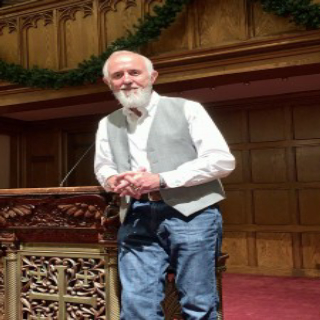 Nik and Ruth, with 3 children, served for over 32 years obeying Christ’s command to share Jesus across the globe. After 7 years in Malawi & South Africa, they moved to Nairobi, Kenya to begin work among the Somali people (1991-1997). Since that time (1998-2013) they have journeyed globally among people whom, when they gave their lives to Jesus, faced increasing persecution for their faith.
The Ripkens and their teams served throughout the Horn of Africa within famine and war zones; resettling refugees, providing famine relief, and operating mobile medical clinics. Formerly Muslims, many Somali believers, suffered for their faith. Most were martyred. Near the end of the Ripken’s tenure among the Somalis, their 16-year-old son died of an asthma attack on Easter Sunday morning. He’s buried at the school from which the other Ripken children graduated.
One year later, the Holy Spirit led the Ripkens to begin a global pilgrimage to learn from believers in persecution how to recapture a biblical missiology of witness and house-church planting in the midst of persecution and martyrdom. Most of all, believers in persecution modeled for the Ripkens how to trust Jesus completely. Many of these lessons have been lost or forgotten by the church in the West.
Currently the Ripkens have interviewed over 600 believers in persecution, exceeding 72 countries. Sitting at their feet, the Ripkens learned from the suffering church how to thrive amidst suffering, not merely survive. The Ripkens, using everything they’ve learned from believers in persecution are creating resources as gifts from the church to the church. To date they have created articles, books, a music CD, a documentary, workshops, and other tools that allow the church in persecution to teach the church in the West about its biblical heritage of both crucifixion and resurrection. A teaching DVD is included in future plans. All these tools are designed to challenge believers to boldly follow Jesus, sharing their faith with others-no matter the cost.
Nik and Ruth, with 3 children, served for over 32 years obeying Christ’s command to share Jesus across the globe. After 7 years in Malawi & South Africa, they moved to Nairobi, Kenya to begin work among the Somali people (1991-1997). Since that time (1998-2013) they have journeyed globally among people whom, when they gave their lives to Jesus, faced increasing persecution for their faith.
The Ripkens and their teams served throughout the Horn of Africa within famine and war zones; resettling refugees, providing famine relief, and operating mobile medical clinics. Formerly Muslims, many Somali believers, suffered for their faith. Most were martyred. Near the end of the Ripken’s tenure among the Somalis, their 16-year-old son died of an asthma attack on Easter Sunday morning. He’s buried at the school from which the other Ripken children graduated.
One year later, the Holy Spirit led the Ripkens to begin a global pilgrimage to learn from believers in persecution how to recapture a biblical missiology of witness and house-church planting in the midst of persecution and martyrdom. Most of all, believers in persecution modeled for the Ripkens how to trust Jesus completely. Many of these lessons have been lost or forgotten by the church in the West.
Currently the Ripkens have interviewed over 600 believers in persecution, exceeding 72 countries. Sitting at their feet, the Ripkens learned from the suffering church how to thrive amidst suffering, not merely survive. The Ripkens, using everything they’ve learned from believers in persecution are creating resources as gifts from the church to the church. To date they have created articles, books, a music CD, a documentary, workshops, and other tools that allow the church in persecution to teach the church in the West about its biblical heritage of both crucifixion and resurrection. A teaching DVD is included in future plans. All these tools are designed to challenge believers to boldly follow Jesus, sharing their faith with others-no matter the cost.
Be Content with What You Have
Contentment is not simply about settling for what we have, but trusting in what God has said. Both anxiety and greed rise in our hearts as God’s words fall. When the author of Hebrews wanted to teach his readers about contentment, he told them an old story with a familiar refrain. He quieted their fears and quenched their greed by reminding them what God had said . “Keep your life free from love of money, and be content with what you have, for he has said , ‘I will never leave you nor forsake you’” (Hebrews 13:5). Which prompted Charles Spurgeon to ask, Will not the distresses of life and the pangs of death, will not the internal corruptions and the external snares, will not the trials from above and the temptations from beneath all seem but light afflictions when we can hide ourselves beneath the bulwark of “he has said”? The seed of unnecessary fear in the heart of a Christian is forgetfulness — an inability to remember and trust what the God of the universe has said and done. No one has ever had any grounds to accuse God of not following through on his word. Not even one phrase in any sentence in any statement he has ever made has failed (Joshua 21:45). We will only be truly content with what we have when we know that we have him. And we will remember that we have him when we hear and believe his voice. God Has Said When God said, “I will never leave you nor forsake you,” he was speaking to Joshua before little Israel went up to take the whole land of Canaan by force. A nation of nomads was about to invade a land filled with enemies bigger and stronger than themselves. Not one army, but many (Joshua 3:10) — and not our turf, but theirs. Israel’s only confidence was that God had told them to go. He had said . What did he say? The foreign land you are about to enter is already yours (Joshua 1:3). No enemy, no matter how many or how strong, will be able to defeat you (Joshua 1:5). And most promising of all: “I will not leave you or forsake you.” ‘I Will Never Leave You’ “Both anxiety and greed rise in our hearts as God’s words fall.” This great promise will fall flat if we think mainly in terms of geography and not fidelity. Of course God will never leave us because he’s everywhere all the time. “If I ascend to heaven, you are there! If I make my bed in Sheol, you are there!” (Psalms 139:8). But we see God’s fidelity in the very next verse, “If I take the wings of the morning and dwell in the uttermost parts of the sea, even there your hand shall lead me, and your right hand shall hold me” (Psalms 139:9–10). If you are his, he will not leave you; he will lead and protect you. When Joshua stared out into impossible circumstances and enormous opposition, God said, “I will not leave you or forsake you. . . . Be strong and courageous. Do not be frightened, and do not be dismayed, for the Lord your God is with you wherever you go.” (Joshua 1:5, 9) When the author of Hebrews saw what followers of Jesus would face, and how they would be tempted to wander, he went back to those same words (the only time this promise is quoted in the New Testament), “He has said, ‘I will never leave you nor forsake you’” (Hebrews 13:5). You will never be alone. No matter how desperate and alone you feel, no matter how much opposition you face, no matter how precarious your circumstances become, he has said, I will be with you. His presence can calm any fear — if we don’t forget that he’s there, he’s near, and he’s attentive. What You Don’t Have The author of Hebrews, however, wasn’t warning about Canaanites, Hittites, Hivites, Perizzites, Girgashites, Amorites, and Jebusites. His readers, who were Jewish converts, were facing intense persecution, but from within their own nation — from their own communities, even their own families. And as the scorching friendly fire fell, an even more threatening enemy emerged within their hearts: their own cravings and desires. He says, “Keep your life free from love of money, and be content with what you have, for he has said, ‘I will never leave you nor forsake you’” (Hebrews 13:5). When Western Christians today read, “Be content with what you have,” we might assume the Christian has enough. We may hear, “Don’t long for more than you need.” But many of these young converts were being thrown out of their families, cut off from all provision and protection. To follow Jesus was to embrace abandonment and accept poverty. So, many of them were being called to be content with what they did not have. “The seed of unnecessary fear in the heart of a Christian is forgetfulness.” Discontentment suddenly doesn’t seem so unreasonable. Some of them went without food — for Christ. Some of them had only the clothes on their back — for Christ. Some of them lost their homes — for Christ. Some of them “joyfully accepted the plundering of [their] property, since [they] knew that [they themselves] had a better possession and an abiding one” (Hebrews 10:34). If they could be content with what they had, and didn’t have, how can we not learn to be content with what we have? Grace Enough Be content with what you have. Are there six more terrifying words in a culture like ours? They certainly land on me like six sharp cannon blasts. Don’t let your heart endlessly pine for what you might have one day, but cultivate satisfaction in what God has given you for today. The word for content is the same word in 2 Corinthians 12:9, when Jesus says to the apostle Paul, “My grace is sufficient for you, for my power is made perfect in weakness.” Paul responds, “Therefore I will boast all the more gladly of my weaknesses, so that the power of Christ may rest upon me. For the sake of Christ, then, I am content with weaknesses, insults, hardships, persecutions, and calamities. For when I am weak, then I am strong” (2 Corinthians 12:9–10). Paul’s message is not like so many contentment gospels: If the Lord gives you less, make lemonade. Rather, he says, If Christ gives you less, boast in your less, because you get to see more of him in your less. His grace is sufficient to cover any deficiency in us. If God is that big, and grace that sweet, then we are able to say what the vast majority cannot say: “If we have food and clothing, with these we will be content” (1 Timothy 6:8). We will not be simply appeased, but pleased, because our deepest joy does not rise and fall with what we have (Philippians 4:11). How Silver Kills a Man If we want to be content with what we have, however, we have to be free from the love of money. As Paul warns, “The love of money is a root of all kinds of evils. It is through this craving that some have wandered away from the faith and pierced themselves with many pangs” (1 Timothy 6:10). And through this craving, many have forfeited contentment and forgotten what God has said. Intimacy with God loses its value as we fall deeper in love with our currency (and all it buys for us). “We will only be truly content with what we have when we know that we have him.” If we keep flirting with money, we will make ourselves sons of Judas, who traded God himself for thirty pitiful pieces of silver (Matthew 26:15). But even before he died, Judas knew he had been had (Matthew 27:3). He had grossly overestimated money and misjudged the love that no amount of silver could buy: “I will never leave you nor forsake you.” Could he not see how murderously unhappy the Pharisees were (Luke 16:14)? Still he couldn’t shake his cravings for more, even if they cost him everything. If we could feel the horrible realization he felt after trading Jesus away for money, would we not race to give away every possession necessary to have God? Would we not gladly have however little in this life to gain him in the next and forever? Content and Courageous What does contentment sound like? True contentment does not sound cheap, shy, or docile because it often requires profound strength and lionhearted courage. Hebrews continues, “He has said, ‘I will never leave you nor forsake you.’ So we can confidently say , ‘The Lord is my helper; I will not fear; what can man do to me?’” (Hebrews 13:5–6). As he looks out on this small army of Jesus-followers, facing want and need and worse, he turns from Joshua 1 to Psalm 118, which goes on to say, It is better to take refuge in the Lord than to trust in man. It is better to take refuge in the Lord than to trust in princes. (Psalm 118:8–9) Courage ties Psalm 118 to the promise from Joshua 1 because God says to Joshua three times, “Be strong and courageous” (Joshua 1:6–7, 9). And before Joshua heard those four words, Moses had said to him, “Be strong and courageous. Do not fear or be in dread of them, for it is the Lord your God who goes with you. He will not leave you or forsake you” (Deuteronomy 31:6). When you are tempted to worry about how much you have, set your mind on what he has said . If the true God is your God, he goes with you. He knows what you need (Matthew 6:32). And knowing all you need, and all you will face, he will never leave you nor forsake you. Therefore, we can be courageous wherever his hand leads us, flee the shiny promises of silver, and rejoice in what we have. Most of all, we can rejoice that we have him.