
Others like dads and daughters Features >>
Love Must Be Tough: New Hope For Marriages In Crisis
Bringing Up Boys
Bringing Up Girls
A Husband After God's Own Heart
52 Things Daughters Need From Their Dad
Husbands And Fathers (Rediscover The Creators's Purpose For Men)

Love Like You've Never Been Hurt
The Meaning Of Marriage: A Couple’s Devotional

10 Things Every Minister's Wife Needs To Know
Why Men Dont Listen And Women Can't Read Maps
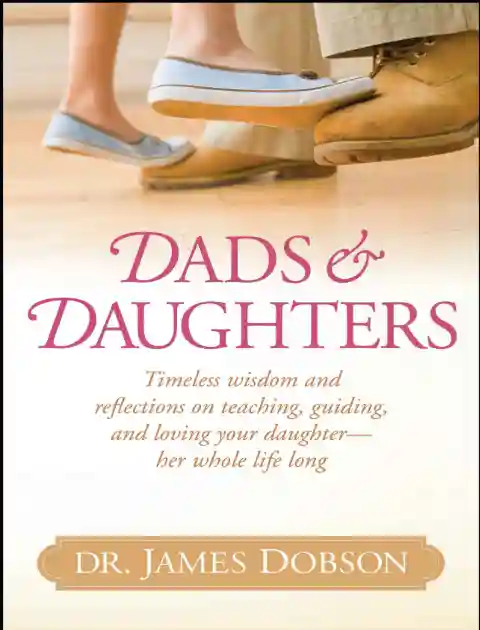
About the Book
"Dads And Daughters" by James Dobson explores the unique and important relationship between fathers and their daughters. Dobson emphasizes the impact that fathers have on their daughters' emotional well-being, self-esteem, and future relationships. Through personal anecdotes and research, Dobson provides practical advice for fathers to strengthen their bond with their daughters and raise confident, resilient young women.
Jonathan Edwards
Jonathan Edwards (1703-1758), colonial New England minister and missionary, was one of the greatest preachers and theologians in American history.
At the close of the 17th century, the science of Isaac Newton and the philosophy of John Locke had significantly changed man's view of his relationship to God. Man's natural ability to discover the laws of creation seemed to demonstrate that supernatural revelation was not a necessary prelude to understanding creation and the creator. God was no longer mysterious; He had endowed men with the power to comprehend His nature and with a will free to choose between good and evil.
It was Jonathan Edwards's genius that he could make full use of Locke's philosophy and Newton's discoveries to reinterpret man's relationship to God in such a way that the experience of supernatural grace became available to people living in an intellectual and cultural climate very different from that of 17th-century England. In so doing, Edwards helped transmit to later generations the richest aspect of American Puritanism: the individual heart's experience of spiritual and emotional rebirth. Further, by his leadership in the religious revivals of the early 18th century, Edwards helped make the experience an integral part of American life for his own time and for the following century.
Jonathan Edwards was born on Oct. 5, 1703, in East Windsor, Conn., where his father was a minister. Jonathan's grandfather was pastor to the church in Northampton, Mass. Jonathan was the only boy in the family; he had 10 sisters. He graduated from Yale College in 1720, staying on there as a theology student until 1722, when, though not yet 19 years old, he was called as minister to a church in New York. Edwards served there for 8 months. In 1723, though called to a church in Connecticut, he decided to try teaching. He taught at Yale from 1724 to 1726.
Early Writings
At an early age Edwards showed a talent for science. At Yale he studied Newton's new science and read Locke with more interest "than the most greedy miser" gathering up "handfuls of silver and gold, from some newly discovered treasure." During these years he also began recording his meditations on the Bible and his observations of the natural world. Edward's central purpose was not to become a scientist but to lead a life of intense holiness.
Edwards's "Personal Narrative" (written ca. 1740) and his letters and diaries show a young man whose religious experience was of great power and beauty. As Edwards tells it, after several "seasons of awakenings," at the age of 17 he had a profound religious experience in which "there came into my mind so sweet a sense of the glorious majesty and grace of God, that I know not how to express. I seemed to see them both in a sweet conjunction; majesty and meekness joined together; it was a sweet, and gentle, and holy majesty; and also a majestic meekness; an awful sweetness; a high, and great, and holy gentleness." Adapting Locke's philosophy to his own purposes, Edwards interpreted the "sweet" sense of God's majesty and grace as a sixth and new sense, created supernaturally by the Holy Spirit. As he wrote later in A Treatise of Religious Affections (1746), the new sense is not "a new faculty of understanding, but it is a new foundation laid in the nature of the soul, for a new kind of exercises of the same faculty of understanding."
Edwards's perception of ultimate reality as supernatural is further evidenced in his statement that "the world is … an ideal one." He wrote in his youthful "Notes on the Mind": "The secret lies here: That, which truly is the Substance of all Bodies, is the infinitely exact, and precise, and perfectly stable Idea, in God's mind, together with his stable Will, that the same shall gradually be communicated to us, and to other minds, according to certain fixed and exact Methods and Laws."
In 1726 Edwards was called from Yale to the Northampton church to assist his grandfather; when his grandfather died in 1729, Edwards became pastor of the church. In 1727 he married the beautiful and remarkable Sarah Pier-repont of New Haven.
Early Revivals
Religious revivals had been spreading through New England for 100 years. In his youth Edwards had seen "awakenings" of his father's congregation, and his grandfather's revivals had made his Northampton church second only to Boston. In early New England Congregationalism, church membership had been open only to those who could give public profession of their experience of grace. The Halfway Covenant of 1662 modified this policy, but when Edwards's grandfather allowed all to partake of the Sacraments (including those who could not give profession of conversion), he greatly increased the number of communicants at the Lord's Supper.
Edwards's first revival took place in 1734-1735. Beginning as prayer meetings among the young in Northampton, the revivals soon spread to other towns, and Edwards's reputation as a preacher of extraordinary power grew. Standing before his congregation in his ministerial robe, he was an imposing figure, 6 feet tall, with a high forehead and intense eyes. A contemporary wrote that Edwards had "the power of presenting an important Truth before an audience, with overwhelming weight of argument, and with such intenseness of feeling, that the whole soul of the speaker is thrown into every part of the conception and delivery… Mr. Edwards was the most eloquent man I ever heard speak."
Edwards endeavored to convey as directly as possible the meaning of Christ's Crucifixion and Resurrection. His words, he hoped, would lead his listeners to a conviction of their sinful state and then through the infusion of divine grace to a profound experience of joy, freedom, and beauty. Edwards's A Faithful Narrative of the Surprising Work of God in the Conversion of Many Hundred Souls in Northampton, and the Neighboring Towns and Villages (1737) relates the history of the 1734-1735 revival and includes careful analyses of the conversions of a 4-year old child and an adolescent girl.
Edwards's preaching and writings about the nature and process of the religious experience created powerful enemies. In western Massachusetts the opposition to Edwards was led by his relatives Israel and Solomon Williams, who maintained that a man's assurance of salvation does not lie in a direct and overpowering experience of the infusion of grace and that he may judge himself saved when he obeys the biblical injunctions to lead a virtuous life. Edwards too believed that a Christian expresses the new life within him in virtuous behavior, but he denied that a man is in a state of salvation simply because he behaves virtuously. For him, good works without the experience of grace brought neither freedom nor joy.
In 1739 Edwards preached sermons on the history of redemption. He clearly thought the biblical promises of Christ's kingdom on earth would be fulfilled soon. His interest in the history of redemption is further evidenced in the many notes he made on the prophecies he found in the Bible and in natural events.
Great Awakening
In 1740 the arrival in America of George Whitefield, the famous English revivalist, touched off the Great Awakening. Revivals now swept through the Colonies, and thousands of people experienced the infusion of grace. The emotional intensity of the revivals soon brought attacks from ministers who believed that Whitefield, Edwards, and other "evangelical" preachers were stirring up religious fanaticism. The most famous attack was made by Charles Chauncy in Seasonable Thoughts on the State of Religion in New England (1743).
Edwards defended the Great Awakening in several books. He acknowledged that there had been emotional excesses, but on the whole he believed the revivals were remarkable outpourings of the Holy Spirit. His works of defense include The Distinguishing Marks of a Work of the Spirit of God (1741), Some Thoughts Concerning the Present Revival of Religion in New England (1742), and A Treatise Concerning Religious Affections (1746), the last a classic in religious psychology. He also wrote a biography of his daughter's fiancé the Native American missionary David Brainer.
The Great Awakening intensified Edward's expectations of Christ's kingdom. With English and Scottish ministers, he began a Concert of United Prayer for the Coming of Christ's Kingdom. To engage people in the concert, he wrote An Humble Attempt to Promote Visible Union of God's People in Extraordinary Prayer for the Revival of Religion (1747).
Edward's Dismissal
The troubles that culminated in Edwards's dismissal from Northampton began in the 1740s. Considerable opposition to Edwards had remained from his revivals. Animosity between him and members of his congregation was increased by an embarrassing salary dispute and an incident in 1744 when Edwards discovered that some children had been secretly reading a book on midwifery. Many children of influential families were implicated; Edwards's reading of their names publicly from the pulpit was resented. But the most important factor in Edwards's dismissal was his decision, announced in 1748, that henceforth only those who publicly professed their conversion experience would be admitted to the Lord's Supper. His decision reversed his grandfather's policy, which Edwards himself had been following for 20 years.
Edwards was denied the privilege of explaining his views from the pulpit, and his written defense, An Humble Inquiry into the Rules of the Word of God, Concerning the Qualifications Requisite to a Complete Standing and Full Communion with the Visible Christian Church (1749), went largely unread. After a bitter struggle, the church voted 200 to 23 against Edwards, and on July 1, 1750, he preached his farewell sermon.
Late Works
In August 1751 Edwards and his large family went to Stockbridge, Mass., where he had been called as pastor to the church and missionary to the Native Americans. As a missionary, he defended the Native Americans against the greed and mismanagement of a local merchant. These struggles consumed much of his time, but he still managed to write extensively. Among the most important works are A Careful and Strict Enquiry into the Modern Prevailing Notions of That Freedom of Will … (1754) and The Great Christian Doctrine of Original Sin Defended (1758). In the first, he asserted that a man has freedom to choose but freedom of choice is not the same as freedom of will. The power which decides what a man will choose—his willing—is in the hands of God and beyond his personal control. In Original Sin Edwards maintained that all men live in the same unregenerate state as Adam after the fall.
Two other works show that Edwards had not become embittered by his dismissal. In The Nature of True Virtue (1756) he defines virtue as benevolence to "being" in general. Concerning the End for Which God Created the World (1756) is a prose poem, a praise to God Who is love, and Whose universe is the expression of God's desire to glorify Himself.
In January 1758 Edwards became president of the College of New Jersey (now Princeton). Two months later he died of fever resulting from a smallpox inoculation. He was buried in Princeton.
Your First Years of Marriage
In many ways, we were a natural fit. My would-be husband and I both loved Jesus, studied his word, cherished worship through song, desired many children, longed to be hospitable, and valued the home and the wife’s joyful place in it. We both had Scandinavian heritage and understood the barbs that flew between Swedes and Norwegians. We both prized hard work — with an openness to risk-taking endeavors. As an engaged couple, with all we had going for us, it was hard for me to imagine what bumps we might face as we started down the road together. But that’s only because I underestimated how real and stubborn indwelling sin is. I thought external bumps in the road would be the obstacles — circumstances like finances or health issues or job difficulties — when really it was our own flesh that presented the biggest problems. Reflecting back on the first years of marriage and family, I commend three principles to ease the bumps and grease the wheels of joy in Christ in your marriage and family. 1. Let God Define ‘Normal’ We all come from unique backgrounds. Even two people who share a similar heritage, like my husband and I, have had vastly different childhoods. I grew up with 27 first cousins. I became an aunt at 14 and can’t really remember a time we didn’t have young children around our home (even though I was the youngest child in my family). My husband had four cousins and had rarely encountered an infant or toddler at close range prior to marrying into my family. This made for very different ideas of what “normal” felt and sounded like. I grew up on an acreage in a blue-collar town that bordered several rural communities. My mom grew up on a farm. My husband grew up in a first-ring suburb of a major metropolis. His dad grew up in the big city. We had very different conceptions of what the “outdoors” was for. For him, it was mainly for recreation and enjoyment — for hiking or biking or kayaking. For me, it was mainly for work — for mowing or burning the burn pile or doing animal chores. Our former “norms” can enrich our marriage, adding interest and laughter and providing opportunities to take something that’s been passed down and make it new. Or they can threaten the allegiance of our hearts. If what was normal to us in our childhood becomes the ultimate standard for our marriage, we have misplaced our loyalties. We need to be led by the only authoritative and inerrant guide to life and marriage that we have: All Scripture is breathed out by God and profitable for teaching, for reproof, for correction, and for training in righteousness, that the man of God may be complete, equipped for every good work. (2 Timothy 3:16–17) Including every good work in the sometimes thorny first years of marriage. In marriage, God is making something new: a new one-flesh union, that is, a new family. And when a husband and wife let God’s word define normal, the wife willingly comes under the leadership of her husband in submission, as Scripture directs her to reflect Christ’s church (Ephesians 5:22–25). Her family of origin may aid that process or hinder it, but in either case, a reprioritizing happens. For the husband, it means looking to Christ as the standard by which he loves and leads his wife, and adopting his previous family’s practices only inasmuch as they accord with Christ. “If God’s word is the norm, the authority, you will have solid common ground on which to stand, come what may.” When I was young, my mom gave me one primary piece of advice when it came to choosing a husband: “God’s word must be his authority.” It’s key advice for men and women, and I gladly pass it along to you. If God’s word is the norm, the authority — not the culture, not your friends’ opinions or your family’s traditions, not Netflix or social media — you will have solid common ground on which to stand, come what may. 2. Stay in Step with the Spirit Paul tells the Galatians, “If we live by the Spirit, let us also keep in step with the Spirit. Let us not become conceited, provoking one another, envying one another” (Galatians 5:25–26). It may seem unlikely for two people who love each other and have committed their lives to one another “for better or worse” to fall into conceit, envy, and provocation of one another — and yet it’s common enough in marriage. The lies of the world have primed us to believe that men and women are on two separate teams in life. Team Women must advocate for women, and Team Men (in a bit of irony) must also advocate for women (although many rebel against this). This means that, at least for those of us raised in the United States or the West, women are expected to compete with men. From a young age, girls are taught that how they rank is a function of whether or not they are beating the boys. This way of thinking infects both boys and girls. And while that attitude may lie dormant during dating or courtship, it will rear its head if not dealt with. In a husband, this can look like unrealistic expectations for his wife — treating her like another man who shouldn’t have any significant differences from him. For example, he may expect her to earn what he earns, or overlook the inherent vulnerability of pregnancy and caring for small children. In a wife, this can look like pulling out the measuring stick to keep track of all the ways she’s getting a raw deal compared to him. For example, she may envy the occasional out-to-eat work lunches while she eats with the kids at home, or she may resent that the care of small children falls mainly to her. These are deadly attitudes to maintain in a marriage. When we marry, the Spirit of God does something amazing: he makes us part of a new team. I was blessed to join Team Dodds — not Team Women, or Team Men, or Team Me. When something wonderful happens to the husband, the wife rejoices as though it has happened to her, because it has. When something difficult happens to the wife, the husband nurtures and defends her as though it has happened to him, because it has. How do we keep in step with the Spirit in marriage? By prayerfully and regularly confessing our sins, and by setting our minds on the things of the Spirit, with a special focus on Christ — his life, his words, and his ways (1 John 1:9; Romans 8:5). We walk in the Spirit of Christ when we conform to the way he’s designed the marriage: “‘a man shall leave his father and his mother and hold fast to his wife, and the two shall become one flesh.’ So they are no longer two but one flesh. What therefore God has joined together, let not man separate” (Matthew 19:5–6). 3. Share Your New Life with Others My husband and I were married in June 2002. By October, we were taking a class to join our local church. At the same time, we opened our home (the upstairs of a duplex) to host a small group of singles and couples. I was 21 and still finishing college. It may have seemed a bit premature for us to join a church we were so new to, or to host a small group made up of mostly strangers, but the church had a need and we were eager to help. We didn’t join the church or host a small group primarily as ways to establish a stronger marriage, but looking back, they were important in shaping the patterns and priorities of our life. “The hospitable people I know are hospitable with little and with much, in small spaces and in big.” Many young families think that hospitality will sprout when the timing is right — when they get a bigger place, or when the kids aren’t so little, or when the finances aren’t so tight, or when they get that one room cleaned out. I’ve never seen it happen that way. The hospitable people I know are hospitable with little and with much, in small spaces and in big, among babies and boomers, in a dirty kitchen and a clean one. Sharing your home with others — making food for them, stretching your grocery budget on their behalf, letting them into your bathroom, cleaning up after their messes, inviting them into your thoughts through conversation and listening to theirs — is shockingly intimate in a world where embodied presence is becoming rare. Paul tells the Thessalonian church that “being affectionately desirous of you, we were ready to share with you not only the gospel of God but also our own selves, because you had become very dear to us” (1 Thessalonians 2:8). When we invite others into our home, we give them a bit of “our own selves.” When a husband, wife, and their children offer their home and their “own selves” to others through hospitality, they are not robbing time or resources from each other; they are gaining by giving. Hospitality forms a family identity that is not navel-gazing, but focused on sharing the love of God in practical ways with others. I can think of little else that will form and establish a Christian family to be joyful and robust in the Lord for decades to come than to practice sharing your life with others. Don’t let your home or marriage or family be only private. “Welcome one another as Christ has welcomed you, for the glory of God” (Romans 15:7). A husband and wife who have made God’s word their norm and who are keeping in step with the Spirit will have much to share with others. Open your doors and welcome many to come taste of Christ’s goodness at your table. Article by Abigail Dodds