
GIP Library icon

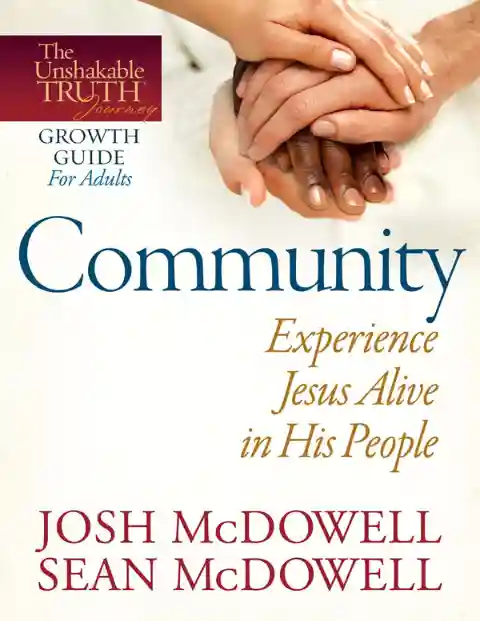
Community — Experience Jesus Alive In His People Community — Experience Jesus Alive In His People

Community — Experience Jesus Alive In His People Order Printed Copy

  • Author: Josh Mcdowell, Sean Mcdowell
  • Size: 1.58MB | 69 pages
  • |
Continue with
Google Twitter
LOG IN TO REVIEW
About the Book


"Community—Experience Jesus Alive In His People" by Josh McDowell and Sean McDowell explores the importance of authentic community in the Christian faith. The authors emphasize the role of relationships with other believers in fostering spiritual growth and deepening one's connection with Jesus. Through personal anecdotes and biblical teachings, they demonstrate how engaging in community can lead to transformation and a more fulfilling Christian life.

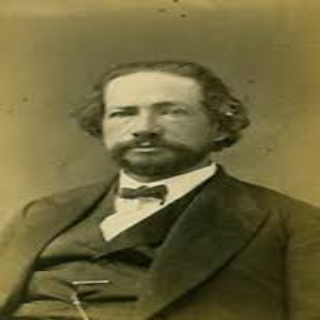
Jonathan Edwards

Jonathan Edwards Jonathan Edwards (1703-1758), colonial New England minister and missionary, was one of the greatest preachers and theologians in American history. At the close of the 17th century, the science of Isaac Newton and the philosophy of John Locke had significantly changed man's view of his relationship to God. Man's natural ability to discover the laws of creation seemed to demonstrate that supernatural revelation was not a necessary prelude to understanding creation and the creator. God was no longer mysterious; He had endowed men with the power to comprehend His nature and with a will free to choose between good and evil. It was Jonathan Edwards's genius that he could make full use of Locke's philosophy and Newton's discoveries to reinterpret man's relationship to God in such a way that the experience of supernatural grace became available to people living in an intellectual and cultural climate very different from that of 17th-century England. In so doing, Edwards helped transmit to later generations the richest aspect of American Puritanism: the individual heart's experience of spiritual and emotional rebirth. Further, by his leadership in the religious revivals of the early 18th century, Edwards helped make the experience an integral part of American life for his own time and for the following century. Jonathan Edwards was born on Oct. 5, 1703, in East Windsor, Conn., where his father was a minister. Jonathan's grandfather was pastor to the church in Northampton, Mass. Jonathan was the only boy in the family; he had 10 sisters. He graduated from Yale College in 1720, staying on there as a theology student until 1722, when, though not yet 19 years old, he was called as minister to a church in New York. Edwards served there for 8 months. In 1723, though called to a church in Connecticut, he decided to try teaching. He taught at Yale from 1724 to 1726. Early Writings At an early age Edwards showed a talent for science. At Yale he studied Newton's new science and read Locke with more interest "than the most greedy miser" gathering up "handfuls of silver and gold, from some newly discovered treasure." During these years he also began recording his meditations on the Bible and his observations of the natural world. Edward's central purpose was not to become a scientist but to lead a life of intense holiness. Edwards's "Personal Narrative" (written ca. 1740) and his letters and diaries show a young man whose religious experience was of great power and beauty. As Edwards tells it, after several "seasons of awakenings," at the age of 17 he had a profound religious experience in which "there came into my mind so sweet a sense of the glorious majesty and grace of God, that I know not how to express. I seemed to see them both in a sweet conjunction; majesty and meekness joined together; it was a sweet, and gentle, and holy majesty; and also a majestic meekness; an awful sweetness; a high, and great, and holy gentleness." Adapting Locke's philosophy to his own purposes, Edwards interpreted the "sweet" sense of God's majesty and grace as a sixth and new sense, created supernaturally by the Holy Spirit. As he wrote later in A Treatise of Religious Affections (1746), the new sense is not "a new faculty of understanding, but it is a new foundation laid in the nature of the soul, for a new kind of exercises of the same faculty of understanding." Edwards's perception of ultimate reality as supernatural is further evidenced in his statement that "the world is … an ideal one." He wrote in his youthful "Notes on the Mind": "The secret lies here: That, which truly is the Substance of all Bodies, is the infinitely exact, and precise, and perfectly stable Idea, in God's mind, together with his stable Will, that the same shall gradually be communicated to us, and to other minds, according to certain fixed and exact Methods and Laws." In 1726 Edwards was called from Yale to the Northampton church to assist his grandfather; when his grandfather died in 1729, Edwards became pastor of the church. In 1727 he married the beautiful and remarkable Sarah Pier-repont of New Haven. Early Revivals Religious revivals had been spreading through New England for 100 years. In his youth Edwards had seen "awakenings" of his father's congregation, and his grandfather's revivals had made his Northampton church second only to Boston. In early New England Congregationalism, church membership had been open only to those who could give public profession of their experience of grace. The Halfway Covenant of 1662 modified this policy, but when Edwards's grandfather allowed all to partake of the Sacraments (including those who could not give profession of conversion), he greatly increased the number of communicants at the Lord's Supper. Edwards's first revival took place in 1734-1735. Beginning as prayer meetings among the young in Northampton, the revivals soon spread to other towns, and Edwards's reputation as a preacher of extraordinary power grew. Standing before his congregation in his ministerial robe, he was an imposing figure, 6 feet tall, with a high forehead and intense eyes. A contemporary wrote that Edwards had "the power of presenting an important Truth before an audience, with overwhelming weight of argument, and with such intenseness of feeling, that the whole soul of the speaker is thrown into every part of the conception and delivery… Mr. Edwards was the most eloquent man I ever heard speak." Edwards endeavored to convey as directly as possible the meaning of Christ's Crucifixion and Resurrection. His words, he hoped, would lead his listeners to a conviction of their sinful state and then through the infusion of divine grace to a profound experience of joy, freedom, and beauty. Edwards's A Faithful Narrative of the Surprising Work of God in the Conversion of Many Hundred Souls in Northampton, and the Neighboring Towns and Villages (1737) relates the history of the 1734-1735 revival and includes careful analyses of the conversions of a 4-year old child and an adolescent girl. Edwards's preaching and writings about the nature and process of the religious experience created powerful enemies. In western Massachusetts the opposition to Edwards was led by his relatives Israel and Solomon Williams, who maintained that a man's assurance of salvation does not lie in a direct and overpowering experience of the infusion of grace and that he may judge himself saved when he obeys the biblical injunctions to lead a virtuous life. Edwards too believed that a Christian expresses the new life within him in virtuous behavior, but he denied that a man is in a state of salvation simply because he behaves virtuously. For him, good works without the experience of grace brought neither freedom nor joy. In 1739 Edwards preached sermons on the history of redemption. He clearly thought the biblical promises of Christ's kingdom on earth would be fulfilled soon. His interest in the history of redemption is further evidenced in the many notes he made on the prophecies he found in the Bible and in natural events. Great Awakening In 1740 the arrival in America of George Whitefield, the famous English revivalist, touched off the Great Awakening. Revivals now swept through the Colonies, and thousands of people experienced the infusion of grace. The emotional intensity of the revivals soon brought attacks from ministers who believed that Whitefield, Edwards, and other "evangelical" preachers were stirring up religious fanaticism. The most famous attack was made by Charles Chauncy in Seasonable Thoughts on the State of Religion in New England (1743). Edwards defended the Great Awakening in several books. He acknowledged that there had been emotional excesses, but on the whole he believed the revivals were remarkable outpourings of the Holy Spirit. His works of defense include The Distinguishing Marks of a Work of the Spirit of God (1741), Some Thoughts Concerning the Present Revival of Religion in New England (1742), and A Treatise Concerning Religious Affections (1746), the last a classic in religious psychology. He also wrote a biography of his daughter's fiancé the Native American missionary David Brainer. The Great Awakening intensified Edward's expectations of Christ's kingdom. With English and Scottish ministers, he began a Concert of United Prayer for the Coming of Christ's Kingdom. To engage people in the concert, he wrote An Humble Attempt to Promote Visible Union of God's People in Extraordinary Prayer for the Revival of Religion (1747). Edward's Dismissal The troubles that culminated in Edwards's dismissal from Northampton began in the 1740s. Considerable opposition to Edwards had remained from his revivals. Animosity between him and members of his congregation was increased by an embarrassing salary dispute and an incident in 1744 when Edwards discovered that some children had been secretly reading a book on midwifery. Many children of influential families were implicated; Edwards's reading of their names publicly from the pulpit was resented. But the most important factor in Edwards's dismissal was his decision, announced in 1748, that henceforth only those who publicly professed their conversion experience would be admitted to the Lord's Supper. His decision reversed his grandfather's policy, which Edwards himself had been following for 20 years. Edwards was denied the privilege of explaining his views from the pulpit, and his written defense, An Humble Inquiry into the Rules of the Word of God, Concerning the Qualifications Requisite to a Complete Standing and Full Communion with the Visible Christian Church (1749), went largely unread. After a bitter struggle, the church voted 200 to 23 against Edwards, and on July 1, 1750, he preached his farewell sermon. Late Works In August 1751 Edwards and his large family went to Stockbridge, Mass., where he had been called as pastor to the church and missionary to the Native Americans. As a missionary, he defended the Native Americans against the greed and mismanagement of a local merchant. These struggles consumed much of his time, but he still managed to write extensively. Among the most important works are A Careful and Strict Enquiry into the Modern Prevailing Notions of That Freedom of Will … (1754) and The Great Christian Doctrine of Original Sin Defended (1758). In the first, he asserted that a man has freedom to choose but freedom of choice is not the same as freedom of will. The power which decides what a man will choose—his willing—is in the hands of God and beyond his personal control. In Original Sin Edwards maintained that all men live in the same unregenerate state as Adam after the fall. Two other works show that Edwards had not become embittered by his dismissal. In The Nature of True Virtue (1756) he defines virtue as benevolence to "being" in general. Concerning the End for Which God Created the World (1756) is a prose poem, a praise to God Who is love, and Whose universe is the expression of God's desire to glorify Himself. In January 1758 Edwards became president of the College of New Jersey (now Princeton). Two months later he died of fever resulting from a smallpox inoculation. He was buried in Princeton.

ready to commit, slow to compare - a recipe for real community

Months ago a young couple visited our church, and we had them over to our home for lunch. As we ate and conversed over meatloaf and mashed potatoes, the young woman peppered me with questions. “So what is community like at your church?” “How many people are in discipleship relationships?” In between questions, she gave us a glowing review of the church they had been a part of in another state. I felt expectations rise as she shared about her close relationship with the pastor’s wife, who happened to live in the apartment above them, and how she popped in on their family at all different times of day. I was beginning to feel like a job description was being offered to me, and our church was being evaluated as to whether we fit the bill. I’m thankful this couple had such a wonderful experience at their former church, but I couldn’t help but wonder how helpful it was to measure everything against their previous experience. Yes, we learn from our past and are blessed when we have great models, but is it helpful to compare communities of faith and assume that one is the ideal model and all others should strive to look the same? “Relationships deepen and grow only when we’re willing to commit time and energy to fostering them.” The conversation about what church community should look like caused me to reflect on different issues I’ve noticed emerging around this important debate. Community Without Commitment Despite all the hype about the importance of community in the body of Christ, there can be a tendency to want all the feelings of community without a firm commitment to a local body of believers. Relationships deepen and grow only when we’re willing to commit time and energy to fostering them (Hebrews 10:24–25). Committing to a Bible study or small group or discipleship relationship often provides the setting to establish community. But if you always have a list of reasons why you don’t have the time, how will the body of Christ you belong to know how to minister to your needs? If having babies or being tired or working late keeps you from faithfully serving your church or being served through a ministry of the church, you’re likely not going to feel well-connected. How will we know how to pray for each other when there isn’t a regular time to meet in a smaller setting and share our joys and burdens of life? If your travel plans or children’s sports schedules consistently have you missing corporate times of worship, you’ll be deprived of not just hearing the word proclaimed, but the interactions that happen in the pews before and after the service. We will never experience true community without a firm, sacrificial commitment to a local body of believers. Community Without Accountability True community also means being transparent enough with your own struggles so that others in the body know how to pray for you (James 5:16). Not everyone in your church needs to know your darkest moments of despair, but do a select few know your battles? Are others free to ask you how you’re faring in your war with pornography, binge eating, or gossip? Or do you meet them with a high wall of defense when they try to speak truth into your life? “We will never experience true community without a firm, sacrificial commitment to a local body of believers. ” When another member in the body has the courage to confront our inconsistency or hold us accountable in a struggle we’re facing, we should ask God to give us grace to receive their words with humility and meekness. Our own pride can tempt us to surround ourselves with people who will affirm our words and actions, instead of challenge us when we turn down the wrong path. There is a temptation to shut people out who are speaking truth into our life by avoiding communication with them: unfriending them on Facebook, turning the other way when you see them at church, or conveniently never finding the time to meet them for coffee. But we’re missing out on what could be a primary means of sanctification in our lives when we refuse to be held accountable by our community of faith. No Perfect Community So, in your search for the church with the perfect community, be willing to accept that community will look different from church to church. Maybe your community was established by a strong relationship with the pastor’s wife at your former church, but be willing to see that your close relationships at your new church could come through an unexpected way: a single woman longing for companionship or perhaps a gray-haired grandma willing to meet you for coffee each week. Instead of sitting on the sidelines comparing and critiquing what your church does or doesn’t have, commit to a ministry of the church to both serve in and be served. Find a smaller group within the body to share life with, study Scripture with, and pray for one another with. And keep the commitments you make. If you sign up for a Bible study that lasts twelve weeks, do your best to commit for the long haul. If you’re feeling disconnected from others within your church, evaluate your own level of involvement. True community is established through faithfulness, commitment, and a humility to both share your struggles and receive counsel. You honor God when you commit to the saints and sinners he has placed in your church family. We Need Each Other “One day we’ll see Jesus together, but we’ll only make it if we push each other to cling to him today.” We might not ever find the perfect community this side of heaven, but our church families are essential for our walk with Jesus. Like Hebrews says, the state of our very souls depends on our community of faith: Take care, brothers, lest there be in any of you an evil, unbelieving heart, leading you to fall away from the living God. But exhort one another every day, as long as it is called “today,” that none of you may be hardened by the deceitfulness of sin. (Hebrews 3:12–13) We need community. We need our brothers and sisters in Christ. However imperfect our church may be, we need our family to point us to the gospel. One day we’ll see Jesus together, but we’ll only make it if we push each other to cling to him today.

Feedback
Suggestionsuggestion box
x