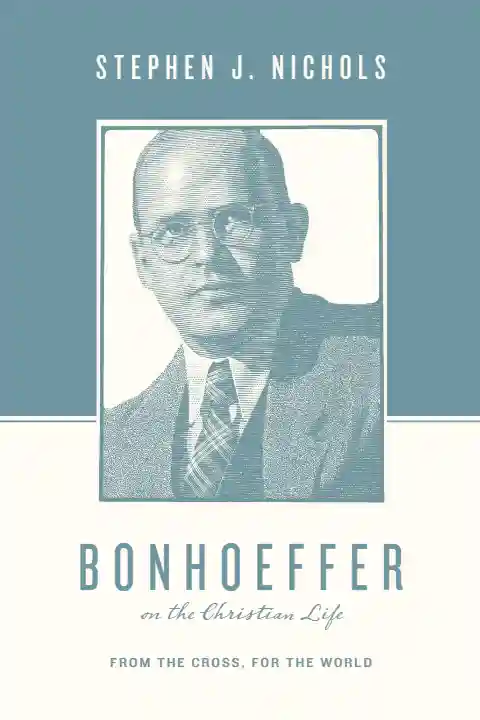

Bonhoeffer On The Christian Life Order Printed Copy
- Author: Stephen J. Nichols
- Size: 1.14MB | 50 pages
- |
Others like bonhoeffer on the christian life Features >>

Normal Christian Life

Basic Elements Of The Christian Life Vol II
-160.webp)
School Of The Presence: Walking In Power, Intimacy, And Authority On Earth As It Is In Heaven

The Purpose Driven Life

No Handle On The Cross - An Asian Meditation On The Crucified Mind
In The School Of Christ - Lessons On Holiness In John 13–17

Body Of Christ: A Reality

Breath Of The Holies
-160.webp)
Finding Your Purpose In Life (Why Am I Here)

Balanced Christian Life
About the Book
"BONHOEFFER ON THE CHRISTIAN LIFE" by Stephen J. Nichols explores the life and teachings of Dietrich Bonhoeffer, a prominent figure in Christian theology and resistance to the Nazi regime in WWII. The book examines how Bonhoeffer's beliefs on discipleship, community, and living in a fallen world can be applied to the modern Christian life. It delves into Bonhoeffer's commitment to ethical living, the importance of costly grace, and his emphasis on the intersection of faith and action. Nichols presents a compelling analysis of Bonhoeffer's enduring relevance and impact on Christians today.
William Chalmers Burns
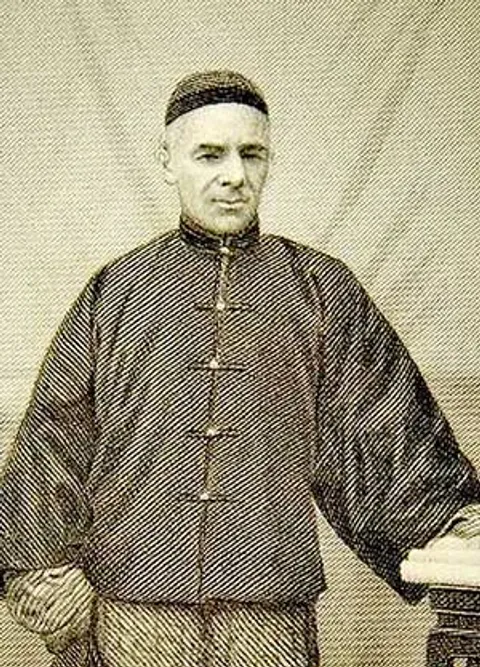 William Chalmers Burns was born in the Manse of Dun, in Angus, on April Ist, 1815. He was the third son of the Parish Church minister there. After leaving school, he went to Edinburgh to be apprenticed with an uncle to the legal profession. His eldest sister, a gay young lady, was converted to God, and became a bright witness for the Lord Jesus in 1831, and it was by means of her decided testimony that William was first awakened to a sense of his need of salvation, and led to put his trust in the Son of God, as his Redeemer and Saviour.
It was shortly after his conversion that he walked into the manse of Kilsyth, where the family then resided, having walked on foot the thirty-six miles from Edinburgh, to tell his mother and his sisters the glad news of his conversion, and to say that his desire now was to relinquish his study of law, and devote himself entirely to the preaching of the Gospel of God’s grace to his fellowmen.
And this he did heartily and with all his might, first in the neglected Parts of Scotland, and latterly among many heathen millions of the great Chinese Empire, then scarcely touched by the feet of God’s messengers of peace.
Mr. Burns’s name came into prominence in connection with a wonderful work of grace in Dundee, while he was preaching for Robert Murray M’Cheyne, then on a visit to Palestine, for the evangelization of the Jews. During Mr. Burns’s preaching in Dundee, a remarkable awakening took place; thousands were aroused to their condition in the sight of God, truly converted, and set on the heavenward way.
Remarkable scenes were witnessed in the old church of St. Peter’s, near to which M’Cheyne’s body now lies, awaiting the first resurrection. It was on the evening of a Lord’s Day in Kilsyth, after preaching to a crowded congregation, that Mr. Burns felt constrained to intimate to the people that he would preach to the people in the open air, before returning to Dundee the following day.
Deeply burdened with the souls of the people, he went into the village and invited the people, who thronged into the old church, until every seat and passage was filled. And the Lord helped His servant to preach straight to the people with great power, with the result that the whole congregation became melted under the message, many weeping aloud and crying to God for mercy. A glorious work of conversion followed.
Meetings for prayer and preaching of the Gospel continued in the churchyard, the market-place and elsewhere for weeks, while Mr. Burns returned to Dundee to resume his ministry. The work progressed in Dundee with increased interest, until the return of Mr. M’Cheyne, who greatly rejoiced in all that the Lord had done during his absence, through the ministry of His servant.
There was no jealousy, but the deepest gratitude, and these two true ministers of Christ rejoiced together over the Lord’s doings, which were indeed marvellous in their eyes.
From that time onward, until the Lord’s call came to go to China, Mr. Burns gave himself almost wholly to itinerant Gospel preaching, through Perthshire, up as far north as Aberdeen, preaching in barns, on market-places, and wherever the people could be gathered together to hear the Word. His message was plain, and to the point; thousands were awakened and many saved. But the adversary opposed. Time and again Mr. Burns was stoned, and bore the marks of these brands of the enemy for many days.
Believing it to be the call of the Lord, he went forth to China as the first missionary of the Presbyterian Church of England, in June, 1847. When questioned by those interested in his out-going, how long it would take him to prepare for the voyage, he replied with all simplicity, “I will be ready to go to-morrow.”
On a brief visit to his home, to take farewell of his sister, he silently wrung her hand, took a last glance around their old home, and with a small bag in his hand and his mother’s plaid across his arm, went forth, in the Name of the Lord with the Gospel to China’s benighted people, of whom it was said “a million a month” were dying without having once heard the Gospel.
For years this solitary witness toiled alone, at times with a few helpers, in the great heathen land, amid overwhelming hindrances, but his faith in God never faltered. On and on he went, sowing the seed which others would reap, until he reached the borders of the great kingdom of Manchuria, where, in a small, comfortless room in Nieu-chang, wearied and worn in labours abundant, he fell asleep on April 4th, 1868, his last audible words being, “For Thine is the Kingdom and the Power and the Glory.”
It is of this great land that the story of grace related in the following pages is told, and those who saw and shared in its joyful results, say that it was no doubt part of the result of William Burns’s sowing, in his earlier years in China.
William Chalmers Burns was born in the Manse of Dun, in Angus, on April Ist, 1815. He was the third son of the Parish Church minister there. After leaving school, he went to Edinburgh to be apprenticed with an uncle to the legal profession. His eldest sister, a gay young lady, was converted to God, and became a bright witness for the Lord Jesus in 1831, and it was by means of her decided testimony that William was first awakened to a sense of his need of salvation, and led to put his trust in the Son of God, as his Redeemer and Saviour.
It was shortly after his conversion that he walked into the manse of Kilsyth, where the family then resided, having walked on foot the thirty-six miles from Edinburgh, to tell his mother and his sisters the glad news of his conversion, and to say that his desire now was to relinquish his study of law, and devote himself entirely to the preaching of the Gospel of God’s grace to his fellowmen.
And this he did heartily and with all his might, first in the neglected Parts of Scotland, and latterly among many heathen millions of the great Chinese Empire, then scarcely touched by the feet of God’s messengers of peace.
Mr. Burns’s name came into prominence in connection with a wonderful work of grace in Dundee, while he was preaching for Robert Murray M’Cheyne, then on a visit to Palestine, for the evangelization of the Jews. During Mr. Burns’s preaching in Dundee, a remarkable awakening took place; thousands were aroused to their condition in the sight of God, truly converted, and set on the heavenward way.
Remarkable scenes were witnessed in the old church of St. Peter’s, near to which M’Cheyne’s body now lies, awaiting the first resurrection. It was on the evening of a Lord’s Day in Kilsyth, after preaching to a crowded congregation, that Mr. Burns felt constrained to intimate to the people that he would preach to the people in the open air, before returning to Dundee the following day.
Deeply burdened with the souls of the people, he went into the village and invited the people, who thronged into the old church, until every seat and passage was filled. And the Lord helped His servant to preach straight to the people with great power, with the result that the whole congregation became melted under the message, many weeping aloud and crying to God for mercy. A glorious work of conversion followed.
Meetings for prayer and preaching of the Gospel continued in the churchyard, the market-place and elsewhere for weeks, while Mr. Burns returned to Dundee to resume his ministry. The work progressed in Dundee with increased interest, until the return of Mr. M’Cheyne, who greatly rejoiced in all that the Lord had done during his absence, through the ministry of His servant.
There was no jealousy, but the deepest gratitude, and these two true ministers of Christ rejoiced together over the Lord’s doings, which were indeed marvellous in their eyes.
From that time onward, until the Lord’s call came to go to China, Mr. Burns gave himself almost wholly to itinerant Gospel preaching, through Perthshire, up as far north as Aberdeen, preaching in barns, on market-places, and wherever the people could be gathered together to hear the Word. His message was plain, and to the point; thousands were awakened and many saved. But the adversary opposed. Time and again Mr. Burns was stoned, and bore the marks of these brands of the enemy for many days.
Believing it to be the call of the Lord, he went forth to China as the first missionary of the Presbyterian Church of England, in June, 1847. When questioned by those interested in his out-going, how long it would take him to prepare for the voyage, he replied with all simplicity, “I will be ready to go to-morrow.”
On a brief visit to his home, to take farewell of his sister, he silently wrung her hand, took a last glance around their old home, and with a small bag in his hand and his mother’s plaid across his arm, went forth, in the Name of the Lord with the Gospel to China’s benighted people, of whom it was said “a million a month” were dying without having once heard the Gospel.
For years this solitary witness toiled alone, at times with a few helpers, in the great heathen land, amid overwhelming hindrances, but his faith in God never faltered. On and on he went, sowing the seed which others would reap, until he reached the borders of the great kingdom of Manchuria, where, in a small, comfortless room in Nieu-chang, wearied and worn in labours abundant, he fell asleep on April 4th, 1868, his last audible words being, “For Thine is the Kingdom and the Power and the Glory.”
It is of this great land that the story of grace related in the following pages is told, and those who saw and shared in its joyful results, say that it was no doubt part of the result of William Burns’s sowing, in his earlier years in China.
The Fruitful Empty Nest - Lessons for When the Kids Leave Home
We hugged, said our goodbyes and “I love you.” He walked with us to the car, turned, and walked away. And as we sat there looking at his back, I cried my heart out. Our firstborn child was launched, and I felt like my insides were being ripped out. Two years later, we had a repeat. Once again, after goodbyes, “We love you,” and hugs, another son walked us to the car. Watching him as he turned and walked away, those same deep heart cries rose up in me. One last time, a few years later, goodbyes and “I love you” were said, and hugs were given. We went to the car and watched as our youngest son turned and walked away into his new life. And yes, we sat there looking at his back and I cried my heart out. Not that I would never see our sons again, of course. But when our kids left home, I was keenly aware that my life would dramatically change. For years I had anticipated this day and often thought I couldn’t survive the emotion of it all, but I did. It’s been many years now since those goodbyes. And today I am so grateful to God for his sustaining grace, and for the surprisingly sweet joys he’s given in each season of life since. New Strength After Kids I had been a “full-time” mom, and so obviously when our sons left home, the whole structure of my life altered. No more hurried breakfasts to get out the door in the mornings. No games to go to late in the day. No large meals to prepare that would satisfy teenage boys. No kids hanging out at the house or event-planning with other parents. Oh, yes, life was going to be different, and I wasn’t at all sure I was going to like that! Early on after the kids left, I found myself on my knees before God with a kind of blank, empty feeling, when I found these words: For this reason I bow my knees before the Father, from whom every family in heaven and on earth is named, that according to the riches of his glory he may grant you to be strengthened with power through his Spirit in your inner being. (Ephesians 3:14–16) That good word assured me that God would fill me with his strength for the new season ahead. Six Lessons for Empty Nests We moms want to be good mothers, and we give everything we have to our children. As Christian moms, we feel a special calling to raise our children to love Jesus and follow him, which can seem especially weighty. And on top of it all, our identity can get so wrapped up in our children that we forget who we are. So when it comes time for the kids to leave home, it’s hard! And it’s sad. But we need not stay stuck in sadness. We can move forward into adult relationships with our children which have a sweetness all their own. “Our identity can get so wrapped up in our children that we forget who we are.” If you are in the transition years, anticipating the day when your kids leave home, or are already adjusting to an empty nest, here are some practical steps that have been a great help to me. 1. Pray fervently. No doubt you have prayed for your children since before they were born. Keep praying! As you pray for your child who is no longer under your daily care, you will discover your prayers will become deeper and your relationship with both God and your child will be enriched. Remember, you can cast your anxieties on God, because he cares about you — and your child (1 Peter 5:7). 2. Place your child in the arms of God. I never understood what it meant to “let go” of my children. Then someone suggested, rather than letting go of my children to float out into some kind of never-never land, I can deliberately place them into the strong and loving arms of God where they are protected and cared for. “The eternal God is your dwelling place, and underneath are the everlasting arms” (Deuteronomy 33:27). This has been a great comfort. 3. Perspective helps. The aim of parenting is to raise little humans to become productive adults. Throughout the child-raising years, we want to create a nurturing environment so our children will develop and mature. We want our children to be adults. In a sense, we raise them to leave. 4. Prioritize your husband. While our kids are home, they often require the biggest chunk of our time and energy, but the priority still should be our husband. Make time for him when the kids are home, so you’ll know each other when they leave. Have fun together now, so that you will enjoy each other later. 5. Personal development is essential. Take care of yourself — physically, emotionally, intellectually, and spiritually. Develop an interest or involvement while your kids are home that will carry over into the empty-nest years. One way to do this is to cultivate friendships and fellowship with other women in your church. 6. Plant yourself by streams of water. “A tree planted by streams of water yields its fruit in its season, and its leaf does not wither” (Psalm 1:3). Get rooted, and stay rooted, in God’s word, take delight in God’s Son, maintain fellowship with God’s people. When you do this over the years, you will be fruitful in every season of your life. Enjoy Being a Child Again Most Christian moms, like me, focus on God’s love for our children. We remind ourselves that God loves our kids more than we do — and he does. We help our children understand and accept God’s love for them. But I discovered, when my boys left home, I’d nearly forgotten that God loves me, too. He cares about me. He knows my needs. He wants to bless me because I am his child. “I discovered, when my boys left home, I’d nearly forgotten that God loves me, too.” Mom, if your kids have just left home — or are soon to leave — you are about to enter a new season with great potential for fruitfulness. As young women we bore the fruit of the womb. Then the childrearing years were full of great blessing, energy, and vitality. These years were times of hope, of spring and the warm summer sunshine. But, surprisingly, the empty-nest years can be a very productive and fruit-filled season, too. When kids leave home, parenting takes on new and rewarding dimensions. Daily life is different, for sure, but you are still, and always will be, your kids’ mom. In fact, you no doubt will discover as I have, that as the years move on and you and your kids grow older, your relationships will deepen and enrich on many levels. At the same time, fruit that you bear in this new season of life can have an even wider impact now as you stay connected to your local church. Look for ways to be involved with the younger women in your church. You are a seasoned woman who can nourish the upcoming generation of women. Be encouraged, dear mom. God is with you and loves you through every season of life. He will not forsake you. He wants to bless you and make you a blessing! O God, from my youth you have taught me, and I still proclaim your wondrous deeds. So even to old age and gray hairs, O God, do not forsake me, until I proclaim your might to another generation, your power to all those to come. (Psalm 71:17–18) Article by Linda Linder