-480.webp)

Biblical Demonology (A Study Of Spiritual Forces At Work Today) Order Printed Copy
- Author: Merrill F Unger
- Size: 6.25MB | 315 pages
- |
Others like biblical demonology (a study of spiritual forces at work today) Features >>
-160.webp)
Move (What 1,000 Churches Reveal About Spiritual Growth)
God Cannot Lie: A Study On The Infallible Integrity Of Gods Word And The Importance Of Knowing The Word

A More Excellent Way - Pathways Of Wholeness Spiritual Roots Of Disease
Your Sanctification

The Things That Matter
%20by%20Myles%20Munroe-160.webp)
Kingdom Principles Preparing For Kingdom Experience And Expansion
Divine Revelation Of Healing
God's Master Plan For Your Life
The Emotionally Healthy Leader

War In Heaven
About the Book
"Biblical Demonology" by Merrill F. Unger is a comprehensive study of the spiritual forces at work in the world today, based on the teachings of the Bible. The book explores the origins, nature, and activities of demons, as well as how to recognize and combat their influence in our lives. Unger provides a thorough examination of the biblical perspective on demonology, offering valuable insights for Christians seeking to understand and engage with spiritual warfare.
A. A. Allen
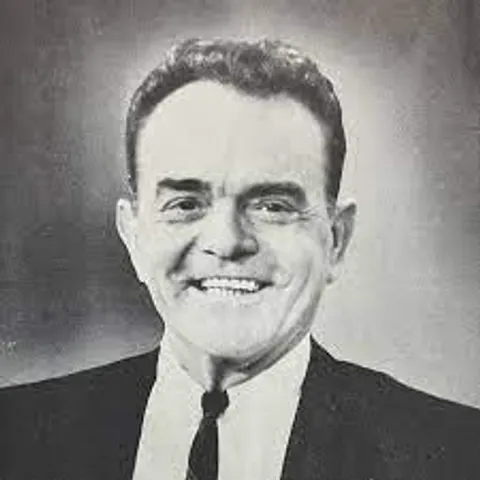 Born in Sulphur Rock, Arkansas, in 1911, he grew up with an alcoholic father and an unfaithful mother who lived with a series of men. “By the time I was twenty-one,” recalled Allen, “I was a nervous wreck. I couldn’t get a cigarette to my lip with one hand. . . . I was a confirmed drunkard.” (Lexie Allen, God’s Man of Faith and Power, p57, 1954). Two years later he served a jail sentence for stealing corn in the midst of the depression and thought of himself as “an ex-jailbird drifting aimlessly through life.” It was at this point that Allen was converted in a “tongues speaking” Methodist church in 1934 He met his wife, Lexie in Colorado and she became a powerful influence in shaping him for his future ministry.
Licensed by the Assemblies of God as a minister in 1936 began an effective evangelistic ministry at a small church in Colorado. After a two year pastorate he spent four-and-a-half years during World War II, as a full-time revivalist. He was the worship leader, musician and preacher but low finances and mediocre results took their toll on this father of four children. He left the itinerant ministry in 1947 when he was offered the security of a pastorate in a stable Assemblies of God church in Corpus Christi, Texas.
Soon after moving to Texas he heard news of the revival and read a copy of ‘The Voice of Healing’ magazine which he found incredulous and labelled the revivalists “fanatics.” However, in 1949, he attended an Oral Roberts campaign in Dallas where he was enthralled by Roberts’ power over the audience and left convinced that the revival was from God
Back in Texas, when his church board refused to sponsor a radio program, he resigned and began conducting revivals again with the hope that he too might develop a major healing ministry. In, He sent his first report to The Voice of Healing in May 1950, from Oakland, California, “Many say this is the greatest Revival in the history of Oakland” in what was to become typical AAA style.
He said, “Although I do not claim to possess the gift of healing, hundreds are being miraculously healed in this meeting of every known disease. I do not claim to possess a single gift of the Spirit nor to have the power to impart any gift to others, yet in this meeting, as well as in other recent meetings, all the gifts of the Spirit are being received and exercised night after night. (The Voice of Healing May 1950)
Observing the burgeoning ministry of others he noticed that the evangelists who were drawing the largest crowds were doing so under canvas. In the summer of 1951 joined the ranks of the tent ministries giving a down payment and commitment to pay off the remaining amount as the ministry grew – and it did. He established his headquarters in Dallas and in 1953 launched the Allen Revival Hour on radio. He conducted overseas campaigns in Cuba and Mexico regularly, and by1955 was broadcasting on seventeen Latin American radio stations as well as eighteen American ones.
Allen’s sanguine personality expressed itself in his enthusiastic reports, unparalleled showmanship and startling miraculous claims. He was a persuasive preacher, with a compelling presence and unusual empathy and rapport with the common people. He preached an old-time Pentecostal message with consummate skill. His message of holiness resonated in the hearts of those reared in austere Pentecostalism.
His stage presence and theatrical approach endeared him to the economically deprived working class and also to black communities. Ever the showman he made religion enjoyable and church-going fun.
But, above all, it was the power of God which attracted the huge audiences over the years. Thousands were converted in the midst of dramatic public healings and deliverances from evil spirits. Nothing was ‘done in a corner’ but all was employed to support the message that Jesus was alive and interested in the needs of ordinary people.
A. A. Allen considered himself the most persecuted preacher in the world. The Assemblies of God were not happy with his apparently questionable, or at least exaggerated, claims. His readiness to publicly counter-attack his accusers brought a continual stream of criticism and alienation from mainline Pentecostals.
But the accusation that he drank abusively was the straw that broke the camel’s back. In the fall 1955, he was arrested for drunken driving while conducting a revival in Knoxville, Tennessee. The local press took the opportunity to attack and expose Allen and the beleaguered minister forfeited his bail rather than stand trial on the charge.
Whatever the truth was Allen called the incident an “unprecedented persecution” aimed at ruining his ministry. As always he employed even the worst accusations to reinforce his claims that his commitment to God’s work in God’s way was truly from heaven, despite the fact that the Devil continually tried to destroy his ministry. His Miracle Magazine published his defense:
Allen declares that all this is but a trick of the devil to try to kill his ministry and his influence among his friends at a time when God has granted him greater miracles in his ministry than ever before. . . . If ministers pay the price of real MIRACLES today, they will meet with greater persecution than ever before. The only way to escape such persecution is to fold up and quit! But we are going on! Will you go on with us? (Miracle Magazine October, 1955)
Gordon Lindsay felt that the Voice of Healing had to take “a strong stand on ethics.” Allen resigned from the group, pre-empting their imminent dismissal. He immediately began publishing his own magazine, and, although he affected a cordial relationship with his former colleagues in the Voice of Healing, feelings remained strained.
In some ways independence suited Allen. His daughter recalled:
The Knoxville event also led to Allen’s separation from the Assemblies of God. It was suggested that he “withdraw from the public ministry until the matter at Knoxville be settled.” Allen’s response was to surrender his credentials as “a withdrawal from public ministry at this time would ruin my ministry, for it would have the appearance of an admission of guilt.”
By the mid-1950’s many of the more moderate ministers tried to continue to work with the Pentecostal denominations – or at least to remain friendly – but Allen repeatedly attacked organized religion and urged Pentecostal ministers to establish independent churches which would be free to support the revival. He charged that the Sunday school had replaced the altar in the Pentecostal churches and that few church members were filled with the Holy Ghost:
“Revivals are almost a thing of the past. Many pastors, and even evangelists, declare they will never try another one. They say it doesn’t work. They are holding “Sunday School Conventions,” “Teacher Training Courses,” and social gatherings. With few exceptions the churches today are leaning more and more toward dependence upon organizational strength, and natural ability, and denominational “methods.” They no longer expect to get their increase through the old fashioned revival altar bench, or through the miracle working power of God, but rather through the Sunday School.”
In fall 1956, Allen announced the formation of the Miracle Revival Fellowship, an alternative fellowship intended to license independent ministers and to support missions. Theologically, the fellowship welcomed all who accepted “the concept that Christ is the only essential doctrine.” Allen urged laymen as well as ministers to join his fellowship, through his “Every Member an Exhorter plan.” Although Allen announced that “MRF is not interested in dividing churches,” he also disclosed that “the purpose of this corporation shall be to encourage the establishing and the maintenance of independent local, sovereign, indigenous, autonomous churches.” The fellowship listed more than 500 ministers in its “first ordination
Interestingly, as other ministries were struggling and the revival was waning, Allen’s charisma and ministry skills coupled with well-staged revivals and an amazingly gifted team, enabled him to re-establish his ministry and rebuild a substantial and effective work.
Miracle Magazine was resounding success. At the end of a year’s publication in 1956, it had a paid subscription of about 200,000,and, according to Mrs. Allen, was “the fastest growing subscription magazine in the world today.” In 1957, Allen began conducting the International Miracle Revival Training Camp, an embryonic ministerial training centre. In 1958, he was given land in Arizona where he began building a permanent headquarters and training centre. At the height of the 1958 crisis in the revival, Allen announced a five-pronged program for his ministry: tent revivals, the Allen Revival Hour radio broadcast, an overseas mission program, the Miracle Valley Training Centre, and a “great number of dynamic books and faith inspiring tracts” published by the ministry. In 1958, Allen purchased Jack Coe’s old tent and proudly announced that he was moving into the “largest tent in the world.” His old-time revivalism, up-beat gospel music and anointed entertainers continued to attract the masses.
Allan died at the Jack Tar Hotel in San Francisco, California on June 11, 1970 at the age of 59. Some claim that Allen died an alcoholic because the coroner’s report concluded Allen died from liver failure brought on by acute alcoholism. Others know that he had battled with excruciating pain from severe arthritis in his knees, for over a year. It is true that Allen had undergone surgery on one of his knees and in June of 1970, was considering surgery on the other knee. They believe that the Coroner’s Report of “fatty infiltration of the liver” was a result of the few times he used alcohol in his last days to alleviate the excruciating pain of his arthritis.
Whatever is true of his death the life of A. A. Allen was one of extraordinary commitment to Jesus Christ which brought victory over the enemy of mankind. A. A. Allen was a true survivor. Even though the revival was declining in the late 1950’s and 1960’s his commitment to old-time faith-healing campaigns ensured the continuing testimony of signs and wonders to the next generation. He may have had his personal ‘quirks and foibles’ but the testimony of thousands of the blessing they received, the enduring love for God that resulted and the demonstration of the power of the Gospel are good reasons to give God thanks for such an amazing life!
Born in Sulphur Rock, Arkansas, in 1911, he grew up with an alcoholic father and an unfaithful mother who lived with a series of men. “By the time I was twenty-one,” recalled Allen, “I was a nervous wreck. I couldn’t get a cigarette to my lip with one hand. . . . I was a confirmed drunkard.” (Lexie Allen, God’s Man of Faith and Power, p57, 1954). Two years later he served a jail sentence for stealing corn in the midst of the depression and thought of himself as “an ex-jailbird drifting aimlessly through life.” It was at this point that Allen was converted in a “tongues speaking” Methodist church in 1934 He met his wife, Lexie in Colorado and she became a powerful influence in shaping him for his future ministry.
Licensed by the Assemblies of God as a minister in 1936 began an effective evangelistic ministry at a small church in Colorado. After a two year pastorate he spent four-and-a-half years during World War II, as a full-time revivalist. He was the worship leader, musician and preacher but low finances and mediocre results took their toll on this father of four children. He left the itinerant ministry in 1947 when he was offered the security of a pastorate in a stable Assemblies of God church in Corpus Christi, Texas.
Soon after moving to Texas he heard news of the revival and read a copy of ‘The Voice of Healing’ magazine which he found incredulous and labelled the revivalists “fanatics.” However, in 1949, he attended an Oral Roberts campaign in Dallas where he was enthralled by Roberts’ power over the audience and left convinced that the revival was from God
Back in Texas, when his church board refused to sponsor a radio program, he resigned and began conducting revivals again with the hope that he too might develop a major healing ministry. In, He sent his first report to The Voice of Healing in May 1950, from Oakland, California, “Many say this is the greatest Revival in the history of Oakland” in what was to become typical AAA style.
He said, “Although I do not claim to possess the gift of healing, hundreds are being miraculously healed in this meeting of every known disease. I do not claim to possess a single gift of the Spirit nor to have the power to impart any gift to others, yet in this meeting, as well as in other recent meetings, all the gifts of the Spirit are being received and exercised night after night. (The Voice of Healing May 1950)
Observing the burgeoning ministry of others he noticed that the evangelists who were drawing the largest crowds were doing so under canvas. In the summer of 1951 joined the ranks of the tent ministries giving a down payment and commitment to pay off the remaining amount as the ministry grew – and it did. He established his headquarters in Dallas and in 1953 launched the Allen Revival Hour on radio. He conducted overseas campaigns in Cuba and Mexico regularly, and by1955 was broadcasting on seventeen Latin American radio stations as well as eighteen American ones.
Allen’s sanguine personality expressed itself in his enthusiastic reports, unparalleled showmanship and startling miraculous claims. He was a persuasive preacher, with a compelling presence and unusual empathy and rapport with the common people. He preached an old-time Pentecostal message with consummate skill. His message of holiness resonated in the hearts of those reared in austere Pentecostalism.
His stage presence and theatrical approach endeared him to the economically deprived working class and also to black communities. Ever the showman he made religion enjoyable and church-going fun.
But, above all, it was the power of God which attracted the huge audiences over the years. Thousands were converted in the midst of dramatic public healings and deliverances from evil spirits. Nothing was ‘done in a corner’ but all was employed to support the message that Jesus was alive and interested in the needs of ordinary people.
A. A. Allen considered himself the most persecuted preacher in the world. The Assemblies of God were not happy with his apparently questionable, or at least exaggerated, claims. His readiness to publicly counter-attack his accusers brought a continual stream of criticism and alienation from mainline Pentecostals.
But the accusation that he drank abusively was the straw that broke the camel’s back. In the fall 1955, he was arrested for drunken driving while conducting a revival in Knoxville, Tennessee. The local press took the opportunity to attack and expose Allen and the beleaguered minister forfeited his bail rather than stand trial on the charge.
Whatever the truth was Allen called the incident an “unprecedented persecution” aimed at ruining his ministry. As always he employed even the worst accusations to reinforce his claims that his commitment to God’s work in God’s way was truly from heaven, despite the fact that the Devil continually tried to destroy his ministry. His Miracle Magazine published his defense:
Allen declares that all this is but a trick of the devil to try to kill his ministry and his influence among his friends at a time when God has granted him greater miracles in his ministry than ever before. . . . If ministers pay the price of real MIRACLES today, they will meet with greater persecution than ever before. The only way to escape such persecution is to fold up and quit! But we are going on! Will you go on with us? (Miracle Magazine October, 1955)
Gordon Lindsay felt that the Voice of Healing had to take “a strong stand on ethics.” Allen resigned from the group, pre-empting their imminent dismissal. He immediately began publishing his own magazine, and, although he affected a cordial relationship with his former colleagues in the Voice of Healing, feelings remained strained.
In some ways independence suited Allen. His daughter recalled:
The Knoxville event also led to Allen’s separation from the Assemblies of God. It was suggested that he “withdraw from the public ministry until the matter at Knoxville be settled.” Allen’s response was to surrender his credentials as “a withdrawal from public ministry at this time would ruin my ministry, for it would have the appearance of an admission of guilt.”
By the mid-1950’s many of the more moderate ministers tried to continue to work with the Pentecostal denominations – or at least to remain friendly – but Allen repeatedly attacked organized religion and urged Pentecostal ministers to establish independent churches which would be free to support the revival. He charged that the Sunday school had replaced the altar in the Pentecostal churches and that few church members were filled with the Holy Ghost:
“Revivals are almost a thing of the past. Many pastors, and even evangelists, declare they will never try another one. They say it doesn’t work. They are holding “Sunday School Conventions,” “Teacher Training Courses,” and social gatherings. With few exceptions the churches today are leaning more and more toward dependence upon organizational strength, and natural ability, and denominational “methods.” They no longer expect to get their increase through the old fashioned revival altar bench, or through the miracle working power of God, but rather through the Sunday School.”
In fall 1956, Allen announced the formation of the Miracle Revival Fellowship, an alternative fellowship intended to license independent ministers and to support missions. Theologically, the fellowship welcomed all who accepted “the concept that Christ is the only essential doctrine.” Allen urged laymen as well as ministers to join his fellowship, through his “Every Member an Exhorter plan.” Although Allen announced that “MRF is not interested in dividing churches,” he also disclosed that “the purpose of this corporation shall be to encourage the establishing and the maintenance of independent local, sovereign, indigenous, autonomous churches.” The fellowship listed more than 500 ministers in its “first ordination
Interestingly, as other ministries were struggling and the revival was waning, Allen’s charisma and ministry skills coupled with well-staged revivals and an amazingly gifted team, enabled him to re-establish his ministry and rebuild a substantial and effective work.
Miracle Magazine was resounding success. At the end of a year’s publication in 1956, it had a paid subscription of about 200,000,and, according to Mrs. Allen, was “the fastest growing subscription magazine in the world today.” In 1957, Allen began conducting the International Miracle Revival Training Camp, an embryonic ministerial training centre. In 1958, he was given land in Arizona where he began building a permanent headquarters and training centre. At the height of the 1958 crisis in the revival, Allen announced a five-pronged program for his ministry: tent revivals, the Allen Revival Hour radio broadcast, an overseas mission program, the Miracle Valley Training Centre, and a “great number of dynamic books and faith inspiring tracts” published by the ministry. In 1958, Allen purchased Jack Coe’s old tent and proudly announced that he was moving into the “largest tent in the world.” His old-time revivalism, up-beat gospel music and anointed entertainers continued to attract the masses.
Allan died at the Jack Tar Hotel in San Francisco, California on June 11, 1970 at the age of 59. Some claim that Allen died an alcoholic because the coroner’s report concluded Allen died from liver failure brought on by acute alcoholism. Others know that he had battled with excruciating pain from severe arthritis in his knees, for over a year. It is true that Allen had undergone surgery on one of his knees and in June of 1970, was considering surgery on the other knee. They believe that the Coroner’s Report of “fatty infiltration of the liver” was a result of the few times he used alcohol in his last days to alleviate the excruciating pain of his arthritis.
Whatever is true of his death the life of A. A. Allen was one of extraordinary commitment to Jesus Christ which brought victory over the enemy of mankind. A. A. Allen was a true survivor. Even though the revival was declining in the late 1950’s and 1960’s his commitment to old-time faith-healing campaigns ensured the continuing testimony of signs and wonders to the next generation. He may have had his personal ‘quirks and foibles’ but the testimony of thousands of the blessing they received, the enduring love for God that resulted and the demonstration of the power of the Gospel are good reasons to give God thanks for such an amazing life!
Your First Years of Marriage
In many ways, we were a natural fit. My would-be husband and I both loved Jesus, studied his word, cherished worship through song, desired many children, longed to be hospitable, and valued the home and the wife’s joyful place in it. We both had Scandinavian heritage and understood the barbs that flew between Swedes and Norwegians. We both prized hard work — with an openness to risk-taking endeavors. As an engaged couple, with all we had going for us, it was hard for me to imagine what bumps we might face as we started down the road together. But that’s only because I underestimated how real and stubborn indwelling sin is. I thought external bumps in the road would be the obstacles — circumstances like finances or health issues or job difficulties — when really it was our own flesh that presented the biggest problems. Reflecting back on the first years of marriage and family, I commend three principles to ease the bumps and grease the wheels of joy in Christ in your marriage and family. 1. Let God Define ‘Normal’ We all come from unique backgrounds. Even two people who share a similar heritage, like my husband and I, have had vastly different childhoods. I grew up with 27 first cousins. I became an aunt at 14 and can’t really remember a time we didn’t have young children around our home (even though I was the youngest child in my family). My husband had four cousins and had rarely encountered an infant or toddler at close range prior to marrying into my family. This made for very different ideas of what “normal” felt and sounded like. I grew up on an acreage in a blue-collar town that bordered several rural communities. My mom grew up on a farm. My husband grew up in a first-ring suburb of a major metropolis. His dad grew up in the big city. We had very different conceptions of what the “outdoors” was for. For him, it was mainly for recreation and enjoyment — for hiking or biking or kayaking. For me, it was mainly for work — for mowing or burning the burn pile or doing animal chores. Our former “norms” can enrich our marriage, adding interest and laughter and providing opportunities to take something that’s been passed down and make it new. Or they can threaten the allegiance of our hearts. If what was normal to us in our childhood becomes the ultimate standard for our marriage, we have misplaced our loyalties. We need to be led by the only authoritative and inerrant guide to life and marriage that we have: All Scripture is breathed out by God and profitable for teaching, for reproof, for correction, and for training in righteousness, that the man of God may be complete, equipped for every good work. (2 Timothy 3:16–17) Including every good work in the sometimes thorny first years of marriage. In marriage, God is making something new: a new one-flesh union, that is, a new family. And when a husband and wife let God’s word define normal, the wife willingly comes under the leadership of her husband in submission, as Scripture directs her to reflect Christ’s church (Ephesians 5:22–25). Her family of origin may aid that process or hinder it, but in either case, a reprioritizing happens. For the husband, it means looking to Christ as the standard by which he loves and leads his wife, and adopting his previous family’s practices only inasmuch as they accord with Christ. “If God’s word is the norm, the authority, you will have solid common ground on which to stand, come what may.” When I was young, my mom gave me one primary piece of advice when it came to choosing a husband: “God’s word must be his authority.” It’s key advice for men and women, and I gladly pass it along to you. If God’s word is the norm, the authority — not the culture, not your friends’ opinions or your family’s traditions, not Netflix or social media — you will have solid common ground on which to stand, come what may. 2. Stay in Step with the Spirit Paul tells the Galatians, “If we live by the Spirit, let us also keep in step with the Spirit. Let us not become conceited, provoking one another, envying one another” (Galatians 5:25–26). It may seem unlikely for two people who love each other and have committed their lives to one another “for better or worse” to fall into conceit, envy, and provocation of one another — and yet it’s common enough in marriage. The lies of the world have primed us to believe that men and women are on two separate teams in life. Team Women must advocate for women, and Team Men (in a bit of irony) must also advocate for women (although many rebel against this). This means that, at least for those of us raised in the United States or the West, women are expected to compete with men. From a young age, girls are taught that how they rank is a function of whether or not they are beating the boys. This way of thinking infects both boys and girls. And while that attitude may lie dormant during dating or courtship, it will rear its head if not dealt with. In a husband, this can look like unrealistic expectations for his wife — treating her like another man who shouldn’t have any significant differences from him. For example, he may expect her to earn what he earns, or overlook the inherent vulnerability of pregnancy and caring for small children. In a wife, this can look like pulling out the measuring stick to keep track of all the ways she’s getting a raw deal compared to him. For example, she may envy the occasional out-to-eat work lunches while she eats with the kids at home, or she may resent that the care of small children falls mainly to her. These are deadly attitudes to maintain in a marriage. When we marry, the Spirit of God does something amazing: he makes us part of a new team. I was blessed to join Team Dodds — not Team Women, or Team Men, or Team Me. When something wonderful happens to the husband, the wife rejoices as though it has happened to her, because it has. When something difficult happens to the wife, the husband nurtures and defends her as though it has happened to him, because it has. How do we keep in step with the Spirit in marriage? By prayerfully and regularly confessing our sins, and by setting our minds on the things of the Spirit, with a special focus on Christ — his life, his words, and his ways (1 John 1:9; Romans 8:5). We walk in the Spirit of Christ when we conform to the way he’s designed the marriage: “‘a man shall leave his father and his mother and hold fast to his wife, and the two shall become one flesh.’ So they are no longer two but one flesh. What therefore God has joined together, let not man separate” (Matthew 19:5–6). 3. Share Your New Life with Others My husband and I were married in June 2002. By October, we were taking a class to join our local church. At the same time, we opened our home (the upstairs of a duplex) to host a small group of singles and couples. I was 21 and still finishing college. It may have seemed a bit premature for us to join a church we were so new to, or to host a small group made up of mostly strangers, but the church had a need and we were eager to help. We didn’t join the church or host a small group primarily as ways to establish a stronger marriage, but looking back, they were important in shaping the patterns and priorities of our life. “The hospitable people I know are hospitable with little and with much, in small spaces and in big.” Many young families think that hospitality will sprout when the timing is right — when they get a bigger place, or when the kids aren’t so little, or when the finances aren’t so tight, or when they get that one room cleaned out. I’ve never seen it happen that way. The hospitable people I know are hospitable with little and with much, in small spaces and in big, among babies and boomers, in a dirty kitchen and a clean one. Sharing your home with others — making food for them, stretching your grocery budget on their behalf, letting them into your bathroom, cleaning up after their messes, inviting them into your thoughts through conversation and listening to theirs — is shockingly intimate in a world where embodied presence is becoming rare. Paul tells the Thessalonian church that “being affectionately desirous of you, we were ready to share with you not only the gospel of God but also our own selves, because you had become very dear to us” (1 Thessalonians 2:8). When we invite others into our home, we give them a bit of “our own selves.” When a husband, wife, and their children offer their home and their “own selves” to others through hospitality, they are not robbing time or resources from each other; they are gaining by giving. Hospitality forms a family identity that is not navel-gazing, but focused on sharing the love of God in practical ways with others. I can think of little else that will form and establish a Christian family to be joyful and robust in the Lord for decades to come than to practice sharing your life with others. Don’t let your home or marriage or family be only private. “Welcome one another as Christ has welcomed you, for the glory of God” (Romans 15:7). A husband and wife who have made God’s word their norm and who are keeping in step with the Spirit will have much to share with others. Open your doors and welcome many to come taste of Christ’s goodness at your table. Article by Abigail Dodds
-480.webp)