
Others like your sanctification Features >>

Angelic Visitations And Supernatural Encounters
Your Life In Christ

Your Identity In Christ
In The School Of Christ - Lessons On Holiness In John 13–17
Discovering God's Will For Your Life
Overcoming Sin And Temptation
Brokenness

The Purpose Of Failure
Divine Revelation Of Healing
The Fear Of The Lord
About the Book
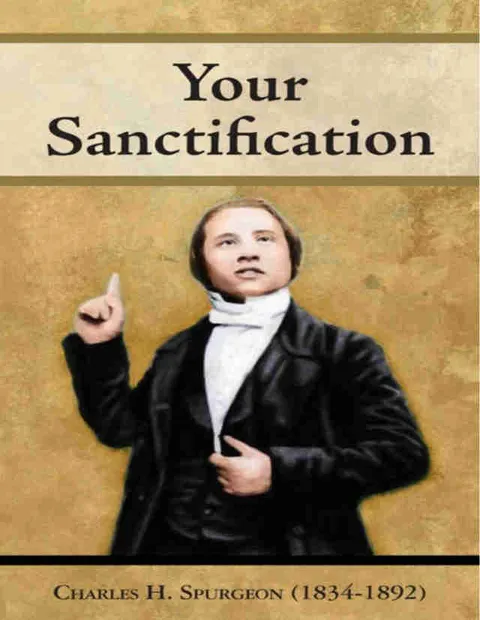
"Your Sanctification" by Charles Spurgeon is a Christian book that explores the importance of personal holiness and spiritual growth. Spurgeon emphasizes the need for believers to continuously strive for sanctification through faith, repentance, and obedience to God's word. He offers practical advice and encouragement for Christians seeking to live a life that glorifies God and reflects His love and grace.
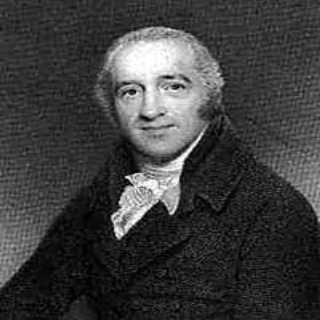
William Booth
General William Booth’s early life
William Booth was born in Nottingham in 1829 of well-bred parents who had become poor. He was a lively lad nicknamed Wilful Wil. At the age of fifteen he was converted in the Methodist chapel and became the leader of a band of teenage evangelists who called him Captain and held street meetings with remarkable success.
In 1851 he began full-time Christian work among the Methodist Reformers in London and later in Lincolnshire. After a period in a theological college he became a minister of the Methodist New Connexion. His heart however was with the poor people unreached by his church, and in 1861 he left the Methodists to give himself freely to the work of evangelism. Joined by Catherine, his devoted wife, they saw their ministry break out into real revival, which in Cornwall spread far and wide.
One memorable day in July 1865, after exploring the streets in an East End district where he was to conduct a mission, the terrible poverty, vice and degradation of these needy people struck home to his heart. He arrived at his Hammersmith home just before midnight and greeted his waiting Catherine with these words: “Darling, I have found my destiny!” She understood him. Together they had ministered God’s grace to God’s poor in many places.
Now they were to spend their lives bringing deliverance to Satan”s captives in the evil jungle of London”s slums. One day William took Bramwell, his son, into an East End pub which was crammed full of dirty, intoxicated creatures. Seeing the appalled look on his son”s face, he said gently, “Bramwell, these are our people—the people I want you to live for.”
William and Catherine loved each other passionately all their lives. And no less passionately did they love their Lord together. Now, although penniless, together with their dedicated children, they moved out in great faith to bring Christ”s abundant life to London”s poverty-stricken, devil-oppressed millions.
At first their organisation was called the Christian Mission. In spite of brutal opposition and much cruel hardship, the Lord blessed this work, and it spread rapidly.
William Booth was the dynamic leader who called young men and women to join him in this full-time crusade. With enthusiastic abandon, hundreds gave up all to follow him.
“Make your will, pack your box, kiss your girl and be ready in a week”, he told one young volunteer.
Salvation Army born
One day as William was dictating a report on the work to George Railton, his secretary, he said, “We are a volunteer army,”
“No”, said Bramwell, “I am a regular or nothing.”
His father stopped in his stride, bent over Railton, took the pen from his hand, and crossing out the word “volunteer”, wrote “salvation”. The two young men stared at the phrase “a salvation army”, then both exclaimed “Hallelujah”. So the Salvation Army was born.
As these dedicated, Spirit-filled soldiers of the cross flung themselves into the battle against evil under their blood and fire banner, amazing miracles of deliverance occurred. Alcoholics, prostitutes and criminals were set free and changed into workaday saints.
Cecil Rhodes once visited the Salvation Army farm colony for men at Hadleigh, Essex, and asked after a notorious criminal who had been converted and rehabilitated there.
“Oh”, was the answer, “He has left the colony and has had a regular job outside now for twelve months.”
“Well” said Rhodes in astonishment, “if you have kept that man working for a year, I will believe in miracles.”
Slave traffic
The power that changed and delivered was the power of the Holy Spirit. Bramwell Booth in his book Echoes and Memories describes how this power operated, especially after whole nights of prayer. Persons hostile to the Army would come under deep conviction and fall prostrate to the ground, afterward to rise penitent, forgiven and changed. Healings often occurred and all the gifts of the Spirit were manifested as the Lord operated through His revived Body under William Booth’s leadership.
Terrible evils lay hidden under the curtain of Victorian social life in the nineteenth century. The Salvation Army unmasked and fought them. Its work among prostitutes soon revealed the appalling wickedness of the white slave traffic, in which girls of thirteen were sold by their parents to the pimps who used them in their profitable brothels, or who traded them on the Continent.
“Thousands of innocent girls, most of them under sixteen, were shipped as regularly as cattle to the state-regulated brothels of Brussels and Antwerp.” (Collier).
Imprisoned
In order to expose this vile trade, W. T. Stead (editor of The Pall Mall Gazette) and Bramwell Booth plotted to buy such a child in order to shock the Victorians into facing the fact of this hidden moral cancer in their society. This thirteen-year-old girl, Eliza Armstrong, was bought from her mother for ÂŁ5 and placed in the care of Salvationists in France.
W. T. Stead told the story in a series of explosive articles in The Pall Mall Gazette which raised such a furore that Parliament passed a law raising the age of consent from thirteen to sixteen. However, Booth and Stead were prosecuted for abduction, and Stead was imprisoned for three months.
William Booth always believed the essential cause of social evil and suffering was sin, and that salvation from sin was its essential cure. But as his work progressed, he became increasingly convinced that social redemption and reform should be an integral part of Christian mission.
So at the age of sixty he startled England with the publication of the massive volume entitled In Darkest England, and the Way Out. It was packed with facts and statistics concerning Britain’s submerged corruption, and proved that a large proportion of her population was homeless, destitute and starving. It also outlined Booth’s answer to the problem — his own attempt to begin to build the welfare state.
All this was the result of two years” laborious research by many people, including the loyal W. T. Stead. On the day the volume was finished and ready for publication, Stead was conning its final pages in the home of the Booths. At last he said, “That work will echo round the world. I rejoice with an exceeding great joy.”
“And I”, whispered Catherine, dying of cancer in a corner of the room, “And I most of all thank God. Thank God!” As the work of the Salvation Army spread throughout Britain and into many countries overseas, it met with brutal hostility. In many places Skeleton Armies were organised to sabotage this work of God. Hundreds of officers were attacked and injured (some for life). Halls and offices were smashed and fired. Meetings were broken up by gangs organised by brothel keepers and hostile publicans.
One sympathiser in Worthing defended his life and property with a revolver. But Booth’s soldiers endured the persecution for many years, often winning over their opponents by their own offensive of Christian love.
The Army that William Booth created under God was an extension of his own dedicated personality. It expressed his own resolve in his words which Collier places on the first page of his book:
“While women weep as they do now, I’ll fight; while little children go hungry as they do now, I’ll fight; while men go to prison, in and out, in and out, as they do now, I’ll fight—I’ll fight to the very end!”
Toward the end of his life, he became blind. When he heard the doctor’s verdict that he would never see again, he said to his son: “Bramwell, I have done what I could for God and the people with my eyes. Now I shall see what I can do for God and the people without my eyes.”
But the old warrior had finally laid down his sword. His daughter, Eva, head of the Army’s work in America, came home to say her last farewell. Standing at the window she described to her father the glory of that evening’s sunset.
“I cannot see it,” said the General, “but I shall see the dawn.”
Trade Self-Help for God-Help
They set out to get help from a higher power. The lion needed courage. The tinman needed a heart. The scarecrow needed a brain. The little girl longed to return home. But at journey’s end, they came to the unfortunate discovery: The Wizard of Oz was no wizard at all. He relied on screens and microphones. His wand was broken. He had only pins and needles to give. Yet, all was not lost. Our four heroes realized that what each had sought, each already possessed. Along the way, Tinman loved, Lion risked, Scarecrow thought. Dorothy carried the ability to travel home wherever she went. They discovered that they did not need an all-powerful Oz behind the curtain. What each truly needed he already held within. Whether or not Frank Baum meant it or not, Wizard of Oz is an apt parable of the generations-old self-help movement in our increasingly post-Christian West. The Oz, many say, has nothing to offer. God, the wisdom of modern man finally confirms, is a fraud. Yet, some rush to tell us, all is not lost. After sobering from the opiate of the masses, they tell us to awaken to reality: what we’ve needed all along already resides within each of us. Truth in Self-Help Some professing Christians are promoting self-help resources at alarming rates. As can happen when biting into that pizza roll too quickly, we can lose the ability to taste differences. We chew pop-psychology’s ideology of self-reliance and discern no real difference from Christianity, which builds upon God-dependence. We swallow both indiscriminately and wonder why our stomachs hurt. Before we look at the differences between the ideologies, first a question: Can we learn anything from the self-help movement? Why does this placebo help some? Many will line up to testify of its cure-all power. What’s in the snake oil? At least one true ingredient: self-help acknowledges our personal agency. Self-help assumes that you can indeed do something to help yourself. It too rejects the deceit that we drift helplessly downstream from our past or current circumstances. We are not leaves floating down from trees. The me of yesterday doesn’t have to be the me of tomorrow. We can learn discipline. We can “take control” of various aspects of our lives, escape addictions, and overcome fears. At least self-help affirms what God always has: we can, even now, reap a different harvest by sowing a different crop. It properly highlights the truth that we can — and must — own some measures of responsibility for our lives. We each can choose, as Luther once said, many things under heaven. And each decision will have consequences. Self-help advice rescues some from the fatalistic, paternalistic, dehumanizing worldviews (so common today) that deny a crucial component of God’s world: “So God created man in his own image, in the image of God he created him; male and female he created them” (Genesis 1:27). Diagnosing the Difference The ineptitude of the self-help philosophy becomes apparent when we contrast it with God-help. Note three differences, among others. 1. On Whom Do You Rely? Self-help gurus have little to sell us other than ourselves. In stopping at mere personal agency, they send us to build a new life while denying us straw for our bricks. Sure, they interject themselves to get us going (for a small fee, of course), but the real power resides within. The god they point to stoops down to fit into every mirror we see. Returning to our childhood optimism, “I think I can, I think I can,” this endless search to find your true potential borrows from the oldest heresy: “And you will be like God” (Genesis 3:5). Claiming to be wise, these gurus exchange the glory of the immortal God for images of successful man. Believe in yourself. Clutch the scepter of your life. You can do all things through you who gives you strength. As if God, looking down from heaven without any mercy, thundered, “Just figure it out!” Promoters of self-help have not been tutored in that school that Paul had: We were so utterly burdened beyond our strength that we despaired of life itself. Indeed, we felt that we had received the sentence of death. But that was to make us rely not on ourselves but on God who raises the dead. (2 Corinthians 1:8–9) The illusions of self-help shatter when suffering weighs so heavily on our backs that we despair of life itself. Pain reminds us that we are still but creatures — for the gods do not bleed. But all affliction is a choice friend when it teaches us to sing, “I lift up my eyes to the hills. From where does my help come? My help comes from the Lord, who made heaven and earth” (Psalm 121:1–2). The shoulders of him alone, who carried the cross and willingly bled for the treason of our self-reliance, can bear all of our further needs. 2. What Help Do You Get? When we look within for help, we receive only temporal solutions to what amounts to eternal problems. That alcohol addiction is not first and foremost a sin because it destroys one’s family and poisons oneself. All transgression, as we shall all soon discover, is against God: “Against you, you only, have I sinned and done what is evil in your sight” (Psalm 51:4). God has the first grievance, though the shrapnel certainly strikes others as well. Self-dependence may subdue some of the symptoms of sin — you stop drinking, overeating, or committing adultery — but a life of sin against God remains unaddressed and ultimately unaltered. Whereas self-help can tidy a sinking ship, “godliness is of value in every way, as it holds promise for the present life and also for the life to come” (1 Timothy 4:8). Grace trains the Christian to say “No!” to theft, anger-issues, pornography, pride, laziness, and say, “Yes!” to self-control, uprightness, and godly lives in the present (Titus 2:11–12) — all while steering us home and preparing us for heaven, not hell. 3. Who Gets the Glory? When we trust in self — and actually succeed— we get the glory. I am smarter, more disciplined, better. When we become self-made men and women, and not God-made men and women, we run from disordered lives into the arms of pride. Having escaped the cobra, we encounter the bear. And this tempts the self-reliant to look down on others who aren’t successful, and, whether they ever succumb to temptation or not, they never bother looking up to God. But the man who makes God his trust has a very different victory song: Not in my bow do I trust, nor can my sword save me. But you have saved us from our foes and have put to shame those who hate us. In God we have boasted continually, and we will give thanks to your name forever. (Psalm 44:6–8) The Christian, awake to the reality that he has no good apart from his God (Psalm 16:2), speaks repeatedly, “Not to me, O God, not to me, but to your name give glory” (Psalm 115:1). Christ is his boast. Christ is his refrain. He wants every triumph to add another jewel to the crown of his King. Make the Trade Self-help gives me my own small, fleeting glory. God-help offers us deep, everlasting joy, secure in his unfading glory. Self-help offers a temporal good (at best). God-help gives eternal good with the temporal thrown in. Self-help relies on my discipline, my resolve, and my effort. God-help builds upon a child’s cry to his father, leaning on one’s eternal family, and trusting God’s unfailing promises. God-help sustains me with daily bread from heaven. Self-help cannibalizes me, for it can find no other food. God-help ends in salvation, glory, and the conquering of the world, the flesh, and the devil. Self-help addresses the coughs and sneezes of this life but leaves me, at the end of it, without hope, without forgiveness, and without God in this world. So, trade self-help for God-help. God does not help those who, unmindful of him, help themselves. He works for those who wait for him (Isaiah 64:4). In the end, self-help is sheer folly. It sends us to work on Babel, rent a room in Gomorrah, eat grass with the mad king, and speak over ourselves, “Take up your bed and rise.” The placebo works only for so long, but all shall fall eventually — and “great shall be the fall.” But those who trust in Christ have Almighty God working in them, unsearchable promises to guide them, a heaven to journey to, and a Savior to glorify along the way. Article by Greg Morse