
GIP Library icon

LOG IN TO REVIEW
About the Book


"Be Angry, but Don't Blow It!" by Lisa Bevere is a book that offers practical advice on how to deal with anger in a healthy and productive way. The author emphasizes the importance of acknowledging and expressing anger, but also provides strategies for controlling and managing it effectively. Through personal anecdotes and biblical teachings, Bevere encourages readers to harness their anger for positive outcomes and to avoid destructive behaviors. Overall, the book aims to help individuals navigate through difficult emotions and relationships with wisdom and grace.

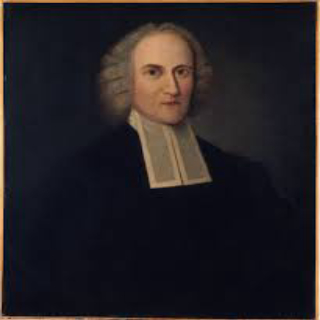
J.C. Ryle

J.C. Ryle ​John Charles Ryle (May 10, 1816 - June 10, 1900) was an evangelical Anglican clergyman and first Bishop of Liverpool. He was renowned for his powerful preaching and extensive tracts. Biography Ryle was born on May 10th, 1816 at Park House, Macclesfield, the eldest son of John Ryle MP and Susannah Ryle. His family had made their money in the silk mills of the Industrial Revolution, and were prominent members of Cheshire society. Accordingly, Ryle was educated at Eton College and then Christ Church, Oxford, where he took a congratulatory First in Greats, and a Blue in cricket. Conversion and ordination Ryle's family were nominal Anglicans, and until his time as an undergraduate Ryle had a similar attitude to Christianity. However, as he was due to sit his final examinations, he became seriously ill with a chest infection, and was confined to his bed. During this time he began to pray and seriously read the Scriptures. However his conversion occurred when he attended an unknown church, and arriving late, he heard the reading Ephesians 2:8-9. The force of these words hit his heart, and from that point on he was assured of his salvation. After leaving Oxford, he returned to Macclesfield to assist his father in business and with the assumption that he would inherit the estate. However in June 1841 Ryle Senior was bankrupted, and the family was left ruined, and forced to leave Macclesfield. With his future now in tatters, Ryle was forced to look for a profession to sustain himself, and as a last resort, he offered himself for ministry in the Church of England. He was duly accepted and ordained in December 1841 by Bishop C.R. Summner of Winchester. Parish ministry Ryle's first charge was as curate of the hamlet of Exbury in Hampshire, an area of a rough but sparse agricultural population, and riddled with disease. After a difficult two years, he became unwell, and was forced to spend several months recuperating. In November 1843 he moved to become the rector of St Thomas', Winchester, where he made a reputation for himself as an energetic and thorough pastor. Over a period of six months the congregation grew to well over six hundred communicants, and the church was forced to consider alternative accommodation. However Ryle was offered the living of Helmingham, Suffolk, and it was to here that he moved in 1844, where he stayed until 1861. With a congregation of some two hundred, it was here that Ryle began to read widely amongst the Reformed theologians, and produce the writings that would make him famous. It was at Helmingham that he began his series of "Expository Thoughts on the Gospels", and started his tract-writing. Though his time at Helmingham was extremely fruitful, Ryle quarreled with the squire John Tollemache, and by 1861 he felt the need to move on. His final parish incumbency was Stradbroke, also in Suffolk, and it was from here that Ryle became nationally famed for his firm preaching and staunch defense of evangelical principles, both from the study and the platform. He wrote several well-known books, mainly based on his tracts and sermons, and often addressing issues of contemporary relevance for the Church from a Biblical standpoint. Of these, perhaps the most enduring are "Holiness" and "Practical Religion", both still in print. Episcopate Ryle's uncompromising evangelicalism in the face of increasing liberal and Tractarian opposition gained him many admirers, and he was fast becoming one of the leading lights of the evangelical party. He was originally recommended for the post of Dean of Salisbury, but before he was appointed the out-going Conservative Prime Minister Benjamin Disraeli offered him the position of Bishop of the newly-created Diocese of Liverpool. Ryle moved to Liverpool in 1880, and would stay until 1900. Despite his previous ministry experience having been almost exclusively exercised within a rural context, his plain speech and distinctive principles made him a favorite amongst Liverpool's largely working-class population. He proved an active bishop, encouraging the building of more churches and missions to reach out to the growing urban communities, and generally seeking to develop the new diocese as best he could. In common with many late Victorian bishops, Ryle was increasingly forced to deal with the tensions caused by the developing Anglo-Catholic wing of the Church of England. Of particular note is the so-called "Bell Cox Case" of 1885. Bell Cox was vicar of St. Margaret's, and a committed Ritualist. His Catholic practices soon came to the attention of several prominent evangelicals in the city, and one of them, James Hakes of the Liverpool Church Association, brought a private prosecution against Bell Cox under the Public Worship and Regulation Act of Despite Ryle's entreaties, Bell Cox refused to moderate his behavior, and thus the case proceeded to the Chancery Court of York, where Bell Cox was found guilty of contempt of court, and imprisoned for seventeen days. Ryle's behavior in particular was criticized for his failure to exercise his legal episcopal veto over the prosecution, and his apparent willingness to allow one of his clergy to be imprisoned over matters of worship. However, an examination of letters written by Ryle from the time suggest that Ryle was by no means a supporter of such practice, yet felt it wrong to come between the law and the defendant, particularly in the case of a private prosecution. In his speech to the Liverpool Diocesan conference the same year he openly declared the imprisonment of clergy over such matters as "barbarous", hardly a note of support. ​ Ryle's tenure as bishop in general is remarkable for his efforts to build churches and mission halls to reach the rapidly expanding urban areas of Liverpool. Though subsequent biographers have criticised this policy, owing to figures which suggest a general decline in church attendance,[[ Link title]] it perhaps says most about Ryle's heart as an evangelist; a desire for all to hear and respond to the Gospel. Ryle served as Bishop until March 1900, where in his eighty-fourth year, a stroke and a general decline in health forced him to retire, despite his desire to die "in harness." He retired to Lowestoft, Suffolk, however passed away on 10th June 1900. He was interred in All Saint's, Childwall, next to his third wife, Henrietta. Bio. Taken from Theopedia

No Holiness, No Heaven

No one will be in heaven who did not walk in good works on earth. In other words, and in the words of Hebrews 12:14, there is a “holiness without which no one will see the Lord.” Abbreviated, “no holiness, no heaven.” In directness, “Faith without works is dead” (James 2:26 NASB). In confession, “Faith, thus receiving and resting on Christ and his righteousness, is the alone instrument of justification: yet is it not alone in the person justified, but is ever accompanied with all other saving graces, and is no dead faith, but works by love” (Westminster Confession). In commandment: “Work out [literally, produce] your own salvation with fear and trembling” (Philippians 2:12). “No one will be in heaven who did not walk in good works on earth.” In illustration: “Every branch in me that does not bear fruit he takes away . . . and the branches are gathered, thrown into the fire, and burned” (John 15:2, 6). In lyric, “He leads me in paths of righteousness for his name’s sake” (Psalm 23:3). In repetition: no one will be in heaven who did not walk in good works on earth. Two Familiar Heresies Now, to say this, I hasten to avoid a different heresy: no one will be in heaven based upon good works. “By grace you have been saved through faith. And this is not your own doing; it is the gift of God, not a result of works, so that no one may boast” (Ephesians 2:8–9). “A person is not justified by works of the law” (Galatians 2:16). Christ’s righteousness, not ours, justifies entirely. The man, woman, or child who believes in him who justifies the ungodly shall be counted righteous before God. His blood brings us near to God, his righteousness imputed to us is needed. In other words, him, him, him — not us — so that no man may boast. Although the Christian walks into the narrow path full of good works, God prepared them for him to walk in beforehand. So here we have it: no one will be in heaven who did not walk in faith-producing good works on earth — “the obedience of faith” (Romans 1:5; 16:26) or “faith working through love” (Galatians 5:6) — and no one in heaven will be there on the basis of his good works. One heresy says it doesn’t matter if you work, run, or fight at all; the other, that your working, running, and fighting earn your place before a holy God. James calls the first the faith of demons (James 2:19). Paul calls the second the faith of the bewitched (Galatians 3:1). One error sits comfortably among evangelicals; the other among Catholics. It is the dead faith closer to home that I wish to address. Once Saved, Always Saved Dead faith (which produces no works) is not necessarily a silent faith. It often rehearses (and abuses) golden mantras such as, “Once saved, always saved,” putting a jewel, as it were, up a pig’s snout. “Nothing shall separate his true children from the love of God; the Shepherd will lose none of his sheep.” Properly understood, “Once saved, always saved” would stand for the amazing truth that from the vantage point of the eternal mountain of God, his children, predestined to be saved before time began, will not fall away — he will bring them home. He carved their names in the book of life; his Son has atoned for their actual sins; he seals them with his very Spirit as a down payment — the Spirit that shall surely bring his work to completion at the day of Christ Jesus. Nothing shall separate his true children from the love of God; the Shepherd will lose none of his sheep. From this, however, some draw crooked lines. Instead of deducing with Paul, “God’s firm foundation stands, bearing this seal: ‘The Lord knows those who are his,’ and, ‘Let everyone who names the name of the Lord depart from iniquity’” (2 Timothy 2:19), some conclude that the perseverance of the saints is optional. They may imagine God putting souls on a conveyor belt to glory. “Once saved, always saved” — no matter how deeply compromised their lives may be. In so doing they pit the essential doctrine of justification against the blood, sweat, and toil of the essential doctrine of sanctification, judging the first to eclipse the second. We do not need holiness, it is thought, because once saved, always saved. And by “saved” we cannot help but conclude they include “saved from needing to obey.” Texts that speak conditionally of inheriting eternal life (conditions God empowers his true children to meet) bewilder dead faith. They cannot stomach texts about the need to continue stable and steadfast in the faith, to endure to the end, to stand firm through trials, to put the flesh to death by the Spirit, to work out one’s own salvation with fear and trembling, to make our calling and election sure through energetic striving (2 Peter 1:1–11). The shouts of their dead faith cry “Lord, Lord” while they disobey him with their lives. Theirs is a faith I knew too well. A faith soberly depicted by the character Talkative in Bunyan’s animated theology, The Pilgrim’s Progress. Along the Road with Talkative A man named Faithful, in Bunyan’s allegory, possessed a faith that worked, while Talkative possessed a faith that did not. They had a conversation along the way. Faithful: Are you going to the heavenly country? Talkative: I am going to that same place. Talkative believes himself headed to the Celestial City. And what’s more, he speaks very Christianly, possessing excellent Reformed doctrine: By this [profitable talk of the Scriptures] a man may learn the necessity of the new birth; the insufficiency of our works; the need of Christ’s righteousness, and so forth. Besides, by this a man may learn what it is to repent, to believe, to pray, to suffer, or the like; by this also a man may learn what are the great promises and consolations of the Gospel, to his own comfort. Further, by this a man may learn to refute false opinions; to vindicate the truth; and also to instruct the ignorant. Bunyan teaches that proper orthodoxy communicated well is not a sufficient sign in itself of living faith. Faithful, not knowing the report of Talkative, whispers to his companion, Christian, “What a brave companion have we got! Surely this man will make a very excellent pilgrim.” At this, Christian modestly smiles and answers plainly, This man with whom you are so taken will beguile with this tongue of his twenty of them that know him not. . . . He is best abroad; near home he is ugly enough. . . . Religion hath no place in his heart, or house, or conversation; all he hath lieth in his tongue, and his religion is to make a noise therewith. His Christianity lies only in his tongue. How does Christian know this? “I have been in his family and have observed him both at home and abroad.” The tree is known by its fruit. He is “a saint abroad, and a devil at home.” Like the Pharisees of Jesus’s day, he says much, but obeys little (Matthew 23:3). “The new covenant promises Christians with new hearts will hate their sin and feel it to be the shame it is.” It is easy for us to imagine that God has saved us because we know right doctrine. Talkative’s great religion of tongue proved untrue in his loves, his relationships, his life. He talks of truth he was never changed by. The grace he speaks of never trained him to say no to ungodliness and to live a godly life (Titus 2:11–14). Borrowing a phrase from C.S. Lewis, he speaks of new life like “a scholar’s parrot may talk Greek.” He repeats what he overhears without knowing the reality of it, as the parrot listening to a scholar may repeat words like charis and sōtēria. Christian observes what is true of many Talkatives today: “He talks of prayer, of repentance, of faith, and of the new birth; but he knows but only to talk of them.” What a fearful place to be. Questions for Self-Examination Are you like this Talkative? I was, and God woke me from my delusion. I pray he would for others like me. Talkative, in the end, does not venture from the City of Destruction. He labels Christian and Faithful judgmental and parts from them. His words traveled beyond his faith and obedience; in the end, he was lost. He never examined himself to make sure he was in the faith and truly born again. At times, we all ask plainly, Am I born again? Christian counsels Faithful concerning Talkative, “Ask him plainly (when he has approved of it, for that he will) whether this thing be set up in his heart, house, or conversation.” Some questions Faithful and Talkative discuss are still helpful to ask today. Do you hate your sin? Not merely talk about hating it, like a hypocritical pastor who denounces the secret sin he indulges. The new covenant promises Christians with new hearts will hate their sin and feel it to be shameful: “You shall remember your ways and all your deeds with which you have defiled yourselves, and you shall loathe yourselves for all the evils that you have committed” (Ezekiel 20:43). Blessed are those who mourn for their sin (Matthew 5:4); God will not despise the heart broken over its sin (Psalm 51:17). Do you love God? Paul said as plain as day, “If anyone has no love for the Lord, let him be accursed” (1 Corinthians 16:22). Do you love him? Do you desire to know him? Do you love him above father, mother, spouse, child? Can you confess that his steadfast love is better than life? Do you hate your remaining sin because it is against him, your soul’s Treasure? Do you obey what you know? Jesus says, “If you know these things, blessed are you if you do them” (John 13:17). “That servant who knew his master’s will but did not get ready or act according to his will, will receive a severe beating” (Luke 12:47). We can imagine we have advanced much in religion or the love of Christ because we know more and more texts on the subject. But these texts must be believed, obeyed, loved. They must take root in us. If we truly know and love him, we will keep his commandments (John 14:15; 1 John 2:3). What do others see? Bunyan writes, “A work of grace in the soul discovers itself either to him that hath it, or to standers by.” Other Christians’ judgments are not infallible, but they can help to reveal blind spots to us (and signs of grace) we do not see in ourselves. As the Faithfuls and Christians today keep along the narrow way with the Book in their hands and love in their hearts, they will do good in this world. They will because God is working in them to will and to work for his good pleasure, producing the fruit of the Spirit in them. They must do good, in fact, because they have a Book of promises commanding, warning, and wooing them onward to the Celestial City. No one in heaven will be there on the basis of his good works, and no one will be in heaven who did not walk in good works on earth. So, we press onward in holiness toward our heavenly home because Jesus has already made us his own. Article by Greg Morse

Feedback
Suggestionsuggestion box
x