
GIP Library icon

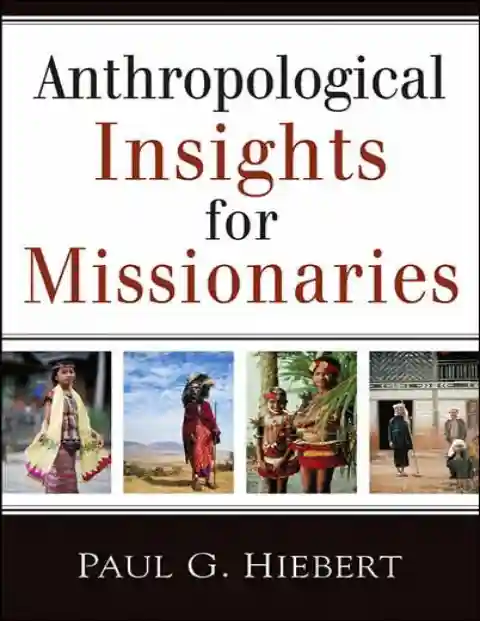
Anthropological Insights For Missionaries Anthropological Insights For Missionaries

Anthropological Insights For Missionaries Order Printed Copy

  • Author: Paul G Hiebert
  • Size: 4.96MB | 408 pages
  • |
Continue with
Google Twitter
LOG IN TO REVIEW
About the Book


"Anthropological Insights for Missionaries" explores the intersection of anthropology and missionary work, providing practical guidance for missionaries seeking to understand and effectively engage with different cultures. The book emphasizes the importance of cultural sensitivity, adaptation, and communication in successful missionary endeavors.

Keith Green

Keith Green Born on October 21, 1953, in Sheepshead Bay, NY; died on July 28, 1982, in Lindale, TX; married Melody Steiner, 1973; children: Josiah (deceased), Keith, Bethany (deceased), Rebekah. Addresses: Record company--Sparrow Records, P.O. Box 5085, Brentwood, TN 37024. Website--Keith Green Official Website: http://www.lastdaysministries.org. Known for his uncompromising approach to both his faith and his music, Keith Green has become a legendary figure in Contemporary Christian music since his death in 1982. Taking on the role of a modern-day prophet, he earned a fervent following thanks to his explicit evangelical message and buoyant brand of pop-rock. Green was a critic both of secular society and of commercial tendencies within the Christian community. Since his passing, he has been the subject of several tribute albums and was inducted into the Gospel Music Hall of Fame in 2001. From early childhood onward, it seemed certain that Green would become a musician. Born in New York, he relocated to the San Fernando Valley area of California with his family not long after. At age eight, he began to perform in stage musicals, appearing in such notable roles as Kurt Von Trapp in a local production of The Sound of Music. In 1965 he published his first song, "The Way I Used to Be," and became the youngest member of the American Society of Composers, Authors, and Publishers. That same year he signed a five-year recording contract with Decca Records and released his first single, "Cheese and Crackers." Though Green was groomed to be a teenage idol, he never quite achieved success. The late 1960s found him experimenting with drugs and dabbling in various Eastern religions. His life began to turn around after he met (and eventually married) songwriter Melody Steiner in the early 1970s. Under Steiner's guidance, Green began to explore fundamentalist Christianity. Before fully embracing the faith, he began keeping company with singer/songwriters Larry Norman and Randy Stonehill, two of Southern California's best-known Christian rock artists. His skills as a singer and composer began to develop as he edged closer to religious conversion. Finally, in 1975 he became a committed Christian after becoming involved with the Vineyard, a well-known San Fernando Valley church. With a convert's fervor, Green became involved in a series of Christian music projects, including the band Good News and the stage musical Firewind. He also began writing spiritually themed songs, among them "Your Love Broke Through," which went on to become a Christian pop standard recorded by Randy Stonehill, Phil Keaggy, and others. Dedicating his reawakened creativity to glorifying God, Green founded Last Days Ministries in 1977. He and his followers evangelized to young rock music fans, street people, and others not being reached by conventional churches. At the same time, he made his debut as a Christian recording artist, signing with Sparrow Records and releasing the album For Him Who Has Ears to Hear. This song collection displays the essentials of Green's musical style: exuberant singing, piano-based melodies, and well-crafted pop/rock production. Among the best-known tracks on Green's first album are "You Put This Love in My Heart," "No One Believes Me Anymore," and "Your Love Broke Through." Balancing the warm-hearted testimony of these tunes are some humorous moments, including "No One Believes Me Anymore," a mock lament sung from the Devil's point of view. Overall, For Him Who Has Ears to Hear introduced Green to the Christian music market as a gifted musical evangelist of enormous potential. As his audience grew, Green made clear that his focus was on spreading Christian teaching rather than providing entertainment. He sought to challenge the assumptions of his fellow believers, criticizing Christians who took their faith for granted. Some compared him with the Old Testament prophet Ezekiel, who decried the loose morals and weak faith of his generation. A number of the songs on Green's 1978 album No Compromise were addressed to the spiritually lazy. Most important among these is "Asleep at the Light," a ringing call for Christian activism sung by Green with palpable emotion. Less intense but still effective is the playful "Dear John (Letter to the Devil)" and the country-tinged "Soften Your Heart." All three of these songs received considerable airplay on Christian music stations. Green was uneasy in his role as an emerging celebrity. He spoke out against the Christian music industry's increasing tendency to imitate secular show business ways. "Why do we idolize Christian singers and speakers?," he asked in a statement issued through Last Days Ministries. "We go from glorifying musicians in the world, to glorifying Christian musicians. It's all idolatry! ... It's true that there are many men and women of God who are greatly anointed to call down the Spirit of God on His people and the unsaved. But Satan is getting a great victory as we seem to worship these ministers on tapes and records...." Turning away from the California Christian music scene, Green relocated to Lindale, a small east Texas community, in 1978. In addition to maintaining Last Days Ministries, he decided to launch his own record company, Pretty Good Records. Through this label, he released his next album, So You Wanna Go Back to Egypt, in 1980. This eclectic effort pokes fun at weak-spirited believers in its title track and offers a personal confession of need in "I Want to Be More Like Jesus." The most enduringly popular track proved to be "Oh Lord You're Beautiful," a powerful hymn that became a favorite at Christian worship services. In a bold move, Green announced that So You Wanna Go Back to Egypt would be sold for a variable price, even given away for free to those unable to pay. This decision sent shock waves through the Christian music industry, causing other artists to reconsider their album and concert pricing policies. An estimated 200,000 copies of the album were eventually distributed on a "pay what you can afford" basis. Unlike some of his Christian music peers, Green showed little desire to dilute his message in hopes of reaching a wider audience. His 1982 album Songs to the Shepherd concentrates on worshipful material, praising the Lord in musical settings ranging from uplifting pop ("You Are the One") to blues-seasoned rock ("O God Our Lord") to old-fashioned country ("Draw Me"). While these songs were little-heard outside the Christian community, they helped fire Green's already-committed audience to a greater level of devotion. Fusing his work as a performer and evangelist, he toured actively during the early 1980s, mixing personal testimonials and heartfelt exhortations in between his musical numbers. Green's life was cut short just as he began to hit his stride as a musician and minister. On July 28, 1982, he boarded a small Cessna aircraft for a brief sightseeing flight around his property in Lindale. Also on board were his son Josiah and daughter Bethany, along with the pilot and eight other passengers. Overloaded, the plane crashed shortly after takeoff, killing everyone on board. Recovering from her loss, Melody Green decided to carry on with Last Days Ministries and Pretty Good Records. Recordings of her husband's music were released posthumously, beginning with Prodigal Son and Jesus Commands Us to Go in 1983. Though lacking the cohesiveness of the albums released during his lifetime, both these song collections capture Green in strong creative moments. Prodigal Son's dramatic title track is a particular highpoint. Melody Green continued to guide Last Days Ministries through the coming years and, in 1985, also took on the directorship of Americans against Abortion. Green's musical legacy remained vital as well, with many of his best-known recordings repackaged in compilation albums by Sparrow during the 1980s and 1990s. Multi-artist tribute albums also began to appear, starting with 1992's No Compromise: Remembering the Music of Keith Green. 2001 saw the release of Start Right Here: Remembering the Life of Keith Green, featuring spirited interpretations of his songs by such notable Christian rock acts as MxPx, Joy Electric, and Starflyer 59. Your Love Broke Through: The Worship Songs of Keith Greencontains covers of Green tunes by Michael W. Smith, Twila Paris, Rebecca St. James, and other top-rank Christian pop/rock talents. On November 27, 2001, Green was inducted into the Gospel Music Hall of Fame. The honor served as an acknowledgment of his continuing influence in Contemporary Christian music some 20 years after his death. Green's intensity and dedication have continued to make him a role model for younger Christian performers, such as Rebecca St. James, who paid tribute to him in a Sparrow Records press biography. "I think what touches me most about him was that he was so committed to loving God and living for Him," she said of Green. "I know he was very strong-willed and people were sometimes offended at what he did and said, but it all came out of a pure motive of trying to be committed to Him in every part of his life. He wasn't going to back down just because of what people thought of him. That, to me, says that he was more focused on pleasing God than on pleasing man, something I think we should all try to focus on." Keith Green's Career Began career as child stage actor and composer, early 1960s; signed with Decca, released debut single, "Cheese and Crackers," 1965; began writing Christian songs, mid-1970s; founded Last Days Ministries, released first album, For Him Who Has Ears to Hear, 1977; founded Pretty Good Records, released album So You Wanna Go Back to Egypt, 1980. Keith Green's Awards Induction (posthumous), Gospel Music Hall of Fame, 2001. Famous Works For Him Who Has Ears To Hear , Sparrow, 1977. No Compromise , Sparrow, 1978. So You Wanna Go Back to Egypt , Pretty Good, 1980. The Keith Green Collection , Sparrow, 1981. Songs for the Shepherd , Pretty Good, 1982. The Prodigal Son , Pretty Good, 1983. Jesus Commands Us to Go , Pretty Good, 1984. Because of You--Songs of Testimony , Sparrow, 1998. Here I Am, Send Me--Songs of Evangelism , Sparrow, 1998. Oh Lord, You're Beautiful--Songs of Worship , Sparrow, 1998. Make My Life a Prayer to You--Songs of Devotion , Sparrow, 1998.

Your First Years of Marriage

In many ways, we were a natural fit. My would-be husband and I both loved Jesus, studied his word, cherished worship through song, desired many children, longed to be hospitable, and valued the home and the wife’s joyful place in it. We both had Scandinavian heritage and understood the barbs that flew between Swedes and Norwegians. We both prized hard work — with an openness to risk-taking endeavors. As an engaged couple, with all we had going for us, it was hard for me to imagine what bumps we might face as we started down the road together. But that’s only because I underestimated how real and stubborn indwelling sin is. I thought external bumps in the road would be the obstacles — circumstances like finances or health issues or job difficulties — when really it was our own flesh that presented the biggest problems. Reflecting back on the first years of marriage and family, I commend three principles to ease the bumps and grease the wheels of joy in Christ in your marriage and family. 1. Let God Define ‘Normal’ We all come from unique backgrounds. Even two people who share a similar heritage, like my husband and I, have had vastly different childhoods. I grew up with 27 first cousins. I became an aunt at 14 and can’t really remember a time we didn’t have young children around our home (even though I was the youngest child in my family). My husband had four cousins and had rarely encountered an infant or toddler at close range prior to marrying into my family. This made for very different ideas of what “normal” felt and sounded like. I grew up on an acreage in a blue-collar town that bordered several rural communities. My mom grew up on a farm. My husband grew up in a first-ring suburb of a major metropolis. His dad grew up in the big city. We had very different conceptions of what the “outdoors” was for. For him, it was mainly for recreation and enjoyment — for hiking or biking or kayaking. For me, it was mainly for work — for mowing or burning the burn pile or doing animal chores. Our former “norms” can enrich our marriage, adding interest and laughter and providing opportunities to take something that’s been passed down and make it new. Or they can threaten the allegiance of our hearts. If what was normal to us in our childhood becomes the ultimate standard for our marriage, we have misplaced our loyalties. We need to be led by the only authoritative and inerrant guide to life and marriage that we have: All Scripture is breathed out by God and profitable for teaching, for reproof, for correction, and for training in righteousness, that the man of God may be complete, equipped for every good work. (2 Timothy 3:16–17) Including every good work in the sometimes thorny first years of marriage. In marriage, God is making something new: a new one-flesh union, that is, a new family. And when a husband and wife let God’s word define normal, the wife willingly comes under the leadership of her husband in submission, as Scripture directs her to reflect Christ’s church (Ephesians 5:22–25). Her family of origin may aid that process or hinder it, but in either case, a reprioritizing happens. For the husband, it means looking to Christ as the standard by which he loves and leads his wife, and adopting his previous family’s practices only inasmuch as they accord with Christ. “If God’s word is the norm, the authority, you will have solid common ground on which to stand, come what may.” When I was young, my mom gave me one primary piece of advice when it came to choosing a husband: “God’s word must be his authority.” It’s key advice for men and women, and I gladly pass it along to you. If God’s word is the norm, the authority — not the culture, not your friends’ opinions or your family’s traditions, not Netflix or social media — you will have solid common ground on which to stand, come what may. 2. Stay in Step with the Spirit Paul tells the Galatians, “If we live by the Spirit, let us also keep in step with the Spirit. Let us not become conceited, provoking one another, envying one another” (Galatians 5:25–26). It may seem unlikely for two people who love each other and have committed their lives to one another “for better or worse” to fall into conceit, envy, and provocation of one another — and yet it’s common enough in marriage. The lies of the world have primed us to believe that men and women are on two separate teams in life. Team Women must advocate for women, and Team Men (in a bit of irony) must also advocate for women (although many rebel against this). This means that, at least for those of us raised in the United States or the West, women are expected to compete with men. From a young age, girls are taught that how they rank is a function of whether or not they are beating the boys. This way of thinking infects both boys and girls. And while that attitude may lie dormant during dating or courtship, it will rear its head if not dealt with. In a husband, this can look like unrealistic expectations for his wife — treating her like another man who shouldn’t have any significant differences from him. For example, he may expect her to earn what he earns, or overlook the inherent vulnerability of pregnancy and caring for small children. In a wife, this can look like pulling out the measuring stick to keep track of all the ways she’s getting a raw deal compared to him. For example, she may envy the occasional out-to-eat work lunches while she eats with the kids at home, or she may resent that the care of small children falls mainly to her. These are deadly attitudes to maintain in a marriage. When we marry, the Spirit of God does something amazing: he makes us part of a new team. I was blessed to join Team Dodds — not Team Women, or Team Men, or Team Me. When something wonderful happens to the husband, the wife rejoices as though it has happened to her, because it has. When something difficult happens to the wife, the husband nurtures and defends her as though it has happened to him, because it has. How do we keep in step with the Spirit in marriage? By prayerfully and regularly confessing our sins, and by setting our minds on the things of the Spirit, with a special focus on Christ — his life, his words, and his ways (1 John 1:9; Romans 8:5). We walk in the Spirit of Christ when we conform to the way he’s designed the marriage: “‘a man shall leave his father and his mother and hold fast to his wife, and the two shall become one flesh.’ So they are no longer two but one flesh. What therefore God has joined together, let not man separate” (Matthew 19:5–6). 3. Share Your New Life with Others My husband and I were married in June 2002. By October, we were taking a class to join our local church. At the same time, we opened our home (the upstairs of a duplex) to host a small group of singles and couples. I was 21 and still finishing college. It may have seemed a bit premature for us to join a church we were so new to, or to host a small group made up of mostly strangers, but the church had a need and we were eager to help. We didn’t join the church or host a small group primarily as ways to establish a stronger marriage, but looking back, they were important in shaping the patterns and priorities of our life. “The hospitable people I know are hospitable with little and with much, in small spaces and in big.” Many young families think that hospitality will sprout when the timing is right — when they get a bigger place, or when the kids aren’t so little, or when the finances aren’t so tight, or when they get that one room cleaned out. I’ve never seen it happen that way. The hospitable people I know are hospitable with little and with much, in small spaces and in big, among babies and boomers, in a dirty kitchen and a clean one. Sharing your home with others — making food for them, stretching your grocery budget on their behalf, letting them into your bathroom, cleaning up after their messes, inviting them into your thoughts through conversation and listening to theirs — is shockingly intimate in a world where embodied presence is becoming rare. Paul tells the Thessalonian church that “being affectionately desirous of you, we were ready to share with you not only the gospel of God but also our own selves, because you had become very dear to us” (1 Thessalonians 2:8). When we invite others into our home, we give them a bit of “our own selves.” When a husband, wife, and their children offer their home and their “own selves” to others through hospitality, they are not robbing time or resources from each other; they are gaining by giving. Hospitality forms a family identity that is not navel-gazing, but focused on sharing the love of God in practical ways with others. I can think of little else that will form and establish a Christian family to be joyful and robust in the Lord for decades to come than to practice sharing your life with others. Don’t let your home or marriage or family be only private. “Welcome one another as Christ has welcomed you, for the glory of God” (Romans 15:7). A husband and wife who have made God’s word their norm and who are keeping in step with the Spirit will have much to share with others. Open your doors and welcome many to come taste of Christ’s goodness at your table. Article by Abigail Dodds

Feedback
Suggestionsuggestion box
x