
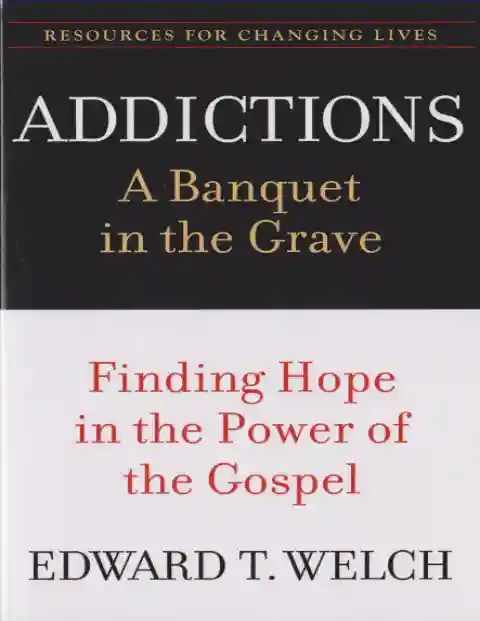

Addictions: A Banquet In The Grave Order Printed Copy
- Author: Edward T. Welch
- Size: 1.99MB | 336 pages
- |
Others like addictions: a banquet in the grave Features >>

There Were Two Trees In The Garden

The Assignment Vol I: The Dream And The Destimy
Holy Discontent: Fueling The Fire That Ignites Personal Vision

The Assignment Vol 3: The Trials And The Triumphs
The Assignment Vol 4: The Pain And The Passion

No Handle On The Cross - An Asian Meditation On The Crucified Mind
-160.webp)
Uprooting The Spirit Of Fear
The Holy Spirit And His Gifts

The Holy Spirit — The Missing Ingredient
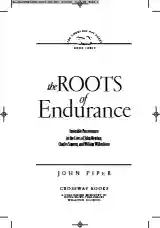
The Roots Of Endurance
About the Book
"Addictions: A Banquet In The Grave" by Edward T. Welch explores the nature of addictions and offers biblical insights on how to overcome destructive behaviors. The book emphasizes the spiritual roots of addiction and provides practical guidance for individuals struggling with various forms of addiction. Welch encourages readers to turn to God for true freedom and transformation.
Calvin Miller
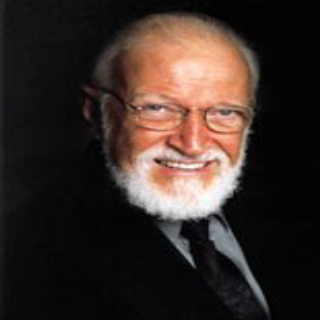 Calvin Miller was a pastor, professor and storyteller, best known for The Singer Trilogy, a mythic retelling of the New Testament story in the spirit of C. S. Lewis and J. R. R. Tolkien. Miller passed away on the afternoon of August 19, 2012, due to complications after heart surgery. He was 75.
A prolific artist and a writer's writer, Miller garnered respect and praise throughout his career from peers like Luci Shaw, Max Lucado and Philip Yancey. He was the author of more than forty books of popular theology and Christian inspiration including such recent books as Letters to Heaven, The Path of Celtic Prayer, Letters to a Young Pastor and his memoir Life Is Mostly Edges.
In addition to his twenty years of pastoral service at Westside Church in Omaha, Nebraska, Miller was also a great mentor to many students and leaders through his preaching and pastoral ministry classes at Beeson Divinity School. Calvin Miller, never one to multiply words, used just four to describe his rule of life: "Time is a gift."
RESCUE FROM THE SLUSH PILE
In October 1973 one important book was rescued from the slush pile (the stack of unsolicited manuscripts every publisher receives) by assistant editor Don Smith. He read a manuscript by a little-known Baptist pastor in Nebraska that was a poetic retelling of the life of Jesus—portraying him as a Troubadour. Both he and Linda Doll excitedly encouraged Jim Sire to take this imaginative manuscript seriously. In February 1974 Sire wrote the author, Calvin Miller, that IVP wanted to publish his book The Singer.
Months before, Miller had been waking up nights, stirred to write this tale, perhaps unconsciously inspired by the recent Broadway hits Jesus Christ Superstar and Godspell. Later Miller wrote:
When the manuscript was done, I sent it to Jim Sire at InterVarsity Press. “It’s good,” he said, “but we want to think about it a couple of weeks before we give you an answer.” So I waited until finally the letter came. They were going to do it. Jim Sire had done his Ph.D. on John Milton, and the fact that he liked it was joy immeasurable to me. “But,” he cautioned, “we’re going to print five thousand of these. They may not do well—in fact we may end up with four thousand of them on skids in our basement for the next ten years. Still, it’s a good book and deserves to be in print.”
Far more than a thousand copies sold. Actually, over three hundred times that amount sold in its first decade. It became “the most successful evangelical publication in this genre.” The Singer was followed in two years by The Song (paralleling the story of the early church in Acts) and two years after that by The Finale (inspired by the book of Revelation). Publication of The Singer changed Miller’s life. Even though he stayed in the pastorate for many years, it set him on a course of writing and speaking that he could not have imagined.
Calvin Miller was a pastor, professor and storyteller, best known for The Singer Trilogy, a mythic retelling of the New Testament story in the spirit of C. S. Lewis and J. R. R. Tolkien. Miller passed away on the afternoon of August 19, 2012, due to complications after heart surgery. He was 75.
A prolific artist and a writer's writer, Miller garnered respect and praise throughout his career from peers like Luci Shaw, Max Lucado and Philip Yancey. He was the author of more than forty books of popular theology and Christian inspiration including such recent books as Letters to Heaven, The Path of Celtic Prayer, Letters to a Young Pastor and his memoir Life Is Mostly Edges.
In addition to his twenty years of pastoral service at Westside Church in Omaha, Nebraska, Miller was also a great mentor to many students and leaders through his preaching and pastoral ministry classes at Beeson Divinity School. Calvin Miller, never one to multiply words, used just four to describe his rule of life: "Time is a gift."
RESCUE FROM THE SLUSH PILE
In October 1973 one important book was rescued from the slush pile (the stack of unsolicited manuscripts every publisher receives) by assistant editor Don Smith. He read a manuscript by a little-known Baptist pastor in Nebraska that was a poetic retelling of the life of Jesus—portraying him as a Troubadour. Both he and Linda Doll excitedly encouraged Jim Sire to take this imaginative manuscript seriously. In February 1974 Sire wrote the author, Calvin Miller, that IVP wanted to publish his book The Singer.
Months before, Miller had been waking up nights, stirred to write this tale, perhaps unconsciously inspired by the recent Broadway hits Jesus Christ Superstar and Godspell. Later Miller wrote:
When the manuscript was done, I sent it to Jim Sire at InterVarsity Press. “It’s good,” he said, “but we want to think about it a couple of weeks before we give you an answer.” So I waited until finally the letter came. They were going to do it. Jim Sire had done his Ph.D. on John Milton, and the fact that he liked it was joy immeasurable to me. “But,” he cautioned, “we’re going to print five thousand of these. They may not do well—in fact we may end up with four thousand of them on skids in our basement for the next ten years. Still, it’s a good book and deserves to be in print.”
Far more than a thousand copies sold. Actually, over three hundred times that amount sold in its first decade. It became “the most successful evangelical publication in this genre.” The Singer was followed in two years by The Song (paralleling the story of the early church in Acts) and two years after that by The Finale (inspired by the book of Revelation). Publication of The Singer changed Miller’s life. Even though he stayed in the pastorate for many years, it set him on a course of writing and speaking that he could not have imagined.
what would judas do
Wednesday plants the suicidal seed of Holy Week: betrayal. Before there could be a Garden, there had to be a seed — the inception of insurrection. Jesus gloriously paid for our redemption with blood, but his blood was murderously bought with money. The promised Savior sold for just thirty pieces of silver. Jesus had taught his disciples, including the one who would betray him, “No one can serve two masters, for either he will hate the one and love the other, or he will be devoted to the one and despise the other. You cannot serve God and money” (Matthew 6:24). No one. Not Judas. Not you or me. The Love of Money Murdered Jesus The Pharisees loved money (Luke 16:14), feared men (Matthew 26:5), and hated Jesus (Matthew 26:4). That formula may be lived out before you more than you realize. The love of money often looks merely practical. The fear of men can hide behind masks. But the Bible is clear: If you love money and fear men, you cannot love God or escape hell (Luke 16:13; John 5:44) — and you become a card-carrying member of the crowd who crucified the Author of life (Acts 3:15). The cross — that horrifying drama of hatred — was only a symptom of the Pharisees’ craving for money, approval, and power. It was as if they bought a billboard to advertise their love for money, and set on a hill for all to see. But they would never do something so obvious. What would the people say? They “feared the people” (Luke 22:2). In fact, the people’s love for Jesus was half the reason the religious leaders hated him so much. The authorities were cowards with cravings. They had to find a way to kill him quietly (Matthew 26:3–5). They had to find a way to murder an innocent man without losing any esteem or influence. First they needed an insider — someone close enough to Jesus to betray him, but far enough from Jesus to betray him. In other words, they needed a perp dressed like the Pope. “Then one of the twelve, whose name was Judas Iscariot, went to the chief priests and said, ‘What will you give me if I deliver him over to you?’” (Matthew 26:14–15). “When they heard it, they were glad and promised to give him money” (Mark 14:11). They found their man, someone who loved money as much as they did, someone who was willing to offend and ostracize even his closest friends for a pay day. The market had opened against the Messiah, and Judas was there to profit. As Randy Alcorn writes, “Satan works on the assumption that every person has a price. Often, unfortunately, he is right. Many people are willing to surrender themselves and their principles to whatever god will bring them the greatest short-term profit” ( Money, Possessions, and Eternity , 41). Judas sold out the Savior, and for just thirty pieces of silver (Matthew 26:15). The Love of Money Makes a Name If you love money — value money and what it can buy above all else — you cannot love God. You will hate him, maybe quietly or privately and hypocritically — but you will hate him. And that hatred will mark you and follow you everywhere. That kind of divine rejection and betrayal renames a person. It defines you. For example, look at how Judas is talked about in the Gospels. “ . . . Simon the Zealot, and Judas Iscariot, who betrayed him .” (Matthew 10:4) “Judas, who would betray him , answered, ‘Is it I, Rabbi?’ He said to him, ‘You have said so.’” (Matthew 26:25) “ . . . and Judas Iscariot, who betrayed him .” (Mark 3:19) “ . . . and Judas the son of James, and Judas Iscariot, who became a traitor .” (Luke 6:16) “But Judas Iscariot, one of his disciples ( he who was about to betray him ), said,” (John 12:4). “He spoke of Judas the son of Simon Iscariot, for he, one of the Twelve, was going to betray him .” (John 6:71) “Judas, who betrayed him , was standing with them.” (John 18:5) Instead of being a faithful disciple guiding people to follow Jesus, he “became a guide to those who arrested Jesus” (Acts 1:16). What will be the testimony of your life — of your spending and giving? Will it be clear to others that you used what God had given you to lead others to his Son, or will it be plain that you surrendered to the gods of the material and drew people away from Jesus? Did you guide the blind to sight, or help blind them to death? The Love of Money Leads to Regret Judas’s affair did not fair so well for him. “Then when Judas, his betrayer, saw that Jesus was condemned, he changed his mind and brought back the thirty pieces of silver to the chief priests and the elders” (Matthew 27:3). Drowning in shame, he screamed for a refund. Confronted with the horror of his exchange, the money had lost its allure. What have I done?! What awful trade have I made?! Take it all back, and give me Jesus! There was no turning back for Judas, no return policy on this rejection. He killed himself in the overwhelming waves of regret and remorse (Matthew 27:5). However, there is time to turn back for you. Luke quotes Jesus for the greedy today, “Take care, and be on your guard against all covetousness, for one’s life does not consist in the abundance of his possessions” (Luke 12:15). When life begins to seem like one long mission to make more money, someone is lying to you. Wake up and give back the silver before it crucifies you. John Piper writes, “When you are dying . . . money walks away from you. It abandons you. It will not go with you to help you. And nothing that you bought with it can go either” ( Money, Sex, and Power , 65). And again later, “[The love of money] substitutes a dollar bill for the divine” (71). The love of money leads only to regret and loss. Reject Judas, Receive Joy Ask yourself what Judas would do in your situation. How would he feel about your current income, shopping habits, and retirement savings? How uneasy would he be about your generosity? Does your budget begin to look like his, just two thousand years later? Refuse to follow Judas in his betrayal, and reject all that money promises to be in place of God. Find your security and satisfaction in something supernatural, eternal, and free. Piper goes on, reflecting on Paul in Philippians 4:11–13, When the stock market goes up or he gets a bonus, he says, I find Jesus more precious and valuable and satisfying than my increasing money . And when the stock market goes down or he faces a pay cut, he says, I find Jesus more precious and valuable and satisfying than all that I have lost . The glory and beauty and worth and preciousness of Christ is the secret of contentment that keeps money from controlling him. ( Money, Sex, and Power , 65) When our joy is no longer in our money but rather is in God . . . our money becomes the visible extension of joy in God, directed toward others. . . . Treasuring God above all things turns money into the currency of worship and love. ( Money, Sex, and Power , 123) Instead of surrendering to our cravings for more, let’s pour ourselves, every penny, into telling the world God is our treasure — right now, later in retirement, and forever in eternity — and spending whatever it takes to bring others into that joy and security with us.

-by-pat-holliday.webp)