

Others like a shepherd looks at psalm 23 Features >>

A Serious Call To A Devout And Holy Life

Hope: A Partner To Faith

Loneliness - How To Be Alone But Not Lonely

Sermon On The Mount

God's Book Of Wisdom

Streams In The Desert: Morning And Evening. 365 Devotions

The Passion Translation

Peace

A Living Sacrifice

Words Of Wisdom: A Life-Changing Journey Through Psalms And Proverbs
About the Book
"A Shepherd Looks At Psalm 23" is a spiritual exploration of the well-known Bible passage from the perspective of a former shepherd. W. Phillip Keller uses his experiences tending sheep to shed new light on the meaning and significance of each verse in Psalm 23. Through personal anecdotes and insights, Keller illustrates the shepherd's care, guidance, and provision for his flock, drawing parallels to God's love, protection, and guidance for his people. This book offers a unique and profound perspective on one of the most beloved and comforting passages in the Bible.
Martin and Gracia Burnham
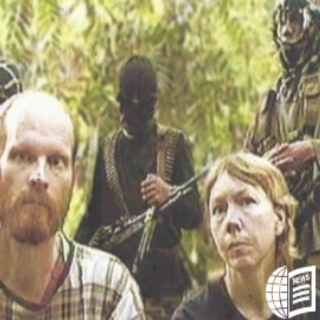 Martin Burnham and Gracia were missionaries who served for 17 years in the Philippines. After their marriage, they underwent hard training in the jungle to prepare themselves to serve in jungle parts. Martin, being a pilot missionary, supported other missionaries who were working among the tribals in jungles. He delivered groceries and medicines to missionaries and tribals and transported sick people to medical facilities. He always had a big heart for tribals and missionaries. Gracia supported him well in the work.
On May 29, 2001, while relaxing at a resort after Martin’s one overseas mission, a Muslim militant group called the Abu Sayyaf Group attacked the resort and abducted the missionary couple and few others for ransom. The missionaries were kept captive for more than a year.
During that one year, the couple went through terrible experiences. They suffered starvation, sleeplessness and sickness, witnessed atrocities of militants and experienced gun battles between militants and the military. Amidst suffering, God was their only hope and strength.
At some point, Gracia was so depressed that although she believed that Christ died for her, she felt God doesn’t love her anymore. Martin said to her “either you believe it all or don’t believe it at all.” They encouraged one another to stand firm in the faith.
Martin Burnham and Gracia ministry in Philippines
Finally, on June 7, 2002, in a rescue operation by the Philippine military, wounded Gracia was rescued. But 42 years old Martin died in the gunfight during the rescue. Later, Gracia went back to America and joined her children.
Gracia did not let her painful experiences depress her and move her away from God. But she used those experiences to encourage others who are going through hardships. She founded the Martin and Gracia Burnham Foundation, which supports missionary aviation and tribal mission work around the world. It also focuses on ministries among Muslims. She forgave who abducted them, visited them in jail and shared Christ’s love. Some of them accepted Christ. Gracia believes that this may be God’s great purpose behind their suffering.
Martin Burnham and Gracia were missionaries who served for 17 years in the Philippines. After their marriage, they underwent hard training in the jungle to prepare themselves to serve in jungle parts. Martin, being a pilot missionary, supported other missionaries who were working among the tribals in jungles. He delivered groceries and medicines to missionaries and tribals and transported sick people to medical facilities. He always had a big heart for tribals and missionaries. Gracia supported him well in the work.
On May 29, 2001, while relaxing at a resort after Martin’s one overseas mission, a Muslim militant group called the Abu Sayyaf Group attacked the resort and abducted the missionary couple and few others for ransom. The missionaries were kept captive for more than a year.
During that one year, the couple went through terrible experiences. They suffered starvation, sleeplessness and sickness, witnessed atrocities of militants and experienced gun battles between militants and the military. Amidst suffering, God was their only hope and strength.
At some point, Gracia was so depressed that although she believed that Christ died for her, she felt God doesn’t love her anymore. Martin said to her “either you believe it all or don’t believe it at all.” They encouraged one another to stand firm in the faith.
Martin Burnham and Gracia ministry in Philippines
Finally, on June 7, 2002, in a rescue operation by the Philippine military, wounded Gracia was rescued. But 42 years old Martin died in the gunfight during the rescue. Later, Gracia went back to America and joined her children.
Gracia did not let her painful experiences depress her and move her away from God. But she used those experiences to encourage others who are going through hardships. She founded the Martin and Gracia Burnham Foundation, which supports missionary aviation and tribal mission work around the world. It also focuses on ministries among Muslims. She forgave who abducted them, visited them in jail and shared Christ’s love. Some of them accepted Christ. Gracia believes that this may be God’s great purpose behind their suffering.
jesus is coming again
Reader, do you know that Jesus is coming again? He said, "I will come again" (John 14:3) and His word endureth forever (1 Pet. 1:25), for He is the truth (John 14:6). The angels said He would come again. "This same Jesus," and "in like manner" (Acts 1:11), and they were not mistaken when they announced His first coming (Luke 1:26-33; see also Luke 2:8-18). The Holy Spirit, by the mouth of the apostles, hath repeatedly said He would come again (1 Thess. 4:16; Heb. 9:28, Heb. 10:37). Is not such an event, stated upon such authority, of vital importance to us? At His first coming, the world rejected Him. He was the despised Nazarene. But when He comes again, He will appear as "the blessed and only Potentate, the King of Kings and Lord of Lords" (1 Tim. 6:13-15). He is coming to sit upon the throne of His glory (Matt. 25:31), and to be admired in all them that believed (2 Thess. 1:10), and to rule, in judgment and equity, all the nations of the earth (Psa. 2:9; Isa. 9:6-7; Rev. 2:25-27). How glorious it will be to see the King in His beauty (Isa. 33:17). Perhaps you are not a Christian, and say— "I Don't Care Anything About It." Then, dear friend, we point you to the crucified Savior as the only hope of salvation. We beg of you to "kiss the Son," lest ye perish from the way. Blessed are all they that put their trust in Him (Psalm 2:12). What shall it profit you if you gain the whole world and lose your own soul? (Matt. 16:26-27) He is coming, and we know neither the day, nor the hour, when He may come (Matt. 25:13). What if He should come now? Would you be found of Him in peace (2 Pet. 3:14), or would you be left behind to endure the terrible things which shall come upon the world (Luke 21:25-26), while the church is with Christ in the air (Luke 21:36; 1 Thess. 4:17), and be made at His appearing (2 Thess. 1:7-10) to mourn (Matt. 24:30) and pray to the mountains and rocks to hide you from His face? (Rev. 6:16). "Prepare to meet thy God," was the solemn injunction to Israel (Amos 4:12), and every one of us, both Jew and Gentile, must meet Him, either in grace or in judgment. We, then, as ambassadors for Christ, beseech you: be ye reconciled to God (2 Cor. 5:20), now, in the accepted time, in the day of salvation (2 Cor. 6:2; Luke 14:31-33). Do let us entreat you to repent and be converted, that your sins may be blotted out (Acts 10:42-43; Acts 17:30-31), and that you may turn "to serve the living and true God; and to wait for his Son from Heaven" (1 Thess. 1:9-10), and be unblamable at the coming of our Lord Jesus Christ (1 Thess. 3:13). But if you are a Christian, then we point you to His coming again, as The True Incentive to a Holy Life.(1 John 3:2-3) Jesus is coming, therefore mortify your members which are upon the earth, that you may appear with Him in glory (Col. 3:4-5). Strive and pray for purity of heart, that you may be like Him and see Him as He is (Matt. 5:18; 1 John 3:2-3). Search the Word, that you may be sanctified and cleansed thereby (Eph. 5:26), and that your whole spirit, and soul, and body may be preserved blameless unto the coming of our Lord Jesus Christ (1 Thess. 5:23). But possibly you say, with contempt, "Oh, That's Second Adventism." Beloved, have you considered that Moses (Deut. 33:2), so David (Psa. 102:16), Isaiah (Isa. 59:20; Isa. 60:1), Jeremiah (Jer. 23:5-6), Daniel (Dan. 7:13), Zechariah (Zech. 14:4-5), all the prophets and apostles (Acts 15:15-17), were believers in the second advent of Christ? And because some, by setting dates, and other errors, have brought disrepute upon this doctrine, shall we cast it aside altogether? But it may be you say (as we have been pained to hear from so many even earnest Christians): "Well, I Don't Think It Concerns Me Much, Anyway: I've always thought that in most cases it meant death, and if I'm prepared for death, that's enough; and there is too much speculation about it to suit me; and I don't believe it's a practical doctrine; and, more than that, I think it's a mistake to pay so much attention to it." Yes, even thus do many Christians, — who profess to be members of the body of Christ (1 Cor. 12:27), and who have been espoused unto one husband, that they may be presented to Him (2 Cor. 11:2) — summarily dispose of this precious truth, that Jesus is coming, to take unto Himself His bride (John 14:3; Eph. 5:23, 32). O, beloved, do not thus deprive yourself of this comforting truth. Please take your pencil and mark in your Bible the passages that pertain to it; and see How Large a Portion of the Word Is Devoted to It. If the Holy Ghost has deemed it so important, is it not worthy of our attention? The Word exhorts us (1 Thess. 4:18; 1 Cor. 1:7) to give attention to it (Rev. 1:3); and the danger of condemnation is to them who do not (Luke 12:45-46; Luke 21:34-36; 1 Thess. 5:1-7). Again, please examine the passages cited under the heading, A Practical Doctrine, and see how Jesus and the apostles used this doctrine to incite us to watchfulness, repentance, patience, ministerial faithfulness, brotherly love, etc., and then decide whether anything could be more practical. Surely no doctrine, in the Word of God, presents a deeper motive for crucifying the flesh, and for separation unto God, and to work for souls, as our hope and joy and crown of rejoicing (1 Thess. 2:19; Dan. 12:3) than this does. For the whole teaching of it is, that our conversation (citizenship) is in heaven; from whence also we look for the Savior, the Lord Jesus Christ; who shall change our vile body, that it may be fashioned like unto His glorious body (Phil. 3:20-21). It awakens groaning for the adoption, to wit, the redemption of our body (Rom. 8:23; Luke 21:28). It gives us a view of the world, as a wrecked vessel (Matt. 7:13-14; 1 Thess. 5:3; 2 Pet. 2:3-9; 2 Pet. 3:5-12), and stimulates us to work with all our might that we may save some (1 Cor. 9:22). Most, if not all, of the evangelists of our day are animated by this doctrine, and surely their work is practical. Again, Peter says, "We have also a more sure word of prophecy; whereunto ye do well that ye take heed, as unto a light that shineth in a dark place, until the day dawn, and the day star arise in your hearts:" (2 Pet. 1:19); and he exhorts us to be mindful of these words (2 Pet. 3:1-2). Therefore we are not speculating when we prayerfully study prophecy. From Jesus is Coming by W. E. B. 3rd. rev. New York: Fleming H. Revell, ©1908. Chapter 1.