
Others like seated in heavenly places Features >>
About the Book
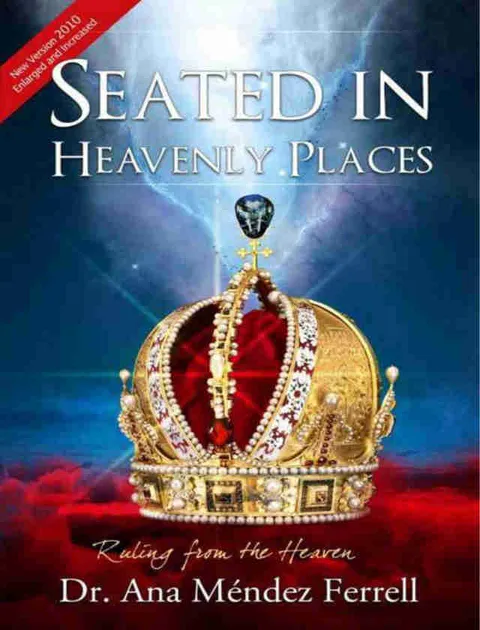
"Seated in Heavenly Places" by Ana Mendez explores the concept of spiritual authority and the believer's identity in Christ. The book delves into the significance of being seated with Christ in heavenly places and teaches readers how to operate from this position of authority in their daily lives. Mendez offers powerful insights and practical tools for walking in dominion and fulfilling one's destiny as a child of God.
Susannah Wesley
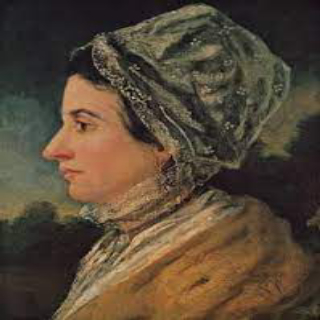
If a passing stranger walking through the rural village of Epworth, England, on any given day between 1700 and 1720 had peered through the window of the home of the rector of the local Anglican church, he might have caught sight of something quite strange. Depending on the time of day, this observer might have seen a woman sitting in a chair with her kitchen apron pulled up over her head while ten children read, studied, or played all around her.
Two of those ten children would have been little boys â John and Charles â who would grow up to shape the course of Christian history and thus change the world. The woman under the apron would have been Susanna Wesley, who assumed this odd posture for two hours almost every day. In a moment you will understand why.
Susanna understood the dynamics of large families. Born the twenty-fifth of twenty-five children in 1669, Susanna Annesley grew up the daughter of a prominent, highly educated minister in cosmopolitan London. She had little formal education, but growing up in an academic household with so many older siblings left her well-read and well-rounded intellectually. She met Samuel Wesley, an aspiring Anglican minister, and married him in 1688, when she was nineteen years old.
Susannaâs remaining fifty-three years were far from easy ones. They were characterized by loss, hardship, and struggle. Yet she became a woman of immense legacy, largely through the dual virtues of organization and prayer.
Susanna delivered nineteen children, but nine â including two sets of twins â died in infancy. Another was accidentally smothered in the night by a nurse as Susanna recovered from labor and delivery.
Her husband, Samuel, did not succeed in his thirty-nine-year assignment as rector of the church at Epworth. An intellectual academic, he simply did not understand or identify with the rural villagers in his parish. Nor did they care for him. When he involved himself from the pulpit in a highly divisive political matter inflaming the entire nation in that era, he earned the hatred of a vast segment of the populace. On two occasions the Wesleysâ parsonage burned down, most likely because of arson on the part of Epworthâs embittered parishioners. Susanna and the children were seldom spared harassment and insults.
Samuel was not good with money, and he once spent several months in debtorsâ prison. The parsonage came with a small farm, but Samuel was uninterested in and ill-suited for farm work, so this too was left for Susanna to manage. This was in addition to the huge task of homeschooling all of the children, with their varying ages and gifts.
For decades, Samuel expended all of his energies and most of the familyâs meager wealth working on an exegetical treatise on the book of Job. The sad irony is that while he was away for long periods of time studying and writing about Jobâs intense sufferings, his living, breathing wife was enduring real pain and hardship, largely on her own.
Susannaâs household organizational skills are the stuff of legend. She knew from personal experience that quality one-on-one time with a parent is hard to come by in a family with many children, yet powerfully important. So she set a rotating schedule through which each of her children spent an hour with her alone before bedtime on a designated night each week.
What is more, she somehow found a way to manage the household and give her large brood of children a world-class education that included both classical and biblical learning. Her girls got the same rigorous education as did her boys, something virtually unheard of in that day. Traditionally, girls of that place and time were taught âfeminineâ skills such as needlework and music before undertaking the most basic education, such as learning to read. Susanna firmly believed this was wrong-headed. Her girls were taught the same curriculum as her boys. Among the âbylawsâ by which she ran her home school was this: â8. That no girl be taught to work till she can read very well; and then that she be kept to her work with the same application, and for the same time, that she was held to in reading. This rule also is much to be observed; for the putting of children to learn sewing before they can read perfectly, is the very reason why so few women can read fit to be heard, and never to be well understood.â1
School hours were from 9:00 a.m. to noon and then 2:00 p.m. to 5:00 p.m., six days a week. All but the smallest children completed their assigned chores promptly before the start of the school day. As in many one-room schoolhouses in generations past, older children helped teach the younger.
No Excuse for Not Praying!
Susanna took her relationship to God as seriously as she did her duties as a wife and mother.
Early in her life, she vowed that she would never spend more time in leisure entertainment than she did in prayer and Bible study. Even amid the most complex and busy years of her life as a mother, she still scheduled two hours each day for fellowship with God and time in His Word, and she adhered to that schedule faithfully. The challenge was finding a place of privacy in a house filled to overflowing with children.
Mother Wesleyâs solution to this was to bring her Bible to her favorite chair and throw her long apron up over her head, forming a sort of tent. This became something akin to the âtent of meeting,â the tabernacle in the days of Moses in the Old Testament. Every person in the household, from the smallest toddler to the oldest domestic helpers, knew well to respect this signal. When Susanna was under the apron, she was with God and was not to be disturbed except in the case of the direst emergency. There in the privacy of her little tent, she interceded for her husband and children and plumbed the deep mysteries of God in the Scriptures. This holy discipline equipped her with a thorough and profound knowledge of the Bible.
Prayer Leads to Teaching
When husband Samuel was away, as was often the case, a substitute minister brought the Sunday morning sermon at the church. Susanna found these messages uninspiring and lacking in spiritual meat. She had a good-sized congregation of her own at home, so she began teaching them the Bible in her kitchen on Sunday afternoons. Soon neighbors began asking if they could attend. Word circulated and others from the area began asking permission to attend as well. So thorough was Susannaâs knowledge of the Bible, and so gifted was she at communicating its truths, that on any given Sunday after church, Susanna would have as many as two hundred people in attendance at her informal family Bible study, which started in her home but soon moved to a larger venue.
Susanna passed away in 1742 at the age of seventy-three, living long enough to see her sons John and Charles become world-renowned leaders of the global Christian movement. This is her legacy, forged in large part in those diligent hours of intercession under that makeshift apron tent.
The Lasting Legacy of Prayer
John Wesley is estimated to have preached to nearly a million people in his long, fruitful life.
His powerful, evangelistic services were frequently held in the open air to accommodate audiences in the tens of thousands. Traveling on horseback, he regularly preached three or more times a day, often beginning before daybreak. Even at the age of seventy he preached, without the assistance of modern amplification, to an estimated throng of thirty-two thousand people.
It is hard to overstate John Wesleyâs theological impact. He remains the dominant theological influence on Methodists and Methodist-heritage groups the world over, including the United Methodist Church, the Methodist Church of Great Britain, and the African Methodist Episcopal Church, all of which played a pivotal role in the abolitionist movement of the nineteenth century.
Wesleyan theology also formed the foundation for the holiness movement in the United States, which includes denominations like the Wesleyan Church, the Free Methodist Church, the Church of the Nazarene, the Christian and Missionary Alliance, the Church of God (Anderson, Indiana), and other groups which compose the colorful mosaic of Pentecostalism and the charismatic movement in North America.
As prolific a writer as he was busy as a preacher, John Wesley has been called the Father of the Religious Paperback. His published sermons, tracts, pamphlets, and booklets number roughly five thousand items. In addition to theology, Wesley wrote about music, marriage, medicine, science, abolitionism, and current events.
Although John married, he and his wife, Mary, had no children. Because of his giving nature toward the poor, the oppressed, and the unevangelized, he left little of material wealth behind when he died in 1791 at the age of eighty-seven. One biographer said John Wesley âwas carried to his grave by six poor men âleaving behind him nothing but a good library of books, a well-worn clergymanâs gown⌠and â the Methodist Church.ââ2 The same writer observed that Johnâs impact was so profound that he in effect âsupplied a new starting-point to modern religious history.â3
Johnâs younger brother Charles was very much a partner in and vital contributor to these accomplishments. A brilliant musician and lyricist, he wrote more than 6,600 hymns, many of which are still in hymnals the world over today.
Charles and his wife, Sarah, had three children who survived infancy, including two boys, Samuel and Charles Jr., who were musical prodigies. Charles Jr. grew up to serve as the personal organist of the English royal family. His brother, Samuel Sebastian Wesley, became one of the most accomplished British composers of the nineteenth century. A contemporary of Mozart, Samuel is sometimes called âThe English Mozart.â4
John and Charles Wesley were passionate lovers of God and powerful persuaders of people.
As a result, the brothers were viewed by many of their contemporaries as religious fanatics. History has been far kinder in its verdict. It views them as world changers. And every one of the changes they wrought is part of the legacy of Susanna Wesley. In his 1864 biography, John Kirk wrote of Susanna, âHer name has been everywhere received with respect; and by a large and influential Christian Community it has been cherished with strongest affection. Her success in the education of her children has been the theme of universal admiration; and no one has yet ventured to hazard even a conjecture as to how much the cause of religion and the well-being of the human race are indebted to her steady piety and extraordinary talents.â5
We hope that as you read [the story of] Susanna Wesley, youâll grab on to the power of them. For Susanna Wesley, there was no amount of distraction that could keep her from prayer and the Bible. That kind of life, deeply rooted, produced great fruit, as evidenced not only by the people who came to hear her teach but also by the children she influenced. The great truth in her story is how prayer does not occupy the stage of activity. Its power is in the quiet trust of gentle souls who are willing to pull away from the everyday to commune with God.
John Wesley, The Heart of Wesleyâs Journal, ed. Ed Hughes and Hugh Price (Peabody, MA: Hendrickson, 2008), 127.
William Henry Fitchett, Wesley and His Century: A Study in Spiritual Forces (London: Smith, Elder & Co., 1906), 1.
Ibid.
Peter Matthews, Whoâs Buried Where in London (London: â¨Bloomsbury, 2017), 37.
John Kirk, The Mother of the Wesleys: A Biography (Ambler, MA: â¨Tresidder, 1864), vii.
Excerpted with permission from Only One Life by Jackie Green and Lauren Green McAfee, copyright Jackie Green, Lauren Green McAfee, Bill High.
Who Might Find God in Your Suffering
Do you feel prepared today to defend your faith in Jesus? If not, what would it take for you to feel ready? Have no fear of them, nor be troubled, but in your hearts honor Christ the Lord as holy, always being prepared to make a defense to anyone who asks you for a reason for the hope that is in you. (1 Peter 3:14â15) These verses are often quoted in conversations about evangelistic and apologetic strategies: Be prepared to make a defense. Meaning, study up on arguments against the Christian faith, anticipate the hardest questions someone might ask, and prepare convincing answers. However, while it is good and loving to carefully think through objections to Christianity, that is not the primary focus or emphasis of this charge. Peter is not encouraging merely a more informed faith, but a more sincere faith â a more fearful, joyful, and active faith. âHave no fear of them, nor be troubled,â he says, âbut in your hearts honor Christ the Lord as holy, always being prepared to make a defense to anyone who asks you for a reason for the hope that is in you.â This kind of defense is not captured in apologetics books, but in our hearts. Itâs not merely a matter of reading and thinking more (though both are essential), but of fearing, loving, and enjoying more. The best way to be prepared to defend your hope in Jesus is not to learn new, sophisticated arguments, but to honor Jesus as much as possible with what you already know. The best apologetic for Christianity is the real transformation already happening in you. Honor Christ as Holy Do you want to be prepared to make a defense for your hope? Pray then like this: âOur Father in heaven, hallowed be your nameâ (Matthew 6:9). Not just in my neighborhood, or city, or nation, but first and most deeply in me. Lord, make my heart a deep and vibrant reflection of your worth. Help me honor you as holy. âPeter is not encouraging merely a more informed faith, but a more sincere faith.â When it comes to witnessing, some of us might spend too much time worrying about intellectual answers to philosophical questions, rather than meditating on the holiness, the glorious otherness, of God. We may not mainly need to read more but to sit longer beneath the galaxies of what we know of him. We need to linger along the streams of his mercy. We need to sit near the window and listen to the thunder of his justice. We need to hike higher up the mountains of his authority and power. We need to wade a little farther out into the depths of his wisdom. For some, our hearts do not need to be piled high with information to be inflamed with the holiness of God but to take more seriously what we know and ask him to light it on fire. And as his holiness burns hotter within us, his light will shine brighter and brighter through us. Our passion and devotion will testify that he made and rules over all; that he loves and redeems sinners; that he satisfies the aches and longings we each carry; that he can be trusted, even through suffering; that heâs returning to make all things new. And as his holiness rises in our hearts, holiness increasingly invades our lives â how we speak and act and love (1 Peter 1:15â16; 2 Corinthians 3:18). Those who honor Christ as holy in their hearts cannot help but witness to him. Their lives and conversations are filled with evidence of sovereign love. Why Would Anyone Ask? But even if we honor Christ as holy in our hearts, even if we feel ready to give a defense for the hope within us, what would make someone ask (1 Peter 3:15)? When Peter wrote to these believers scattered across several regions (1 Peter 1:1), they were not safe believers sheltered in secure churches protected by tolerant governments. These Christians were following Jesus into the growing fires of hostility. They were challenging their cultureâs favorite sins, claiming a Lord higher than the emperor, and choosing him over friends, parents, and even spouses, believing Jesus when he said they would receive a hundredfold (Matthew 19:29). And in the weeks and months that followed, they inherited not peace and comfort, but insults and slander (1 Peter 3:9; 4:4). And that suffering became a stunning platform for their hope. Why did anyone ask about their hope? Because they had hope when few others would â when they were treated unfairly. Because they did not fear what man said or did to them. Because trouble did not seem to trouble them anymore (1 Peter 3:14). They should have been anxious, but they werenât. They should have been defensive, but they werenât. They should have been bitter, but they werenât. Their hope was surprising, confusing, odd. Odd enough to pique a neighborâs curiosity. And when a neighborâs curiosity compelled them to ask, they were met with surprising âgentleness and respectâ (1 Peter 3:15). How these believers shared about Jesus proved their hope as much as anything they said about him. They spoke truth to cruelty with kindness. They received shame and yet held out dignity. They had the spiritual strength, by grace, both to endure abuse and to remain gentle. Do Not Be Surprised What might all of that mean, though, for Christians in less hostile times and places? If we donât suffer like they did, should we expect anyone to ask about our hope? Well, we shouldnât assume we wonât suffer like they did. Faithful followers of Jesus in Western societies either already have, or soon will, experience greater opposition to our faith â in our families, our workplaces, our neighborhoods, our social media feeds. In other words, we are likely about to experience (apart from revival) what the vast majority of faithful followers of Jesus in history have experienced. As John Piper observes, The church in America is slowly awakening from the distortion of 350 years of dominance and prosperity. Until recently, being a Christian in America has been viewed as normal, good, patriotic, culturally acceptable, even beneficial. (âNavigating Trials in the New Americaâ) Christians have always been strangers and aliens in America, but some of us are finally beginning to feel just how foreign we are here. So, âdo not be surprised at the fiery trial when it comes upon you to test you, as though something strange were happening to youâ (1 Peter 4:12). They Will Malign Us Also, the fiery trials in Peterâs letters actually may be surprisingly similar to what we can increasingly expect today. While the persecution he was speaking into was pointed and intense, it seems to have been social and verbal, not physical: âThey malign youâ could be a good summary (1 Peter 4:4; see also 4:14). And the world will malign us for what we believe about Jesus, about abortion, about homosexuality, about race, about hell. In most places in America today, if everyone in our lives knew what we really believe, many would hate what we believe. And they may hate us â whether loudly or quietly, whether to our faces or to a coworker â for what we believe. The apostle Paul warns, âAll who desire to live a godly life in Christ Jesus will be persecutedâ (2 Timothy 3:12). Those of us who have not been persecuted in some way ought to begin asking some hard questions about all of the acceptance and approval we enjoy. Jesus said, âWoe to you, when all people speak well of youâ (Luke 6:26). So do they? Does the warm admiration of a world that hates God alarm us? When You Suffer Even apart from potential social or political hostility, though, every follower of Christ still suffers in various ways. âThe best apologetic for Christianity is the real transformation already happening in you.â James 1:2 says, âCount it all joy, my brothers, when you meet trials of various kindsâ â not if, but when. Peter says that these trials are necessary âso that the tested genuineness of your faith â more precious than gold that perishes though it is tested by fire â may be found to result in praise and glory and honor at the revelation of Jesus Christâ (1 Peter 1:7). For any Christian in any society during any century, the question is not if we will suffer, but when we will suffer. And more importantly, will how we suffer call attention to our hope in Jesus â or call it into question? Whether our suffering is large or small, whether we endure persecution or infection or some other affliction, our pain exposes the world to our hope. Where do we look when life inevitably gets hard? What do we cling to when all else fails? Can the Christ we proclaim really bear the awful weight of our fears, anxieties, insecurities, and sins? He can, and he does, and he will. So honor him as holy, especially when suffering comes, and be ready to tell whoever might ask why you still have hope. Article by Marshall Segal Staff writer, desiringGod.org