
Others like the power of forgiveness Features >>
A Story Of Forgiveness And Healing
The Power Of The Blood
The Force Of Freedom
The Power Of The Communion Table
The Burden Of Freedom

The Logic Of Penal Substitution
The Price Of God's Miracle Working Power
The Life Of Repentance And Purity

Forgiveness: Breaking The Power Of The Past

The Work Of The Holy Spirit In Regeneration
About the Book
"The Power of Forgiveness" by Marilyn Hickey explores the transformative impact of forgiveness on our relationships, emotions, and overall well-being. Through personal anecdotes and biblical teachings, Hickey emphasizes the importance of releasing resentment and choosing to forgive others in order to experience freedom, healing, and restoration in our lives. The book offers practical guidance and spiritual insights on how to cultivate a heart of forgiveness and experience the power of God's grace in our lives.
Keith Green
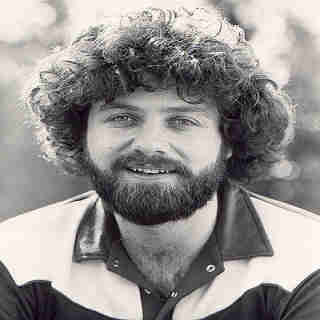 Born on October 21, 1953, in Sheepshead Bay, NY; died on July 28, 1982, in Lindale, TX; married Melody Steiner, 1973; children: Josiah (deceased), Keith, Bethany (deceased), Rebekah. Addresses: Record company--Sparrow Records, P.O. Box 5085, Brentwood, TN 37024. Website--Keith Green Official Website: http://www.lastdaysministries.org.
Known for his uncompromising approach to both his faith and his music, Keith Green has become a legendary figure in Contemporary Christian music since his death in 1982. Taking on the role of a modern-day prophet, he earned a fervent following thanks to his explicit evangelical message and buoyant brand of pop-rock. Green was a critic both of secular society and of commercial tendencies within the Christian community. Since his passing, he has been the subject of several tribute albums and was inducted into the Gospel Music Hall of Fame in 2001.
From early childhood onward, it seemed certain that Green would become a musician. Born in New York, he relocated to the San Fernando Valley area of California with his family not long after. At age eight, he began to perform in stage musicals, appearing in such notable roles as Kurt Von Trapp in a local production of The Sound of Music. In 1965 he published his first song, "The Way I Used to Be," and became the youngest member of the American Society of Composers, Authors, and Publishers. That same year he signed a five-year recording contract with Decca Records and released his first single, "Cheese and Crackers."
Though Green was groomed to be a teenage idol, he never quite achieved success. The late 1960s found him experimenting with drugs and dabbling in various Eastern religions. His life began to turn around after he met (and eventually married) songwriter Melody Steiner in the early 1970s. Under Steiner's guidance, Green began to explore fundamentalist Christianity. Before fully embracing the faith, he began keeping company with singer/songwriters Larry Norman and Randy Stonehill, two of Southern California's best-known Christian rock artists. His skills as a singer and composer began to develop as he edged closer to religious conversion. Finally, in 1975 he became a committed Christian after becoming involved with the Vineyard, a well-known San Fernando Valley church. With a convert's fervor, Green became involved in a series of Christian music projects, including the band Good News and the stage musical Firewind. He also began writing spiritually themed songs, among them "Your Love Broke Through," which went on to become a Christian pop standard recorded by Randy Stonehill, Phil Keaggy, and others.
Dedicating his reawakened creativity to glorifying God, Green founded Last Days Ministries in 1977. He and his followers evangelized to young rock music fans, street people, and others not being reached by conventional churches. At the same time, he made his debut as a Christian recording artist, signing with Sparrow Records and releasing the album For Him Who Has Ears to Hear. This song collection displays the essentials of Green's musical style: exuberant singing, piano-based melodies, and well-crafted pop/rock production. Among the best-known tracks on Green's first album are "You Put This Love in My Heart," "No One Believes Me Anymore," and "Your Love Broke Through." Balancing the warm-hearted testimony of these tunes are some humorous moments, including "No One Believes Me Anymore," a mock lament sung from the Devil's point of view. Overall, For Him Who Has Ears to Hear introduced Green to the Christian music market as a gifted musical evangelist of enormous potential.
As his audience grew, Green made clear that his focus was on spreading Christian teaching rather than providing entertainment. He sought to challenge the assumptions of his fellow believers, criticizing Christians who took their faith for granted. Some compared him with the Old Testament prophet Ezekiel, who decried the loose morals and weak faith of his generation. A number of the songs on Green's 1978 album No Compromise were addressed to the spiritually lazy. Most important among these is "Asleep at the Light," a ringing call for Christian activism sung by Green with palpable emotion. Less intense but still effective is the playful "Dear John (Letter to the Devil)" and the country-tinged "Soften Your Heart." All three of these songs received considerable airplay on Christian music stations.
Green was uneasy in his role as an emerging celebrity. He spoke out against the Christian music industry's increasing tendency to imitate secular show business ways. "Why do we idolize Christian singers and speakers?," he asked in a statement issued through Last Days Ministries. "We go from glorifying musicians in the world, to glorifying Christian musicians. It's all idolatry! ... It's true that there are many men and women of God who are greatly anointed to call down the Spirit of God on His people and the unsaved. But Satan is getting a great victory as we seem to worship these ministers on tapes and records...."
Turning away from the California Christian music scene, Green relocated to Lindale, a small east Texas community, in 1978. In addition to maintaining Last Days Ministries, he decided to launch his own record company, Pretty Good Records. Through this label, he released his next album, So You Wanna Go Back to Egypt, in 1980. This eclectic effort pokes fun at weak-spirited believers in its title track and offers a personal confession of need in "I Want to Be More Like Jesus." The most enduringly popular track proved to be "Oh Lord You're Beautiful," a powerful hymn that became a favorite at Christian worship services. In a bold move, Green announced that So You Wanna Go Back to Egypt would be sold for a variable price, even given away for free to those unable to pay. This decision sent shock waves through the Christian music industry, causing other artists to reconsider their album and concert pricing policies. An estimated 200,000 copies of the album were eventually distributed on a "pay what you can afford" basis.
Unlike some of his Christian music peers, Green showed little desire to dilute his message in hopes of reaching a wider audience. His 1982 album Songs to the Shepherd concentrates on worshipful material, praising the Lord in musical settings ranging from uplifting pop ("You Are the One") to blues-seasoned rock ("O God Our Lord") to old-fashioned country ("Draw Me"). While these songs were little-heard outside the Christian community, they helped fire Green's already-committed audience to a greater level of devotion. Fusing his work as a performer and evangelist, he toured actively during the early 1980s, mixing personal testimonials and heartfelt exhortations in between his musical numbers.
Green's life was cut short just as he began to hit his stride as a musician and minister. On July 28, 1982, he boarded a small Cessna aircraft for a brief sightseeing flight around his property in Lindale. Also on board were his son Josiah and daughter Bethany, along with the pilot and eight other passengers. Overloaded, the plane crashed shortly after takeoff, killing everyone on board. Recovering from her loss, Melody Green decided to carry on with Last Days Ministries and Pretty Good Records. Recordings of her husband's music were released posthumously, beginning with Prodigal Son and Jesus Commands Us to Go in 1983. Though lacking the cohesiveness of the albums released during his lifetime, both these song collections capture Green in strong creative moments. Prodigal Son's dramatic title track is a particular highpoint.
Melody Green continued to guide Last Days Ministries through the coming years and, in 1985, also took on the directorship of Americans against Abortion. Green's musical legacy remained vital as well, with many of his best-known recordings repackaged in compilation albums by Sparrow during the 1980s and 1990s. Multi-artist tribute albums also began to appear, starting with 1992's No Compromise: Remembering the Music of Keith Green. 2001 saw the release of Start Right Here: Remembering the Life of Keith Green, featuring spirited interpretations of his songs by such notable Christian rock acts as MxPx, Joy Electric, and Starflyer 59. Your Love Broke Through: The Worship Songs of Keith Greencontains covers of Green tunes by Michael W. Smith, Twila Paris, Rebecca St. James, and other top-rank Christian pop/rock talents.
On November 27, 2001, Green was inducted into the Gospel Music Hall of Fame. The honor served as an acknowledgment of his continuing influence in Contemporary Christian music some 20 years after his death. Green's intensity and dedication have continued to make him a role model for younger Christian performers, such as Rebecca St. James, who paid tribute to him in a Sparrow Records press biography. "I think what touches me most about him was that he was so committed to loving God and living for Him," she said of Green. "I know he was very strong-willed and people were sometimes offended at what he did and said, but it all came out of a pure motive of trying to be committed to Him in every part of his life. He wasn't going to back down just because of what people thought of him. That, to me, says that he was more focused on pleasing God than on pleasing man, something I think we should all try to focus on."
Keith Green's Career
Began career as child stage actor and composer, early 1960s; signed with Decca, released debut single, "Cheese and Crackers," 1965; began writing Christian songs, mid-1970s; founded Last Days Ministries, released first album, For Him Who Has Ears to Hear, 1977; founded Pretty Good Records, released album So You Wanna Go Back to Egypt, 1980.
Keith Green's Awards
Induction (posthumous), Gospel Music Hall of Fame, 2001.
Famous Works
For Him Who Has Ears To Hear , Sparrow, 1977.
No Compromise , Sparrow, 1978.
So You Wanna Go Back to Egypt , Pretty Good, 1980.
The Keith Green Collection , Sparrow, 1981.
Songs for the Shepherd , Pretty Good, 1982.
The Prodigal Son , Pretty Good, 1983.
Jesus Commands Us to Go , Pretty Good, 1984.
Because of You--Songs of Testimony , Sparrow, 1998.
Here I Am, Send Me--Songs of Evangelism , Sparrow, 1998.
Oh Lord, You're Beautiful--Songs of Worship , Sparrow, 1998.
Make My Life a Prayer to You--Songs of Devotion , Sparrow, 1998.
Born on October 21, 1953, in Sheepshead Bay, NY; died on July 28, 1982, in Lindale, TX; married Melody Steiner, 1973; children: Josiah (deceased), Keith, Bethany (deceased), Rebekah. Addresses: Record company--Sparrow Records, P.O. Box 5085, Brentwood, TN 37024. Website--Keith Green Official Website: http://www.lastdaysministries.org.
Known for his uncompromising approach to both his faith and his music, Keith Green has become a legendary figure in Contemporary Christian music since his death in 1982. Taking on the role of a modern-day prophet, he earned a fervent following thanks to his explicit evangelical message and buoyant brand of pop-rock. Green was a critic both of secular society and of commercial tendencies within the Christian community. Since his passing, he has been the subject of several tribute albums and was inducted into the Gospel Music Hall of Fame in 2001.
From early childhood onward, it seemed certain that Green would become a musician. Born in New York, he relocated to the San Fernando Valley area of California with his family not long after. At age eight, he began to perform in stage musicals, appearing in such notable roles as Kurt Von Trapp in a local production of The Sound of Music. In 1965 he published his first song, "The Way I Used to Be," and became the youngest member of the American Society of Composers, Authors, and Publishers. That same year he signed a five-year recording contract with Decca Records and released his first single, "Cheese and Crackers."
Though Green was groomed to be a teenage idol, he never quite achieved success. The late 1960s found him experimenting with drugs and dabbling in various Eastern religions. His life began to turn around after he met (and eventually married) songwriter Melody Steiner in the early 1970s. Under Steiner's guidance, Green began to explore fundamentalist Christianity. Before fully embracing the faith, he began keeping company with singer/songwriters Larry Norman and Randy Stonehill, two of Southern California's best-known Christian rock artists. His skills as a singer and composer began to develop as he edged closer to religious conversion. Finally, in 1975 he became a committed Christian after becoming involved with the Vineyard, a well-known San Fernando Valley church. With a convert's fervor, Green became involved in a series of Christian music projects, including the band Good News and the stage musical Firewind. He also began writing spiritually themed songs, among them "Your Love Broke Through," which went on to become a Christian pop standard recorded by Randy Stonehill, Phil Keaggy, and others.
Dedicating his reawakened creativity to glorifying God, Green founded Last Days Ministries in 1977. He and his followers evangelized to young rock music fans, street people, and others not being reached by conventional churches. At the same time, he made his debut as a Christian recording artist, signing with Sparrow Records and releasing the album For Him Who Has Ears to Hear. This song collection displays the essentials of Green's musical style: exuberant singing, piano-based melodies, and well-crafted pop/rock production. Among the best-known tracks on Green's first album are "You Put This Love in My Heart," "No One Believes Me Anymore," and "Your Love Broke Through." Balancing the warm-hearted testimony of these tunes are some humorous moments, including "No One Believes Me Anymore," a mock lament sung from the Devil's point of view. Overall, For Him Who Has Ears to Hear introduced Green to the Christian music market as a gifted musical evangelist of enormous potential.
As his audience grew, Green made clear that his focus was on spreading Christian teaching rather than providing entertainment. He sought to challenge the assumptions of his fellow believers, criticizing Christians who took their faith for granted. Some compared him with the Old Testament prophet Ezekiel, who decried the loose morals and weak faith of his generation. A number of the songs on Green's 1978 album No Compromise were addressed to the spiritually lazy. Most important among these is "Asleep at the Light," a ringing call for Christian activism sung by Green with palpable emotion. Less intense but still effective is the playful "Dear John (Letter to the Devil)" and the country-tinged "Soften Your Heart." All three of these songs received considerable airplay on Christian music stations.
Green was uneasy in his role as an emerging celebrity. He spoke out against the Christian music industry's increasing tendency to imitate secular show business ways. "Why do we idolize Christian singers and speakers?," he asked in a statement issued through Last Days Ministries. "We go from glorifying musicians in the world, to glorifying Christian musicians. It's all idolatry! ... It's true that there are many men and women of God who are greatly anointed to call down the Spirit of God on His people and the unsaved. But Satan is getting a great victory as we seem to worship these ministers on tapes and records...."
Turning away from the California Christian music scene, Green relocated to Lindale, a small east Texas community, in 1978. In addition to maintaining Last Days Ministries, he decided to launch his own record company, Pretty Good Records. Through this label, he released his next album, So You Wanna Go Back to Egypt, in 1980. This eclectic effort pokes fun at weak-spirited believers in its title track and offers a personal confession of need in "I Want to Be More Like Jesus." The most enduringly popular track proved to be "Oh Lord You're Beautiful," a powerful hymn that became a favorite at Christian worship services. In a bold move, Green announced that So You Wanna Go Back to Egypt would be sold for a variable price, even given away for free to those unable to pay. This decision sent shock waves through the Christian music industry, causing other artists to reconsider their album and concert pricing policies. An estimated 200,000 copies of the album were eventually distributed on a "pay what you can afford" basis.
Unlike some of his Christian music peers, Green showed little desire to dilute his message in hopes of reaching a wider audience. His 1982 album Songs to the Shepherd concentrates on worshipful material, praising the Lord in musical settings ranging from uplifting pop ("You Are the One") to blues-seasoned rock ("O God Our Lord") to old-fashioned country ("Draw Me"). While these songs were little-heard outside the Christian community, they helped fire Green's already-committed audience to a greater level of devotion. Fusing his work as a performer and evangelist, he toured actively during the early 1980s, mixing personal testimonials and heartfelt exhortations in between his musical numbers.
Green's life was cut short just as he began to hit his stride as a musician and minister. On July 28, 1982, he boarded a small Cessna aircraft for a brief sightseeing flight around his property in Lindale. Also on board were his son Josiah and daughter Bethany, along with the pilot and eight other passengers. Overloaded, the plane crashed shortly after takeoff, killing everyone on board. Recovering from her loss, Melody Green decided to carry on with Last Days Ministries and Pretty Good Records. Recordings of her husband's music were released posthumously, beginning with Prodigal Son and Jesus Commands Us to Go in 1983. Though lacking the cohesiveness of the albums released during his lifetime, both these song collections capture Green in strong creative moments. Prodigal Son's dramatic title track is a particular highpoint.
Melody Green continued to guide Last Days Ministries through the coming years and, in 1985, also took on the directorship of Americans against Abortion. Green's musical legacy remained vital as well, with many of his best-known recordings repackaged in compilation albums by Sparrow during the 1980s and 1990s. Multi-artist tribute albums also began to appear, starting with 1992's No Compromise: Remembering the Music of Keith Green. 2001 saw the release of Start Right Here: Remembering the Life of Keith Green, featuring spirited interpretations of his songs by such notable Christian rock acts as MxPx, Joy Electric, and Starflyer 59. Your Love Broke Through: The Worship Songs of Keith Greencontains covers of Green tunes by Michael W. Smith, Twila Paris, Rebecca St. James, and other top-rank Christian pop/rock talents.
On November 27, 2001, Green was inducted into the Gospel Music Hall of Fame. The honor served as an acknowledgment of his continuing influence in Contemporary Christian music some 20 years after his death. Green's intensity and dedication have continued to make him a role model for younger Christian performers, such as Rebecca St. James, who paid tribute to him in a Sparrow Records press biography. "I think what touches me most about him was that he was so committed to loving God and living for Him," she said of Green. "I know he was very strong-willed and people were sometimes offended at what he did and said, but it all came out of a pure motive of trying to be committed to Him in every part of his life. He wasn't going to back down just because of what people thought of him. That, to me, says that he was more focused on pleasing God than on pleasing man, something I think we should all try to focus on."
Keith Green's Career
Began career as child stage actor and composer, early 1960s; signed with Decca, released debut single, "Cheese and Crackers," 1965; began writing Christian songs, mid-1970s; founded Last Days Ministries, released first album, For Him Who Has Ears to Hear, 1977; founded Pretty Good Records, released album So You Wanna Go Back to Egypt, 1980.
Keith Green's Awards
Induction (posthumous), Gospel Music Hall of Fame, 2001.
Famous Works
For Him Who Has Ears To Hear , Sparrow, 1977.
No Compromise , Sparrow, 1978.
So You Wanna Go Back to Egypt , Pretty Good, 1980.
The Keith Green Collection , Sparrow, 1981.
Songs for the Shepherd , Pretty Good, 1982.
The Prodigal Son , Pretty Good, 1983.
Jesus Commands Us to Go , Pretty Good, 1984.
Because of You--Songs of Testimony , Sparrow, 1998.
Here I Am, Send Me--Songs of Evangelism , Sparrow, 1998.
Oh Lord, You're Beautiful--Songs of Worship , Sparrow, 1998.
Make My Life a Prayer to You--Songs of Devotion , Sparrow, 1998.
sacred weapons for spiritual war
Over recent years, there have been many television shows aimed at helping people get properly dressed. Sometimes the premise revolves around experts helping people to pick the right outfit for a wedding. At other times, someone with a woefully poor fashion sense receives a total makeover with the help of fashion gurus and some serious spending. In a similar way, Christianity helps people become properly dressed, although not in the typical sense. Paul advises the Ephesians that there are certain things Christians must put off and others they must put on. More specifically, he tells them (and us) to put on the Christian armor so we can be properly equipped to stand up to the assaults that inevitably come our way in this spiritually dangerous world. God’s Armor According to the Bible, life is not a picnic but a battle , an armed struggle against a powerful adversary. To engage in that battle properly, we need a spiritual makeover in which our flimsy, inadequate natural attire is replaced by suitable armor and weaponry. So Paul concludes his magnificent, gospel-saturated letter to the Ephesians with a final charge to be prepared to engage with the battle of life in the right way, dressed in the armor of God. Many people assume that, as Wikipedia puts it, the various pieces (the belt of truth, the breastplate of righteousness, the shoes of the gospel of peace, the shield of faith, the helmet of salvation, and the sword of the Spirit) are correlated to what Paul would have witnessed firsthand as the arms and armor of Roman legionaries during his life in the Roman Empire. This assumption, however, misses the fact that each of the pieces of armor has a rich background in the Old Testament, where they describe God’s armor — the armor that God himself dons to rescue his people. The Old Testament, not the Roman legionary, provided Paul with his inspiration — and if we miss this background, we may misinterpret and misapply the various pieces of the armor. Breastplate and Helmet The most obvious examples are “the breastplate of righteousness” and “the helmet of salvation” (Ephesians 6:14, 17), both of which are drawn directly from Isaiah 59:17. There the prophet says of God, “He put on righteousness as a breastplate, and a helmet of salvation on his head; he put on garments of vengeance for clothing, and wrapped himself in zeal as a cloak.” In the preceding chapters, Isaiah describes God’s promise to deal with the physical enemies of his people, especially Babylon. But now the prophet describes the divine warrior coming to deal with the far greater and more dangerous enemy of their souls: sin. God’s people have no righteousness of their own to bring; their best righteousness, apart from divine help, is nothing more than filthy garments (Isaiah 64:6). If the Lord were to deal with his people according to their own deeds, there would be nothing to anticipate but fearful judgment. But Isaiah declares that the divine warrior would not come as a wrathful judge; instead, he would come as their Redeemer to bring them salvation. Ready Feet Similarly, Paul’s image of “feet readied with the gospel of peace” (Ephesians 6:15, my translation) does not stem from observing Roman sandals; rather, the picture draws directly on Isaiah 52:7: “How beautiful upon the mountains are the feet of him who brings good news, who publishes peace, who brings good news of happiness, who publishes salvation, who says to Zion, ‘Your God reigns.’” Ephesians 6 and Isaiah 52 (together with Nahum 1) are the only passages in the Bible where the words feet , good news , and peace occur together. “According to the Bible, life is not a picnic but a battle, an armed struggle against a powerful adversary.” This Old Testament background clarifies a potential ambiguity in Paul’s words. When Paul speaks of feet shod with “the readiness of the gospel of peace,” does he mean the readiness given by the gospel of peace or the readiness to spread the good news that brings peace? Many translations and commentaries opt for the former interpretation. But if Paul is thinking about Isaiah 52, then the readiness he has in mind is primarily the readiness to share the good news as heralds of the gospel. Heralds need good shoes to enable them to travel far and fast to bring their message to those hungry to hear good news. Isaiah imagines the watchmen bursting into joyful song on the walls of Jerusalem (Isaiah 52:8). Those who had long strained their eyes with fearful anticipation of an approaching enemy now herald good news of deliverance to the beleaguered citizens of Zion. Paul applies this same image to our privilege of hastening to share the gospel of peace with believers and unbelievers alike. Belt of Truth The belt of truth also comes from Isaiah. In Isaiah 11, God’s people, Israel, had turned their back on the light and chosen to live in darkness, spurning the Lord’s revelation. Yet God promised he would send a messianic figure from the line of David to deliver them. This coming King would wear righteousness as a belt around his waist and “faithfulness” as a belt around his loins (Isaiah 11:5). The Greek translation of the Old Testament uses the same Greek word ( aletheia ) for faithfulness in Isaiah 11 that Paul uses in Ephesians 6, where our English versions translate it as truth . This messianic King will save his people and bring in the final blessing of peace — a peace that extends throughout creation (Isaiah 11:6–9). The toxic effects of the fall, brought about by the first Adam listening to Satan’s lies, would be reversed by this second Adam and heir of the line of David, whose foundational qualities are truth and faithfulness. Sword of the Spirit The sword of the Spirit, the word of God, is drawn from Isaiah 49:2. There the promised servant of the Lord says, “[The Lord] made my mouth like a sharp sword; in the shadow of his hand he hid me; he made me a polished arrow; in his quiver he hid me away.” In other words, the Lord was preparing his servant to come as a warrior with sharp words of judgment. In the original context, the servant was Israel, who was supposed to be God’s faithful servant, equipped by him to bring light to the Gentiles. Yet in Isaiah’s time, there was much that needed to be judged and condemned in Israel and Judah themselves. They were not fit to be the Lord’s servant, so he had to send his servant to bring light to them as well as to the Gentiles. “The armor is first and foremost God’s armor rather than ours.” This promised servant, the new Israel with a mission to historic Israel, is Jesus himself. Yet even though Jesus could have entered this world with sharp words of judgment, condemning all those who fall short of perfect righteousness, in his first coming he came to seek and to save the lost, both those from Israel and from the nations (Luke 19:10). In his second coming, Jesus will return as a warrior riding out on a white horse with a sharp sword coming from his mouth with which to judge all nations (Revelation 19:11–16). Shield of Faith The Old Testament background for the phrase shield of faith also clarifies an ambiguity in Paul’s imagery. When he says, “Take up the shield of faith, with which you can extinguish all the flaming darts of the evil one” (Ephesians 6:16), Paul is not saying that faith in itself has remarkable defensive power against Satan. Rather, he is saying that faith protects us from Satan’s attacks because faith takes hold of the power and protection of God himself. Throughout the Old Testament, it is God, not faith, that is repeatedly described as our shield. In Genesis 15:1 the Lord tells Abraham, “I am your shield; your reward shall be very great.” Proverbs 30:5 says, “[God] is a shield to those who take refuge in him.” God is our shield and refuge; he is our hiding place in the day of difficulty; his faithfulness will keep us safe when we are being shot at by arrows, flaming or otherwise (Psalm 91:4–5). Faith becomes our shield in Paul’s imagery because it is the means by which we flee to God for refuge. Christ the Warrior Most importantly, the Old Testament background challenges the common view that the Christian armor is primarily a set of disciplines we must perform to measure up as Christians. It is certainly true that God’s armor describes essential qualities for us to pursue passionately if we are to stand firm under Satan’s assault. Yet the armor is first and foremost God’s armor rather than ours. Through the gospel, the divine warrior gives us his equipment, which he wore first triumphantly in our place in his definitive struggle against the forces of evil. “Through the gospel, the divine warrior gives us his equipment, which he wore first in our place.” Jesus Christ is the triumphant warrior over Satan, death, and sin through his faithfulness and righteousness, and his victory is now credited to us as if it were our own. Because he stood firm in his battle, we Christians — weak, fearful, and unprepared as we so often are — also will ultimately stand. By faith, his righteousness becomes ours, and in Christ we have a shield of refuge in God, who will never leave us nor forsake us. This is the good news that we have been given the privilege of heralding far and wide throughout the world, as well as preaching to our own hearts on a daily basis. The armor of God speaks mercy and grace to broken sinners, and a salvation that the combined forces of hell itself can never steal from us, as we rest in him.