

Others like seated in heavenly places Features >>




-160.webp)

About the Book
"Seated in Heavenly Places" by Ana Mendez explores the concept of spiritual authority and the believer's identity in Christ. The book delves into the significance of being seated with Christ in heavenly places and teaches readers how to operate from this position of authority in their daily lives. Mendez offers powerful insights and practical tools for walking in dominion and fulfilling one's destiny as a child of God.
William Still
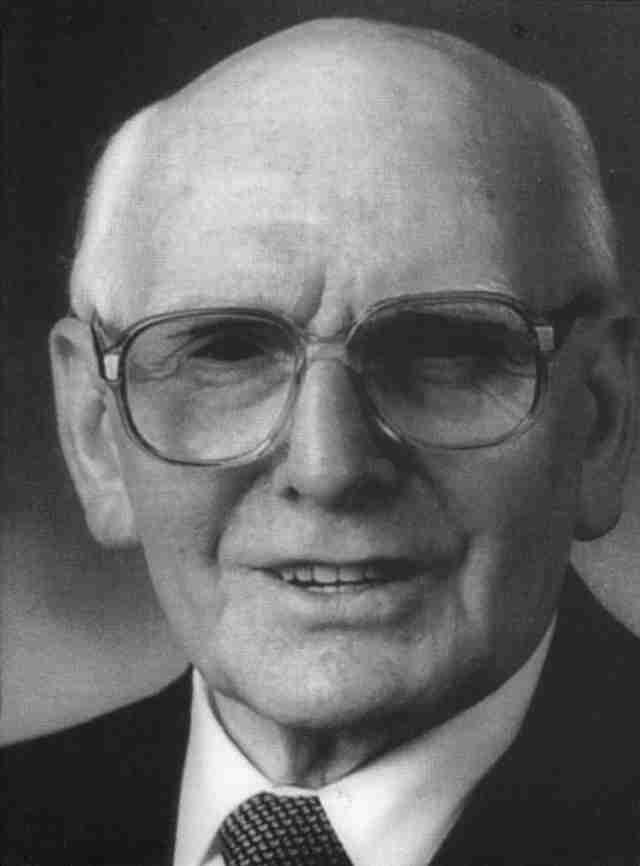 I recently read Dying to Live (Christian Focus, 1991), the autobiography of Scottish pastor William Still. I became interested in Still after reading his book The Work of the Pastor earlier this year.
The first half of Dying to Live tells about Still’s early years into young adulthood and his beginning in pastoral ministry. Still had an unsettled childhood. His parents were separated in his early years, and his father was an alcoholic. He was a sickly child who took refuge in music and became an accomplished pianist. He was part of the Salvation Army as a young man but then entered ministry in the Church of Scotland and served at the Gilcomston Church in his hometown of Aberdeen from 1945-1997.
The second half of the book deals with various aspects of Still’s pastoral ministry. Still was an evangelical. In his early ministry he worked with Billy Graham, Alan Redpath, and others in evangelistic events. With time, however, he moved away from what he came to call “evangelisticism” to develop a solid expositional ministry.
Still faced his fair share of hardships during the course of his ministry. When he moved away from pragmatic evangelistic methods, for example, more than two hundred people stopped attending his church almost overnight. In the preface, he references Martin Luther’s observation that there are three things which make a minister: study, prayer, and afflictions. He observes, “He who is not prepared to make enemies for Christ’s sake by the faithful preaching of the Word will never make lasting friends for Christ, either” (p. 93).
He describes one particularly difficult controversy early in his ministry when he confronted a group of disgruntled elders. At the end of one Sunday service, he read a statement confronting these men, which ended, “There you sit, with your heads down, guilty men. What would you say if I named you before the whole congregation? You stand condemned before God for your contempt of the Word and of his folk.” He adds, “The moment I had finished, I walked out of the pulpit. There was no last hymn—no benediction. I went right home. It was the hardest and most shocking thing I ever had to do in Gilcomston” (p. 124). That same week seven of his elders resigned and Still was called twice before his Presbytery to answer for the controversy. Yet, he endured.
Still maintains that in light of the unpleasantness one will face in the ministry that the minister of the Word must possess one quality in particular: “…I would say that this quality is courage: guts, sheer lion-hearted bravery, clarity of mind and purpose, grit. Weaklings are no use here. They have a place in the economy of God if they are not deliberate weaklings and stunted adults as Paul writes of both to the Romans and to the Corinthians. But weaklings are no use to go out and speak prophetically to men from God and declare with all compassion, as well as with faithfulness, the truth: the divine Word that cuts across all men’s worldly plans for their lives” (p. 140).
Still was a pioneer in several areas. First, he developed a pattern of preaching and teaching systematically through books of the Bible at a time when this was rarely done. He began a ministry of “consecutive Bible teaching” starting with the book of Galatians in 1947, calling this transition from “evangelisticism to systematic exposition … probably the most significant decision in my life” (p. 191).
He was also a pioneer in simplifying and integrating the ministry of the church. After noting how youth in the church were drifting away, even after extensive involvement in the church’s children’s ministry, Still writes, “I conceived the idea of ceasing all Sunday School after beginners and Primary age (seven years) and invited parents to have their children sit with them in the family pew from the age of eight” (p. 171). He laments “the disastrous dispersion of congregations by the common practice of segregating the church family into every conceivable category of division of ages, sexes, etc.” (p. 173).
Dying to Live is a helpful and encouraging work about the life and work of the minister and is to be commended to all engaged in the call of gospel ministry. As the title indicates, Still’s essential thesis is that in order to be effective in ministry the minister must suffer a series of deaths to himself (cf. John 12:24). On this he writes:
The deaths one dies before ministry can be of long duration—it can be hours and days before we minister, before the resurrection experience of anointed preaching. And then there is another death afterwards, sometimes worse than the death before. From the moment that you stand there dead in Christ and dead to everything you are and have and ever shall be and have, every breath you breathe thereafter, every thought you think, every word you say and deed you do, must be done over the top of your own corpse or reaching over it in your preaching to others. Then it can only be Jesus that comes over and no one else. And I believe that every preacher must bear the mark of that death. Your life must be signed by the Cross, not just Christ’s cross (and there is really no other) but your cross in his Cross, your particular and unique cross that no one ever died—the cross that no one ever could die but you and you alone: your death in Christ’s death (p. 136).
I recently read Dying to Live (Christian Focus, 1991), the autobiography of Scottish pastor William Still. I became interested in Still after reading his book The Work of the Pastor earlier this year.
The first half of Dying to Live tells about Still’s early years into young adulthood and his beginning in pastoral ministry. Still had an unsettled childhood. His parents were separated in his early years, and his father was an alcoholic. He was a sickly child who took refuge in music and became an accomplished pianist. He was part of the Salvation Army as a young man but then entered ministry in the Church of Scotland and served at the Gilcomston Church in his hometown of Aberdeen from 1945-1997.
The second half of the book deals with various aspects of Still’s pastoral ministry. Still was an evangelical. In his early ministry he worked with Billy Graham, Alan Redpath, and others in evangelistic events. With time, however, he moved away from what he came to call “evangelisticism” to develop a solid expositional ministry.
Still faced his fair share of hardships during the course of his ministry. When he moved away from pragmatic evangelistic methods, for example, more than two hundred people stopped attending his church almost overnight. In the preface, he references Martin Luther’s observation that there are three things which make a minister: study, prayer, and afflictions. He observes, “He who is not prepared to make enemies for Christ’s sake by the faithful preaching of the Word will never make lasting friends for Christ, either” (p. 93).
He describes one particularly difficult controversy early in his ministry when he confronted a group of disgruntled elders. At the end of one Sunday service, he read a statement confronting these men, which ended, “There you sit, with your heads down, guilty men. What would you say if I named you before the whole congregation? You stand condemned before God for your contempt of the Word and of his folk.” He adds, “The moment I had finished, I walked out of the pulpit. There was no last hymn—no benediction. I went right home. It was the hardest and most shocking thing I ever had to do in Gilcomston” (p. 124). That same week seven of his elders resigned and Still was called twice before his Presbytery to answer for the controversy. Yet, he endured.
Still maintains that in light of the unpleasantness one will face in the ministry that the minister of the Word must possess one quality in particular: “…I would say that this quality is courage: guts, sheer lion-hearted bravery, clarity of mind and purpose, grit. Weaklings are no use here. They have a place in the economy of God if they are not deliberate weaklings and stunted adults as Paul writes of both to the Romans and to the Corinthians. But weaklings are no use to go out and speak prophetically to men from God and declare with all compassion, as well as with faithfulness, the truth: the divine Word that cuts across all men’s worldly plans for their lives” (p. 140).
Still was a pioneer in several areas. First, he developed a pattern of preaching and teaching systematically through books of the Bible at a time when this was rarely done. He began a ministry of “consecutive Bible teaching” starting with the book of Galatians in 1947, calling this transition from “evangelisticism to systematic exposition … probably the most significant decision in my life” (p. 191).
He was also a pioneer in simplifying and integrating the ministry of the church. After noting how youth in the church were drifting away, even after extensive involvement in the church’s children’s ministry, Still writes, “I conceived the idea of ceasing all Sunday School after beginners and Primary age (seven years) and invited parents to have their children sit with them in the family pew from the age of eight” (p. 171). He laments “the disastrous dispersion of congregations by the common practice of segregating the church family into every conceivable category of division of ages, sexes, etc.” (p. 173).
Dying to Live is a helpful and encouraging work about the life and work of the minister and is to be commended to all engaged in the call of gospel ministry. As the title indicates, Still’s essential thesis is that in order to be effective in ministry the minister must suffer a series of deaths to himself (cf. John 12:24). On this he writes:
The deaths one dies before ministry can be of long duration—it can be hours and days before we minister, before the resurrection experience of anointed preaching. And then there is another death afterwards, sometimes worse than the death before. From the moment that you stand there dead in Christ and dead to everything you are and have and ever shall be and have, every breath you breathe thereafter, every thought you think, every word you say and deed you do, must be done over the top of your own corpse or reaching over it in your preaching to others. Then it can only be Jesus that comes over and no one else. And I believe that every preacher must bear the mark of that death. Your life must be signed by the Cross, not just Christ’s cross (and there is really no other) but your cross in his Cross, your particular and unique cross that no one ever died—the cross that no one ever could die but you and you alone: your death in Christ’s death (p. 136).
Satan Will Sing You to Sleep
“You don’t tell people about Jesus, because you don’t care about their eternal state.” His assertion stung. But I knew it was true. Confronted with the way he lives for the lost, its truth was as obvious to me as the nose on my face. And like the nose on my face, I wasn’t paying much attention to it until he called it out. But unlike the nose on my face, his assertion was eternally significant. I recently met this remarkable man while traveling in the Middle East. He, along with his wife, is leading a rapidly growing movement of Muslims turning to Christ in a very restrictive part of the Islamic world. I had the great (and exposing) privilege of spending hours with him. I wish I could tell you more about his story — how Jesus called him and the incredible ways the Lord uniquely prepared him to make disciples and plant churches in a very dangerous place. His story is worth a book someday. For now, I will spare the details, lest I in any way expose him. I must pass along something he shared with me, though, because we all might be ignoring the obvious and eternally significant “nose” on our collective Western Christian faces — to our own spiritual detriment, for sure, but also to the spiritual catastrophe of those around us. What Could Happen to Them My new friend lives in an Islamic country where sharing the gospel, if you’re caught, will get you thrown into prison and likely tortured to extract information about other Christians. Yet he and his wife are daily, diligently seeking to share the gospel with others because they want to “share with them in its blessings” (1 Corinthians 9:23) — even more than they want their own survival. Each morning, when this husband and wife part ways, they acknowledge to one another that it might be the last time they see each other. She knows, if caught, part of her torture will almost assuredly include rape, probably repeatedly. He knows, if caught, brutal things await him before a likely execution. For to them, “to live is Christ, and to die is gain” (Philippians 1:21). Yet each day they prayerfully pursue the Spirit of Jesus’s direction in order to show the lost the way of salvation. And they are equipping other Christians to do the same. Wholly Dependent on God When I say “prayerfully,” I mean prayerfully. They, and their fellow leaders, spend a minimum of four hours a day in prayer and God’s word, and frequently fast for extended periods, before they go out seeking souls. They do this because they need to. Spiritual strongholds do not give way and conversions don’t happen unless they do this. One wrong move and a whole network of believers could be exposed. So, they depend on the Holy Spirit to specifically lead them to people the Spirit has prepared. For them, the doctrine of election is not some abstract theological controversy for seminary students to debate. They see it played out in front of them continually. The cessationism-continuationism debate is also a moot issue for them. They regularly see the Holy Spirit do things we read about in the book of Acts. As my friend described the Spirit’s activity where he lives, it was clear that all the revelatory and miraculous spiritual gifts listed in 1 Corinthians 12–14 are a normal part of life for these believers — because they really need them. They’re not debating Christian Hedonism either. When you live under the threat of death daily, either life is Christ and death is gain to you, or you will not last. So, I learned that my friend has translated John Piper’s original sermon series on Christian Hedonism into his native language and used them as part of his core theological curriculum for believers. Lulled by an Evil Lullaby All those things were wonderful and encouraging — as well as convicting — to hear. But then he told me a disturbing story. A number of years ago, this man and his wife were given the opportunity to move to the States, and they did. After living here for a period of time, however, the wife began to plead with her husband that they move back to their Islamic country of origin. Why? She told him, “It’s like there’s a satanic lullaby playing here, and the Christians are asleep. And I feel like I’m falling asleep! Please, let’s go back!” Which they did (God be praised!). This story contains an urgent message we must hear: she wanted to go back to a dangerous environment to escape what she recognized as a greater danger to her faith: spiritual lethargy and indifference. This should stop us in our tracks. Do we recognize this as a serious danger? How spiritually sleepy are we? According to my new friend, we can gauge our sleepiness by how the eternal states of non-Christians around us shape the way we approach life. Judging by the general behavior of Christians in the West, it’s clear to my friend that, as a whole (we all can point to remarkable exceptions), we don’t care much about people’s eternal states. Are We Content to Sleep? My friend and his wife are right. There is a satanic lullaby playing, even in churches, across the West. Why else are we so lethargic in the midst of such relative freedom and unprecedented prosperity? Where is our collective Christian sense of urgency? Where are the tears over the perishing? Where is the groaning? Where is the fasting and prevailing intercession for those we love and those we live near and those we work with, not to mention the unreached of the world who have no meaningful gospel witness among them? Paul had “great sorrow and unceasing anguish in [his] heart” over his unbelieving Jewish kinsmen (Romans 9:2). Do we feel anything like that? And Paul’s Spirit-inspired urgency to bring the gospel to the lost shaped his whole approach to life: I have become all things to all people, that by all means I might save some. I do it all for the sake of the gospel, that I may share with them in its blessings. (1 Corinthians 9:22–23) What is shaping our approach to life? If we think that kind of mentality was only for someone with Paul’s apostolic calling, all we need to do is keep reading 1 Corinthians 9:24–27. It’s clear that Paul means for us to run our unique faith-races with the same kind of kingdom-focused mentality. If we’re not feeling anguish over people’s eternal state and ordering our lives around praying for and trying to find ways to bring the gospel to them, we are being lulled to sleep by the devil’s soothing strains. It’s time to start fasting and praying and pleading with God and one another to wake up. Now Is the Time It matters not if we call ourselves Calvinists and believe we have an accurate knowledge of the doctrine of election, if our knowledge does not lead us to feel anguish in our hearts over the lost and a resolve to do whatever it takes to save some. “We do not yet know as we ought to know” (to paraphrase 1 Corinthians 8:2). What we need is to cultivate Paul’s heart for the lost. My conversation with this new friend showed me that, Calvinist though I am, I do not yet know as I ought to know. But, Father, I want to know as I ought to know! I repent of all lethargy and indifference! I will not remain sleepy anymore when it comes to the eternal states of the unbelieving family and friends and neighbors and restaurant servers and checkout clerks all around me. Over Our Dead Bodies According to Jesus, in his parable of the ten virgins, spiritual sleepiness is a very, very dangerous condition (Matthew 25:1–13). We need to get more oil — now! There isn’t much time. I want to be done with satanic sleepiness and cultivate the resolve that led Charles Spurgeon — that unashamed Calvinist — to say, If sinners be damned, at least let them leap to hell over our dead bodies. And if they perish, let them perish with our arms wrapped about their knees, imploring them to stay. If hell must be filled, let it be filled in the teeth of our exertions, and let not one go unwarned and unprayed for. Father, in Jesus’s name, increase my anguish over perishing unbelievers and my urgent resolve to “become all things to all people, that by all means I might save some” (1 Corinthians 9:22), whatever it takes! Article by Jon Bloom