
Others like open heaven Features >>
The God Catchers
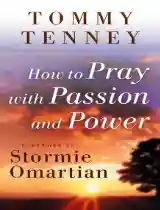
How To Pray With Passion And Power

Mary’s Prayers And Martha’s Recipes

Secret Sources Of Power
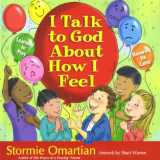
I Talk To God About How I Feel
The Fire Of Delayed Answers
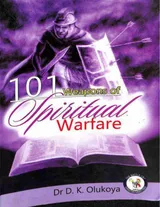
101 Weapons Of Spiritual Warfare
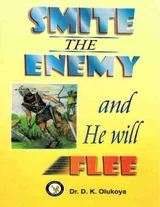
Smite The Enemy And He Will Flee
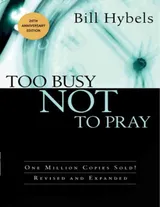
Too Busy Not To Pray
ive.com%20)-160.webp)
Shaping History Through Prayer And Fasting
About the Book
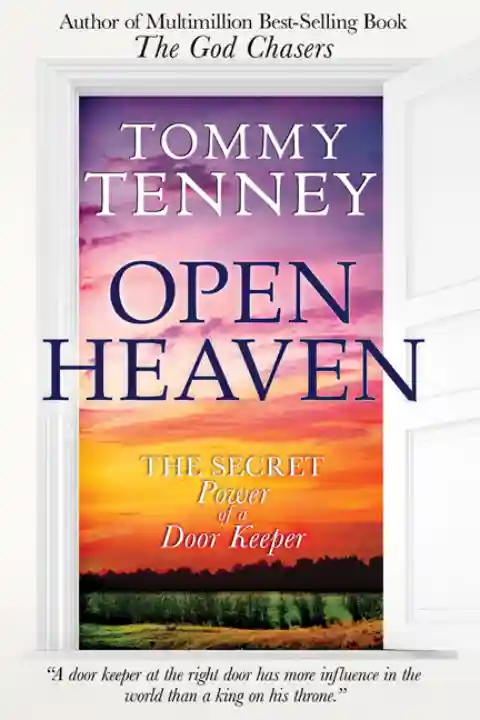
"Open Heaven" by Tommy Tenney explores the concept of experiencing God's presence and power in everyday life. The book delves into the importance of cultivating a relationship with God and how this can lead to experiencing spiritual breakthroughs and miracles. Tenney encourages readers to seek an open heaven in their lives through prayer, worship, and obedience to God. Ultimately, the book serves as a guide to help individuals deepen their connection with God and tap into the blessings of heaven on earth.
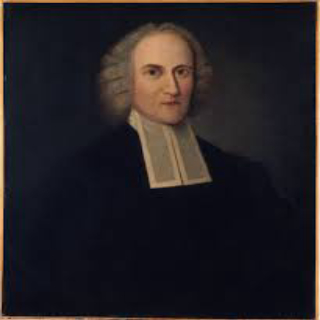
Jonathan Edwards
Narnia Meets Middle-Earth
On December 3, 1929, C.S. Lewis began a letter to Arthur Greeves, his boyhood friend from Belfast. Having just turned 31 and in his fourth year as an Oxford don, Lewis described how he had gotten “into a whirl” as he always did near the end of the term. “I was up till 2:30 on Monday,” Lewis wrote, “talking to the Anglo Saxon professor Tolkien who came with me to College from a society and sat discoursing of the gods and giants and Asgard for three hours, then departing in the wind and rain. . . . The fire was bright and the talk good.”1 This was Lewis pre-conversion and Tolkien before The Hobbit, two men virtually unknown outside their small circle at Oxford. Years later in The Four Loves, Lewis would note how great friendships can often be traced to the moment two people discover they have a common interest few others share — when each thinks, “You too? I thought I was the only one.”2 For Lewis and Tolkien, it was a shared interest in old stories. Beginning of a Friendship The two had met for the first time three and a half years earlier at an English faculty meeting. Not long afterward, Tolkien invited Lewis to join the Kolbitar, a group that met to read Icelandic sagas together. But Lewis’s suggestion that Tolkien come back to his rooms at Magdalen on that blustery December night marked a pivotal step in their friendship. During their late-night discussion, Tolkien came to see that Lewis was one of those rare people who just might like the strange tales he had been working on since coming home from the war, stories he previously considered just a private hobby. And so, summoning up his courage, he lent Lewis a long, unfinished piece called “The Gest of Beren and Luthien.” Several days later, Tolkien received a note with his friend’s reaction. “It is ages since I have had an evening of such delight,” Lewis reported.3 Besides its mythic value, Lewis praised the sense of reality he found in the work, a quality that would be typical of Tolkien’s writing. At the end of Lewis’s note, he promised that detailed criticisms would follow, and they did — fourteen pages where Lewis praised a number of specific elements and pointed out what he saw as problems with others. Tolkien took heed of Lewis’s criticisms, but in a unique way. While accepting few specific suggestions, Tolkien rewrote almost every passage Lewis had problems with. Lewis would later say about Tolkien, “He has only two reactions to criticism: either he begins the whole work over again from the beginning or else takes no notice at all.”4 And so began one of the world’s great literary friendships. ‘Has Nobody Got Anything to Read Us?’ While millions worldwide have come to love and value Tolkien’s stories of Middle-earth, Lewis was the first. His response, exuberant praise as well as hammer-and-tongs criticism, would also be the pattern for their writing group, the Inklings. And this blend of encouragement and critique provided the perfect soil in which some of the most beloved works of the twentieth century would sprout. The informal circle of friends would gather in Lewis’s rooms on Thursday nights. Lewis’s brother, Warnie, provides this description of what would happen next: When half a dozen or so had arrived, tea would be produced, and then when pipes were alight Jack would say, “Well, has nobody got anything to read us?” Out would come a manuscript, and we would settle down to sit in judgement upon it — real, unbiased judgement, too, since we were no mutual admiration society: praise for good work was unstinted, but censure for bad work — or even not-so-good work — was often brutally frank.5 “While millions worldwide have come to love and value Tolkien’s stories of Middle-earth, Lewis was the first.” Tolkien read sections of The Hobbit and The Lord of the Rings. Lewis read from The Problem of Pain, which he dedicated to the Inklings, as well as from The Screwtape Letters, which he dedicated to Tolkien. Other Lewis works debuted at Inklings meetings included Perelandra, That Hideous Strength, and The Great Divorce. Warnie read from The Splendid Century, his work about life under Louis XIV. Charles Williams read drafts of All Hallows’ Eve. The Inklings were not without flaws. Rather than trying to help improve The Lord of the Rings, several simply disparaged it. Hugo Dyson was so negative that Tolkien finally chose not to read if he were present, saving his chapters for Lewis alone. A letter to Tolkien’s son Christopher in 1944 provides a window into what those private meetings were like, as Tolkien reports, “Read the last 2 chapters (“Shelob’s Lair” and “The Choices of Master Samwise”) to C.S.L. on Monday morning. He approved with unusual fervor, and was actually affected to tears by the last chapter.”6 Unpayable Debt Years later, Tolkien would describe the “unpayable debt” he owed Lewis, explaining, “Only from him did I ever get the idea that my ‘stuff’ could be more than a private hobby. But for his interest and unceasing eagerness for more I should never have brought The Lord of the Rings to a conclusion.”7 Without Lewis, there would be no Lord of the Rings. We might also say that without Tolkien there would be no Chronicles of Narnia, not because of Tolkien’s literary interest in them but for a different reason. Today we know Lewis as one of the greatest Christian writers of the twentieth century, but while it was clear from the start that Lewis would be a writer, it was not clear at all that he would become a Christian. Before his midlife conversion, he would need Tolkien to provide a missing piece. Addison’s Walk In another letter to Arthur, this one dated September 22, 1931, Lewis tells about an evening conversation that would change his life. He explains that he had a weekend guest, Dyson, from Reading University. Tolkien joined them for supper, and afterward the three went for a walk. “We began (in Addison’s walk just after dinner) on metaphor and myth,” Lewis writes. He then describes how they were interrupted by a rush of wind so unexpected they all held their breath. “We continued (in my room) on Christianity,” Lewis adds, “a good long satisfying talk in which I learned a lot.”8 What Lewis learned was critical. He had previously ended his disbelief and became a theist. As he states in Surprised by Joy, “In the Trinity Term of 1929 I gave in, and admitted that God was God, and knelt and prayed: perhaps, that night, the most dejected and reluctant convert in all England.”9 After this first step — with help from Christian friends and Christian authors like G.K. Chesterton, George Herbert, and George MacDonald — Lewis began the step that would lead to belief in Christ. Lewis explained to Arthur that what had been holding him back was his inability to comprehend in what sense Christ’s life and death provided salvation to the world, except insofar as his example might help. What Dyson and Tolkien showed him was that understanding exactly how Christ’s death puts us right with God was not most important but believing that it did. They urged him to allow the story of Christ’s death and resurrection to work on him, as the other myths he loved did — with one tremendous difference: this one really happened. Nine days after that special night on Addison’s Walk — during a ride to the zoo in the sidecar of Warnie’s motorbike — Lewis came to believe that Jesus is the Son of God. Years later he stated, “Dyson and Tolkien were immediate human causes of my own conversion.”10 ‘It Really Won’t Do’ Given Lewis’s encouragement of Tolkien and Tolkien’s role in Lewis’s acceptance of Christianity, we can say, in one sense, that without the other’s contribution, we would not have Narnia or Middle-earth. But only in one sense. For while Lewis appreciated Tolkien’s stories about Middle-earth, Tolkien did not like Lewis’s books about Narnia. “We can say, in one sense, that without the other’s contribution, we would not have Narnia or Middle-earth.” Perhaps too much is made of Tolkien’s dislike for Narnia, particularly since Tolkien seems never to have made that much of it. While there is a good deal of speculation on the reasons for Tolkien’s disapproval, this speculation is based on secondhand reports. In Green and Hooper’s biography, we have several vague, disapproving, private comments Tolkien made about The Lion, the Witch and the Wardrobe, such as, “It really won’t do, you know!”11 George Sayer, who knew both men personally, includes two paragraphs in his Lewis biography summarizing Tolkien’s objections but offering little in terms of direct quotes. In addition to their jumble of unrelated mythological elements, Sayer claims that Tolkien thought the Narnia stories showed signs of being “carelessly and superficially written.”12 In a letter to David Kolb, we have a brief instance where Tolkien directly expresses his opinion of Narnia as he states, “It is sad that ‘Narnia’ and all that part of C.S.L.’s work should remain outside the range of my sympathy.”13 Here we find the suggestion that Tolkien’s narrow tastes may have been part of the problem. We do know that when the Tolkiens’ granddaughter Joanna was staying with them and went looking for something to read, her grandfather directed her to the Narnia books on his bookshelf. ‘I Miss You Very Much’ As the two men grew older, they were less close — another aspect scholars sometimes make too much of. Evidence that they remained friends, though in a less intense and intimate way, is found in a number of places. In the autumn of 1949, twelve years after first starting it, Tolkien finished typing a final copy of The Lord of the Rings. Lewis, now 50, was the first person to whom he lent the completed typescript. “I have drained the rich cup and satisfied a long thirst,” Lewis wrote on October 27, 1949, declaring it to be “almost unequalled in the whole range of narrative art known to me.” Recalling the many obstacles Tolkien had overcome, Lewis declared, “All the long years you have spent on it are justified.” Lewis closed the world’s first review of Tolkien’s masterpiece with the words “I miss you very much.”14 It took more years for Tolkien to secure a publisher. In November 1952, when he learned Allen & Unwin was willing to publish the long-awaited sequel to The Hobbit, Tolkien immediately wrote Lewis with the good news. Lewis wrote back with warm congratulations, noting the “sheer pleasure of looking forward to having the book to read and re-read.”15 In 1954, after Lewis had been passed over more than once for a chair at Oxford, Tolkien played a key role in Lewis being offered and then accepting Cambridge’s newly created Chair of Medieval and Renaissance Studies. And in 1961, less than three years before his death, Lewis was invited to nominate someone for the Nobel Prize in Literature and put forth Tolkien’s name. In November of the following year, Tolkien wrote to Lewis inviting him to a dinner celebrating the publication of English and Medieval Studies Presented to J.R.R. Tolkien on the Occasion of His Seventieth Birthday — a collection to which Lewis had contributed an essay. Citing his deteriorating health, Lewis thanked him but graciously declined. A few days before Christmas, Tolkien wrote again. We do not know the topic but do know that on Christmas Eve, 1962, Lewis wrote back thanking him for his “most kind letter.” Lewis closed by saying, “Is it still possible amid the ghastly racket of ‘Xmas’ to exchange greetings for the Feast of the Nativity? If so, mine, very warm, to both of you.”16 By the next Christmas, Lewis was gone. Lewis died at home on November 22, 1963, a week shy of his 65th birthday. Shortly afterward, Tolkien wrote his son Michael about the loss. Although they had become less close, Tolkien stated, “We owed each a great debt to the other, and that tie with the deep affection that it begot, remains.”17 Here Tolkien, always careful with words, does not say that his tie and deep affection with Lewis remained all the way up until Lewis’s death, but that it remains. Presumably, it still does. ‘Much Good’ At the close of his biography, Alister McGrath seeks to explain Lewis’s enduring appeal, especially in America. McGrath proposes that by “engaging the mind, the feelings, and the imagination” of his readers, Lewis is able to extend and enrich their faith. Reading Lewis not only gives added power and depth to their commitment but also opens up a deeper vision of what Christianity is.18 I know this was true for me. Lewis was able to help extend and enrich my faith at a time when help was desperately needed. For those like me, Lewis’s books become lifelong companions, reminding us again and again of who we are and why we are here, seeing us through difficult times, and helping to shape and add meaning to our experience. Tolkien wrote in his diary, “Friendship with Lewis compensates for much, and besides giving constant pleasure and comfort has done me much good.”19 Today, on the anniversary of Lewis’s birth, people all over the world, from all walks of life and stages in faith, would agree. Yes, it does. And yes, it has. The Collected Letters of C.S. Lewis, ed. Walter Hooper, vol. 1, Family Letters 1905–1931 (New York: HarperCollins, 2004), 838. ↩ C.S. Lewis, The Four Loves (New York: Harvest, 1988), 65. ↩ Humphrey Carpenter, J.R.R. Tolkien: A Biography (New York: Houghton Mifflin, 1977), 148–49. ↩ The Collected Letters of C.S. Lewis, ed. Walter Hooper, vol. 3, Narnia, Cambridge, and Joy 1950–1963 (New York: HarperCollins, 2007), 1049. ↩ Warren Lewis, “Memoir of C.S. Lewis,” in Letters of C.S. Lewis, ed. W.H. Lewis and Walter Hooper (New York: Harvest, 1993), 21–46. ↩ Letters of C.S. Lewis, 83. ↩ Letters of C.S. Lewis, 362. ↩ Collected Letters, 1:970. ↩ C.S. Lewis, Surprised by Joy: The Shape of My Early Life (New York: Harvest, 1955), 228–29. ↩ Collected Letters of C.S. Lewis, ed. Walter Hooper, vol. 2, Books, Broadcasts, and the War 1931–1949 (New York: HarperCollins, 2004), 501. ↩ Roger Lancelyn Green and Walter Hooper. C.S. Lewis: A Biography (London: HarperCollins, 2002), 307. ↩ George Sayer, Jack: A Life of C.S. Lewis (Wheaton: Crossway, 1994), 313. ↩ Letters of C.S. Lewis, 352. ↩ Collected Letters, 2:990–91. ↩ Collected Letters, 3:249–50. ↩ Collected Letters, 3:1396. ↩ Letters of C.S. Lewis, 341. ↩ Alister McGrath, C.S. Lewis — A Life: Eccentric Genius, Reluctant Prophet (Carol Stream, IL: Tyndale, 2013), 375. ↩ Carpenter, J.R.R. Tolkien, 152. ↩ Article by Devin Brown Professor, Asbury University