
GIP Library icon

LOG IN TO REVIEW
About the Book


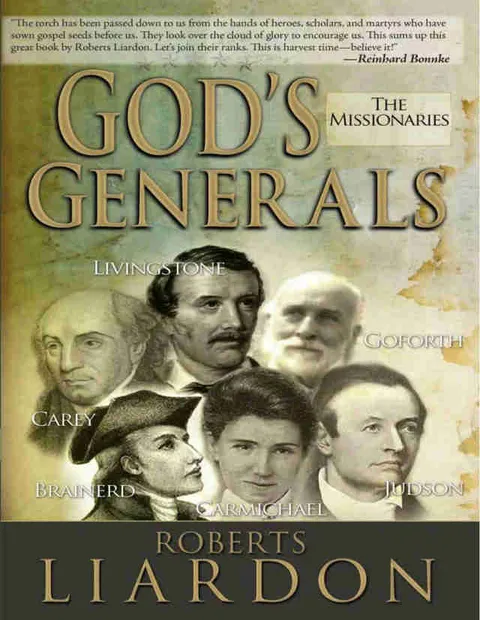
"God's Generals: The Missionaries" by Roberts Liardon provides a detailed account of some of the most influential missionaries in Christian history, highlighting their extraordinary faith, courage, and dedication to spreading the Gospel around the world. Liardon's book offers inspiring stories of missionaries like David Livingstone, Amy Carmichael, and Hudson Taylor, showing how their passion for God's work impacted countless lives and shaped the course of history.

Lecrae Moore

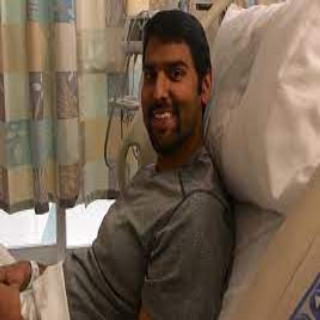
Lecrae Moore Lecrae Devaughn Moore, or simply Lecrae, is an American Christian rapper, songwriter, and record producer who performs both as a solo artist and as the leader of a group named ‘116 Clique’. He had a troubled beginning in life but all that changed after he found his faith at 19. Heavily influenced by 2Pac Shakur, and motivated by his new found faith, he ventured into a musical career. He and his friend Ben Washer set up their own independent record label ‘Reach Records’ and through it, he released his debut album ‘Real Talk’ in 2004. In the following years, he brought out six more studio albums, three mix tapes, and two EPs as a solo artist and three studio albums, one remix album, and one EP with his group. He has received six ‘GMA Dove Awards’, two Grammys, two ‘BET Awards’ and more. Lecrae is very active in the community and in 2005, he established ‘ReachLife Ministries’, the mission of which was to “bridge the gap between biblical truth and the urban context”. He is a vocal supporter of the preservation of responsibility and believes that fatherhood should be considered as a value to be installed among men in the United States. He has authored several op-ed articles on race relations in the modern-day America which were published by ‘Billboard’. Childhood & Early Life Lecrae Devaughn Moore was born on October 9, 1979, in Houston, Texas, USA. His father had always been absent from his life and later became a drug addict. He was raised by his poor but hardworking mother and grandmother. He attended services with them at their local church but the initial response to religion was indifferent at best. Growing up, he lived in San Diego, Denver, and Dallas. He suffered sexual molestation at the hands of a female baby sitter when he was eight, and according to Lecrae, it left a long-term negative impact on his views on sexuality. In a life full of abuse and violence, hip hop provided him with a refuge. Besides 2Pac who he admired for his rapping skills, he also looked up to his uncle who introduced him to a life of crime. He began doing drugs at 16 and soon started dealing as well. He kept a Bible with him that his grandmother had given him as a good luck charm. The turning point in his life came when he was arrested for drug possession. The officer let him go upon Lecrae’s promising that he would read and follow the Bible. He thus started visiting the church again. Upon an invitation from a friend, he also started attending Bible studies. He was once involved in an accident where he wrecked his car but he himself came out unscathed. This incident further strengthened his belief in Christ and he devoted his life fully to his faith. He returned to his college, the ‘University of North Texas’ and volunteered and sang at a juvenile detention centre. Career Six years after his conversion, Lecrae Moore released the album ‘Real Talk’ (2004) through ‘Reach Records’, a label he had founded with his friend Ben Washer. It reached #29 spot on the ‘Billboard Gospel Album’ chart after being re-released in 2005 by ‘Cross Movement Records’. In 2005, he formed ‘116 Clique’ with other artists who had signed with ‘Reach Records’. The group owes its name to the Bible Verse ‘Romans 1:16’. They debuted with ‘The Compilation Album’ in the same year. They have since released three more albums, ‘The Compilation Album: Chopped & Screwed’ (remix, 2006), ‘13 Letters’ (2007), and ‘Man Up’ (2011), and one EP, ‘Amped’ (2007). He was nominated for a ‘Stellar Award’ for the ‘Rap/Hip-Hop/Gospel CD of the Year’ for his second solo album ‘After the Music Stops’ (2006). In 2008, he put out his third studio album ‘Rebel’. In his fourth studio album, ‘Rehab’ (2010), Lecrae talks about freedom from inhibiting addictions and habits. Both Lecrae and his album received accolades in the 2010 ‘Rapzilla.com staff picks’, being hailed as the ‘Artist of the Year’ and the ‘Album of the Year’, respectively. His fifth studio album, ‘Rehab: The Overdose’ (2011) was a direct follow-up to ‘Rehab’, both being highly conceptual works. While ‘Rehab’ was about the victory over addiction, ‘Rehab: The Overdose’ focused on attaining "grace, love, peace and hope" in Jesus. He won his first two Doves because of this album, one for the ‘Rap/Hip Hop Album of the Year’ and the other for the ‘Rap/Hip Hop Recorded Song of the Year’ for the track, ‘Hallelujah’. ’Gravity’, released on September 4, 2012, was his sixth studio album and had 15 songs with a total runtime of 57 minutes. It peaked on the ‘Rap Albums’, ‘Christian Albums’, ‘Gospel Albums’, and ‘Independent Albums’ charts. Lecrae released his first mixtape ‘Church Clothes’ on May 10, 2012, through digital download for free. It was followed by ‘Church Clothes 2’ (November 7, 2013), and ‘Church Clothes 3’ (January 15, 2016). He has also released two Extended Plays till date, the EP version of ‘Church Clothes’, and ‘Gravity: The Remix EP’, both released in 2012. He has collaborated with the likes of Trip Lee, Tedashii, Canon, Mali Music, and Ty Dolla Sign. ‘Columbia Records’ signed him in May 2016, in a contract between them and his label. His most recent work, a track named ‘Hammer Time’, which is a collaborative effort with 1k Phew, was released on June 23, 2017. On May 3, 2016, he published his memoir titled ‘Unashamed’ through ‘Broadman & Holman Publishers’. It debuted at #19 spot on the ‘New York Times Best Sellers’ list. Philanthropic Works In 2011, Lecrae, through ‘116 Clique’ and the ‘ReachLife Ministries’, instigated the campaign ‘Man Up’, focused on providing guidance to young urban males on fatherhood and Biblical manhood. In March 2015, ReachLife was deactivated and ‘116 Clique’ shifted its attention to contribute to ‘Peace Preparatory Academy’, a Christian school in Atlanta. In May 2013, he worked alongside several other celebrities on a media initiative named ‘This is Fatherhood’. Jay Z, Barack Obama, Joshua DuBois, Lecrae himself, and others have appeared in the initiative’s promotional public service announcement videos. Major Works In a career marked by successful artistic ventures and awards, Lecrae’s greatest musical achievement is unarguably his seventh and the latest studio album ‘Anomaly’, released on September 9, 2014. It was the first album in history to debut at #1 on both ‘Billboard 200’ and ‘Top Gospel Albums’ charts. It was also certified Gold by the RIAA. Awards & Achievements Lecrae Moore received a Grammy in 2013 for the ‘Best Gospel Album’ for his sixth studio album ‘Gravity’. He won his second Grammy in 2015 for the ‘Best Contemporary Christian Music Performance/Song’ for the track ‘Messengers’ which also featured the Christian pop band ‘For King & Country’. He was named the best gospel artist at the ‘2015 BET Awards’. In 2017, he was the recipient of the ‘BET Best Gospel/ Inspirational Award’ for the song ‘Can’t Stop Me Now (Destination)’. On March 14, 2016, he was conferred with an honorary doctorate from ‘Canada Christian College’. Personal Life & Legacy Lecrae Moore met his wife Darragh at a Bible study when they were both teenagers. They have three children together, two sons and a daughter. The family resides in Atlanta, Georgia. In 2002, he was informed by his then girlfriend that she was pregnant with his child. The couple had an abortion, a decision which he has regretted since. The incident was the subject of the song ‘Good, Bad, Ugly’ from ‘Anomaly’. Trivia Lecrae portrayed the character Dr. Darnall Malmquist in the 2014 independent film ‘Believe Me’.

God, Make Us Bold About Jesus

It’s been said that the content of a prayer shapes the one who prays it, because we tend to pray what we love, and what we love makes us who we are. And this is not only true of individuals, but of churches too. Like when the early church once prayed, Now, Lord, look upon their threats and grant to your servants to continue to speak your word with all boldness, while you stretch out your hand to heal, and signs and wonders are performed through the name of your holy servant Jesus. (Acts 4:29–30) Of all the things they might have prayed — and of all things churches should pray at various times — the fledging church in the early pages of Acts wanted God to give them boldness: “Grant to your servants to continue to speak your word with all boldness.” We as twenty-first-century pastors and churches can learn from this first-century prayer, but to do so, we need to first go back one chapter. Words Filled with Jesus The apostles Peter and John were walking to the temple one afternoon when they encountered a lame man. He had been lame from birth. The man was doing what he was always doing: asking for money from people passing by. But on this particular day, something unexpected happened. The man passing by responded, “I have no silver and gold, but what I do have I give to you. In the name of Jesus Christ of Nazareth, rise up and walk!” (Acts 3:6). In an instant, the man was healed. He leapt up and began to walk. He entered the temple “walking, leaping, and praising God” (Acts 3:8). The scene drew a crowd, so Peter did what Peter was always doing. He preached. His sermon was full of crystal-clear witness to the person and purpose of Jesus. He is the Holy and Righteous One (verse 14), the Author of Life and the one whom God has raised from the dead (verse 15). Jesus is the reason, the only reason, why the lame man was healed (verse 17). Then Peter proceeds to show that the Hebrew Scriptures had long foretold Jesus, from Moses in Deuteronomy and God’s promise to Abraham in Genesis, to all the prophets “from Samuel and those who came after him” (Acts 3:24). It has always been about Jesus, and people’s response, now, must unequivocally be to repent (Acts 3:19, 26). New World Breaking In These Jewish leaders were “greatly annoyed because [Peter and John] were teaching the people and proclaiming in Jesus the resurrection from the dead” (Acts 4:2). The problem wasn’t only that Peter and John were witnessing to Jesus’s own resurrection, but that they were saying Jesus’s resurrection has led to the inbreaking of the resurrection age. As Alan Thompson writes, “In the context of Acts 3–4, Jesus’s resurrection anticipates the general resurrection at the end of the age and makes available now, for all those who place their faith in him, the blessings of the ‘last days’” (The Acts of the Risen Lord Jesus, 79). That, in fact, was what the healing of the lame man was declaring. The new creation had invaded the old. “Jesus is the climax of all of God’s saving purposes, and we cannot ignore this without eternal consequences.” In the resurrection of Jesus, everything has changed. He is the climax of all of God’s saving purposes, and we cannot ignore this without eternal consequences. This message ruffled the feathers of the Jewish leaders, and so they arrested Peter and John and put them on trial for all that happened that day. “By what power or by what name did you do this?” they demanded (Acts 4:7). Peter, filled with the Holy Spirit, and again with a crystal-clear witness, says the lame man was healed because of Jesus. Jesus is the Messiah who was crucified and raised, and who was foretold in the Hebrew Scriptures. Specifically, Peter says that Jesus is the stone mentioned in Psalm 118:22, the stone that would be rejected by the builders but then become the cornerstone. The stakes could not be higher. Only in Jesus could one be saved (Acts 4:12). Outdone by Fishermen The Jewish leaders were astonished. They could not reconcile Peter and John’s boldness with the fact that they were “uneducated, common men” (Acts 4:13). These were neither teachers nor even pupils, but fishermen. Fishermen. That agitated the Jewish leaders all the more. These unskilled regular Joes, as it were, had been teaching the people! And now they ventured to interpret the Hebrew Scriptures before these skilled Jewish interpreters, telling them who Jesus was, according to the Scriptures, and who they were, according to the Scriptures. These Jewish leaders saw their “boldness” (Acts 4:13), but this wasn’t merely a reference to their emotional tone. Peter and John’s boldness wasn’t mainly about their zeal or behavior — it was about what they had to say. This kind of boldness is repeatedly connected to speech in Acts, so much so that another way to render “boldness” in many passages would be “to speak freely or openly.” That’s what Peter and John had done. They had spoken clearly, freely, openly, boldly about Jesus from the Hebrew Scriptures — and they had done so under intense intimidation. As they watched this unfold, even the Jewish leaders began to connect some dots. “They recognized that they had been with Jesus” (Acts 4:13). So how did these untrained fishermen learn to interpret the Scriptures like that? How could they speak so confidently about the meaning of Scripture when they had never been taught? Well, because they had been taught — by Jesus himself. They had been with Jesus, and so they were unusually bold. They spoke of Jesus clearly, both of his person and work, on the grounds of what the Scriptures say, even when it might have cost them their lives. Voices Lifted Together This is the boldness the church pleads for in Acts 4:29–30. The Jewish leaders had warned and threatened Peter and John to stop talking about Jesus, but eventually they had to release the men from custody. Peter and John went straight to their friends to report what happened. These friends of Peter and John, the nascent church in Jerusalem, “lifted their voices together to God” (Acts 4:24). Their corporate prayer was as rich with the Old Testament’s witness to Jesus as Peter’s sermon was. They knew the person of Jesus. They knew why he had come. And they knew how unpopular this message would be. And what did they pray? They did not pray for articulate positions on the current cultural issues, nor for increased dialogue with those of other faiths, nor for the ability to refute this or that ism, nor for the development of a particularly Christian philosophy or culture (all things we might pray for at certain times in the church). None of these are part of the church’s prayer in Acts 4. Rather, they prayed for boldness to speak the word of God. They asked God to give them the kind of speech Peter and John had modeled — to testify clearly about who Jesus is from the word of God, no matter the cost, as the new creation continues to invade the old. Do our churches ever pray like this today? Do we lack a similar heart? A similar perspective? Or both? And yet our cities need our boldness every bit as much as Jerusalem did in Peter and John’s day. They need the crystal-clear witness of who Jesus is and what he has come to do. Praying for Revival What if the church of Jesus Christ, in all her local manifestations, was marked by a singular passion to know Jesus and make him known? This is the true priority of the church in every age and culture. “The best, most important thing we ever have to say is what we have to say about Jesus.” We are all about Jesus, and the best, most important thing we ever have to say is what we have to say about him. Our failures to live up to this calling are reminders of our need for revival — of our need to plead with God for boldness. Like the early church, may our heart continually beat to testify to Jesus’s glory and to what he demands of the world. Church, this is who we are. Recover it, as needed, and live it out — even though it’s the last thing our society wants to hear from us. Our society wants the church to be “helpful” on society’s terms — what J.I. Packer called the “new gospel,” a substitute for the biblical gospel, in his introduction to Owen’s The Death of Death in the Death of Christ. Whereas the chief aim of the biblical gospel is to teach people to worship God, Packer explains, the concern of the substitute only wants to make people feel better. The subject of the biblical gospel is God and his ways; the subject of the substitute is man and the help God offers him. The market demands the substitute, and those who refuse to cater to it are at the risk of being considered irrelevant or worse. Against that mounting pressure, we should pray that we would speak clearly, freely, openly, boldly about Jesus from the Bible, no matter the cost. Would this not be the sign of revival? Would God not answer our prayers like he did for that first church? When they had prayed, the place in which they were gathered together was shaken, and they were all filled with the Holy Spirit and continued to speak the word of God with boldness. (Acts 4:31) Article by Jonathan Parnell Pastor, Minneapolis, Minnesota

Feedback
Suggestionsuggestion box
x