.webp)

Foxes Book Of Martyrs (History Of The Lives, Sufferings, And Triumphant Deaths Of The Primitive Protestant Martyrs) Order Printed Copy
- Author: John Foxe
- Size: 3.64MB | 693 pages
- |
William and Catherine Booth
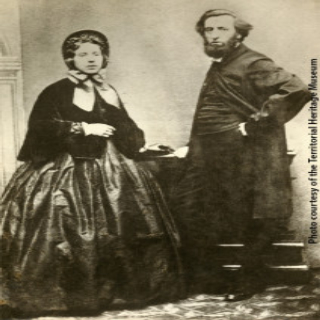 William Booth
The Salvation Army founder, William Booth was born in Nottingham, England, on 10 April 1829.
Salvation Army founder General William BoothFrom his earliest years, William was no stranger to poverty. He was just 14 when his father died and was already working as a pawnbroker’s apprentice to supplement the family’s income.
As a pawnbroker, William saw poverty and suffering on a daily basis. By the time he finished his six-year apprenticeship, he had developed a deep hatred of it.
William, a fiery and impulsive teenager, became a Christian at 15 and began attending the local Wesleyan Chapel. There, he developed the passion that would be the driving force in his life; to reach the down and out of Britain's cities through the Gospel of Christ.
William, a talented preacher from a young age, went on to work as a travelling evangelist with the Methodist church. But it was through preaching in the streets of London's slums that he discovered his life's purpose and The Salvation Army was born.
Catherine Booth
The Salvation Army "mother", Catherine Mumford was born in Ashbourne, Derbyshire, on 17 January 1829.
The Salvation Army founder and Army mother Catherine BoothFrom an early age, she was a serious and sensitive girl with a strong Christian upbringing. By the age of 12, it's said that she had read the Bible through eight times.
At 14, Catherine became ill and spent a great deal of time in bed. She kept herself busy, especially concerned about the problems of alcohol. She wrote articles for a magazine, encouraging people not to drink.
But at 16, she came wholly into her faith. Reading the words, 'My God I am Thine, what a comfort Divine' in her hymn book, she realised the truth of them for herself.
A gentle woman with powerful appeal, Catherine would go on to co-found The Salvation Army and prove an inspiration to women in a harsh time.
Life together
Catherine and William met when he came to preach at her church. They soon fell in love and became engaged. During their three-year engagement, William continued his work as a travelling evangelist. Catherine was a constant support to William, writing him letters of encouragement on his travels.
They married on 16 June 1855.
Together, William and Catherine embarked on a lifelong journey to answer the call of God to bring the Gospel to the people. While William was a natural speaker, Catherine was a quiet woman and not at all accustomed to speaking at gatherings. It took time for her to find her voice, but she was driven by a conviction that woman had the same rights as men to speak. She grew into a courageous speaker, known for her gentle manner but powerful appeal, counselling alcoholics in their homes and holding cottage meetings for new faithfuls.
They were also parents to a growing family of eight children, who were brought up with a firm Christian education and a great love for their God’s mission. Two of their children, Bramwell and Evangeline would go on to be Generals of The Salvation Army.
In 1865, William, by now an independent evangelist, along with Catherine founded The Christian Mission. William preached to the poor while Catherine spoke to the wealthy to gain support for their financially demanding work. In time, she began to hold her own fundraising campaigns.
It was not until 1878 that The Christian Mission became known as The Salvation Army. Modelled after the military with William and his fellow ministers a part of God’s Army, seeking salvation for the masses. William was appointed the first General and his ministers became “officers”.
Catherine became known as “The Army Mother” and remained a strong voice on The Salvation Army’s ideas on social issues and matters of belief.
With its strong focus on the downtrodden and dispossessed, The Salvation Army began to grow beyond Britain’s borders. In William’s lifetime, the Army would be established in 58 countries and colonies. Its mission was and is still guided by William’s book “In Darkest England and the Way Out”, which maps out a revoluntionary approach to social engagement never before undertaken by a church.
Both Catherine and William worked tirelessly to bring the Gospel to all, establishing a movement in the form of The Salvation Army. But, on 4th October 1890, Catherine lost her ongoing battle with ill health. Her son, Bramwell, described her passing as “a warrior laid down her sword to receive her crown”.
William continued on for many years, traveling all over the world to oversee his growing Army. On 20th August 1912, William Booth was, in Salvation Army terms, promoted to glory.
Though passed, both William and Catherine continue to be guiding influences in The Salvation Army and stand as the mightiest examples of how God uses the ordinary to create the extraordinary.
William Booth
The Salvation Army founder, William Booth was born in Nottingham, England, on 10 April 1829.
Salvation Army founder General William BoothFrom his earliest years, William was no stranger to poverty. He was just 14 when his father died and was already working as a pawnbroker’s apprentice to supplement the family’s income.
As a pawnbroker, William saw poverty and suffering on a daily basis. By the time he finished his six-year apprenticeship, he had developed a deep hatred of it.
William, a fiery and impulsive teenager, became a Christian at 15 and began attending the local Wesleyan Chapel. There, he developed the passion that would be the driving force in his life; to reach the down and out of Britain's cities through the Gospel of Christ.
William, a talented preacher from a young age, went on to work as a travelling evangelist with the Methodist church. But it was through preaching in the streets of London's slums that he discovered his life's purpose and The Salvation Army was born.
Catherine Booth
The Salvation Army "mother", Catherine Mumford was born in Ashbourne, Derbyshire, on 17 January 1829.
The Salvation Army founder and Army mother Catherine BoothFrom an early age, she was a serious and sensitive girl with a strong Christian upbringing. By the age of 12, it's said that she had read the Bible through eight times.
At 14, Catherine became ill and spent a great deal of time in bed. She kept herself busy, especially concerned about the problems of alcohol. She wrote articles for a magazine, encouraging people not to drink.
But at 16, she came wholly into her faith. Reading the words, 'My God I am Thine, what a comfort Divine' in her hymn book, she realised the truth of them for herself.
A gentle woman with powerful appeal, Catherine would go on to co-found The Salvation Army and prove an inspiration to women in a harsh time.
Life together
Catherine and William met when he came to preach at her church. They soon fell in love and became engaged. During their three-year engagement, William continued his work as a travelling evangelist. Catherine was a constant support to William, writing him letters of encouragement on his travels.
They married on 16 June 1855.
Together, William and Catherine embarked on a lifelong journey to answer the call of God to bring the Gospel to the people. While William was a natural speaker, Catherine was a quiet woman and not at all accustomed to speaking at gatherings. It took time for her to find her voice, but she was driven by a conviction that woman had the same rights as men to speak. She grew into a courageous speaker, known for her gentle manner but powerful appeal, counselling alcoholics in their homes and holding cottage meetings for new faithfuls.
They were also parents to a growing family of eight children, who were brought up with a firm Christian education and a great love for their God’s mission. Two of their children, Bramwell and Evangeline would go on to be Generals of The Salvation Army.
In 1865, William, by now an independent evangelist, along with Catherine founded The Christian Mission. William preached to the poor while Catherine spoke to the wealthy to gain support for their financially demanding work. In time, she began to hold her own fundraising campaigns.
It was not until 1878 that The Christian Mission became known as The Salvation Army. Modelled after the military with William and his fellow ministers a part of God’s Army, seeking salvation for the masses. William was appointed the first General and his ministers became “officers”.
Catherine became known as “The Army Mother” and remained a strong voice on The Salvation Army’s ideas on social issues and matters of belief.
With its strong focus on the downtrodden and dispossessed, The Salvation Army began to grow beyond Britain’s borders. In William’s lifetime, the Army would be established in 58 countries and colonies. Its mission was and is still guided by William’s book “In Darkest England and the Way Out”, which maps out a revoluntionary approach to social engagement never before undertaken by a church.
Both Catherine and William worked tirelessly to bring the Gospel to all, establishing a movement in the form of The Salvation Army. But, on 4th October 1890, Catherine lost her ongoing battle with ill health. Her son, Bramwell, described her passing as “a warrior laid down her sword to receive her crown”.
William continued on for many years, traveling all over the world to oversee his growing Army. On 20th August 1912, William Booth was, in Salvation Army terms, promoted to glory.
Though passed, both William and Catherine continue to be guiding influences in The Salvation Army and stand as the mightiest examples of how God uses the ordinary to create the extraordinary.
expect god to do something unexpected
God doesn’t do things the way we think he should. That theme emerges reading de-conversion stories or listening to people explain why they left Christianity based on supposedly intellectual arguments. God doesn’t fit our expectations. He is not like us; he is wholly different. Although not put in exactly these words, the argument goes something like this: If God is perfect and good, he should have revealed himself more clearly, he should have preserved the Scriptures without any textual variants, he should have produced a Bible less open to so many different interpretations (it should somehow be transhistorical and transcultural), he should have completely removed evil and suffering right away. These arguments could be rephrased: If I were God, I would have done things differently . In comparison to our enlightened reason, God’s actions are seen as wanting and deficient. Our preferences, wisdom, rationality, and expectations become the standard to which God must submit or be rejected as false and untrustworthy. There seems to be no place left for a humble assessment of the limits and frailty of human ability and rationality. Scandal and Folly at the Cross God often does not do things the way that we as humans think he should. The clearest example of this is Jesus’s crucifixion. Paul argues that “we preach Christ crucified, a stumbling block to Jews and folly to Gentiles, but to those who are called, both Jews and Greeks, Christ the power of God and the wisdom of God. For the foolishness of God is wiser than men, and the weakness of God is stronger than men” (1 Corinthians 1:23–25). Paul is not embracing fideism, blind faith, or anti-intellectualism; he is recognizing the limits of human rationality and the reality that God is not bound to act as we think he should. The crucifixion may have been scandalous to Jews and ridiculous to Gentiles, but it was God’s plan to save and restore his image-bearing representatives. Scandal and Folly at Christmas We are so familiar with the Christmas narratives that we often fail to see how they are similar to the crucifixion: certainly scandalous, debatably foolish, but nevertheless, God’s plan to fulfill his promises and save his people. First, the virgin conception was scandalous. Joseph himself assumed infidelity and intended to divorce Mary. Around 100 years after Matthew wrote his Gospel, Origen describes the common non-Christian Jewish counter-narrative. He accuses him of having “invented his birth from a virgin,” and upbraids him with being “born in a certain Jewish village, of a poor woman of the country, who gained her subsistence by spinning, and who was turned out of doors by her husband, a carpenter by trade, because she was convicted of adultery; that after being driven away by her husband, and wandering about for a time, she disgracefully gave birth to Jesus, an illegitimate child.” (Origen, Against Celsus 1.28, in The Ante-nicene Fathers , 4.408) These claims have no surviving first-century corroborating evidence, but it is easy enough to see how they arose in response to Christian claims about Jesus’s virgin conception. Could God have done things in a way less open to ridicule? Or could he not have somehow provided more supernatural proof? Of course he could have; but he didn’t. And skeptics mock. Meanwhile, Christians celebrate this truth as the way God chose to act to save the world through his Son Jesus, fully God and fully man. Second, the incarnation itself is incredible to believe — did God really need to become man? Justin Martyr describes early criticism of Christianity from the mid-second century, You ought to feel ashamed when you make assertions similar to theirs [Greco-Roman religions], and rather [should] say that this Jesus was born man of men. . . . You endeavor to prove an incredible and well-nigh impossible thing; [namely], that God endured to be born and become man. (Justin, Dial . 67–68, in The Ante-nicene Fathers , 1.231–232) It may be hard to believe, but God became man; he entered our pain, our suffering, and our death in order to defeat death for all of us. As the book of Hebrews makes clear, he experienced our limitations and temptations in order to become our perfect and eternal High Priest and to offer a perfect and final sacrifice for sin. Could God have done it a different, less painful, less embarrassing way? Maybe, but he didn’t. Third, why the lowly birth? Why be born in poverty, in obscurity, and in weakness? We are so familiar with the Christmas story that we fail to see how counterintuitive this all is. In saving the world, God seems to have gone the most difficult route imaginable. Like Satan’s temptation to instantly give Jesus global sovereignty without the suffering of the cross, there could have been quite a few quicker and easier ways to get this done. But as Paul notes, God’s “folly” is greater than man’s wisdom (1 Corinthians 1:25). Trust God to Be God As you reflect this Christmas season on your life, your struggles, your disappointments, your victories, your faith, and your hope, remember that God is God and we are not. Jesus’s death on the cross was simultaneously foolishness to the wise in the world, to those who are perishing, and a demonstration of the power and wisdom of God to those of us who believe. He doesn’t always do things the way we might expect or wish he would, but when it comes to God, shouldn’t we know by now to expect the unexpected? Faith in God certainly doesn’t make us safe (as if we were living in a magical bubble in which nothing bad could happen and we were guaranteed success at every turn), but it does make us incredibly secure. Because he is faithful and good, we can trust and worship without always completely understanding. Christianity did not begin, survive, and expand primarily through intellectual argumentation but through a demonstration of the Spirit, who is the true power of Christmas.