
Others like be on fire for the lord Features >>
Bonhoeffer On The Christian Life

How To Know The Will Of God
What Is The Fear Of The Lord

Don't Be Offended
Be Strong In The Lord
-1-160.webp)
Shifting Shadows Of Supernatural Power: A Prophetic Manual For Those Wanting To Move In God's Supernatural Power

How To Know The Will Of God
Overcoming The Storms Of Life
The Fear Of The Lord
Developing Faith For The Working Of Miracles
About the Book
"Be On Fire For The Lord" by Billy Joe Daugherty is a guidebook for Christians looking to deepen their faith and passion for God. The book explores the importance of living a life of spiritual fervor, dedication, and obedience to God. Daugherty shares practical tips and insights on how to maintain a strong relationship with God and stay on fire for him in all areas of life.
Emerson Andrews
 His Early life
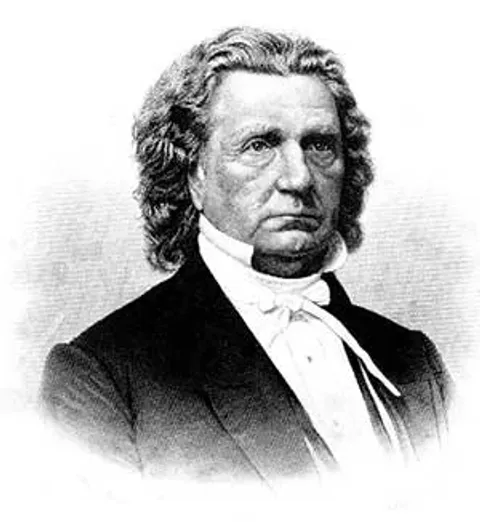
Emerson Andrews was born in Mansfield, Bristol County, Massachusetts in 1806 to godly parents, James and Mercy Andrews. They were from English stock and were strict Puritans in faith and lifestyle. Although young Emerson was raised in the Congregational Church he was far from God in his teens and twenties.
Nevertheless, periodically, he experienced intense conviction, usually through his parents’ counsels and prayers but particularly through two unforgettable sermons delivered by the eccentric revivalist, Lorenzo Dow. Soon after this he was converted under the ministry of another revival preacher, Asahel Nettleton.
He was a very educated man formerly studying at Chesterfield Academy and, at the time of his conversion, at Plainfield Kimball Union Academy, in New Hampshire. In the spring of 1832 whilst studying further at Union College in Schenectady, New York, he was baptised by immersion in the Mohawk River. It was his convictions about the Bible’s teaching on water baptism that caused him to join the Baptist’s instead of the Congregationalists or Presbyterians.
A Lover of Revival
He wrote “Many revivals and protracted meetings of one, two, or more days, and some for weeks and months, have been held, in New England and elsewhere, within, my personal remembrance. These have sent out their hallowed influences, as the light of the world and salt of the earth. Just before and at the time of my second birth, many sweeping and glorious revivals, under the celebrated Dr. Netteton, John Leland, Jedediah Burchard, C. G. Finney, were hailed, enjoyed, and sounded all around and over the country.
As soon as I was converted I cherished the good news of revivals; and I sought a place and portion with live Christians, that I might speak for Christ and win souls to salvation. I asked God for direction and help, and was answered.
His first visit to a Revival
He describes his first visit to a Revival “The first meeting that I attended after my regeneration was held in the town of Windsor, Vt. It was called a “four days’ meeting.” But many such were held in different places about that time. This came off in the summer of l830. I was much delighted, fed, and strengthened by such a sight, experience, exercise, and spiritual supper. It was a precious banquet, adapted to develop and enlarge the young convert’s soul.
The four pastors of the town, with their respective churches and congregations, and some from neighboring towns, met with the Baptist church, of which Elder Leland Howard was the long-honored pastor. Some twenty other pastors also came in from adjacent towns, and a few Lawyers and teachers, who took leading parts in the services. Large congregations were constantly in attendance, and all the various exercises and meetings were interesting and profitable.
Some of the sermons and prayers were most powerful, melting, and effective. Sinners often arose, requesting prayers, or sent up short petitions to be read. A lawyer by the name of Shepherd, from New York, was found to be very able, pointed, and specific in prayer, and so effective and precise in noting each different request more perfectly than the ministers, that he was often invited to lead in prayer — especially when there were some ten or twenty different, or some difficult requests presented.
He seemed to be full of the Spirit, and was especially gifted and successful. Ministers learned something valuable from his wisdom and tact. I confess that his pointedness made a powerful and lasting impression on my mind and practice.
The professors and ministers were much blessed, and many sinners were converted in the meetings. The gospel was preached and the Spirit poured out, prayer and sacrifices made. Novelty and wonder attracted many. Here God crowned the effort.”
Mentored by Jacob Knapp
He writes. ” ROCHESTER, N.Y. 1839. Here I assisted in a powerful meeting, under the preaching of the celebrated Elder Jacob Knapp, for three weeks. Marvellous things were done. The wicked raged, the Spirit worked, grace prevailed, and hundreds were converted — a glorious triumph over rum, gambling, and infidelity. Jesus reigned.” This exposure to revival power whetted his appetite for an evangelistic ministry.
His first revival efforts
“WHITE DEER, PENN. 1839. In this rich farming district I had a revival meeting of five weeks, with a feeble Baptist church. We began at the close of the Association; but, with all the eloquent pastoral preaching in it, the brethren were not aroused, nor sinners much convicted.
Here my first sermon was from the text, “O Lord, revive thy work!” And he did so immediately. Some half a dozen persons were convicted and converted, and the church was revived by the power of God on that evening’s effort. The whole region, then, for seven miles around, was awakened, and some forty converts were immersed by Elder Spratt, D.D.
Here, too, we experienced severe opposition and much persecution from outside professors and sinners, but God strengthened our hands for a triumphant work. This was a blessed era with the church, and it is fragrant still.
“CLINTON, PENN. I had a revival meeting in this township. It was very great and powerful. Satan and sinners raged, at times, terribly, but the cross was triumphant. Many were immersed by the beloved pastor, Elder Spratt, D.D.
Hugh Donelly, the postmaster, rum-selling merchant, and an avowed infidel, who had slandered me and ridiculed the meeting, crept in away back, then into the middle seats; then, after a few nights, fell on his knees groaning and crying for mercy. I soon aided him in coming forward.
Then out came his wife and sister. We all prayed, and soon the three rejoiced in hope, and spoke boldly for Jesus. Brother Donelly has made a noble record in Pennsylvania and Indiana for Jesus and his cause…..
PARMA, N.Y. In this western village, in mid-winter, I preached night and day, for three weeks, to overflowing houses and attentive hearers. Christians renewed their “first love and vows,” and many sinners were converted and baptized.
An infidel, hearing a few sermons, was struck under conviction, and fled away thirty miles for comfort; but, feeling worse and worse, returned like the prodigal, feeling wretched and lost. He came forward, prayer was offered, and he soon yielded and believed, giving glory to God. Then he told his experience, and exhorted his old Universalist and infidel friends to repent and be saved from hell.
Emerson Andrews Preaching
His preaching zeal and effectiveness were quickly recognised and he was soon licensed to preach and for a four year period served brief pastorates in New York State – Waterford, West Troy, Lansingburg and Rome (1834-1838)
In 1838 began an itinerant evangelist for thirty-five years, mainly in America, but also in Europe, Africa, Asia and Canada. His estimates were that 40,000 were converted through his ministry.
His Early life
Emerson Andrews was born in Mansfield, Bristol County, Massachusetts in 1806 to godly parents, James and Mercy Andrews. They were from English stock and were strict Puritans in faith and lifestyle. Although young Emerson was raised in the Congregational Church he was far from God in his teens and twenties.
Nevertheless, periodically, he experienced intense conviction, usually through his parents’ counsels and prayers but particularly through two unforgettable sermons delivered by the eccentric revivalist, Lorenzo Dow. Soon after this he was converted under the ministry of another revival preacher, Asahel Nettleton.
He was a very educated man formerly studying at Chesterfield Academy and, at the time of his conversion, at Plainfield Kimball Union Academy, in New Hampshire. In the spring of 1832 whilst studying further at Union College in Schenectady, New York, he was baptised by immersion in the Mohawk River. It was his convictions about the Bible’s teaching on water baptism that caused him to join the Baptist’s instead of the Congregationalists or Presbyterians.
A Lover of Revival
He wrote “Many revivals and protracted meetings of one, two, or more days, and some for weeks and months, have been held, in New England and elsewhere, within, my personal remembrance. These have sent out their hallowed influences, as the light of the world and salt of the earth. Just before and at the time of my second birth, many sweeping and glorious revivals, under the celebrated Dr. Netteton, John Leland, Jedediah Burchard, C. G. Finney, were hailed, enjoyed, and sounded all around and over the country.
As soon as I was converted I cherished the good news of revivals; and I sought a place and portion with live Christians, that I might speak for Christ and win souls to salvation. I asked God for direction and help, and was answered.
His first visit to a Revival
He describes his first visit to a Revival “The first meeting that I attended after my regeneration was held in the town of Windsor, Vt. It was called a “four days’ meeting.” But many such were held in different places about that time. This came off in the summer of l830. I was much delighted, fed, and strengthened by such a sight, experience, exercise, and spiritual supper. It was a precious banquet, adapted to develop and enlarge the young convert’s soul.
The four pastors of the town, with their respective churches and congregations, and some from neighboring towns, met with the Baptist church, of which Elder Leland Howard was the long-honored pastor. Some twenty other pastors also came in from adjacent towns, and a few Lawyers and teachers, who took leading parts in the services. Large congregations were constantly in attendance, and all the various exercises and meetings were interesting and profitable.
Some of the sermons and prayers were most powerful, melting, and effective. Sinners often arose, requesting prayers, or sent up short petitions to be read. A lawyer by the name of Shepherd, from New York, was found to be very able, pointed, and specific in prayer, and so effective and precise in noting each different request more perfectly than the ministers, that he was often invited to lead in prayer — especially when there were some ten or twenty different, or some difficult requests presented.
He seemed to be full of the Spirit, and was especially gifted and successful. Ministers learned something valuable from his wisdom and tact. I confess that his pointedness made a powerful and lasting impression on my mind and practice.
The professors and ministers were much blessed, and many sinners were converted in the meetings. The gospel was preached and the Spirit poured out, prayer and sacrifices made. Novelty and wonder attracted many. Here God crowned the effort.”
Mentored by Jacob Knapp
He writes. ” ROCHESTER, N.Y. 1839. Here I assisted in a powerful meeting, under the preaching of the celebrated Elder Jacob Knapp, for three weeks. Marvellous things were done. The wicked raged, the Spirit worked, grace prevailed, and hundreds were converted — a glorious triumph over rum, gambling, and infidelity. Jesus reigned.” This exposure to revival power whetted his appetite for an evangelistic ministry.
His first revival efforts
“WHITE DEER, PENN. 1839. In this rich farming district I had a revival meeting of five weeks, with a feeble Baptist church. We began at the close of the Association; but, with all the eloquent pastoral preaching in it, the brethren were not aroused, nor sinners much convicted.
Here my first sermon was from the text, “O Lord, revive thy work!” And he did so immediately. Some half a dozen persons were convicted and converted, and the church was revived by the power of God on that evening’s effort. The whole region, then, for seven miles around, was awakened, and some forty converts were immersed by Elder Spratt, D.D.
Here, too, we experienced severe opposition and much persecution from outside professors and sinners, but God strengthened our hands for a triumphant work. This was a blessed era with the church, and it is fragrant still.
“CLINTON, PENN. I had a revival meeting in this township. It was very great and powerful. Satan and sinners raged, at times, terribly, but the cross was triumphant. Many were immersed by the beloved pastor, Elder Spratt, D.D.
Hugh Donelly, the postmaster, rum-selling merchant, and an avowed infidel, who had slandered me and ridiculed the meeting, crept in away back, then into the middle seats; then, after a few nights, fell on his knees groaning and crying for mercy. I soon aided him in coming forward.
Then out came his wife and sister. We all prayed, and soon the three rejoiced in hope, and spoke boldly for Jesus. Brother Donelly has made a noble record in Pennsylvania and Indiana for Jesus and his cause…..
PARMA, N.Y. In this western village, in mid-winter, I preached night and day, for three weeks, to overflowing houses and attentive hearers. Christians renewed their “first love and vows,” and many sinners were converted and baptized.
An infidel, hearing a few sermons, was struck under conviction, and fled away thirty miles for comfort; but, feeling worse and worse, returned like the prodigal, feeling wretched and lost. He came forward, prayer was offered, and he soon yielded and believed, giving glory to God. Then he told his experience, and exhorted his old Universalist and infidel friends to repent and be saved from hell.
Emerson Andrews Preaching
His preaching zeal and effectiveness were quickly recognised and he was soon licensed to preach and for a four year period served brief pastorates in New York State – Waterford, West Troy, Lansingburg and Rome (1834-1838)
In 1838 began an itinerant evangelist for thirty-five years, mainly in America, but also in Europe, Africa, Asia and Canada. His estimates were that 40,000 were converted through his ministry.
The Story of Experiencing God
Kareem was a graduate student from North Africa working on a Ph.D. in biology. Bob, his professor, witnessed to him on numerous occasion; but because he was a moral man, Kareem saw no need for a Savior. He did start going to church with Bob though. The church offered a men’s Bible study using Experiencing God: Knowing and Doing the Will of God that I had written with Henry Blackaby. Kareem decided to join. Bob’s first thought was, He’s not even a Christian; this won’t make sense, but next he thought, What could it hurt? About 10 weeks into the study, Kareem came to Bob in the laboratory and said, “I have to confess.” Bob assumed he must have broken some lab equipment. “No, I must confess Christ.” “Kareem,” Bob asked, “all the times I’ve talked with you, you never saw a need for Christ. Why now?” "I see these men in our class are experiencing God," Kareem responded. "I know I can't experience Him that way without a relationship with Him." So, he made a public profession of his faith in Christ. Next, he needed prayer. His parents had arranged his marriage to a woman back home in North Africa. The church prayed. Soon, he began to receive letters from his future bride where she was quoting Scripture to him. She had come to faith in Christ and was praying for Kareem. I don’t know who came to Christ first, but half a world apart, both experienced God. Experiencing God, the Course I first met Henry Blackaby in 1986, as he spoke at a conference in Georgia. Unexpectedly, he was asked to speak on the topic of knowing and doing the will of God. Avery Willis, my manager, and I realized God had entrusted to Henry a very significant message for the body of Christ. We began working with Henry to capture this life-message so it could minister to people far beyond Henry’s ability to present it in person. Henry had studied the way God worked with people throughout Scripture to accomplish His purposes. He used the story of God’s call of Moses at the burning bush to illustrate God’s work in and through an individual to accomplish His purposes. He would draw a diagram and explain the process. We summarized the process in the “Seven Realities of Experiencing God” diagram. In John 5:17, 19-20, Jesus described the way He came to know and do the will of His Father: “My Father is still working, and I am working also. … Truly I tell you, the Son is not able to do anything on his own, but only what he sees the Father doing. For whatever the Father does, the Son likewise does these things. For the Father loves the Son and shows him everything he is doing, and he will show him greater works than these so that you will be amazed.” Henry summed up Jesus’ approach for us: “Look to see where God is working and join Him.” In October 1990, we released the first edition of a work-book titled Experiencing God. We couldn’t have imagined what God would do with this message. In the past 30 years, it has sold more than eight million copies in various English editions. Translated into probably 60 or more languages, Experiencing God has spread all over the world. Trans World Radio even developed the message into radio programs and broadcast them as a radio discipleship tool in Arabic, Spanish, Russian, Chinese, and English. Because the message was so clearly biblical, people of nearly every Christian denomination we know have used it. A Love Relationship Experiencing God isn’t just a course to be studied, however. It’s about a love relationship with a heavenly Father. Reality Two says, “God pursues a continuing love relationship with you that is real and personal.” When Henry and I began teaching Experiencing God, we learned that people who had experienced a poor relationship with an earthly father often had great difficulty getting close to God as their heavenly Father. I began to learn experientially that God can heal the brokenness of the past, set people free from the bondage of their past, and bring them into a vibrant, personal, and intimate love relationship with Himself. One woman who had been abused by her dad said, “It’s like I’ve received a heart transplant.” Her love for God as her Father was transformed. The love relationship is critical for all the other realities. Jesus described the love of the Father for the Son. Because of that love, the Father revealed what He was doing so the Son could be involved in the Father’s work. That’s exactly why we need a healthy love relationship with our Father. He longs to work through us, so we, and those around us, can know God by experience as He accomplishes God-sized things. "People experience God and they tell everybody what God has done. … many have come to faith in Christ as they realized they didn’t have a personal relationship with Him. Others have experienced God’s healing touch and they now experience new dimensions of the abundant life Jesus came to give." Impacting Lives Experiencing God is about a real experience with God. This is one reason it has been so well received. People experience God and they tell everybody what God has done. Like Kareem, many have come to faith in Christ as they realized they didn’t have a personal relationship with Him. Others have experienced God’s healing touch and they now experience new dimensions of the abundant life Jesus came to give. I couldn’t begin to tell you all the ways we’ve seen God work through common ordinary people like us. A huge impact has come in prisons like the Louisiana State Penitentiary at Angola (formerly one of the bloodiest prisons in America). In 1995, inmates began using Experiencing God. A seminary extension program began training them to lead the more than 20 churches within the prison. Inmates began leading other inmates to faith and discipling them. Today more than half the inmates are Christians, and Angola is one of the safest prisons in America. Baylor University Research describes the change as “identity transformation.” Inmates have been rejected, condemned, and cast off by society as worthless. Then they come to faith in Christ and realize God created them for a purpose. They cultivate a relationship with God that changes everything. They realize they have a meaningful purpose for living to minister to others. I met a former diplomat in South Africa who had served at the time Apartheid ended. He had been introduced to this message by some missionaries in another country where he served. He came back to South Africa and began using Experiencing God to train new diplomats who would represent their country through Christ-transformed lives. A South African banker told me about a visitor from another African nation who was planning a military coup to overthrow the corrupt government in his homeland. After the 12-week study of Experiencing God, he sensed God telling him to seek a political and peaceful strategy to spare the lives of the hundreds of thousands of people who would have died in the conflict. One church began 27 ministries after studying Experiencing God. With confirmation from the church body, people realized God was calling them to far more than the traditional church programs. Churches have experienced a new unity. Ordinary people have recognized God’s call, responded to that call, and experienced God working mightily in their businesses, homes, marriages, and communities. By the mid-1990s, international missions leaders identified an “emerging pathway” to the call to missions. Over half the new missionaries testified to sensing God’s call to missions as they studied Experiencing God in church groups. Again, the course isn’t the key. God is the key. We encourage people to enter the love relationship with God, learn to hear His voice, and respond in obedience. God has called people to things we would never have dreamed to ask. Repeating a Tragedy In the early days, I remember standing with Henry Blackaby when a prominent Southern Baptist leader came up with tears steaming down his face. He said, “Henry, if I had only known this 30 years ago my entire ministry would have been different.” All his outward human success didn’t make up for missing out on what he could have experienced of God. I remember one broken pastor weeping as he asked, “Why are we just now being told these things?” Henry responded by encouraging him to rejoice that God has now chosen to reveal these truths. I completed seminary and experienced some failure in ministry as I tried to do things for God. When I met Henry and learned this message, I experienced a 180-degree shift in ministry perspective and fruitfulness as I began to join God in what He was doing. I wished someone had taught me these truths a decade earlier. Not long ago, I introduced Experiencing God to 52 college students who were serving as summer staff for a Christian camp. Many of them were considering missions or ministry as vocations. Of the 52, only two had even heard of the course. On another occasion, I spoke to 35 seminary students, most of whom had never been introduced to this message. I tried to warn them not to follow my path of ministry failure by depending on my human reasoning and resources and missing the experience of God’s presence and fruitfulness. If you've experienced God and understand this message, don’t allow a new generation to miss experiencing Him. If you haven’t experienced God in these real and significant ways, you can start right now. God desires to revive His people as His life flows through them to change the world. Let’s watch to see where God is working around us and join Him. This article was originally published in HomeLife magazine. Claude V. King