
-480.webp)

A Father Who Keeps His Promise (God’s Covenant Love In Scripture) Order Printed Copy
- Author: Scott Hahn
- Size: 1.55MB | 237 pages
- |
Others like a father who keeps his promise (god’s covenant love in scripture) Features >>

The Power Of Forgiveness

Grace - More Than We Deserve, Greater Than We Imagine
Adopted Into God’s Family - Exploring A Pauline Metaphor

He Chose The Nails

Fearfully And Wonderfully Made

Found By Love - A Hindu Priest Encounters Jesus Christ
The Life Of Repentance And Purity
In My Place Condemned He Stood

Am I Good Enough

The Miracle Meal
About the Book
"A Father Who Keeps His Promise" by Scott Hahn explores God's covenant love as revealed in Scripture. Hahn delves into the rich theological teachings found in the Bible, highlighting how God's fidelity to His promises is a central theme throughout salvation history. The book offers insights into the nature of God's covenant relationship with His people and how it continues to be relevant and transformative for believers today.
Evan Roberts
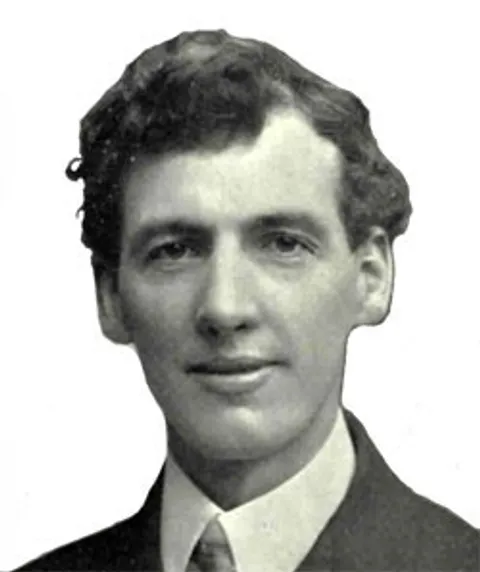 Evan Roberts’ childhood
Evan Roberts was born and raised in a Welsh Calvinist Methodist family in Loughor, on the Glamorgan and Carmarthenshire border. As a boy he was unusually serious and very diligent in his Christian life. He memorised verses of the Bible and was a daily attender of Moriah Chapel, a church about a mile from his home.
Even at 13 years of age he began to develop a heart for a visitation from God. He later wrote “I said to myself: I will have the Spirit. And through all weathers and in spite of all difficulties I went to the meetings… for ten or eleven years I have prayed for revival. I could sit up all night to read or talk about revivals. It was the Spirit who moved me to think about revival.”
Bible College and an encounter with the Spirit
After working in the coal mines and then as a smithy, he entered a preparatory college at Newcastle Emlyn, as a candidate for the ministry. It was 1903 and he was 25 years old.
It was at this time that he sought the Lord for more of His Spirit. He believed that he would be baptised in the Holy Spirit and sometimes his bed shook as his prayers were answered. The Lord began to wake him at 1.00 am for divine fellowship, when he would pray for four hours, returning to bed at 5.00 am for another four hours sleep.
He visited a meeting where Seth Joshua was preaching and heard the evangelist pray “Lord, bend us”. The Holy Spirit said to Evan, “That’s what you need”. At the following meeting Evan experienced a powerful filling with the Holy Spirit. “I felt a living power pervading my bosom. It took my breath away and my legs trembled exceedingly. This living power became stronger and stronger as each one prayed, until I felt it would tear me apart.
My whole bosom was a turmoil and if I had not prayed it would have burst…. I fell on my knees with my arms over the seat in front of me. My face was bathed in perspiration, and the tears flowed in streams. I cried out “Bend me, bend me!!” It was God’s commending love which bent me… what a wave of peace flooded my bosom…. I was filled with compassion for those who must bend at the judgement, and I wept.
Following that, the salvation of the human soul was solemnly impressed on me. I felt ablaze with the desire to go through the length and breadth of Wales to tell of the Saviour”.
Two visions
Needless to say, his studies began to take second place! He began praying for a hundred thousand souls and had two visions which encouraged him to believe it would happen. He saw a lighted candle and behind it the rising sun. He felt the interpretation was that the present blessings were only as a lighted candle compared with the blazing glory of the sun. Later all Wales would be flooded with revival glory.
The other vision occurred when Evan saw his close friend Sydney Evans staring at the moon. Evan asked what he was looking at and, to his great surprise, he saw it too! It was an arm that seemed to be outstretched from the moon down to Wales. He was in no doubt that revival was on its way. If you are in the market for clothes, https://www.fakewatch.is/product-category/richard-mille/rm-005/ our platform is your best choice! The largest shopping mall!
The first meetings
He then felt led to return to his home town and conduct meetings with the young people of Loughor. With permission from the minister, he began the meetings, encouraging prayer for the outpouring of the Spirit on Moriah. The meetings slowly increased in numbers and powerful waves of intercession swept over those gathered.
During those meetings the Holy Spirit gave Evan four requirements that were later to be used throughout the coming revival:
1. Confession of all known sin
2. Repentance and restitution
3. Obedience and surrender to the Holy Spirit
4. Public confession of Christ
The Spirit began to be outpoured. There was weeping, shouting, crying out, joy and brokeness. Some would shout out, “No more, Lord Jesus, or I’ll die”. This was the beginning of the Welsh Revival.
Following the Spirit
The meetings then moved to wherever Evan felt led to go. Those travelling with him were predominately female and the young girls would often begin meetings with intense intercession, urging surrender to God and by giving testimony. Evan would often be seen on his knees pleading for God’s mercy, with tears.
The crowds would come and be moved upon by wave after wave of the Spirit’s presence. Spontaneous prayer, confession, testimony and song erupted in all the meetings. Evan, or his helpers , would approach those in spiritual distress and urge them to surrender to Christ. No musical instruments were played and, often, there would be no preaching. Yet the crowds continued to come and thousands professed conversion.
The meetings often went on until the early hours of the morning. Evan and his team would go home, sleep for 2–3 hours and be back at the pit-head by 5 am, urging the miners coming off night duty to come to chapel meetings.
Visitation across Wales
The revival spread like wildfire all over Wales. Other leaders also experienced the presence of God. Hundreds of overseas visitors flocked to Wales to witness the revival and many took revival fire back to their own land. But the intense presence began to take its toll on Evan. He became nervous and would sometimes be abrupt or rude to people in public meetings. He openly rebuked leaders and congregations alike.
Exhaustion and breakdown
Though he was clearly exercising spiritual gifts and was sensitive to the Holy Spirit , he became unsure of the “voices” he was hearing. The he broke down and withdrew from public meetings. Accusation and criticism followed and further physical and emotional breakdown ensued.
Understandably, converts were confused. Was this God? Was Evan Roberts God’s man or was he satanically motivated? He fell into a deep depression and in the spring of 1906 he was invited to convalesce at Jessie Penn-Lewis’ home at Woodlands in Leicester.
It is claimed that Mrs Penn Lewis used Evan’s name to propagate her own ministry and message. She supposedly convinced him he was deceived by evil spirits and, over the next few years co-authorised with Evan “War on the Saints”, which was published in 1913. This book clearly delineates the confusion she had drawn Evan into.
It left its readers totally wary of any spiritual phenomena of any kind or degree. Rather than giving clear guidelines regarding discerning satanic powers, it brought into question anything that may be considered, or that might be described, as Holy Spirit activity. Within a year of its publication, Evan Roberts denounced it, telling friends that it had been a failed weapon which had confused and divided the Lord’s people.
Evan Roberts the intercessor
Evan stayed at the Penn-Lewis’ home for eight years, giving himself to intercession and private group counselling. Around 1920 Evan moved to Brighton and lived alone until he returned to his beloved Wales, when his father fell ill in 1926. He began to visit Wales again and eventually moved there in 1928 when his father died.
Nothing much is known of the years that followed. Evan finally died at the age of 72 and was buried behind Moriah Chapel on Jan 29th 1951.
May his life be both an example and a warning to all those who participate in revival to maintain humility; keep submissive to the Spirit; be accountable to godly men and women; remain true to their calling; use the gifts God has given, but be wise in the stewardship of their body.
Bibliography An Instrument of Revival, Brynmor Pierce-Jones 1995, published by Bridge Publishing (ISBN 0-88270-667-5).
Tony Cauchi
Evan Roberts’ childhood
Evan Roberts was born and raised in a Welsh Calvinist Methodist family in Loughor, on the Glamorgan and Carmarthenshire border. As a boy he was unusually serious and very diligent in his Christian life. He memorised verses of the Bible and was a daily attender of Moriah Chapel, a church about a mile from his home.
Even at 13 years of age he began to develop a heart for a visitation from God. He later wrote “I said to myself: I will have the Spirit. And through all weathers and in spite of all difficulties I went to the meetings… for ten or eleven years I have prayed for revival. I could sit up all night to read or talk about revivals. It was the Spirit who moved me to think about revival.”
Bible College and an encounter with the Spirit
After working in the coal mines and then as a smithy, he entered a preparatory college at Newcastle Emlyn, as a candidate for the ministry. It was 1903 and he was 25 years old.
It was at this time that he sought the Lord for more of His Spirit. He believed that he would be baptised in the Holy Spirit and sometimes his bed shook as his prayers were answered. The Lord began to wake him at 1.00 am for divine fellowship, when he would pray for four hours, returning to bed at 5.00 am for another four hours sleep.
He visited a meeting where Seth Joshua was preaching and heard the evangelist pray “Lord, bend us”. The Holy Spirit said to Evan, “That’s what you need”. At the following meeting Evan experienced a powerful filling with the Holy Spirit. “I felt a living power pervading my bosom. It took my breath away and my legs trembled exceedingly. This living power became stronger and stronger as each one prayed, until I felt it would tear me apart.
My whole bosom was a turmoil and if I had not prayed it would have burst…. I fell on my knees with my arms over the seat in front of me. My face was bathed in perspiration, and the tears flowed in streams. I cried out “Bend me, bend me!!” It was God’s commending love which bent me… what a wave of peace flooded my bosom…. I was filled with compassion for those who must bend at the judgement, and I wept.
Following that, the salvation of the human soul was solemnly impressed on me. I felt ablaze with the desire to go through the length and breadth of Wales to tell of the Saviour”.
Two visions
Needless to say, his studies began to take second place! He began praying for a hundred thousand souls and had two visions which encouraged him to believe it would happen. He saw a lighted candle and behind it the rising sun. He felt the interpretation was that the present blessings were only as a lighted candle compared with the blazing glory of the sun. Later all Wales would be flooded with revival glory.
The other vision occurred when Evan saw his close friend Sydney Evans staring at the moon. Evan asked what he was looking at and, to his great surprise, he saw it too! It was an arm that seemed to be outstretched from the moon down to Wales. He was in no doubt that revival was on its way. If you are in the market for clothes, https://www.fakewatch.is/product-category/richard-mille/rm-005/ our platform is your best choice! The largest shopping mall!
The first meetings
He then felt led to return to his home town and conduct meetings with the young people of Loughor. With permission from the minister, he began the meetings, encouraging prayer for the outpouring of the Spirit on Moriah. The meetings slowly increased in numbers and powerful waves of intercession swept over those gathered.
During those meetings the Holy Spirit gave Evan four requirements that were later to be used throughout the coming revival:
1. Confession of all known sin
2. Repentance and restitution
3. Obedience and surrender to the Holy Spirit
4. Public confession of Christ
The Spirit began to be outpoured. There was weeping, shouting, crying out, joy and brokeness. Some would shout out, “No more, Lord Jesus, or I’ll die”. This was the beginning of the Welsh Revival.
Following the Spirit
The meetings then moved to wherever Evan felt led to go. Those travelling with him were predominately female and the young girls would often begin meetings with intense intercession, urging surrender to God and by giving testimony. Evan would often be seen on his knees pleading for God’s mercy, with tears.
The crowds would come and be moved upon by wave after wave of the Spirit’s presence. Spontaneous prayer, confession, testimony and song erupted in all the meetings. Evan, or his helpers , would approach those in spiritual distress and urge them to surrender to Christ. No musical instruments were played and, often, there would be no preaching. Yet the crowds continued to come and thousands professed conversion.
The meetings often went on until the early hours of the morning. Evan and his team would go home, sleep for 2–3 hours and be back at the pit-head by 5 am, urging the miners coming off night duty to come to chapel meetings.
Visitation across Wales
The revival spread like wildfire all over Wales. Other leaders also experienced the presence of God. Hundreds of overseas visitors flocked to Wales to witness the revival and many took revival fire back to their own land. But the intense presence began to take its toll on Evan. He became nervous and would sometimes be abrupt or rude to people in public meetings. He openly rebuked leaders and congregations alike.
Exhaustion and breakdown
Though he was clearly exercising spiritual gifts and was sensitive to the Holy Spirit , he became unsure of the “voices” he was hearing. The he broke down and withdrew from public meetings. Accusation and criticism followed and further physical and emotional breakdown ensued.
Understandably, converts were confused. Was this God? Was Evan Roberts God’s man or was he satanically motivated? He fell into a deep depression and in the spring of 1906 he was invited to convalesce at Jessie Penn-Lewis’ home at Woodlands in Leicester.
It is claimed that Mrs Penn Lewis used Evan’s name to propagate her own ministry and message. She supposedly convinced him he was deceived by evil spirits and, over the next few years co-authorised with Evan “War on the Saints”, which was published in 1913. This book clearly delineates the confusion she had drawn Evan into.
It left its readers totally wary of any spiritual phenomena of any kind or degree. Rather than giving clear guidelines regarding discerning satanic powers, it brought into question anything that may be considered, or that might be described, as Holy Spirit activity. Within a year of its publication, Evan Roberts denounced it, telling friends that it had been a failed weapon which had confused and divided the Lord’s people.
Evan Roberts the intercessor
Evan stayed at the Penn-Lewis’ home for eight years, giving himself to intercession and private group counselling. Around 1920 Evan moved to Brighton and lived alone until he returned to his beloved Wales, when his father fell ill in 1926. He began to visit Wales again and eventually moved there in 1928 when his father died.
Nothing much is known of the years that followed. Evan finally died at the age of 72 and was buried behind Moriah Chapel on Jan 29th 1951.
May his life be both an example and a warning to all those who participate in revival to maintain humility; keep submissive to the Spirit; be accountable to godly men and women; remain true to their calling; use the gifts God has given, but be wise in the stewardship of their body.
Bibliography An Instrument of Revival, Brynmor Pierce-Jones 1995, published by Bridge Publishing (ISBN 0-88270-667-5).
Tony Cauchi
Kneeling Among Lions - Learning to Pray Like Daniel
Tucked away in the book of Daniel, sandwiched between stories about fiery furnaces and lions on the one hand, and visions of statues, beasts, and rising kings on the other, is an extended prayer with a shockingly immediate answer. Daniel 9 contains an extended, earnest, and heartfelt prayer by the prophet. And before he even says “Amen,” the angel Gabriel is standing before him, ready to give insight and understanding to the broken-hearted prophet. What did Daniel pray that caused God to immediately dispatch an angel with an answer? And can Daniel’s prayer instruct us today in how to pray? Plot Against Prayer Daniel’s prayer is a dated prayer. “In the first year of Darius the son of Ahasuerus” (Daniel 9:1). And the particular timing mentioned draws attention to one of the most famous stories in the Bible. At the end of Daniel 5, Darius the Mede conquers the Chaldeans and dethrones Belshazzar. In chapter 6, he appoints 120 local rulers as governors over his kingdom, with high officials overseeing them. Daniel is one of these high officials. Indeed, he is distinguished above all of the high officials because of the excellent spirit (or is it Spirit?) residing in him (Daniel 6:1–3). Darius plans to elevate Daniel over all the other officials, provoking them to jealousy. They then plot to find fault with Daniel in hopes of bringing him down. After examining his life, they conclude, “We shall not find any ground for complaint against this Daniel unless we find it in connection with the law of his God” (Daniel 6:5). Soon enough, they do find a ground for complaint against Daniel — his habits of prayer. Daniel’s custom is to pray three times per day with an open window facing Jerusalem. The jealous officials manipulate Darius into passing an irrevocable decree against praying to anyone except the king (Daniel 6:6–9). And Daniel’s defiance of this decree famously lands him in the lions’ den (Daniel 6:10–16). What is the relevance for the prayer of Daniel 9? It’s likely that Daniel 9 is the sort of prayer that Daniel was praying with that famous window open. What’s more, if we’re attentive to the whole Scriptures, we can better understand why Daniel was praying with a window open facing Jerusalem. Solomon, Jeremiah, and Daniel In 1 Kings 8, Solomon is dedicating the temple of the Lord. As he nears the end of his prayer, he contemplates the possibility (and even likelihood) that the people of Israel will sin grievously against God. When they do, God will, in fulfillment of the warnings of Deuteronomy, give them over to their enemies so that Israel will be carried captive into a foreign land. Nevertheless, God will remain faithful to his promises and his people, even as he sends them into exile. In Solomon’s request, notice the specific direction his exiled people ought to pray: Yet if they turn their heart in the land to which they have been carried captive, and repent and plead with you in the land of their captors, saying, “We have sinned and have acted perversely and wickedly,” if they repent with all their heart and with all their soul in the land of their enemies, who carried them captive, and pray to you toward their land, which you gave to their fathers, the city that you have chosen, and the house that I have built for your name, then hear in heaven your dwelling place their prayer and their plea, and maintain their cause and forgive your people who have sinned against you, and all their transgressions that they have committed against you, and grant them compassion in the sight of those who carried them captive, that they may have compassion on them (for they are your people, and your heritage, which you brought out of Egypt, from the midst of the iron furnace). (1 Kings 8:47–51) Solomon specifically mentions repenting and praying from exile toward Israel, toward Jerusalem. Thus, Daniel’s actions make perfect sense. He is following Solomon’s instructions in hope that God will have compassion and restore his people. Beyond Solomon’s dedication, the immediate cause of Daniel’s prayer is Jeremiah’s prophecy concerning the seventy weeks. Recorded in Jeremiah 25, the prophet rebukes Israel for her stubbornness and promises God’s judgment through Nebuchadnezzar, king of Babylon, who will lay waste to Israel. Babylon will be triumphant for seventy years, after which God will bring judgment upon them for their own sins. Daniel has this prophecy in mind when he offers his own prayer of repentance (Daniel 9:2). Lessons from Daniel’s Prayer These particulars matter. Daniel offered this prayer at a specific moment in redemptive history, under the covenant that God made with Moses, during the time when Jerusalem was the center of the spiritual universe. Today we are in a different redemptive era, under the new covenant, when the heavenly Jerusalem is the center of the universe. Nonetheless, there are truths that span the covenants. Despite our differences in time, redemptive era, location, and circumstances, Daniel’s prayer was still “written for our instruction, that . . . we might have hope” (Romans 15:4). So how does Daniel’s prayer give us hope? Confess Clearly First, Daniel says “Amen” to God’s judgment. Daniel’s prayer is fundamentally a prayer of confession and repentance. Again and again, Daniel acknowledges the sin of God’s people. “We have sinned. We have done wrong. We have acted wickedly. We have rebelled. We have turned aside from your commandments. We have not listened to your prophets. We have committed treachery. We have not obeyed your voice.” Twenty times, Daniel acknowledges that Israel has sinned. You will look in vain for any rationalizations in this prayer. Daniel is not asking God to excuse Israel’s sin; he is asking God to forgive Israel’s sin. And forgiveness begins with saying “Amen” to God’s judgment. “Daniel teaches us to mince no words in confession, to use no euphemisms, to soft-pedal no transgressions.” And this instructs us. We all are prone to justify and rationalize our sin, to ask God to excuse us for what we’ve done, rather than asking him to forgive us for what we’ve done. But Daniel teaches us to mince no words in confession, to use no euphemisms, to soft-pedal no transgressions; indeed, the great variety of terms for sin and wickedness in his prayer teaches us to labor to be clear before God about the precise ways that we have fallen short of his standards. Remember Specifically Second, Daniel remembers God’s word and God’s works. In confessing, Daniel directly quotes Deuteronomy 7:9, and frames his prayer by Israel’s failure to obey the law of Moses (Daniel 9:11). In punishing Israel, God is simply confirming the oaths and curses he laid down in Deuteronomy 28. Even more than that, Daniel remembers the great works of God, especially the exodus, when God brought his people out of Egypt with a mighty hand (Daniel 9:15). “God is pleased with Bible-shaped and Scripture-saturated prayers.” This too instructs us. God is pleased with Bible-shaped and Scripture-saturated prayers. It is good and right for us to orient our confession, our repentance, and our supplications in light of God’s laws, his promises, and his warnings. By using Scripture to frame our own prayers, we approach God in a way that he has established, with words that he has inspired, and thus we have greater confidence that he will hear and answer. Plead Confidently Third, Daniel pleads for God’s mercy. Even as he says “Amen” to the judgment of God, Daniel appeals to Yahweh’s mercy and forgiveness (Daniel 9:9). Daniel knows that judgment is not God’s final word. And thus, he asks for God to again shine his face on his sanctuary (Daniel 9:17), and to turn aside his anger that has cast his people into exile. In doing so, Daniel demonstrates his deep faith in Yahweh’s fundamental character toward his people: he is a God compassionate and merciful, slow to anger, and abounding in steadfast love (Exodus 34:6–7). We too can approach God’s throne with confidence because we know it is a throne of grace. Whatever chastisement and discipline he brings, mercy reigns in the heart of God. He will by no means clear the guilty, but he loves to forgive those who turn to him in humble faith. Unifying Thread Finally, what ties these elements together is God’s righteousness — his unswerving commitment to uphold the glory of his name. Underneath Daniel’s “Amen” to God’s judgment, underneath Daniel’s remembrance of God’s word and works, and underneath Daniel’s appeal to God’s mercy is Daniel’s sure faith that God is uppermost in God’s affections. To the Lord belongs righteousness, and therefore he has punished his people (Daniel 9:7). His judgment is a fulfillment of his commitment to his word; he will not overlook transgressions against his law (Daniel 9:11–12). He is righteous to bring this judgment. But more than that, he is righteous in showing mercy. Daniel appeals to God’s love for his name. God made a name for himself in delivering Israel from Egypt (Daniel 9:15). And now, Daniel roots his plea for mercy in God’s righteousness (Daniel 9:16). Israel has become a byword; the nations mock at the once-great nation and the once-great city of Jerusalem. But this nation and this city are called by the name of Yahweh. And therefore, Daniel’s final plea is not based on Israel’s righteousness, but on God’s name. Now therefore, O our God, listen to the prayer of your servant and to his pleas for mercy, and for your own sake, O Lord, make your face to shine upon your sanctuary, which is desolate. O my God, incline your ear and hear. Open your eyes and see our desolations, and the city that is called by your name. For we do not present our pleas before you because of our righteousness, but because of your great mercy. O Lord, hear; O Lord, forgive. O Lord, pay attention and act. Delay not, for your own sake, O my God, because your city and your people are called by your name. (Daniel 9:17–19) So too for us. When we approach God, we do not come based on our righteousness. How could we? Instead, we beg God to act on our behalf for his own sake. Indeed, as those who live under God’s new covenant, we appeal to him in the name of his Son Jesus. We plead for God to hear and forgive and pay attention and act on our behalf because we are called by the name of his Son, the great and awesome God who keeps covenant and steadfast love with his blood-bought people.
-480.webp)
-480.webp)