

Mysterious Secrets Of The Dark Kingdom Order Printed Copy
- Author: J. P Timmons
- Size: 2.04MB | 451 pages
- |
Others like mysterious secrets of the dark kingdom Features >>

Secrets Of The Vine

Mystery Of The Holy Sprirt

Steps To The Anointing

The Messenger Of The Cross
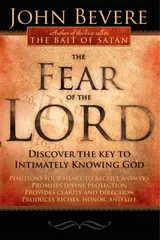
The Fear Of The Lord

What Is The Fear Of The Lord
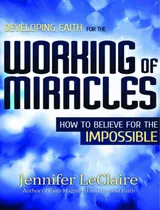
Developing Faith For The Working Of Miracles

Basic Elements Of The Christian Life Vol II
%20by%20Myles%20Munroe-160.webp)
Kingdom Principles Preparing For Kingdom Experience And Expansion

The Assignment Vol 4: The Pain And The Passion
About the Book
In "Mysterious Secrets of the Dark Kingdom" by J.P. Timmons, a group of teenagers discovers a hidden underground kingdom ruled by a mysterious and powerful queen. As they uncover the kingdom's dark secrets, they must navigate dangerous challenges and confront their own demons in order to save themselves and the kingdom. Through twists and turns, the teenagers learn valuable lessons about courage, friendship, and the importance of facing their fears.
Henry Alline
 Henry Alline’s early years
He was born and received his early education in Newport, Rhode Island and his family moved to Nova Scotia in 1760, when he was 12 years old. When he was nine he began to read theological works and became somewhat mystical, but after years of soul-searching and spiritual conflict he was powerfully converted in 1775, simultaneously receiving a call to the ministry.
Alone and desperate he prayed until…’redeeming love broke into my soul… with such power that my whole soul seemed to be melted down with love…and my will turned of choice after the infinite God. A year later he began to preach.
His preaching career
His preaching career lasted until his death eight years later. He was an itinerant preacher in Nova Scotia and Prince Edward Island in an ever-widening circuit, beginning what became known as the ‘New Light’ movement and which is still the greatest revival that Canada has ever seen. He preached the new birth powerfully and effectively and his admirers compared him to George Whitefield and John the Baptist.
Considered an emotional and dangerous fanatic by some and a ‘ravager of congregations,’ the Congregationalists withdrew his right to preach in their churches, so he spoke in barns, houses and the open air. In all he began eight ‘New Light’ Congregational churches based on his non-Arminian but anti-Calvinist views of free-will and predestination, and his strong rejection of outward religious form.
Ironically, despite his indifference regarding baptism, his major 19th century influence was amongst the Baptists of eastern Canada, many of whom were his converts.
Despite possibly unorthodox views and methods, his ministry was without doubt that of an extraordinary revivalist.
Alline’s sermon style was always simple and extemporary, using a few simple, understandable points to help the unchurched to grasp the simple truths of the gospel. As with other itinerant revivalists, his objective was to lead the hearers to a point of decision – to accept or reject Christ as Saviour and Lord, which opened the door to the “new birth.”
Doubtless, his sermons were repeated over time, but he was never in one place long enough for his listeners to notice.
Alline also employed the ministry of prayer and of singing, writing many hymns which were helpful in communicating the gospel. A collection was gathered after his death and was reprinted at least four times in the United States, and several were included in the standard hymnals of the 19th century.
Henry Alline’s early years
He was born and received his early education in Newport, Rhode Island and his family moved to Nova Scotia in 1760, when he was 12 years old. When he was nine he began to read theological works and became somewhat mystical, but after years of soul-searching and spiritual conflict he was powerfully converted in 1775, simultaneously receiving a call to the ministry.
Alone and desperate he prayed until…’redeeming love broke into my soul… with such power that my whole soul seemed to be melted down with love…and my will turned of choice after the infinite God. A year later he began to preach.
His preaching career
His preaching career lasted until his death eight years later. He was an itinerant preacher in Nova Scotia and Prince Edward Island in an ever-widening circuit, beginning what became known as the ‘New Light’ movement and which is still the greatest revival that Canada has ever seen. He preached the new birth powerfully and effectively and his admirers compared him to George Whitefield and John the Baptist.
Considered an emotional and dangerous fanatic by some and a ‘ravager of congregations,’ the Congregationalists withdrew his right to preach in their churches, so he spoke in barns, houses and the open air. In all he began eight ‘New Light’ Congregational churches based on his non-Arminian but anti-Calvinist views of free-will and predestination, and his strong rejection of outward religious form.
Ironically, despite his indifference regarding baptism, his major 19th century influence was amongst the Baptists of eastern Canada, many of whom were his converts.
Despite possibly unorthodox views and methods, his ministry was without doubt that of an extraordinary revivalist.
Alline’s sermon style was always simple and extemporary, using a few simple, understandable points to help the unchurched to grasp the simple truths of the gospel. As with other itinerant revivalists, his objective was to lead the hearers to a point of decision – to accept or reject Christ as Saviour and Lord, which opened the door to the “new birth.”
Doubtless, his sermons were repeated over time, but he was never in one place long enough for his listeners to notice.
Alline also employed the ministry of prayer and of singing, writing many hymns which were helpful in communicating the gospel. A collection was gathered after his death and was reprinted at least four times in the United States, and several were included in the standard hymnals of the 19th century.
‘obedience will make you miserable’ - the tired lie satan loves to tell
There are at least two ways to please the devil when it comes to the pursuit of holiness. The first way, of course, is to run from holiness altogether — to flee, with the prodigal, to the far country of this world, away from the Father’s home (Luke 15:11–13). The second way, perhaps even more dangerous than the first, is to pursue holiness (or what we imagine holiness to be), and yet not be happy about it. We may call this second way older-brother Christianity. Like the elder son in Jesus’s parable, such people follow the Father’s rules with a sigh (Luke 15:29). Their holiness is all pursed lips and sober glances. “Such is the cost of righteousness,” they remind themselves. “We must relinquish pleasure on the path to heaven, you know. Holiness, not happiness, is the true good.” “What virtue!” some may exclaim. “What uprightness! What self-denial!” What a sham. Older brothers, for all their outward purity, are still in the grip of the serpent’s ancient lie. They have been deceived, along with our first parents, to live in a world of the devil’s own making: a world where our Father wears a frown, where heaven has no laughter, and where holiness is ultimately a sacrifice. As long as we live in such a world, we will miss the feast that our Father has prepared (Luke 15:22–28). If we want to rid ourselves of older-brother instincts, and pursue holiness in a way that shames the devil, we would do well to return to the garden and listen again to that first lie. Song of the Morning Stars When the serpent approached Adam and Eve in the garden, he knew that only a lie could put the forbidden fruit into their hands. Only a lie could somehow convince them that they were the slaves of a stingy God. Only a lie could do the trick because reality, as always, was not on Satan’s side. For when God first breathed the oceans into being, and lit the stars like candles, and filled mountain fields with wildflowers, no sigh could be heard in all heaven and earth. Rather, all creation joined to praise their glorious Maker. From heaven’s lofty balconies, the morning stars raised their song, the sons of God shouted for joy, and Wisdom delighted in God’s handiwork (Job 38:7; Proverbs 8:30–31). From “Let there be light” onward, the heavens have declared his glory (Psalm 19:1). And how shall we hear their declaration? As an apathetic exhale? As a monotonous lecture? As a distracted recitation? No, as the very pitch of delight: “You make the going out of the morning and the evening to shout for joy” (Psalm 65:8). Adam and Eve, upon hearing the melody of creation, could not help but join the song. As they gazed across God’s handiwork, they trusted the goodness of their Father. They admired the beauty of their Creator. They enjoyed the fellowship of their Friend. They obeyed the counsel of their King. They had no higher happiness. Life in the Serpent’s World No, the devil knew Adam and Eve would never eat the fruit as long as they worshiped the glorious God in his marvelous world. So what did he do? He invited the couple to imagine a different world and a different god. He shuttered their eyes to sunsets and tulips, blocked their ears to the chirping of the robins, and calloused their skin to spring breezes. In short, he shrunk creation to the size of an apple, and gave them eyes for Eden’s only “No.” In the world of the serpent, the morning stars sing a dirge, the hosts of heaven murmur, and creation only groans beneath the dictatorship of the Almighty Ruler. In such a world, Adam and Eve had only two options. They could, like the prodigal, disobey their God and run from their Father’s garden. Or they could, like the older brother, sacrifice their pleasure on the noble altar of obedience. “Either rebel and be happy — or obey and be miserable.” This was the serpent’s offer (Genesis 3:4–5). Adam and Eve took the fruit and fled into the far country. Many today do the same. Many others, however, refuse the fruit — but only on the serpent’s terms. Like older brothers, we aim to keep our Father’s rules. We do so, however, not because his rules are satisfying, but only because they’re right; not because holiness is glorious, but only because it’s obedient; not because fellowship with God is happifying (as Jonathan Edwards used to say), but just because he says so. Which brother we become matters little to the devil. As long as we live within his world — a world where the gifts are scarce and the God is stingy — he is happy whether we rebel or “obey.” As long as we cease to hear and sing creation’s song of praise, the serpent is pleased. Deeper Than Self-Denial If humanity’s first sin arose when we believed the serpent’s lie, then our repentance must go deeper than rule-keeping or self-denial. After all, some of this world’s most marvelous rule-keepers are still tenants in the serpent’s world. No, our repentance requires more: we must break free from his spell altogether, and return to the real God in the real world. We must bend our ears upward once again to hear the heavens sing, “Glory!” We must feel again that heaven and earth, though fallen now, still pulse with God’s pleasure (Psalm 104:31). We must wade again in this delicious stream called creation, remembering that God himself is the fountain (James 1:17). In other words, we must step past the ancient lie and believe once again that God created us to be happy in him. As soon as we “taste and see that the Lord is good” (Psalm 34:8), and that he himself is our “exceeding joy” (Psalm 43:4), everything about our pursuit of holiness will change. We will still deny ourselves, practice obedience, and kill our sin, to be sure. But we will not dare for a moment to think that we are exchanging happiness for holiness. We will trade away our sin because we have seen the treasure to be found (Matthew 13:44). We will forsake the lusts of our flesh because, as Jesus promised, “whoever loses his life for my sake will find it” (Matthew 16:25). And even when we must sacrifice something precious to follow Christ, we trust that we will “receive a hundredfold now in this time . . . and in the age to come, eternal life” (Mark 10:30). The Holy Spirit teaches us not only to obey God, but to enjoy him — indeed, to obey him by enjoying him. He teaches us not only to withstand the devil’s temptations, but as Martin Luther put it, to laugh our adversary to scorn. He teaches us not only to wonder at the mercy of Christ, but to breathe a grand sigh of relief, amazed that joy has been so near at hand all this time. Discipline does not defeat the devil — happiness does. Join the Father’s Feast From where we stand now, of course, we can look to more than creation to see the happiness of God, and to nurture our happiness in him. We now have seen wonders that the morning stars could never have imagined. We have seen a God so happy that he could bear up under a world of sorrows without breaking (Isaiah 53:3). A God who recognized the joy set before him so luminously that he could endure the darkest shame (Hebrews 12:2). A God who runs to meet his prodigal children, too delighted to be dignified (Luke 15:20). A God who even now holds out his own joy to every older brother who will come in from the cold and join the celebration (Luke 15:31–32). Come now, older brother, put up your ear to the door. Can you hear the saints’ laughter? Can you hear the angels’ praise? Can you hear the Father singing over his children who’ve returned? Whatever we must forsake to walk inside this door, there is always more ahead of us than what we leave behind. So go ahead: Turn again to that serpent in the darkness, and laugh his bruised head to scorn. And then open up the door, and join your Father’s feast.