
Others like the books of acts Features >>
About the Book
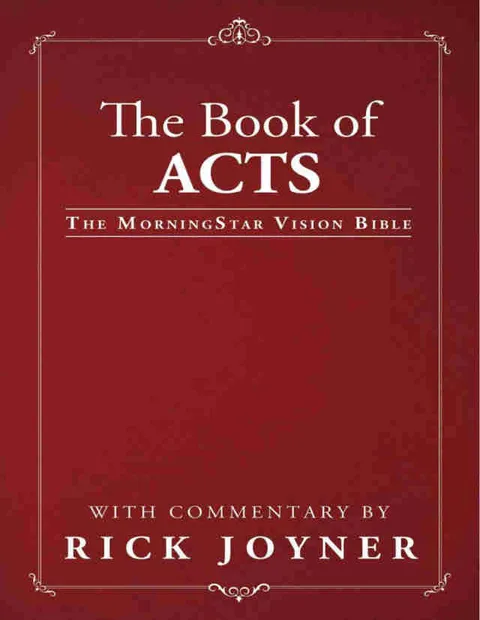
"The Books of Acts" by Rick Joyner provides a deep dive into the biblical Book of Acts, highlighting the key lessons and principles for modern-day Christians to apply in their daily lives. Joyner's engaging writing style and insightful commentary make this book a valuable resource for those seeking to deepen their understanding of the early church and their own faith journey.
Eric Liddell
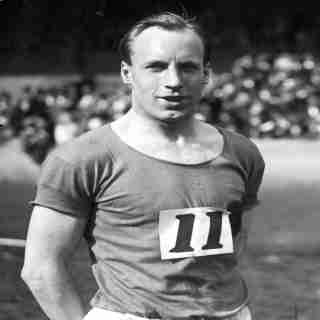
Eric Henry Liddell was born on 16th January 1902 in Tientsin (Tianjin) North China, second son of the Rev. & Mrs. James Dunlop Liddell who were missionaries with the London Mission Society.
He was educated from 1908 to 1920 at Eltham College, Blackheath, school for the sons of missionaries. Eric, with his older brother Rob, were left at their boarding school while their parents and sister, Jenny, returned to China.
During the boys’ time at Eltham College, their parents, sister and new brother Ernest came home on furlough two or three times and were able to be together as a family – mainly living in Edinburgh.
Although born in China and educated in England, Eric Liddell lived in Scotland at various times during his life.
In 1920, Eric joined his brother Rob at Edinburgh University to read for a BSc in Pure Science.
During this period he played rugby for Scotland and trained to run at the Olympics.
Athletics and rugby played a large part in Eric’s University life. He ran in the 100 yards and the 220 yards for Edinburgh University and later for Scotland. He played rugby for Edinburgh University and in 1922 played in seven Scottish Internationals with A.L. Gracie.
Eric Liddell was a gifted rugby player and played for the Edinburgh Univerisity 1st XV team.
He also played international rugby for Scotland and gained seven international caps as a wing-threequarter, scoring four tries thanks to his searing pace.
As a result of having insufficient time for both running and rugby, he chose the former, aiming for the 100 meters in the Paris Olympics. When he learned that the heats were to be run on a Sunday, he switched to the 400 metre competition as he was not prepared to run on a Sunday.
He won a gold medal for the 400 metres and a bronze medal for the 200 metres at the Paris Olympics.
He also travelled briefly to the USA in 1924 to compete in an athletics tournament. He returned to Edinburgh after the Paris Olympics and he graduated from Edinburgh University.
Eric Liddell lived for a short time in Gillespie Crescent before moving to a house in Merchiston Place.
Recollections of Eric Liddell By Sir Arthur Marshall
The Cambridge University Athletics Club had an invitation from Pennsylvania to take a team of seven to the Pennsylvanian Games in March 1924, and I was one of the seven. Eric Liddell, the Scot from Edinburgh University, the 1923 AAA 100 yards Champion, had been personally invited and travelled with us. We stayed at the very comfortable Pennsylvanian Cricket Club. I am afraid none of, including Eric Liddell, managed to win an event at the Pennsylvanian Games.
We travelled back in a small slow ship of the American United Line called ‘The Republic’ – a ten day crossing. Eric Liddell entered in the fun and games on the boat, including the Fancy Dress Dance. Whilst he was very strict about religion. Eric and I became good friends and saw much of two American sisters, Freddie and Edith, who were travelling to ‘do Europe’, including the UK. They said they were going to be in Paris for the Olympic Games, and we said if we were there at the same time we hoped we could meet.
Harold Abrahams had set his whole life on winning the Olympic 100 Metres – it had become and obsession with him. Liddell’s achievement in winning the 1923 AAA 100 Yards in the record time of 9 7/10 seconds was a devastating blow to Abrahams and shook him to the core. To date Abrahams had been a consistent 10 seconds 100 yards winner but had only slightly broken 10 seconds on one or two occasions. He knew in the Olympics he would be up against overseas competition, particularly from the Americans, but this new and very serious opposition out of the blue and on his doorstep had come at a time when Harold had established his 100 yards supremacy in the UK. To achieve level pegging with Eric Liddell’s new record time, Harold had to improve his performance by two or three yards with the help of his trainer Sam Mussabini. It must have been a tremendous relief to Harold when it became known early in 1924 that Eric had decided to concentrate on the 400 metres and, because of his religious principles, would not compete in the Olympic 100 metres as first heats were always run on Sunday.
Eric had in turn become completely dedicated to winning an Olympic Medal within the restrictions of his faith. He was a famous Scottish international rugger player, and gave up his rugger to enable him to concentrate on his Olympic ambitions, which became very deep-rooted, and his work suffered. Winning an Olympic Gold Medal became a priority, second only to his religion, and the ambition to win this event became part of his religion.
Recollections of Eric Liddell By Sir Arthur Marshall
The team travelled to Paris days before the Olympics started and had a big send-off at Victoria Station.
The silence at the start of the 100 metres and 400 metres was quite electric. Harold Abrahams won the 100 metres in a new Games record time.
In spite of all that has been said about Abrahams’ 100 metres, the 400 metres in some way provided the greatest thrill of the meeting with the world record being broken by Eric Liddell three times in two days. It was thought that Liddell had some chance of winning, but nobody thought Liddell capable of the amazing performance he achieved in the final. As far as the crowd were concerned they were well informed about Liddell’s dedication to his religion and his refusal to run in the first round of the 100 metres on the Sunday; they also knew of his determination to win this event. The occasion was enlivened by the support given to Liddell by the pipes and drums of the Cameron Highlanders.
The silence and pent-up excitement at the start of the race could be felt. Liddell went ahead at the start and maintained his pace throughout, finishing in what at the time was described as ‘a most lion-hearted manner’ winning by three yards from Fitch, an American. This was probably the greatest achievement of the VIIIth Olympiad, and superlatives were showered on Liddell by the press of the entire world. Liddell was short and not a pretty runner but just pounded along virtually at the same pace all the way, with a finish as if he was making a final dash for a try in a rugger match with an opponent bearing down on him and about to tackle from behind.
After Eric had won the 400 metres Gold Medal, Eric and I made contact with Freddie and Edith, the American sisters, and took them to a Tango Tea Dance in the Champs Elysees.
Footnote: Along with sacrificing his place in the 1924 Olympics 100m, Eric Liddell also gave up two other races in which Great Britain held high hopes of winning gold that year – the 4 x 100m and 4 x 400m, whose finals also took place on a Sunday.
After the Olympics
After the Olympics and his graduation, he returned to North China where he served as a missionary from 1925 to 1943 – first in Tientsin (Tainjin) and later in Siaochang. During his first furlough in 1932 he was ordained as a minister.
1930 - 1932
On furlough from China studying at Congregational College. After completing his studies he was ordained as a minister on 22nd June 1932. During this time he lived in a hostel in George Square which belonged to the Edinburgh Medical Missionary Society.
During these periods Eric Liddell attended Morningside Congregational Church at the corner of Chamberlain Road and Morningside Road.
Morningside Congregational Church
The Church building (pictured here on the right) was originally built for North Morningside United Presbyterian Church who used it until 1881 when it became too small. They then built a new, larger, church on the other side of the road (which is now the Eric Liddell Centre).
From 1881 the old church was home to the Morningside Athenaeum Club before the Congregational Church purchased it in 1890.
In 1928 this church was demolished and a new one erected (which is now Morningside United Church).
Eric Liddell would have attended meetings in both buildings during his two extended stays in Edinburgh. The old church from 1920 to 1925 and the current building (Morningside United Church) from 1930 to 1932. He also preached at the church on a number of occasions.
On his return to China, he married Florence Mackenzie (of Canadian missionary parentage) in Tientsin in 1934. They had three daughters; Patricia, Heather and Maureen, who now all live in Canada.
Living in China in the 1930s was potentially very dangerous and in 1937 Eric was sent to Siaochang where he joined his brother Rob. He was now crossing the Japanese army lines.
In 1941 life in China was becoming so dangerous that the British Government advised British nationals to leave. Florence and the children left for Canada.
During 1941 – 1943 Eric stayed in Tientsin, then in 1943 he was interned in Weishien camp until his death in 1945.
The Eric Liddell Centre
The United Presbyterian Church merged with the Free Church of Scotland in 1900 and then, in 1929, this merged with the Church of Scotland.
The United Presbyterian Church built in 1879 became known as Morningside North parish Church. By 1980 the building was no longer in use and became the Holy Corner Church Centre.
This was an initiative of the three remaining churches at Holy Corner: Morningside United Church (a merger between the Congregational and Church of Scotland congregations and in joint membership of the United Reformed Church and Church of Scotland), Christ Church (Scottish Episcopal Church) and Morningside Baptist Church.
As the project developed the centre’s name was changed to The Eric Liddell Centre in recognition of his involvement in the life of one of the founding churches and the local community during his time living here.
‘curse god and die’ - satan’s favorite response to suffering
My Dear Globdrop, Regretfully, I have received your last letter. Centuries serving his Lowliness — lifetimes damning souls and training young devils — and yet you still find ways to surprise me. Are you or are you not but one soul away from active duty, from wearing our legion’s darkest colors on the frontlines? If so, what should I expect to find you consumed with? Trapping? Spoiling? Sabotaging? Or, should I — with so much at stake — expect to find you playing with your food like a human child, giggling girlishly about? You have not tasted any meat pierced with your own spear, yet you trifle with the chase. Whatsoever do you mean? I can hear your simple mind ask. Your man, you report, went in for a routine shoulder surgery where, inexplicably , they pierced his lung. This alone causes you great joy, does it? You take great pride that “the fork pierced the prey.” You leave him unattended to tell me all about the victory. Yes, the doctor’s blade took an unexpected (and delicious) detour, but tell me, has the blade yet punctured his soul? Has the wound brought forth an infection of spirit ? Are you so lazy as to hope that the doctor has done your work for you? You have failed miserably to realize that it is not the surgeon’s miscalculations but your patient’s response that gets at the vital thing, the eternal thing. Pierced spirits, seared consciences, scarred hearts, burnt beliefs — these we bend our dark labors toward. Tantalizing trials and savory sufferings serve as an opportunity for this, the real work. Collapsed lungs — or more commonly: sick children, diseased spouses, faltering friendships, ruined romances, cursed careers, even the occasional dead pet — are mere playthings compared to what they can produce: a collapsed faith. This is to strike at the jugular, to slice the major artery. We love the vermin’s squeals and agonies, but never at the expense of our filled bellies. Unpredictable Flame At the expense? you wonder. Suffering, you should know by now, is most unpredictable. Most assuredly it can harden the heart — pushing out the very possibility of a kind, powerful, all-knowing God. Or (as you better hope is not your case) it can be the very thing used by the Enemy to rob our knives and forks of their roast. Have you not glanced over the apostle’s shoulder lately? Not all suffering ends up advancing our cause. We rejoice in our sufferings, knowing that suffering produces endurance, and endurance produces character, and character produces hope, and hope does not put us to shame, because God’s love has been poured into our hearts through the Holy Spirit who has been given to us. (Romans 5:3–5) Who means for suffering to encourage such a horrid thing as endurance, nephew? Do we mean for suffering to produce in them — and I struggle to even write the word — hope ? The punctured lungs, the groans and pains, at every turn, threaten to terribly backfire. The Enemy knows this well enough, and for all his talk, he is as underhanded as any devil. Often, we think we have set the perfect trap, until we discover (too late) that he had tampered with our afflictions and temptations to fit his designs. Making them squeal is pleasurable, watching them squirm under torments make us howl and snort, but it amounts to a mere play if they escape to the Enemy and further enact his dreadful purposes. This, you must ensure, does not happen with your man. Adding Iniquity to Injury Have done, at once, with your prepubescent squeaks and premature gloating. The game is afoot, and the Enemy means to have him as surely as we do. First, make his suffering personal. The question of “How could a good God allow bad things to happen?” is not nearly as useful a question as “How could God allow this bad thing to happen to me ?” This, of course, is the precise question to ask. The Enemy parades himself as the “personal God” at every turn; well, then, let him give his personal defense to the charges. Where was this personal God during his surgery? Give no cover to the Enemy on this point. Press your man, as we have pressed for centuries: Of all people to face this loss, this pain, this nightmare — why me ? Casually point out to your man that his “loving God,” his “refuge,” plays terrible favorites. None of the Christians he knows is facing such “lifelong complications” from such an improbable miscue. Perish any consideration that the Enemy is attempting, at any rate, to twist our bed of thorns into an eternal crown of glory. Hide the Enemy’s lies that such afflictions are precisely measured for their eternal good or in any way purposeful . Second, attend every stab. Never overlook the power of the small inconveniences and stings of discomfort. You must be always on standby for your patient — ready to nurse every flicker of pain toward self-pity, anger, or delectable despair. When he goes to reply to that email one-handed, or has to ask his wife for help to put on his socks, or feels the residual irritations and distresses that will accompany him to the grave — be ready to sow bitterness and pour salt on the wound. No crack, never forget, is too small to exploit. As you attend to his every moan, understand you will not be alone. The Enemy stands by them, always at their beck and call, like a drooling terrier, ready to remind them of his lies and calm them with his presence. In his embarrassing commitment to his fictions, his Spirit stands by to whisper to them. We can’t overhear most of it, but undoubtedly it has to do with Scripture telling them something like he “lovingly” designs their aches, pains, diseases, and deformities in this world, and to persuade them that he is their true comfort, and that this is not their true home. Fight whisper with whisper to keep the dogs from returning to their vomit. Third, hide Tomorrow from him. Finally, conceal any fictions about a Tomorrow that will make all sufferings “untrue.” Of such a Day that beaten, bruised, and bloodied apostle made consistent (and irritating) appeals to, calling the summation of his manifold (and mouthwatering) sufferings as nothing — nothing! — not even worth comparing to that Day of an “eternal weight of glory” which lies ahead (2 Corinthians 4:17) — a “glory” our Father Below weighed and found greatly wanting. Curse God and Die Affliction, nephew, is an uncertain flame, certainly not one to be trifled with. Job and his most useful wife prove a great illustration. Crushed with the fatal blows to property and household, this “upright” man tried to make our Father the fool, shaming us all by responding to murder, devastation, and destruction in such a servile and groveling way: “Job arose and tore his robe and shaved his head and fell on the ground and worshiped ” (Job 1:20). But not all responded in kind. Job’s wife, whom our Master most mercifully and wisely preserved, responded most excellently: “Do you still hold fast your integrity? Curse God and die” (Job 2:9). Curse God and die — I couldn’t have said it any better. Here lies the battlefield, nephew. Not the inflicting of affliction, but the infecting of the soul. We want each man, woman, and child to renounce such a Poser, to spit upon their former loyalties, and curse him before heaven’s eyes. This, nephew, this , is where your man must be led: To much more than a punctured lung But to a depleted faith and denouncing tongue. To teeth tightly clenched and fists held high In flames to curse his god and die. Damnation, Globdrop, damnation. Nothing less. Your most expectant Uncle, Grimgod