







About the Book
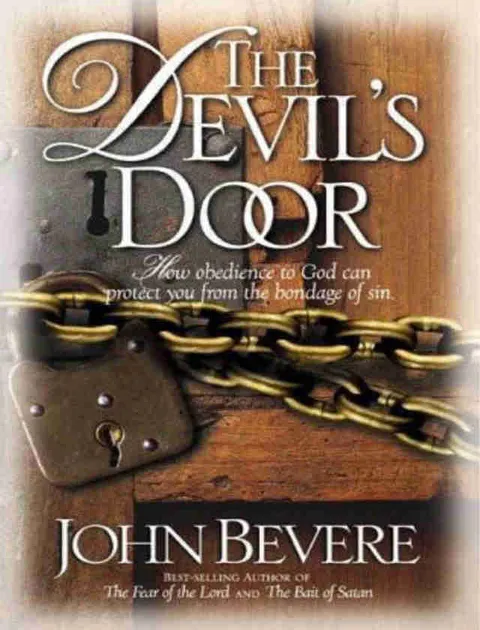
"The Devil's Door" by John Bevere is a thought-provoking and biblically based exploration of how Christians can unknowingly open the door to demonic influence in their lives through sin, disobedience, and ungodly choices. The book provides practical guidance on how to recognize and close these doors through repentance, forgiveness, and spiritual warfare, ultimately leading to greater spiritual freedom and victory in Christ.
Calvin Miller
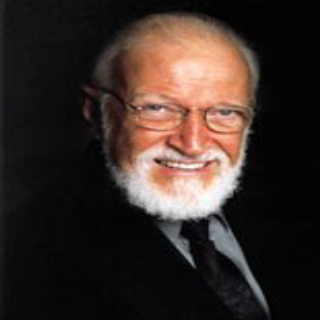 Calvin Miller was a pastor, professor and storyteller, best known for The Singer Trilogy, a mythic retelling of the New Testament story in the spirit of C. S. Lewis and J. R. R. Tolkien. Miller passed away on the afternoon of August 19, 2012, due to complications after heart surgery. He was 75.
A prolific artist and a writer's writer, Miller garnered respect and praise throughout his career from peers like Luci Shaw, Max Lucado and Philip Yancey. He was the author of more than forty books of popular theology and Christian inspiration including such recent books as Letters to Heaven, The Path of Celtic Prayer, Letters to a Young Pastor and his memoir Life Is Mostly Edges.
In addition to his twenty years of pastoral service at Westside Church in Omaha, Nebraska, Miller was also a great mentor to many students and leaders through his preaching and pastoral ministry classes at Beeson Divinity School. Calvin Miller, never one to multiply words, used just four to describe his rule of life: "Time is a gift."
RESCUE FROM THE SLUSH PILE
In October 1973 one important book was rescued from the slush pile (the stack of unsolicited manuscripts every publisher receives) by assistant editor Don Smith. He read a manuscript by a little-known Baptist pastor in Nebraska that was a poetic retelling of the life of Jesus—portraying him as a Troubadour. Both he and Linda Doll excitedly encouraged Jim Sire to take this imaginative manuscript seriously. In February 1974 Sire wrote the author, Calvin Miller, that IVP wanted to publish his book The Singer.
Months before, Miller had been waking up nights, stirred to write this tale, perhaps unconsciously inspired by the recent Broadway hits Jesus Christ Superstar and Godspell. Later Miller wrote:
When the manuscript was done, I sent it to Jim Sire at InterVarsity Press. “It’s good,” he said, “but we want to think about it a couple of weeks before we give you an answer.” So I waited until finally the letter came. They were going to do it. Jim Sire had done his Ph.D. on John Milton, and the fact that he liked it was joy immeasurable to me. “But,” he cautioned, “we’re going to print five thousand of these. They may not do well—in fact we may end up with four thousand of them on skids in our basement for the next ten years. Still, it’s a good book and deserves to be in print.”
Far more than a thousand copies sold. Actually, over three hundred times that amount sold in its first decade. It became “the most successful evangelical publication in this genre.” The Singer was followed in two years by The Song (paralleling the story of the early church in Acts) and two years after that by The Finale (inspired by the book of Revelation). Publication of The Singer changed Miller’s life. Even though he stayed in the pastorate for many years, it set him on a course of writing and speaking that he could not have imagined.
Calvin Miller was a pastor, professor and storyteller, best known for The Singer Trilogy, a mythic retelling of the New Testament story in the spirit of C. S. Lewis and J. R. R. Tolkien. Miller passed away on the afternoon of August 19, 2012, due to complications after heart surgery. He was 75.
A prolific artist and a writer's writer, Miller garnered respect and praise throughout his career from peers like Luci Shaw, Max Lucado and Philip Yancey. He was the author of more than forty books of popular theology and Christian inspiration including such recent books as Letters to Heaven, The Path of Celtic Prayer, Letters to a Young Pastor and his memoir Life Is Mostly Edges.
In addition to his twenty years of pastoral service at Westside Church in Omaha, Nebraska, Miller was also a great mentor to many students and leaders through his preaching and pastoral ministry classes at Beeson Divinity School. Calvin Miller, never one to multiply words, used just four to describe his rule of life: "Time is a gift."
RESCUE FROM THE SLUSH PILE
In October 1973 one important book was rescued from the slush pile (the stack of unsolicited manuscripts every publisher receives) by assistant editor Don Smith. He read a manuscript by a little-known Baptist pastor in Nebraska that was a poetic retelling of the life of Jesus—portraying him as a Troubadour. Both he and Linda Doll excitedly encouraged Jim Sire to take this imaginative manuscript seriously. In February 1974 Sire wrote the author, Calvin Miller, that IVP wanted to publish his book The Singer.
Months before, Miller had been waking up nights, stirred to write this tale, perhaps unconsciously inspired by the recent Broadway hits Jesus Christ Superstar and Godspell. Later Miller wrote:
When the manuscript was done, I sent it to Jim Sire at InterVarsity Press. “It’s good,” he said, “but we want to think about it a couple of weeks before we give you an answer.” So I waited until finally the letter came. They were going to do it. Jim Sire had done his Ph.D. on John Milton, and the fact that he liked it was joy immeasurable to me. “But,” he cautioned, “we’re going to print five thousand of these. They may not do well—in fact we may end up with four thousand of them on skids in our basement for the next ten years. Still, it’s a good book and deserves to be in print.”
Far more than a thousand copies sold. Actually, over three hundred times that amount sold in its first decade. It became “the most successful evangelical publication in this genre.” The Singer was followed in two years by The Song (paralleling the story of the early church in Acts) and two years after that by The Finale (inspired by the book of Revelation). Publication of The Singer changed Miller’s life. Even though he stayed in the pastorate for many years, it set him on a course of writing and speaking that he could not have imagined.
parenting is about treasuring
Everyone is looking for joy. Parents, this includes our children. The search for joy lies behind all of our kids’ desires. It informs and directs all of their hopes, feelings, and actions. It is the proverbial carrot hanging in front of our kids’ hearts. It’s why they make that face when you remind them that dessert belongs only to those who eat their vegetables, and why their world seems to hinge on having five more minutes of video-game time. Once we recognize joy’s formative power over our kids’ hearts, we are well on our way to knowing our children better and our role as parents better too. Stewarding Joy When God calls us to be fathers and mothers, he calls us to be stewards of our children’s joy. Which means that a lot of what we do centers on helping our joy-obsessed children find their greatest joy. Now, this might sound strange to many of us. Most parenting books and podcasts don’t spend a lot of time accentuating the influential power of joy in our kids’ lives. Yet, whether you see it or not, you are more than likely already stewarding your children’s joy toward some end. Just think about this week. What did you say to your daughter about her run-in with the school bully? What did you do when your middle child didn’t make the high school team? More than likely, you sought ways to replace their hurt with joy. And it doesn’t just have to be hurt that we exchange — we seek all the time to replace good with better, and better with best, such as when we tell our kids to power down their screens and pick up a book. These instincts show us that much of what we do as parents is driven by our innate commitment to help our kids find joy. This is a good thing, but it’s also where we can get into problems. Settling for Less The pursuit of joy itself is good. God created all of us to seek true and lasting joy because he knows that this search ultimately leads us to him. This is why Jesus uses parables to liken God and his kingdom to buried treasure and a beautiful pearl (Matthew 13:44–46; cf. Philippians 3:7–8). He knows we would sell everything to makes these priceless riches our own because of the happiness they promise us. Jesus then helps us see that the real treasure, and the real pearl of great price, is God and his kingdom. This is where joy ultimately resides, and making this joy our own is worth giving up everything. Pursuing joy, then, isn’t the problem. The problem is with where and how we find that joy, when we look outside of God for our delight. To be specific, the problem is with how sin twists our pursuit. Sin is, in many ways, simply misplaced or shortsighted joy. Sin works because it peddles counterfeit joys off as the real thing. Sin sets out to confuse and corrupt joy, and to make our hearts settle on anything other than God. This is exactly what the serpent did to our first parents in Genesis 3. He promised that the forbidden fruit was better than God and his promises. So, in taking the bite, Adam and Eve settled for a lesser, broken joy — a fruit that was good and delightful, but paled in comparison to the utmost good and perfect delight of knowing God as they once did (Genesis 3:5–6). So what does this have to do with parenting? Well, it redefines it. It means that God calls parents to more than just helping our kids discover any type of joy, anywhere. It means that God calls us to help show our children where and how they can find him , the very source and reason for every joy ever known (John 15:11; Psalm 36; Psalm 37:4). Parenting Redefined Now, if we let it, this can change everything about the way we raise our kids. For example, if we see ourselves as stewards of our kids’ joy, then our parenting finally has a destination. Everything we do — teaching, talking, commanding, loving, correcting, comforting — can be a step toward helping our children find their greatest joy in our great God (Psalm 16:11). This doesn’t change just our parenting strategies, however; it changes us as parents too. When God becomes the target of our children’s greatest joy, we no longer have to be. When we see every interaction with our kids through the lens of helping them find delight in God, our work as parents is bigger than just having well-behaved kids with perfect test scores. Which means we don’t have to be perfect moms and dads. Our calling is a better one. What we are called to do is lead our kids to joy in their perfect heavenly Father. And with that as our goal, we find freedom, and so do they. We are free to make mistakes, and so are they. We are free to live in God’s grace, and we want our children to live with us there too. Getting to the Heart How do we do this? How do we help our kids find their ultimate joy in God? Here are a few tangible ways to be good stewards of our children’s hearts. 1. Start with your own joy. Remember, everyone is looking for joy. Parents, this includes us. So before we can guide our kids’ hearts, we must first know the way ourselves. We as parents have the privilege to hold our kids’ hands on the way to our greatest joy. So before diagnosing your kids’ idols, make sure to face your own. Ask yourself, What have I put all my hope in today? What am I worshiping? What stands between God and my real joy? 2. Reshape the do’s and don’ts. If you are like me, it’s easy to get lost in the weeds as a parent. Sometimes we don’t have a good reason why we say no to our kids, and sometimes we say yes out of sheer pragmatism or exhaustion. But setting our sights on joy helps us recalibrate. Our do’s and don’ts should have distinct and eternal reasons behind them. We’re after more than behavior modification; we’re after our kids’ long-term happiness. Our commands and instructions don’t have to be speed bumps to our kids’ happiness; they can be signposts that point them to their ultimate joy. So take a moment before your yes or no and consider how your response will affect your kids’ search for joy. 3. Ask why . As your kids grow, teach them how to spot joy’s formative power in their lives. One of the best ways to do this is with the question why . “Why did you hit your sister?” “Why didn’t you study for that exam?” Now, of course, you’ll have to wade through their “I don’t knows” and “just becauses.” But when you do, you’ve helped them to drill down into their motives, where they can finally see how their joys affect their feelings and actions and begin to evaluate them rather than just be enslaved to them. 4. Make connections. One of the most important things we can do as parents is ask our kids what makes them happy, and then just listen. Getting a bead on your kids’ joy is like having an all-access pass to their hearts, and when you know what your kids love, you can help them put their loves in the right place. God isn’t in the business of simply removing our kids’ earthly joys, which means that shouldn’t be our business as parents either. Instead, God calls us to help connect our kids’ earthly and temporal joys to him, the divine and eternal one. So play basketball with your kids and, when you can, help them see how this earthly gift points to greater joys. Sure, Legos and American Girl dolls can become idols, but they can also pave the way to conversations that can help our kids hope in their heavenly Father. And when (not if) our kids seek joy through sin, we have the divinely given privilege to help them see they’ve actually sold joy short by seeking it outside of God and his ways.