
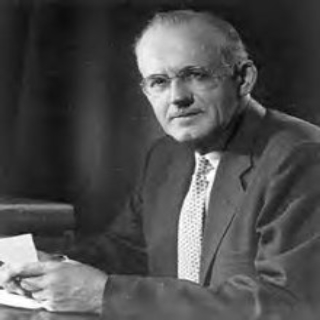
A.W. Tozer (Aiden Wilson Tozer)
 Early life
Tozer hailed from a tiny farming community in western La Jose, Pennsylvania. He was converted to Christianity as a teenager in Akron, Ohio: While on his way home from work at a tire company, he overheard a street preacher say, "If you don't know how to be saved ... just call on God, saying, 'Lord, be merciful to me a sinner.'" Upon returning home, he climbed into the attic and heeded the preacher's advice.
Pastor
In 1919, five years after his conversion and without formal education in Christian theology, Tozer accepted an offer to serve as pastor of his first church. That began 44 years of ministry associated with the Christian and Missionary Alliance (C&MA), a Protestant Evangelical denomination, 33 of them serving as a pastor in several different congregations (his first, a small storefront church in Nutter Fort, West Virginia). Later, he served thirty years (1928 to 1959) as the pastor of Southside Alliance Church in Chicago; the final years of his life he spent as pastor of Avenue Road Church in Toronto, Ontario, Canada. Observing contemporary Christian living, Tozer felt that the church was on a dangerous course toward compromising with "worldly" concerns.
Born into poverty, Tozer was self-educated and taught himself what he missed in high school and university.
Author
Tozer began writing in 1931 for the denominational magazine of the Christian and Missionary Alliance, Alliance Weekly (now Alliance Life), which became the platform from which his writing career emerged. He later wrote the monthly column “There’s Truth in It” (1936–37) and “A Word in Season” (1944–46). In May 1950, he became the editor of the Alliance Weekly, a position he filled until his death in 1963.
At the urging of David W. Fant, publications secretary of the C&MA, Tozer wrote biographies of A. B. Simpson (1943) and Robert A. Jaffray (1947). It was the publication of his third book, The Pursuit of God (1948), that made Tozer a household name among evangelicals. In addition to the 12 books he published in his lifetime, more than 40 other books have been compiled from his magazine features, editorials, and transcribed sermons.
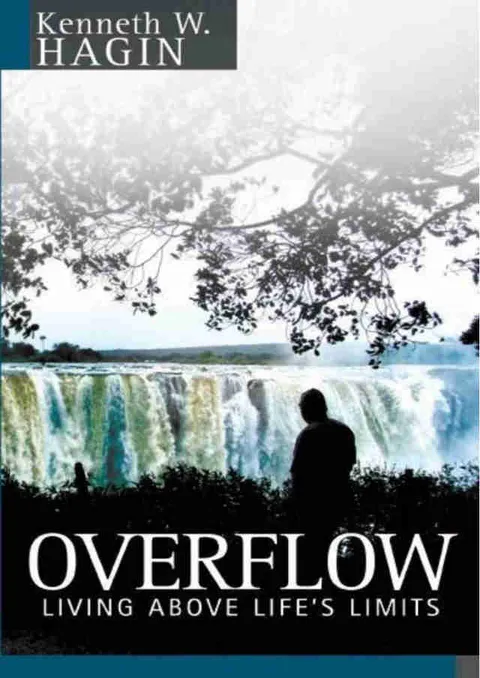
During his lifetime, Tozer’s works were published by Christian Publications, Inc., the denominational press operated by the C&MA. The publishing house declared bankruptcy in 2006 and was purchased by WingSpread Publishers of Camp Hill, Pennsylvania.[8] In November 2013, Moody Publishers acquired Wingspread from parent company Zur Ltd., a transaction that included more than 60 Tozer books and pamphlets. Some of Tozer’s works are now in the public domain and have been issued by multiple publishers.
Personal life
Tozer had seven children, six sons and a daughter. Living a simple and non-materialistic lifestyle, he and his wife, Ada Cecelia Pfautz, never owned a car, preferring bus and train travel. Even after becoming a well-known Christian author, Tozer signed away much of his royalties to those who were in need.
Prayer was of vital personal importance for Tozer. "His preaching as well as his writings were but extensions of his prayer life," comments his biographer, James L. Snyder, in the book In Pursuit of God: The Life Of A.W. Tozer. "He had the ability to make his listeners face themselves in the light of what God was saying to them," writes Snyder.
Death and legacy
Tozer died on May 13, 1963, after suffering a heart attack. He was buried in Chicago, and later the family had his remains reinterred at Ellet Cemetery, Akron, Ohio. A simple marker reads: A. W. Tozer—A Man of God. The Alliance Weekly ran a memorial issue with numerous tributes and excerpts. The same issue also featured “God’s Greatest Gift to Man," a transcription of his final sermon. A few months prior to his death, Tozer had submitted the manuscript to The Christian Book of Mystical Verse, which was released in 1964 as his final book. His official publisher, Christian Publications, released many titles after his death, based on his magazine articles and sermon transcriptions. These continue in print with Moody Publishers. Several other publishers have released his public domain works.
In 2000, The Pursuit of God was named to Christianity Today’s list of 100 “Books of the Century.” In 2006, Knowledge of the Holy was named in “The Top 50 Books That Have Shaped Evangelicals.” Contemporary Christian music artist Lauren Barlow of BarlowGirl later published a compilation of stories told by 59 artists, writers, and leaders about A.W. Tozer’s personal inspiration.
Early life
Tozer hailed from a tiny farming community in western La Jose, Pennsylvania. He was converted to Christianity as a teenager in Akron, Ohio: While on his way home from work at a tire company, he overheard a street preacher say, "If you don't know how to be saved ... just call on God, saying, 'Lord, be merciful to me a sinner.'" Upon returning home, he climbed into the attic and heeded the preacher's advice.
Pastor
In 1919, five years after his conversion and without formal education in Christian theology, Tozer accepted an offer to serve as pastor of his first church. That began 44 years of ministry associated with the Christian and Missionary Alliance (C&MA), a Protestant Evangelical denomination, 33 of them serving as a pastor in several different congregations (his first, a small storefront church in Nutter Fort, West Virginia). Later, he served thirty years (1928 to 1959) as the pastor of Southside Alliance Church in Chicago; the final years of his life he spent as pastor of Avenue Road Church in Toronto, Ontario, Canada. Observing contemporary Christian living, Tozer felt that the church was on a dangerous course toward compromising with "worldly" concerns.
Born into poverty, Tozer was self-educated and taught himself what he missed in high school and university.
Author
Tozer began writing in 1931 for the denominational magazine of the Christian and Missionary Alliance, Alliance Weekly (now Alliance Life), which became the platform from which his writing career emerged. He later wrote the monthly column “There’s Truth in It” (1936–37) and “A Word in Season” (1944–46). In May 1950, he became the editor of the Alliance Weekly, a position he filled until his death in 1963.
At the urging of David W. Fant, publications secretary of the C&MA, Tozer wrote biographies of A. B. Simpson (1943) and Robert A. Jaffray (1947). It was the publication of his third book, The Pursuit of God (1948), that made Tozer a household name among evangelicals. In addition to the 12 books he published in his lifetime, more than 40 other books have been compiled from his magazine features, editorials, and transcribed sermons.
During his lifetime, Tozer’s works were published by Christian Publications, Inc., the denominational press operated by the C&MA. The publishing house declared bankruptcy in 2006 and was purchased by WingSpread Publishers of Camp Hill, Pennsylvania.[8] In November 2013, Moody Publishers acquired Wingspread from parent company Zur Ltd., a transaction that included more than 60 Tozer books and pamphlets. Some of Tozer’s works are now in the public domain and have been issued by multiple publishers.
Personal life
Tozer had seven children, six sons and a daughter. Living a simple and non-materialistic lifestyle, he and his wife, Ada Cecelia Pfautz, never owned a car, preferring bus and train travel. Even after becoming a well-known Christian author, Tozer signed away much of his royalties to those who were in need.
Prayer was of vital personal importance for Tozer. "His preaching as well as his writings were but extensions of his prayer life," comments his biographer, James L. Snyder, in the book In Pursuit of God: The Life Of A.W. Tozer. "He had the ability to make his listeners face themselves in the light of what God was saying to them," writes Snyder.
Death and legacy
Tozer died on May 13, 1963, after suffering a heart attack. He was buried in Chicago, and later the family had his remains reinterred at Ellet Cemetery, Akron, Ohio. A simple marker reads: A. W. Tozer—A Man of God. The Alliance Weekly ran a memorial issue with numerous tributes and excerpts. The same issue also featured “God’s Greatest Gift to Man," a transcription of his final sermon. A few months prior to his death, Tozer had submitted the manuscript to The Christian Book of Mystical Verse, which was released in 1964 as his final book. His official publisher, Christian Publications, released many titles after his death, based on his magazine articles and sermon transcriptions. These continue in print with Moody Publishers. Several other publishers have released his public domain works.
In 2000, The Pursuit of God was named to Christianity Today’s list of 100 “Books of the Century.” In 2006, Knowledge of the Holy was named in “The Top 50 Books That Have Shaped Evangelicals.” Contemporary Christian music artist Lauren Barlow of BarlowGirl later published a compilation of stories told by 59 artists, writers, and leaders about A.W. Tozer’s personal inspiration.
ready to commit, slow to compare - a recipe for real community
Months ago a young couple visited our church, and we had them over to our home for lunch. As we ate and conversed over meatloaf and mashed potatoes, the young woman peppered me with questions. “So what is community like at your church?” “How many people are in discipleship relationships?” In between questions, she gave us a glowing review of the church they had been a part of in another state. I felt expectations rise as she shared about her close relationship with the pastor’s wife, who happened to live in the apartment above them, and how she popped in on their family at all different times of day. I was beginning to feel like a job description was being offered to me, and our church was being evaluated as to whether we fit the bill. I’m thankful this couple had such a wonderful experience at their former church, but I couldn’t help but wonder how helpful it was to measure everything against their previous experience. Yes, we learn from our past and are blessed when we have great models, but is it helpful to compare communities of faith and assume that one is the ideal model and all others should strive to look the same? “Relationships deepen and grow only when we’re willing to commit time and energy to fostering them.” The conversation about what church community should look like caused me to reflect on different issues I’ve noticed emerging around this important debate. Community Without Commitment Despite all the hype about the importance of community in the body of Christ, there can be a tendency to want all the feelings of community without a firm commitment to a local body of believers. Relationships deepen and grow only when we’re willing to commit time and energy to fostering them (Hebrews 10:24–25). Committing to a Bible study or small group or discipleship relationship often provides the setting to establish community. But if you always have a list of reasons why you don’t have the time, how will the body of Christ you belong to know how to minister to your needs? If having babies or being tired or working late keeps you from faithfully serving your church or being served through a ministry of the church, you’re likely not going to feel well-connected. How will we know how to pray for each other when there isn’t a regular time to meet in a smaller setting and share our joys and burdens of life? If your travel plans or children’s sports schedules consistently have you missing corporate times of worship, you’ll be deprived of not just hearing the word proclaimed, but the interactions that happen in the pews before and after the service. We will never experience true community without a firm, sacrificial commitment to a local body of believers. Community Without Accountability True community also means being transparent enough with your own struggles so that others in the body know how to pray for you (James 5:16). Not everyone in your church needs to know your darkest moments of despair, but do a select few know your battles? Are others free to ask you how you’re faring in your war with pornography, binge eating, or gossip? Or do you meet them with a high wall of defense when they try to speak truth into your life? “We will never experience true community without a firm, sacrificial commitment to a local body of believers. ” When another member in the body has the courage to confront our inconsistency or hold us accountable in a struggle we’re facing, we should ask God to give us grace to receive their words with humility and meekness. Our own pride can tempt us to surround ourselves with people who will affirm our words and actions, instead of challenge us when we turn down the wrong path. There is a temptation to shut people out who are speaking truth into our life by avoiding communication with them: unfriending them on Facebook, turning the other way when you see them at church, or conveniently never finding the time to meet them for coffee. But we’re missing out on what could be a primary means of sanctification in our lives when we refuse to be held accountable by our community of faith. No Perfect Community So, in your search for the church with the perfect community, be willing to accept that community will look different from church to church. Maybe your community was established by a strong relationship with the pastor’s wife at your former church, but be willing to see that your close relationships at your new church could come through an unexpected way: a single woman longing for companionship or perhaps a gray-haired grandma willing to meet you for coffee each week. Instead of sitting on the sidelines comparing and critiquing what your church does or doesn’t have, commit to a ministry of the church to both serve in and be served. Find a smaller group within the body to share life with, study Scripture with, and pray for one another with. And keep the commitments you make. If you sign up for a Bible study that lasts twelve weeks, do your best to commit for the long haul. If you’re feeling disconnected from others within your church, evaluate your own level of involvement. True community is established through faithfulness, commitment, and a humility to both share your struggles and receive counsel. You honor God when you commit to the saints and sinners he has placed in your church family. We Need Each Other “One day we’ll see Jesus together, but we’ll only make it if we push each other to cling to him today.” We might not ever find the perfect community this side of heaven, but our church families are essential for our walk with Jesus. Like Hebrews says, the state of our very souls depends on our community of faith: Take care, brothers, lest there be in any of you an evil, unbelieving heart, leading you to fall away from the living God. But exhort one another every day, as long as it is called “today,” that none of you may be hardened by the deceitfulness of sin. (Hebrews 3:12–13) We need community. We need our brothers and sisters in Christ. However imperfect our church may be, we need our family to point us to the gospel. One day we’ll see Jesus together, but we’ll only make it if we push each other to cling to him today.