

God's Generals: The Healing Evangelists Order Printed Copy
- Author: Roberts Liardon
- Size: 1.03MB | 271 pages
- |
Others like god's generals: the healing evangelists Features >>

God's Generals: Jack Coe

God's Generals - The Revivalists

God's Generals: Why They Succeeded And Why Some Failed
-160.webp)
God's Generals (Maria Woodworth)
-160.webp)
God's Generals (A. A. Allen)

God's Generals: The Martyrs
-160.webp)
God's Generals (William J. Seymour)
God's Generals - The Missionaries

God's Generals - The Martyrs

God's Generals: William Branham
About the Book
"God's Generals: The Healing Evangelists" by Roberts Liardon is a comprehensive account of the lives and ministries of some of the most influential healing evangelists in Christian history. This book provides insight into the lives, faith, and impact of individuals such as Oral Roberts, A.A. Allen, Kathryn Kuhlman, and others who played a significant role in spreading the message of healing and restoration through their powerful preaching and miraculous healings. Liardon's engaging narrative offers a powerful exploration of the work of these healing evangelists and their enduring influence on the faith and practice of Christianity.
William Carey
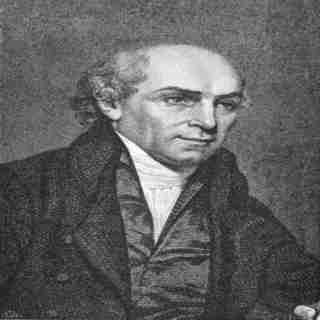 "Expect great things; attempt great things."
At a meeting of Baptist leaders in the late 1700s, a newly ordained minister stood to argue for the value of overseas missions. He was abruptly interrupted by an older minister who said, "Young man, sit down! You are an enthusiast. When God pleases to convert the heathen, he'll do it without consulting you or me."
That such an attitude is inconceivable today is largely due to the subsequent efforts of that young man, William Carey.
Plodder Carey was raised in the obscure, rural village of Paulerpury, in the middle of England. He apprenticed in a local cobbler's shop, where the nominal Anglican was converted. He enthusiastically took up the faith, and though little educated, the young convert borrowed a Greek grammar and proceeded to teach himself New Testament Greek.
When his master died, he took up shoemaking in nearby Hackleton, where he met and married Dorothy Plackett, who soon gave birth to a daughter. But the apprentice cobbler's life was hard—the child died at age 2—and his pay was insufficient. Carey's family sunk into poverty and stayed there even after he took over the business.
"I can plod," he wrote later, "I can persevere to any definite pursuit." All the while, he continued his language studies, adding Hebrew and Latin, and became a preacher with the Particular Baptists. He also continued pursuing his lifelong interest in international affairs, especially the religious life of other cultures.
Carey was impressed with early Moravian missionaries and was increasingly dismayed at his fellow Protestants' lack of missions interest. In response, he penned An Enquiry into the Obligations of Christians to Use Means for the Conversion of the Heathens. He argued that Jesus' Great Commission applied to all Christians of all times, and he castigated fellow believers of his day for ignoring it: "Multitudes sit at ease and give themselves no concern about the far greater part of their fellow sinners, who to this day, are lost in ignorance and idolatry."
Carey didn't stop there: in 1792 he organized a missionary society, and at its inaugural meeting preached a sermon with the call, "Expect great things from God; attempt great things for God!" Within a year, Carey, John Thomas (a former surgeon), and Carey's family (which now included three boys, and another child on the way) were on a ship headed for India.
Stranger in a strange land
Thomas and Carey had grossly underestimated what it would cost to live in India, and Carey's early years there were miserable. When Thomas deserted the enterprise, Carey was forced to move his family repeatedly as he sought employment that could sustain them. Illness racked the family, and loneliness and regret set it: "I am in a strange land," he wrote, "no Christian friend, a large family, and nothing to supply their wants." But he also retained hope: "Well, I have God, and his word is sure."
He learned Bengali with the help of a pundit, and in a few weeks began translating the Bible into Bengali and preaching to small gatherings.
When Carey himself contracted malaria, and then his 5-year-old Peter died of dysentery, it became too much for his wife, Dorothy, whose mental health deteriorated rapidly. She suffered delusions, accusing Carey of adultery and threatening him with a knife. She eventually had to be confined to a room and physically restrained.
"This is indeed the valley of the shadow of death to me," Carey wrote, though characteristically added, "But I rejoice that I am here notwithstanding; and God is here."
Gift of tongues
In October 1799, things finally turned. He was invited to locate in a Danish settlement in Serampore, near Calcutta. He was now under the protection of the Danes, who permitted him to preach legally (in the British-controlled areas of India, all of Carey's missionary work had been illegal).
Carey was joined by William Ward, a printer, and Joshua and Hanna Marshman, teachers. Mission finances increased considerably as Ward began securing government printing contracts, the Marshmans opened schools for children, and Carey began teaching at Fort William College in Calcutta.
In December 1800, after seven years of missionary labor, Carey baptized his first convert, Krishna Pal, and two months later, he published his first Bengali New Testament. With this and subsequent editions, Carey and his colleagues laid the foundation for the study of modern Bengali, which up to this time had been an "unsettled dialect."
Carey continued to expect great things; over the next 28 years, he and his pundits translated the entire Bible into India's major languages: Bengali, Oriya, Marathi, Hindi, Assamese, and Sanskrit and parts of 209 other languages and dialects.
He also sought social reform in India, including the abolition of infanticide, widow burning (sati), and assisted suicide. He and the Marshmans founded Serampore College in 1818, a divinity school for Indians, which today offers theological and liberal arts education for some 2,500 students.
By the time Carey died, he had spent 41 years in India without a furlough. His mission could count only some 700 converts in a nation of millions, but he had laid an impressive foundation of Bible translations, education, and social reform.
His greatest legacy was in the worldwide missionary movement of the nineteenth century that he inspired. Missionaries like Adoniram Judson, Hudson Taylor, and David Livingstone, among thousands of others, were impressed not only by Carey's example, but by his words "Expect great things; attempt great things." The history of nineteenth-century Protestant missions is in many ways an extended commentary on the phrase.
"Expect great things; attempt great things."
At a meeting of Baptist leaders in the late 1700s, a newly ordained minister stood to argue for the value of overseas missions. He was abruptly interrupted by an older minister who said, "Young man, sit down! You are an enthusiast. When God pleases to convert the heathen, he'll do it without consulting you or me."
That such an attitude is inconceivable today is largely due to the subsequent efforts of that young man, William Carey.
Plodder Carey was raised in the obscure, rural village of Paulerpury, in the middle of England. He apprenticed in a local cobbler's shop, where the nominal Anglican was converted. He enthusiastically took up the faith, and though little educated, the young convert borrowed a Greek grammar and proceeded to teach himself New Testament Greek.
When his master died, he took up shoemaking in nearby Hackleton, where he met and married Dorothy Plackett, who soon gave birth to a daughter. But the apprentice cobbler's life was hard—the child died at age 2—and his pay was insufficient. Carey's family sunk into poverty and stayed there even after he took over the business.
"I can plod," he wrote later, "I can persevere to any definite pursuit." All the while, he continued his language studies, adding Hebrew and Latin, and became a preacher with the Particular Baptists. He also continued pursuing his lifelong interest in international affairs, especially the religious life of other cultures.
Carey was impressed with early Moravian missionaries and was increasingly dismayed at his fellow Protestants' lack of missions interest. In response, he penned An Enquiry into the Obligations of Christians to Use Means for the Conversion of the Heathens. He argued that Jesus' Great Commission applied to all Christians of all times, and he castigated fellow believers of his day for ignoring it: "Multitudes sit at ease and give themselves no concern about the far greater part of their fellow sinners, who to this day, are lost in ignorance and idolatry."
Carey didn't stop there: in 1792 he organized a missionary society, and at its inaugural meeting preached a sermon with the call, "Expect great things from God; attempt great things for God!" Within a year, Carey, John Thomas (a former surgeon), and Carey's family (which now included three boys, and another child on the way) were on a ship headed for India.
Stranger in a strange land
Thomas and Carey had grossly underestimated what it would cost to live in India, and Carey's early years there were miserable. When Thomas deserted the enterprise, Carey was forced to move his family repeatedly as he sought employment that could sustain them. Illness racked the family, and loneliness and regret set it: "I am in a strange land," he wrote, "no Christian friend, a large family, and nothing to supply their wants." But he also retained hope: "Well, I have God, and his word is sure."
He learned Bengali with the help of a pundit, and in a few weeks began translating the Bible into Bengali and preaching to small gatherings.
When Carey himself contracted malaria, and then his 5-year-old Peter died of dysentery, it became too much for his wife, Dorothy, whose mental health deteriorated rapidly. She suffered delusions, accusing Carey of adultery and threatening him with a knife. She eventually had to be confined to a room and physically restrained.
"This is indeed the valley of the shadow of death to me," Carey wrote, though characteristically added, "But I rejoice that I am here notwithstanding; and God is here."
Gift of tongues
In October 1799, things finally turned. He was invited to locate in a Danish settlement in Serampore, near Calcutta. He was now under the protection of the Danes, who permitted him to preach legally (in the British-controlled areas of India, all of Carey's missionary work had been illegal).
Carey was joined by William Ward, a printer, and Joshua and Hanna Marshman, teachers. Mission finances increased considerably as Ward began securing government printing contracts, the Marshmans opened schools for children, and Carey began teaching at Fort William College in Calcutta.
In December 1800, after seven years of missionary labor, Carey baptized his first convert, Krishna Pal, and two months later, he published his first Bengali New Testament. With this and subsequent editions, Carey and his colleagues laid the foundation for the study of modern Bengali, which up to this time had been an "unsettled dialect."
Carey continued to expect great things; over the next 28 years, he and his pundits translated the entire Bible into India's major languages: Bengali, Oriya, Marathi, Hindi, Assamese, and Sanskrit and parts of 209 other languages and dialects.
He also sought social reform in India, including the abolition of infanticide, widow burning (sati), and assisted suicide. He and the Marshmans founded Serampore College in 1818, a divinity school for Indians, which today offers theological and liberal arts education for some 2,500 students.
By the time Carey died, he had spent 41 years in India without a furlough. His mission could count only some 700 converts in a nation of millions, but he had laid an impressive foundation of Bible translations, education, and social reform.
His greatest legacy was in the worldwide missionary movement of the nineteenth century that he inspired. Missionaries like Adoniram Judson, Hudson Taylor, and David Livingstone, among thousands of others, were impressed not only by Carey's example, but by his words "Expect great things; attempt great things." The history of nineteenth-century Protestant missions is in many ways an extended commentary on the phrase.
The Harvest of Homemaking
I have been a homemaker for over eighteen years now, and I feel confident saying it is a difficult and demanding job. What is more, it is a job with a massive PR problem. “It’s a soul-crushing grind!” some say. Others ask, “Do you work?” Public opinion on the nature of homemaking has not been subtle. For a generation at least, homemaking has been spoken of as a prison-like existence that stifles a woman’s gifts — as though homemakers have less ambition than others, less ability, less scope, less understanding. This propaganda effort has been radically effective, shaping the imagination of many women who find themselves at home for one reason or another. It takes little effort to see our calling and the work therein through the lens of resentment. Lately, there has been some pushback to the public opinion that homemaking is a life of boredom and ease, but it has been of the worst kind: long-faced social-media posts bemoaning how no one appreciates your work; TikTok videos telling everyone that because your family failed to notice the work you did, you feel invalidated as a person. This too is the fruit of worldly propaganda — and it too will have devastating effects. Homes in the Great War Homemakers often find ourselves without support — not physical support, the absence of which is so loudly reflected on, but rather the spiritual support of understanding why this field of work is glorious, worthy, essential, God-honoring, and strategic. We need an understanding of the value of the home that is strong enough to endure the tumultuous cultural winds around us. We need to see clearly how we are serving God in and with our work. “The Christian home is an essential work of the Christian resistance.” The Christian home is an essential work of the Christian resistance. In any war, it is customary to target your enemy’s supply lines, manufacturing plants, and headquarters. In our spiritual war, the Christian home is all of those things. Why then would it surprise us that the enemy would like to see the home destroyed? Why are we surprised by the obstacles we face — by the threefold resistance of the world, the flesh, and the devil? We have been cleverly fooled into thinking that the obstacles we face at home are due to the work being unimportant, insignificant, unappreciated, or mindless. We should have noticed that anything under such attack from both without and within must be desperately important. Beautiful or Embarrassing? You shall eat the fruit of the labor of your hands; you shall be blessed, and it shall be well with you. Your wife will be like a fruitful vine within your house, Your children will be like olive shoots around your table. Behold, thus shall the man be blessed who fears the Lord. (Psalm 128:3–4) Scripture is the basis for my commitment to being a homemaker, and if I never saw any other reason to love it, never saw the fruit, never understood the importance of the role, that should still be enough. Paul lays out the importance of older women teaching younger women to be “self-controlled, pure, working at home, kind, and submissive to their own husbands, that the word of God may not be reviled” (Titus 2:5). And Proverbs 31 describes a glorious picture of the woman who is clothed in strength and dignity as she gives herself to the needs of her household. At this point, some readers may have rolled their eyes because I mentioned Titus 2 and Proverbs 31 in the same embarrassingly uncool paragraph. Why is that? Could it be because you have been trained to despise passages like these? Could it be that you have listened to countless people explaining them away? Could it be that you have taken in enough worldly propaganda that you feel free to look down on the tone of the word of God and those who embrace it? I am asking you to consider that perhaps you have been played. You have been had. You have welcomed the lies of the world into your home and given them authority in your life. To say, “Women, be self-controlled, pure homemakers who love your husbands and children” is to speak a biblical, God-fearing statement. I am asking you now to listen to your own heart’s response to that. Is your heart bridling? Is it angry? Are you ready to post angry comments on my ignorant or backward ways? Well, think about what you are doing — it’s not me you are despising, but the words of God. What does your response say about where your heart is? Harvest of Homemaking I say that raw obedience to God’s word is enough, and in a sense it should be. But it is far from all that we are given. When I read those sorrowful monologues about the mental load, about how much it all weighs on the poor woman, about how unfair it all is, about how husbands should be responsible for far more housekeeping, all I can see is that women are suffering from the horrible pairing of trying to do the Lord’s work with the attitude of those who hate him. There will be no joy of obedience there. There will be no fruit of free giving there. There will be no strength and laughter and dignity there, because there is a thick fog of accusation, discontent, and envy. “The end of all our small daily plantings may be a harvest of staggering beauty.” I have come to realize through the years that the countless tasks I do that no one notices still shape our home and the people in it. Every meal I lay on the table is a small picture of the feeding of the five thousand. My meager offering, broken in the hands of Jesus, will feed generations of children. This home — the flavors and the smells and the atmosphere of love — will by God’s grace shape people who will go on to be the mothers and fathers of thousands. Is there any other work I could be doing that would be this exponentially fruitful or influential? A hundred years from now, I hope there are people who do not know my name or remember me, but nevertheless carry about with them seeds of faithful living that were first planted in the soil of this home. Do you have the burden of a million duties on your mind? Ask the Lord to establish the work of your hands. He makes valuable all that is done in him, so ask him to do so with your messy duties. Rejoice in him as you offer yourself as a living sacrifice — a sacrifice that cooks and cleans and blows noses and folds clothes and lays a table and looks after the ways of your household. He is shaping something of great beauty and strength that is far beyond our own capacity to imagine. May God give us all eyes to see it, and hearts to imagine it. The end of all our small daily plantings may be a harvest of staggering beauty. Article by Rachel Jankovic