
-480.webp)

God's Generals (Smith Wigglesworth) Order Printed Copy
- Author: Roberts Liardon
- Size: 332KB | 32 pages
- |
Others like god's generals (smith wigglesworth) Features >>
-160.webp)
God's Generals (Evan Roberts)
-160.webp)
God's Generals (William Branham)

God's Generals: A. A. Allen
God's Generals: Jack Coe
God's Generals - The Revivalists
God's Generals: The Healing Evangelists
God's Generals: The Revivalists
God's Generals - The Missionaries
-160.webp)
God's Generals (Aimee Semple Mcpherson)
-160.webp)
God's Generals (William J. Seymour)
About the Book
"God's Generals (Smith Wigglesworth)" by Roberts Liardon offers a detailed account of the life and ministry of renowned Pentecostal preacher, Smith Wigglesworth. Through powerful personal anecdotes and insights, the book highlights Wigglesworth's miraculous healing abilities, deep faith, and unwavering dedication to spreading the gospel. The author emphasizes Wigglesworth's impact on the Christian faith and his enduring legacy as a true spiritual pioneer.
Smith Wigglesworth
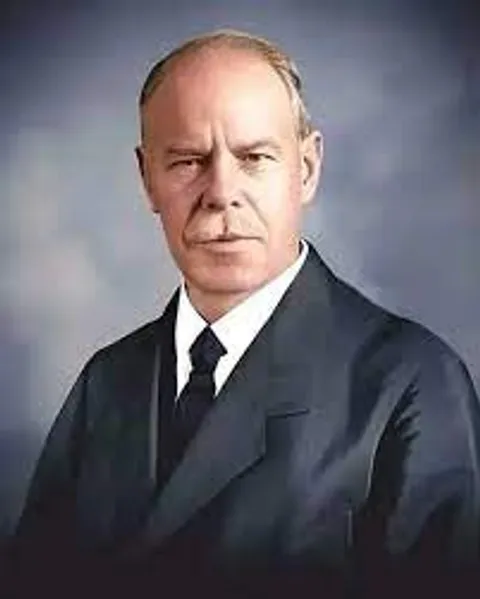 Smith Wigglesworth was born in 1859 to a very poor family. His father did manual labor, for very little pay. Smith himself went to work at the age of six to help with the family income. At six he was pulling turnips and at seven he was working in a woolen mill twelve hours a day. His parents did not know God, but Smith hungered in his heart to know Him. Even as a youngster he would pray in the fields. His grandmother was the critical Christian in his life. She was a Wesleyan Methodist and would take Smith to meetings with her. At one of these meetings there was a song being sung about Jesus as the lamb and Smith came into the realization of God's love for him and his decision to believe Christ for his salvation was decided that day. He was immediately filled with the desire to evangelize and led his own mother to Christ.
Smith has various church experiences as he was growing up. He first went to an Episcopal church and then at thirteen a Wesleyan Methodist church. When he was sixteen he became involved in the Salvation Army. He felt deeply called to fast and pray for lost souls. He saw many people come to Christ. At seventeen a mentor shared with him about water baptism and he decided to be baptized. The Salvation Army was experiencing a tremendous level of the power of God in those days. He describes meetings where "many would be prostrated under the power of the Spirit, sometimes for as long as twenty-four hours at a time." They would pray and fast and cry out for the salvation of fifty or a hundred people for the week and they would see what they had prayed for.
At eighteen Smith left the factory and became a plumber. He moved to Liverpool when he was twenty and continued to work during the day and minister during his free time. He felt called to minister to young people and brought them to meetings. These were destitute and ragged children, whom he would often feed and care for. Hundreds were saved. Smith was often asked to speak in Salvation meetings and he would break down and weep under the power of God. Many would come to repentance in those meetings through this untrained man. At twenty-three he returned back Bradford and continued his work with the Salvation Army.
In Bradford Smith met Mary Jane Featherstone, known as Polly, the daughter of a temperance lecturer. She left home and went to Bradford to take a servants job. One night she was drawn to a Salvation Army meeting. She listened to the woman evangelist, Gipsy Tillie Smith, and gave her heart to Christ. Smith was in that meeting and saw her heart for God. Polly became an enthusiastic Salvationsist and was granted a commission by General Booth. They developed a friendship, but Polly went to Scotland to help with a new Salvationist work. She eventually moved back to Bradford and married Smith, who was very much in love with her.
The couple worked together to evangelize the lost. They opened a small church in a poor part of town. Polly would preach and Smith would make the altar calls. For a season, however, Smith became so busy with his plumbing work that his evangelistic fervor began to wane. Polly continued on, bringing Smith to conviction. One day while Smith was working in the town of Leeds he heard of a divine healing meeting. He shared with Polly about it. She needed healing and so they went to a meeting, and Polly was healed.
Smith struggled with the reality of healing, while being ill himself. He decided to give up the medicine that he was taking and trust God. He was healed. They had five children, a girl and four boys. One morning two of the boys were sick. The power of God came and they prayed for the boys and they were instantly healed. Smith struggled with the idea that God would use him to heal the sick in general. He would gather up a group of people and drive them to get prayer in Leeds. The leaders of the meeting were going to a convention and left Smith in charge. He was horrified. How could he lead a meeting about divine healing? He tried to pass it off to someone else but could not. Finally he led the meeting and several people were healed. That was it. From then on Smith began to pray for people for healing.
Smith had another leap to make. He had heard about the Pentecostals who were being baptized in the Holy Spirit. He went to meetings and was so hungry for God he created a disturbance and church members asked him to stop. He went to prayer and prayed for four days. Finally he was getting ready to head home and the vicar's wife prayed for him and he fell under the power of God and spoke in tongues. Everything changed after that. He would walk by people and they would come under the conviction of the Holy Spirit and be saved. He began to see miracles and healings and the glory of God would fall when he prayed and preached.
Smith had to respond to the many calls that came in and gave up his business for the ministry. Polly unexpectedly died in 1913, and this was a real blow to Smith. He prayed for her and commanded that death release her. She did arise but said "Smith - the Lord wants me." His heartbroken response was "If the Lord wants you, I will not hold you". She had been his light and joy for all the years of their marriage, and he grieved deeply over the loss. After his wife was buried he went to her grave, feeling like he wanted to die. When God told him to get up and go Smith told him only if you "give to me a double portion of the Spirit – my wife’s and my own – I would go and preach the Gospel. God was gracious to me and answered my request.” His daughter Alice and son-in-law James Salter began to travel with him to handle his affairs.
Smith would pray and the blind would see, and the deaf were healed, people came out of wheelchairs, and cancers were destroyed. One remarkable story is when He prayed for a woman in a hospital. While he and a friend were praying she died. He took her out of the bed stood her against the wall and said "in the name of Jesus I rebuke this death". Her whole body began to tremble. The he said "in the name of Jesus walk", and she walked. Everywhere he would go he would teach and then show the power of God. He began to receive requests from all over the world. He taught in Europe, Asia, New Zealand and many other areas. When the crowds became very large he began a "wholesale healing". He would have everyone who needed healing lay hands on themselves and then he would pray. Hundreds would be healed at one time.
Over Smith's ministry it was confirmed that 14 people were raised from the dead. Thousands were saved and healed and he impacted whole continents for Christ. Smith died on March 12, 1947 at the funeral of his dear friend Wilf Richardson. His ministry was based on four principles " First, read the Word of God. Second, consume the Word of God until it consumes you. Third believe the Word of God. Fourth, act on the Word."
Smith Wigglesworth was born in 1859 to a very poor family. His father did manual labor, for very little pay. Smith himself went to work at the age of six to help with the family income. At six he was pulling turnips and at seven he was working in a woolen mill twelve hours a day. His parents did not know God, but Smith hungered in his heart to know Him. Even as a youngster he would pray in the fields. His grandmother was the critical Christian in his life. She was a Wesleyan Methodist and would take Smith to meetings with her. At one of these meetings there was a song being sung about Jesus as the lamb and Smith came into the realization of God's love for him and his decision to believe Christ for his salvation was decided that day. He was immediately filled with the desire to evangelize and led his own mother to Christ.
Smith has various church experiences as he was growing up. He first went to an Episcopal church and then at thirteen a Wesleyan Methodist church. When he was sixteen he became involved in the Salvation Army. He felt deeply called to fast and pray for lost souls. He saw many people come to Christ. At seventeen a mentor shared with him about water baptism and he decided to be baptized. The Salvation Army was experiencing a tremendous level of the power of God in those days. He describes meetings where "many would be prostrated under the power of the Spirit, sometimes for as long as twenty-four hours at a time." They would pray and fast and cry out for the salvation of fifty or a hundred people for the week and they would see what they had prayed for.
At eighteen Smith left the factory and became a plumber. He moved to Liverpool when he was twenty and continued to work during the day and minister during his free time. He felt called to minister to young people and brought them to meetings. These were destitute and ragged children, whom he would often feed and care for. Hundreds were saved. Smith was often asked to speak in Salvation meetings and he would break down and weep under the power of God. Many would come to repentance in those meetings through this untrained man. At twenty-three he returned back Bradford and continued his work with the Salvation Army.
In Bradford Smith met Mary Jane Featherstone, known as Polly, the daughter of a temperance lecturer. She left home and went to Bradford to take a servants job. One night she was drawn to a Salvation Army meeting. She listened to the woman evangelist, Gipsy Tillie Smith, and gave her heart to Christ. Smith was in that meeting and saw her heart for God. Polly became an enthusiastic Salvationsist and was granted a commission by General Booth. They developed a friendship, but Polly went to Scotland to help with a new Salvationist work. She eventually moved back to Bradford and married Smith, who was very much in love with her.
The couple worked together to evangelize the lost. They opened a small church in a poor part of town. Polly would preach and Smith would make the altar calls. For a season, however, Smith became so busy with his plumbing work that his evangelistic fervor began to wane. Polly continued on, bringing Smith to conviction. One day while Smith was working in the town of Leeds he heard of a divine healing meeting. He shared with Polly about it. She needed healing and so they went to a meeting, and Polly was healed.
Smith struggled with the reality of healing, while being ill himself. He decided to give up the medicine that he was taking and trust God. He was healed. They had five children, a girl and four boys. One morning two of the boys were sick. The power of God came and they prayed for the boys and they were instantly healed. Smith struggled with the idea that God would use him to heal the sick in general. He would gather up a group of people and drive them to get prayer in Leeds. The leaders of the meeting were going to a convention and left Smith in charge. He was horrified. How could he lead a meeting about divine healing? He tried to pass it off to someone else but could not. Finally he led the meeting and several people were healed. That was it. From then on Smith began to pray for people for healing.
Smith had another leap to make. He had heard about the Pentecostals who were being baptized in the Holy Spirit. He went to meetings and was so hungry for God he created a disturbance and church members asked him to stop. He went to prayer and prayed for four days. Finally he was getting ready to head home and the vicar's wife prayed for him and he fell under the power of God and spoke in tongues. Everything changed after that. He would walk by people and they would come under the conviction of the Holy Spirit and be saved. He began to see miracles and healings and the glory of God would fall when he prayed and preached.
Smith had to respond to the many calls that came in and gave up his business for the ministry. Polly unexpectedly died in 1913, and this was a real blow to Smith. He prayed for her and commanded that death release her. She did arise but said "Smith - the Lord wants me." His heartbroken response was "If the Lord wants you, I will not hold you". She had been his light and joy for all the years of their marriage, and he grieved deeply over the loss. After his wife was buried he went to her grave, feeling like he wanted to die. When God told him to get up and go Smith told him only if you "give to me a double portion of the Spirit – my wife’s and my own – I would go and preach the Gospel. God was gracious to me and answered my request.” His daughter Alice and son-in-law James Salter began to travel with him to handle his affairs.
Smith would pray and the blind would see, and the deaf were healed, people came out of wheelchairs, and cancers were destroyed. One remarkable story is when He prayed for a woman in a hospital. While he and a friend were praying she died. He took her out of the bed stood her against the wall and said "in the name of Jesus I rebuke this death". Her whole body began to tremble. The he said "in the name of Jesus walk", and she walked. Everywhere he would go he would teach and then show the power of God. He began to receive requests from all over the world. He taught in Europe, Asia, New Zealand and many other areas. When the crowds became very large he began a "wholesale healing". He would have everyone who needed healing lay hands on themselves and then he would pray. Hundreds would be healed at one time.
Over Smith's ministry it was confirmed that 14 people were raised from the dead. Thousands were saved and healed and he impacted whole continents for Christ. Smith died on March 12, 1947 at the funeral of his dear friend Wilf Richardson. His ministry was based on four principles " First, read the Word of God. Second, consume the Word of God until it consumes you. Third believe the Word of God. Fourth, act on the Word."
Love Is the Overflow of Joy in God
More clearly than any other writer in the Bible, the apostle Paul opened up the truth to me that God is most glorified in me when I am most satisfied in him. It was thrilling to discover that glorifying God and satisfying my soul are not at odds. I have told the story of that discovery elsewhere. But there is a second chapter to the story that makes my thankfulness to Paul all the sweeter. I owe to him, more than to anyone else, another crucial, life-changing discovery. If the first discovery was how to resolve the tension between the desire to glorify God and the desire to be happy, the second discovery was how to resolve the tension between the desire to be happy in God and the desire to love other people. Another Unresolved Tension Can you really love people if, in the very act of doing them good, you are seeking the fullness of your own joy? After all, it was Paul himself who said, “Love . . . does not seek its own” (1 Corinthians 13:4–5 NASB). And in another place, “Let no one seek his own good, but the good of his neighbor” (1 Corinthians 10:24). And again, “We . . . have an obligation to bear with the failings of the weak, and not to please ourselves” (Romans 15:1). So how can you claim to love people if, in the very act of loving them, you are seeking your own joy? “On the other side of self-denial — even death — is everlasting joy in the presence of God.” This question felt just as urgent as the first one about how to glorify God while seeking my own joy. Jesus had said that “the great and first” commandment is to love God (Matthew 22:38). But he also said that the commandment to love our neighbor “is like it” (Matthew 22:39). So the question of how to love people out of a heart that could not stop wanting to be happy — indeed, a heart that dare not stop wanting to be happy, lest God be dishonored by my failing to be happy in him — that question was just as urgent as any. So how does the pursuit of joy in God relate to love for other people? Paul showed me that genuine, Spirit-awakened joy in God does not hinder love for people but in fact overflows with love for people. It has a built-in impulse to expand. Joy in God grows as it’s extended into the lives of other people so they can share in it. Paul Points the Way Paul gives us the most explicit illustration of this in the New Testament. It’s found in 2 Corinthians 8:1–2, where Paul is seeking to motivate love in the Corinthians by pointing to the Macedonian Christians and the amazing way they had shown love. We want you to know, brothers, about the grace of God that has been given among the churches of Macedonia, for in a severe test of affliction, their abundance of joy and their extreme poverty have overflowed in a wealth of generosity on their part. . . . I say this not as a command, but to prove by the earnestness of others that your love also is genuine. (2 Corinthians 8:1–2, 8) Note carefully that the “abundance of joy” in the hearts of the Macedonians was not owing to comfortable circumstances. They were in “extreme poverty” and “a severe test of affliction.” “Their abundance of joy” was owing to “the grace of God” that had been “given” (2 Corinthians 8:1). Their sins were forgiven. The wrath of God had been replaced with the divine smile of everlasting favor. Guilt was gone. Hell was closed. Heaven was open. The Spirit was indwelling. Hope had exploded in their hearts. All of this because of Christ, when they deserved none of it. The grace of God had been given (2 Corinthians 8:1). This “abundance of joy” became a fountain of love for people. It could not be clearer: “Their abundance of joy . . . overflowed in a wealth of generosity” (2 Corinthians 8:2). This was love. He called it that in verse 8: “. . . that your love also is genuine.” So Paul’s definition of genuine, God-exalting love would be this: Love is the overflow of joy in God that meets the needs of others. Joy for the Sake of Love This is more profound than what first meets the eye. Paul is not saying, “True happiness requires love for people.” That’s true. An unloving person will not be happy in the long run. But this is an oversimplification that misses the crucial point. The point is not that in order to have the truest pleasure we must love people. Rather, the point is that when joy in God overflows into the lives of others in the form of generosity, that overflow of joy is love. Or to say it another way: we do not merely seek to love in order to be happy, but we seek to be happy in God in order to love. It was “their abundance of joy” that overflowed in love (2 Corinthians 8:2). This thought seemed so radical to me that I wanted to check myself by testing it with the rest of Scripture. Is it true that my joy is that closely connected with my love for people? What I found was a stream of biblical commands to: love kindness, not just do it (Micah 6:8); do acts of mercy with cheerfulness (Romans 12:8); joyfully suffer loss in the service of prisoners (Hebrews 10:34); be a cheerful giver (2 Corinthians 9:7); make our joy the joy of others (2 Corinthians 2:3); tend the flock of God willingly and eagerly (1 Peter 5:2); and keep watch over souls with joy (Hebrews 13:17). To me this was amazing. We are not dealing here with something marginal or clever. This really is soul piercing and radically life changing: the pursuit of authentic love for people includes the pursuit of joy, because joy in God is an essential component of authentic love. This is vastly different from saying, “Let’s all be loving because it will make us happy.” This is saying, “Let’s all seek to be so full of joy in God that it overflows in sacrificial love to other people.” Love That Survives All Sorrow That word sacrificial might sound paradoxical. If we are overflowing in joy to others, and our joy is expanding by drawing others into it, then why talk of sacrifice? The reason is that the path of greatest joy in this life is often the path of great suffering. In the age to come, after Jesus returns, all pain will be gone. But not yet. In this life, love will often demand suffering. It may, in fact, demand that we lay down our lives. But Paul sets the pace for us when he says, “I rejoice in my sufferings for your sake” (Colossians 1:24). “In all our affliction, I am overflowing with joy” (2 Corinthians 7:4). “We rejoice in our sufferings” (Romans 5:3). There are reasons for this strange and wonderful kind of joy that survives and even thrives in affliction. One reason is that Jesus taught us, “It is more blessed to give than to receive” (Acts 20:35). The overflow to others is enriching to us. Another reason is that even though “some of you they will put to death,” in the end “not a hair of your head will perish” (Luke 21:16, 18). Jesus had said, “Everyone who lives and believes in me shall never die” (John 11:26). The world thinks we die. But Jesus takes us so immediately into his care that there is no break in life. A third reason is the promise, “your reward is great in heaven” (Matthew 5:12). Finally, the greatest act of love that was ever performed was sustained by joy in God: “[Look] to Jesus, . . . who for the joy that was set before him endured the cross” (Hebrews 12:2). “We do not merely seek to love in order to be happy, but we seek to be happy in God in order to love.” This is why, during my 33 years as a pastor, the signature text we came back to again and again was 2 Corinthians 6:10: “as sorrowful, yet always rejoicing.” Always. Rejoicing at the same time as sorrowing. Not just sequentially. Simultaneously. Loving others does not have to wait till sorrow passes, because joy does not wait. And during those 33 years, the signature song that the pastoral staff would sing again and again was “It Is Well with My Soul”: When peace like a river attendeth my way, When sorrows like sea billows roll, Whatever my lot, thou hast taught me to say, “It is well, it is well with my soul.” Genuine love makes many sacrifices for the beloved. There is much pain and many sorrows. But in Christ there is no ultimate sacrifice. To be sure, Jesus calls for self-denial. But his argument for self-denial is “whoever loses his life for my sake and the gospel’s will save it” (Mark 8:35). On the other side of self-denial — even death — is everlasting joy in the presence of God. Love Is Not Begrudging I have never met people who are offended because the sacrifices we make for their good bring us joy. In fact, merely dutiful “love” — or worse, begrudging “love” — does not make people feel loved. It makes them feel like a burden. I am sure, therefore, that Paul would agree with the writer to the Hebrews when he tells his hearers to let the leaders keep watch over them “with joy and not with groaning, for that would be of no advantage to you” (Hebrews 13:17). Begrudging ministry is of no advantage to the people. Or to put it positively, finding joy in caring for people is a great advantage to them. It is love. This is surely why Paul said to the Corinthians, “I felt sure of all of you, that my joy would be the joy of you all” (2 Corinthians 2:3). Yes! If you come to me and want me to experience joy — that is, if you want to love me — come with joy. And the best joy of all is joy in God. Bring me that. Overflow on me with that. I will feel loved. And you will be glad. So Paul has done it again. He not only showed me how my pursuit of God’s glory and my pursuit of happiness fit together, but he also showed me how that unquenchable desire for happiness fits together with loving people. Genuine, Christ-exalting, Spirit-empowered, sacrificial love for people is the overflow of joy in God that expands by meeting the needs of others. How can I not love the man who, after the Lord Jesus, showed me, more clearly than anyone else, the beauty of such a way of life? Article by John Piper
-480.webp)
-480.webp)