
-480.webp)

God's Generals (Maria Woodworth) Order Printed Copy
- Author: Roberts Liardon
- Size: 397KB | 32 pages
- |
Others like god's generals (maria woodworth) Features >>
God's Generals: The Martyrs
God's Generals - The Revivalists
-160.webp)
God's Generals (William Branham)
God's Generals: The Missionaries

God's Generals: A. A. Allen
-160.webp)
God's Generals (Aimee Semple Mcpherson)
God's Generals: The Healing Evangelists
God's Generals: Jack Coe
God's Generals: The Roaring Reformers
God's Generals: Evan Roberts
About the Book
"God's Generals" by Roberts Liardon is a biographical look at the life and ministry of Maria Woodworth-Etter, a pioneering female evangelist known for her powerful preaching and healing ministry in the late 19th and early 20th centuries. The book details Woodworth-Etter's struggles, triumphs, and impact on the Pentecostal movement, highlighting her dedication to spreading the gospel and leading countless souls to faith in Christ.
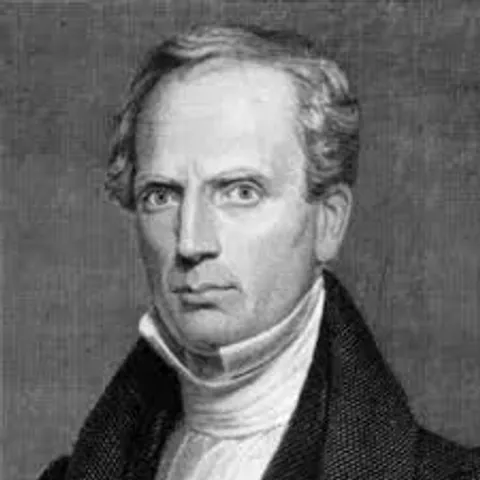
Charles Finney
 Childhood and Teen years
Charles Grandison Finney was born the year after Wesley died on 29th August, 1792 in Warren, Connecticut. In 1794 his family moved to New York state, eventually settling at Henderson, near Lake Ontario. Although he received only a brief formal education he decided to study law and joined the practice of a local lawyer, Benjamin Wright. He was also very musical, played the cello and directed the choir at the local Presbyterian Church pastured by Rev. George Gale.
His conversion
His conversion on October 10th 1821 reads like something out of the book of Acts. Smitten with conviction from Bible reading he decided to ‘settle the question of my soul’s salvation at once, that if it were possible, I would make my peace with God.’ (Autobiography)
This conviction increased to an unbearable level over the next couple of days and came to an head when he was suddenly confronted with an ‘inward voice.’ He was inwardly questioned about his spiritual condition and finally received revelation about the finished work of Christ and his own need to give up his sins and submit to Christ’s righteousness.
As he sought God in a nearby wood he was overwhelmed with an acute sense of his own wickedness and pride but finally submitted his life to Christ. Back at work that afternoon he was filled with a profound sense of tenderness, sweetness and peace. When work was over and he bade his employer goodnight, he then experienced a mighty baptism in the Holy Spirit, which was recorded as vividly as the day he experienced it, though it was penned some fifty years later.
The next morning Finney announced to a customer that he was leaving his law studies to become a preacher of the Gospel.
Charles Finney licensed to preach
He was licensed to preach in 1823 and ordained as an evangelist in 1824. His penetrating preaching was quite different from many local ministers and included an obvious attempt to break away from the traditional and, as he saw it, dead, orthodox Calvinism. He married to Lydia Andrews in October 1824 and was also joined by Daniel Nash (1774-1831), known popularly as ‘Father Nash.’ Undoubtedly Nash’s special ministry of prayer played a great part in Finney’s growing success as an evangelist.
Things really took off when he preached in his old church, where Rev. Gale still ministered. Numerous converts and critics followed! Similar results were experienced in nearby towns of Rome and Utica. Soon newspapers were reporting his campaigns and he began drawing large crowds with dramatic responses.
Soon he was preaching in the largest cities of the north with phenomenal results. Campaign after campaign secured thousands of converts.
The high point of Finney’s revival career was reached at Rochester, New York, during his 1830-1 meetings. Shopkeepers closed their businesses and the whole city seemed to centre on the revivalist. Responding to his irresistible logic and passionate arguments many of his converts were lawyers, merchants and those from a higher income and professional status.
His Preaching
Finney openly preached a modified Calvinism, influenced with his own theology of conversion and used what were perceived to be ‘revivalistic techniques.’
These ‘means’ included the use of the anxious bench (a special place for those under conviction), protracted meetings, women allowed to pray in mixed meetings, publicly naming those present resisting God in meetings and the hurried admission of new converts into church membership. Opponents viewed his preaching of the law as ‘scare tactics’ and his persuasive appeals for sinners to come to Christ for salvation were seen as over-emphasising the responsibility of men and ignoring the sovereignty of God.
His theology and practise soon became known as the ‘New Measures’ and attracted many opponents from the Old School Presbyterians led by Asahel Nettleton (himself no stranger to true revival and , the revivalistic Congregationalists headed by Lyman Beecher.
Pastor at Chatham Street Chapel
Finney accepted an appointment as pastor of Chatham Street Chapel in New York City in 1832 where he remained until 1837. It was during this time that he delivered a series of sermons published in 1835 as ‘Lectures on Revivals of Religion.’ Here he clearly stated his views regarding revivals being products of the correct use of human means. Such was the controversy that he left the Presbyterian denomination and joined the Congregationalists in 1836.
Oberlin College
The next year he became professor of theology at Oberlin College (Ohio) where he taught until his death. He was President here from 1851 until 1866, but still continued regular revival meetings in urban settings (twice in England, 1848, 1851) until 1860. During his stay at Oberlin he produced his, Lectures to Professing Christians (1836), Sermons on Important Subjects (1839) and his famous Memoirs.
The Father of Modern Revivalism
There is no doubt that Charles Grandison Finney well-deserves the title ‘The Father of Modern Revivalism.’ He was an evangelistic pioneer whose model was followed by a long line of revivalists from D. L. Moody to Billy Graham. His writing have made a massive impact on the entire evangelical world and particularly the ‘Lectures on Revivals’ which has, arguably, ignited more fires of revival than any other single piece literature in evangelical history.
This ‘Prince of Revivalists’ passed away peacefully at Oberlin on Sunday, 16th August, 1875 aged almost 83 years.
Bibliography: I Will Pour Out My Spirit, R. E. Davies, 1997; Ed: A. Scott Moreau, Baker Evangelical Dictionary of World Missions, 2000; Dictionary of Evangelical Biography 1730-1860, Vol. 1, 1995.
Tony Cauchi
Childhood and Teen years
Charles Grandison Finney was born the year after Wesley died on 29th August, 1792 in Warren, Connecticut. In 1794 his family moved to New York state, eventually settling at Henderson, near Lake Ontario. Although he received only a brief formal education he decided to study law and joined the practice of a local lawyer, Benjamin Wright. He was also very musical, played the cello and directed the choir at the local Presbyterian Church pastured by Rev. George Gale.
His conversion
His conversion on October 10th 1821 reads like something out of the book of Acts. Smitten with conviction from Bible reading he decided to ‘settle the question of my soul’s salvation at once, that if it were possible, I would make my peace with God.’ (Autobiography)
This conviction increased to an unbearable level over the next couple of days and came to an head when he was suddenly confronted with an ‘inward voice.’ He was inwardly questioned about his spiritual condition and finally received revelation about the finished work of Christ and his own need to give up his sins and submit to Christ’s righteousness.
As he sought God in a nearby wood he was overwhelmed with an acute sense of his own wickedness and pride but finally submitted his life to Christ. Back at work that afternoon he was filled with a profound sense of tenderness, sweetness and peace. When work was over and he bade his employer goodnight, he then experienced a mighty baptism in the Holy Spirit, which was recorded as vividly as the day he experienced it, though it was penned some fifty years later.
The next morning Finney announced to a customer that he was leaving his law studies to become a preacher of the Gospel.
Charles Finney licensed to preach
He was licensed to preach in 1823 and ordained as an evangelist in 1824. His penetrating preaching was quite different from many local ministers and included an obvious attempt to break away from the traditional and, as he saw it, dead, orthodox Calvinism. He married to Lydia Andrews in October 1824 and was also joined by Daniel Nash (1774-1831), known popularly as ‘Father Nash.’ Undoubtedly Nash’s special ministry of prayer played a great part in Finney’s growing success as an evangelist.
Things really took off when he preached in his old church, where Rev. Gale still ministered. Numerous converts and critics followed! Similar results were experienced in nearby towns of Rome and Utica. Soon newspapers were reporting his campaigns and he began drawing large crowds with dramatic responses.
Soon he was preaching in the largest cities of the north with phenomenal results. Campaign after campaign secured thousands of converts.
The high point of Finney’s revival career was reached at Rochester, New York, during his 1830-1 meetings. Shopkeepers closed their businesses and the whole city seemed to centre on the revivalist. Responding to his irresistible logic and passionate arguments many of his converts were lawyers, merchants and those from a higher income and professional status.
His Preaching
Finney openly preached a modified Calvinism, influenced with his own theology of conversion and used what were perceived to be ‘revivalistic techniques.’
These ‘means’ included the use of the anxious bench (a special place for those under conviction), protracted meetings, women allowed to pray in mixed meetings, publicly naming those present resisting God in meetings and the hurried admission of new converts into church membership. Opponents viewed his preaching of the law as ‘scare tactics’ and his persuasive appeals for sinners to come to Christ for salvation were seen as over-emphasising the responsibility of men and ignoring the sovereignty of God.
His theology and practise soon became known as the ‘New Measures’ and attracted many opponents from the Old School Presbyterians led by Asahel Nettleton (himself no stranger to true revival and , the revivalistic Congregationalists headed by Lyman Beecher.
Pastor at Chatham Street Chapel
Finney accepted an appointment as pastor of Chatham Street Chapel in New York City in 1832 where he remained until 1837. It was during this time that he delivered a series of sermons published in 1835 as ‘Lectures on Revivals of Religion.’ Here he clearly stated his views regarding revivals being products of the correct use of human means. Such was the controversy that he left the Presbyterian denomination and joined the Congregationalists in 1836.
Oberlin College
The next year he became professor of theology at Oberlin College (Ohio) where he taught until his death. He was President here from 1851 until 1866, but still continued regular revival meetings in urban settings (twice in England, 1848, 1851) until 1860. During his stay at Oberlin he produced his, Lectures to Professing Christians (1836), Sermons on Important Subjects (1839) and his famous Memoirs.
The Father of Modern Revivalism
There is no doubt that Charles Grandison Finney well-deserves the title ‘The Father of Modern Revivalism.’ He was an evangelistic pioneer whose model was followed by a long line of revivalists from D. L. Moody to Billy Graham. His writing have made a massive impact on the entire evangelical world and particularly the ‘Lectures on Revivals’ which has, arguably, ignited more fires of revival than any other single piece literature in evangelical history.
This ‘Prince of Revivalists’ passed away peacefully at Oberlin on Sunday, 16th August, 1875 aged almost 83 years.
Bibliography: I Will Pour Out My Spirit, R. E. Davies, 1997; Ed: A. Scott Moreau, Baker Evangelical Dictionary of World Missions, 2000; Dictionary of Evangelical Biography 1730-1860, Vol. 1, 1995.
Tony Cauchi
The Holiness from Below - A Warning Against Self-Righteousness
As he who called you is holy, you also be holy in all your conduct. (1 Peter 1:15) My hunch is that you are not a glib and shallow person. You are not the kind of person who would “pervert the grace of God into sensuality” (Jude 4). You are in earnest with the Lord, and you long to be holy. So do I. Indeed, what we deeply desire is nothing less than — may I come right out and say it? — sainthood. But Christians like us — who care so sincerely about holiness and are reaching so diligently for its high standards — we face our own temptation. Let’s come right out and say that too. If others pervert the grace of God, we can “nullify the grace of God” (Galatians 2:21). We can have “a zeal for God, but not according to knowledge” (Romans 10:2). We can “go beyond what is written . . . being puffed up in favor of one against another” (1 Corinthians 4:6). How could it be otherwise? There is always, in this life, more than one way to lose our way! Our very earnestness can become an opening to corruption, rot, and death. The great pastor and saint Robert Murray McCheyne warned his congregation, “Study sanctification to the utmost, but do not make a Christ of it. God hates this idol more than all others.” We should be serious about that too. So, let’s think about one way we can go so wrong, even while feeling we are so right. Two Kinds of Holiness Here is what we must understand. There are two kinds of holiness. One kind is Jesus’s holiness, and the other is our own self-invented holiness. Or to put it in other ways: There is the holiness of the Spirit, and there is the holiness of the flesh. There is the holiness from above, and the holiness from below. There is real holiness, and false holiness. “Real holiness from Jesus is, of course, like Jesus.” The difference is profound, even stark. But for us, it isn’t always easy to see the difference. Both kinds of holiness quote the Bible. Both talk about Jesus. Both go to church. Both are strict and firm and resolute. How then do these two holinesses differ? Real holiness from Jesus is, of course, like Jesus. Look carefully at what our key verse actually says: “As he who called you is holy, you also be holy in all your conduct” (1 Peter 1:15). His kind of holiness does not simply insist on a high moral standard. Any sinner can turn over a new leaf, and with enough willpower align externally with biblical norms. But real holiness reflects Jesus, it thinks like Jesus, its instincts resonate with Jesus. Real holiness embodies Jesus. Beauty of True Holiness When our Lord said, “Follow me” (Mark 1:17), he wasn’t recruiting our moral strengths to advance his cause. His call was and is, “I will teach you a new way of perceiving everything, including morality. I myself am how you avoid sin and become holy.” Jesus is why the Bible speaks of “the beauty of holiness” (Psalm 96:9, KJV). His holiness is humane, life-giving, and desirable in every worthy way. His holiness is both serious enough to warn and light enough to laugh (1 Peter 5:8; Zechariah 8:5); it’s firm and yet also freeing (Deuteronomy 5:32; Malachi 4:2). When we encounter our Lord’s real holiness in someone today, it’s both dignifying and delightful. But false holiness from us is, well, just us. It’s us at our worst, because it’s us exalting our smug superiority, us reinforcing our divisive preferences, us absolutizing our narrow rigidity, and so forth. It’s us asserting ourselves, in the name of the Lord, so that we become more demanding, more grim, more shaming of others. Great Divide I’ll make it still worse. Because false holiness comes so naturally to us, it feels good. Our moral fervor feels moral. But it isn’t. Our moral fervor is immoral. In those moments when we have enough self-awareness to see our carnal holiness for what it is, we are peering into a pit of hell. In Mere Christianity, C. S. Lewis teaches us, The sins of the flesh are bad, but they are the least bad of all sins. All the worst pleasures are purely spiritual: the pleasure of putting other people in the wrong, of bossing and patronizing and spoiling sport and back-biting; the pleasures of power, of hatred. For there are two things inside me, competing with the human self which I must try to become. They are the Animal self, and the Diabolical self. The Diabolical self is the worse of the two. That is why a cold, self-righteous prig who goes regularly to church may be far nearer to hell than a prostitute. But, of course, it is better to be neither. (102–103) If this is so, and it is, then our pursuit of holiness is complicated. We might have expected a choice between two simple categories: sin versus holiness. But in reality, we are facing three categories: (1) sin, (2) our kind of holiness, and, (3) Jesus’s kind of holiness. And the great divide is not between (1) and (2). The great divide is between (2) and (3). Heart of His Holiness If our holiness is no more than that — our wretched rightness — then our holiness is a polished form of evil. The Pharisees proved that. They were morally earnest people and the archvillains of the Gospels. “If our holiness is no more than our wretched rightness, then our holiness is a polished form of evil.” The Pharisees hated Jesus, even while many sinners gravitated to him. Why? Because his kind of holiness has no pride at all. He isn’t pushy and strident and harsh. He really is “gentle and lowly” (Matthew 11:29). And that part of him isn’t a concession, moderating his holiness. It’s at the very heart of his holiness, because it is the very heart of Jesus himself. His kind of holiness melts in the mouths of all who humble themselves before him. This distinction explains something that perplexed me for years. The most repulsive people I’ve encountered along the way are not the worldly party boys on their weekend binges; they are harsh “church people” with their high standards — and no forgiveness. But the loveliest people I’ve ever known have been sinners of many kinds who are turning from both their coarsened evil and their refined evil, and they are humbly opening up to Jesus and his grace for the undeserving. When I hang out with them, Jesus is present. Sometimes I am moved to tears. But among genuinely holy people, I do not feel cornered, pressured, or shamed by their negative scrutiny. The real saints are too holy for that arrogant foolishness. And I hope you have a ton of friends like that! Not Righteousness of My Own It isn’t just our blatant sins that need correction. Our counterfeit holiness needs correction too. It doesn’t need intensification. A. W. Tozer wrote of his generation, “A widespread revival of the kind of Christianity we know today in America might prove to be a moral tragedy from which we would not recover in a hundred years” (Keys to the Deeper Life, 18). I believe that applies even more today. What self-righteous holiness needs is not success, power, and prominence, but failure, collapse, and devastation. Then we can humbly receive Jesus, with the empty hands of faith, and enter into the profound experience Philippians 3:8–9 describes: For his sake I have suffered the loss of all things and count them as rubbish, in order that I may gain Christ and be found in him, not having a righteousness of my own that comes from the law, but that which comes through faith in Christ, the righteousness from God that depends on faith.
-480.webp)
-480.webp)