
-480.webp)

God's Generals (Charles F. Parham) Order Printed Copy
- Author: Roberts Liardon
- Size: 275KB | 42 pages
- |
Others like god's generals (charles f. parham) Features >>
God's Generals: The Revivalists
God's Generals: Why They Succeeded And Why Some Failed

God's Generals: William Branham

God’s Generals: John Alexander Dowie
God's Generals: Jack Coe
God's Generals - The Missionaries
-160.webp)
God's Generals (A. A. Allen)
-160.webp)
God's Generals (William Branham)
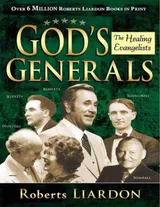
God's Generals: The Healing Evangelists
-160.webp)
God's Generals (Maria Woodworth)
About the Book
"God's Generals" by Roberts Liardon is a biography of Charles F. Parham, a key figure in the early Pentecostal movement. The book offers a detailed account of Parham's life, ministry, and impact on the Christian faith. Through Parham's story, readers gain insight into the beginnings of the Pentecostal movement and the importance of spiritual revival in modern Christianity.
Jack Coe
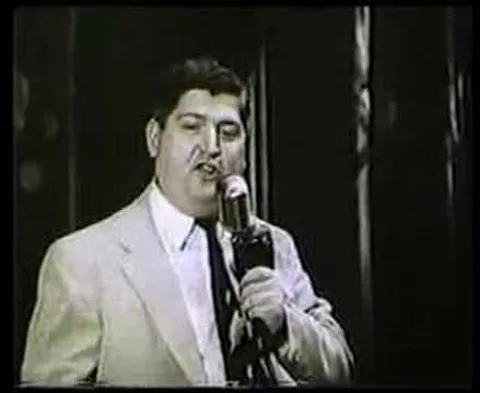 Jack G. Coe was born on March 11, 1918 in Oklahoma City, Oklahoma. His father, George, was a gambler and an alcoholic. His parents, although having been Christians, did not attend church. His grandparents, on his father's side were Christians but they were not able to influence their son's behavior. The couple had seven children in all. When Jack was five his father gambled away all their furniture and their house, leaving his mother Blanche destitute with seven children. They were devastated. His mother tried to make a new life by moving to Pennsylvania, but it was too hard. When Coe's father came to her house promising to change she agreed to reunite. The change did not last, however, and George went back to gambling.
Blanche left George for good, but only took her daughter with her this time. The boys were left with their father, which meant they were essentially left on their own. Often they did not have food to eat. Blanche did return to claim them, but could not care for them on her own. When Jack was nine he and his twelve year old brother was turned over to an orphanage. His older brother ran away, but was hit by a car and died. Jack struggled with rejection and abandonment. At seventeen he left the orphanage and began to drink, becoming an alcoholic like his father. He drank so much he had ulcers and his heart became enlarged. The doctor told him that if he didn't quit drinking he was going to die. Not knowing where else to go he moved to California to be near his mother. When he thought he was near death he promised God he would turn his life around and he was healed for a while. The family moved to Texas and he was drinking again. This time he heard God's voice "This is your last chance". The following Sunday he went to a Nazarene church and accepted Christ. He was radically changed. He went to church meetings almost every night, prayed, and read the Word constantly. After a year and a half he went to a Pentecostal meeting and was filled with the Holy Spirit and had a vision of Jesus.
Jack felt called to the ministry and went to and Assembly of God school called Southwestern Bible Institute, led by P.C. Nelson. He left in 1941 to join the army after the bombing of Pearl Harbor. He was so committed to God's purposes that he went to church every night. His sergeant sent him for psychiatric evaluation This happened several times while he was in the army. One day he was reading a book by P.C. Nelson on Healing when he fell asleep. He had a dream where he saw his sister close to death in a hospital but he saw a bright light come into her room and she was healed. He left immediately to see her and everything was as he'd seen it in a dream. She was healed and he was changed forever.
In 1944 Coe became ill with malaria. He was sent home because the doctors felt they could not help him. He sought the Lord who told him "preach the gospel". God healed him. He went out to preach and three people were saved. That year he was ordained as an Assembly of God minister. His healing experiences caused him to seek God about the gifts of healing. In 1945 he felt God called him to have a healing meeting. He went to Texas and announced in a church that God was going to heal the sick, cause the blind to see, and the deaf to hear. Those were bold words indeed! A woman received her sight that night. His ministry was launched. He began traveling over the country.
In 1946 God spoke to Coe and his wife Juanita to sell their house and start an itinerant ministry. They purchased a beat up truck and a ministry tent and began to live on the road. In 1948 God spoke to Coe to go to Redding, California. A woman, whose leg was about to be amputated, was healed and the news spread throughout the city. God blessed the couple and for the first time had enough money to be ahead on their finances. Healings and miracles regularly occurred in his meetings.
There were some very controversial things about Jack Coe. He believed that he should have a larger tent than other evangelists and went and measured Oral Roberts tent, then he ordered one larger. His style was dramatic and he often hit, slapped, or jerked people. He also would pull people out of wheelchairs. His speaking style was aggressive as he challenged people to believe God. He suggested that people who stood against him would be "struck dead by God". He was anti-medicine and told people not to go to doctors. He also encouraged interracial meetings.
In 1950 Coe began publishing the Herald of Healing magazine. Within six years it was being sent to over 350,000 people. God began to speak to Coe about opening an orphanage. He collected money for the project at every meeting. He sold his own home and began to build the children's home. His own family moved into the partially finished building so they would have a place to live. Coe eventually bought 200 acres outside of Dallas and built four dormitories and established a home farm. They could support 200 abandoned children.
In 1952 Coe began a radio ministry, which eventually was carried on over 100 radio stations. He also began having trouble with the Assembly of God organization. Although initially responsive to suggestions, he felt their goal was to limit the ministry. He suggested that the Assembly of God leadership had lost the belief in the miraculous and felt that they should be replaced. Needless to say this aggravated the situation. In 1953 Coe was expelled from the Assembly of God church. They felt that he was independent, extreme, prone to exaggeration, and they weren't sure about his ministry style. Coe felt that it was an attack against his success. He told people that "one of the officials made the remark to me that he would not rest until every man that was preaching divine healing in a deliverance ministry, separated from the General Council of the Assembly of God."
In 1953 Coe started his own church in Dallas. It was called the Dallas Revival Center. God spoke to him that it was important for those not getting healed to receive teaching about healing from the Word. In 1954 Coe opened a faith home, where people could stay for extended periods of time to receive prayer for healing. Teaching and prayer were given daily. 1956 was a pivotal year. While Coe was preaching in Miami he was arrested for practicing medicine without a license. This brought national attention to him and the ministry, both positive and negative. He was acquitted of practicing medicine without a license when the trial went to court.
At the end of 1956 Coe became ill. He had pushed himself night and day for years. He had poor eating habits and was overweight. He thought it was exhaustion but it was bulbar polio, a form of polio that affects the nerves. He became paralyzed, developed pneumonia, and died December 16, 1956.
Jack G. Coe was born on March 11, 1918 in Oklahoma City, Oklahoma. His father, George, was a gambler and an alcoholic. His parents, although having been Christians, did not attend church. His grandparents, on his father's side were Christians but they were not able to influence their son's behavior. The couple had seven children in all. When Jack was five his father gambled away all their furniture and their house, leaving his mother Blanche destitute with seven children. They were devastated. His mother tried to make a new life by moving to Pennsylvania, but it was too hard. When Coe's father came to her house promising to change she agreed to reunite. The change did not last, however, and George went back to gambling.
Blanche left George for good, but only took her daughter with her this time. The boys were left with their father, which meant they were essentially left on their own. Often they did not have food to eat. Blanche did return to claim them, but could not care for them on her own. When Jack was nine he and his twelve year old brother was turned over to an orphanage. His older brother ran away, but was hit by a car and died. Jack struggled with rejection and abandonment. At seventeen he left the orphanage and began to drink, becoming an alcoholic like his father. He drank so much he had ulcers and his heart became enlarged. The doctor told him that if he didn't quit drinking he was going to die. Not knowing where else to go he moved to California to be near his mother. When he thought he was near death he promised God he would turn his life around and he was healed for a while. The family moved to Texas and he was drinking again. This time he heard God's voice "This is your last chance". The following Sunday he went to a Nazarene church and accepted Christ. He was radically changed. He went to church meetings almost every night, prayed, and read the Word constantly. After a year and a half he went to a Pentecostal meeting and was filled with the Holy Spirit and had a vision of Jesus.
Jack felt called to the ministry and went to and Assembly of God school called Southwestern Bible Institute, led by P.C. Nelson. He left in 1941 to join the army after the bombing of Pearl Harbor. He was so committed to God's purposes that he went to church every night. His sergeant sent him for psychiatric evaluation This happened several times while he was in the army. One day he was reading a book by P.C. Nelson on Healing when he fell asleep. He had a dream where he saw his sister close to death in a hospital but he saw a bright light come into her room and she was healed. He left immediately to see her and everything was as he'd seen it in a dream. She was healed and he was changed forever.
In 1944 Coe became ill with malaria. He was sent home because the doctors felt they could not help him. He sought the Lord who told him "preach the gospel". God healed him. He went out to preach and three people were saved. That year he was ordained as an Assembly of God minister. His healing experiences caused him to seek God about the gifts of healing. In 1945 he felt God called him to have a healing meeting. He went to Texas and announced in a church that God was going to heal the sick, cause the blind to see, and the deaf to hear. Those were bold words indeed! A woman received her sight that night. His ministry was launched. He began traveling over the country.
In 1946 God spoke to Coe and his wife Juanita to sell their house and start an itinerant ministry. They purchased a beat up truck and a ministry tent and began to live on the road. In 1948 God spoke to Coe to go to Redding, California. A woman, whose leg was about to be amputated, was healed and the news spread throughout the city. God blessed the couple and for the first time had enough money to be ahead on their finances. Healings and miracles regularly occurred in his meetings.
There were some very controversial things about Jack Coe. He believed that he should have a larger tent than other evangelists and went and measured Oral Roberts tent, then he ordered one larger. His style was dramatic and he often hit, slapped, or jerked people. He also would pull people out of wheelchairs. His speaking style was aggressive as he challenged people to believe God. He suggested that people who stood against him would be "struck dead by God". He was anti-medicine and told people not to go to doctors. He also encouraged interracial meetings.
In 1950 Coe began publishing the Herald of Healing magazine. Within six years it was being sent to over 350,000 people. God began to speak to Coe about opening an orphanage. He collected money for the project at every meeting. He sold his own home and began to build the children's home. His own family moved into the partially finished building so they would have a place to live. Coe eventually bought 200 acres outside of Dallas and built four dormitories and established a home farm. They could support 200 abandoned children.
In 1952 Coe began a radio ministry, which eventually was carried on over 100 radio stations. He also began having trouble with the Assembly of God organization. Although initially responsive to suggestions, he felt their goal was to limit the ministry. He suggested that the Assembly of God leadership had lost the belief in the miraculous and felt that they should be replaced. Needless to say this aggravated the situation. In 1953 Coe was expelled from the Assembly of God church. They felt that he was independent, extreme, prone to exaggeration, and they weren't sure about his ministry style. Coe felt that it was an attack against his success. He told people that "one of the officials made the remark to me that he would not rest until every man that was preaching divine healing in a deliverance ministry, separated from the General Council of the Assembly of God."
In 1953 Coe started his own church in Dallas. It was called the Dallas Revival Center. God spoke to him that it was important for those not getting healed to receive teaching about healing from the Word. In 1954 Coe opened a faith home, where people could stay for extended periods of time to receive prayer for healing. Teaching and prayer were given daily. 1956 was a pivotal year. While Coe was preaching in Miami he was arrested for practicing medicine without a license. This brought national attention to him and the ministry, both positive and negative. He was acquitted of practicing medicine without a license when the trial went to court.
At the end of 1956 Coe became ill. He had pushed himself night and day for years. He had poor eating habits and was overweight. He thought it was exhaustion but it was bulbar polio, a form of polio that affects the nerves. He became paralyzed, developed pneumonia, and died December 16, 1956.
His Delight Is Not in Your Strength
We discover where we really find our strength not when we feel strong, but when we feel weak. Exhaustion and frustration have a way of blowing away the fog, revealing what’s really happening inside of us: Have we been leaning on God for all that we need, or have we made his help, his strength, his guidance a kind of last resort? Many of us are more self-reliant than we would admit, and self-reliance is far more dangerous than it sounds. The widespread delusion, especially among more secular people, is that I can do anything, if I am willing to work hard. I am stronger than I think, strong enough to do anything I want to do in the world. The reality, however, is that the vast majority of us are weaker than we realize — and yet love to think ourselves strong. And that false sense of strength not only intensifies our arrogance and our ineffectiveness, but it also offends our God. His delight is not in the strength of the horse, nor his pleasure in the legs of a man, but the Lord takes pleasure in those who fear him, in those who hope in his steadfast love. (Psalm 147:10–11) Our delight is often in the strength of our legs — our work ethic, our perseverance, our cleverness, our strategies. And that temptation touches every part of life — at work, in ministry, at home — because every part of life in a fallen world requires strength. But God is not pleased by all that we can do — unless we do all that we do in his strength, and not our own. Rejoice in All He Can Do One way to combat a sinful sense of self-sufficiency is to meditate on all that only God can do — all that he can do, that we cannot. Psalm 147 models how to expose and unravel the lies of pride with the strength and authority of God. The psalm says that God alone places each cloud in the sky (Psalm 147:8). He chooses when, where, and how much rain will fall, and he tends every millimeter of every blade of grass. God alone crafts every snowflake that falls, fashions every inch of frost, and decides just how cold it will be (Psalm 147:16–17). Every aspect of our winters is scripted and conducted by him, including precisely when they end (Psalm 147:18). God alone feeds the elephants, the sharks, the squirrels, and even the ants (Psalm 147:9). When newborn birds whimper in hunger, he hears each faint cry. God alone can count every star in the universe (Psalm 147:4) — and not only count them, but decide their number and give them each a name. God alone heals the wounds of the brokenhearted (Psalm 147:3). Very few are ever tempted to think we ourselves could bring rain, make snow, or count the stars, but we might be tempted to think we could heal a broken heart. We might imagine we could compensate for someone’s loss, or talk someone out of despair, or save someone’s marriage. But Psalm 147 says that God is the healing one. God alone makes peace (Psalm 147:14). We cannot achieve real peace — in families or friendships, in a church or a nation — unless God quiets the conflict and awakens harmony. If we think we can achieve peace without God, we have not understood peace, or God. “Great is our Lord, and abundant in power; his understanding is beyond measure” (Psalm 147:5). Our power is small and often failing, but his power is abundant and never exhausted. Our understanding is extremely limited and often flawed, but his understanding is universal and inscrutable. Why would we ever rely on ourselves? Embrace How Little You Can Do Yet we do rely on ourselves. We slip into habits of living, and working, and serving that don’t require him, and sometimes that barely even acknowledge him. Jeremiah’s warning is as sobering in our day as it was in his: “Thus says the Lord: ‘Cursed is the man who trusts in man and makes flesh his strength, whose heart turns away from the Lord’” (Jeremiah 17:5). The man who deep down trusts in himself cannot help but slowly walk away from God. We fight sinful self-sufficiency by glorying in all that God can do, and we fight by learning to embrace just how little we can do apart from him. Jesus says to his disciples, “I am the vine; you are the branches. Whoever abides in me and I in him, he it is that bears much fruit, for apart from me you can do nothing” (John 15:5). Many of us can recite the phrase, and still quietly suspect that he’s really exaggerating. We know we can do something on our own. And if we won’t admit it, our prayer lives betray us. The humble are strong precisely because they know how weak they truly are — and how strong God will be for them. They sing, “My flesh and my heart may fail, but God is the strength of my heart and my portion forever” (Psalm 73:26). They exhort one another, “Finally, be strong in the Lord and in the strength of his might” (Ephesians 6:10). They serve “by the strength that God supplies — in order that in everything God may be glorified through Jesus Christ” (1 Peter 4:11). The humble have experienced what Isaiah promised: “He gives power to the faint, and to him who has no might he increases strength. . . . They who wait for the Lord shall renew their strength; they shall mount up with wings like eagles; they shall run and not be weary; they shall walk and not faint” (Isaiah 40:29–31). By embracing their weakness, they found vast reservoirs of strength, strength enough to run and even fly. Weakness Welcomes Strength The apostle Paul knew how weak he was and where to find true strength. When he pleaded with God to remove the thorn that plagued him, God said, “My grace is sufficient for you, for my power is made perfect in weakness” (2 Corinthians 12:9). Why would God, in infinite, fatherly love for Paul, not spare him the pain and inconvenience of this weakness? Because our weakness welcomes the gracious strength and intervention of God. Weakness welcomes grace. When we feel strong, we are not prone to rely on the grace and strength of God. We often begin to experience, and even enjoy, the delusion that we are strong. We forget God, and our need for him. But when we feel our weakness, we more fully experience reality — and we remember our tremendous, continual need for him. The intensity of our thorns unearths the depths of his grace and mercy. Without them, we would only play in the wading pools of grace, instead of exploring the endless storehouses God fills and keeps for us. As Paul says earlier in the same letter, “We have this treasure in jars of clay, to show that the surpassing power belongs to God and not to us” (2 Corinthians 4:7). If you look strong in your own strength, very few will wonder how you are so strong. But if people watch you walk through intense or persistent weakness and adversity, with strength and faith and even joy, then God will look unmistakably strong in you. So, to the extent that you are weak, to that extent will you magnify the awesome height of his power and love. We Have Done Nothing We often learn to rely on our own strength because we want the recognition and respect of others. We want to be known as strong, not utterly weak; as independent, not deeply dependent; as self-sufficient, not uncomfortably needy. We want to be the achievers and creators, the healers and the heroes. But as J.I. Packer says, If we think of ourselves or others as achievers, creators, reformers, innovators, movers and shakers, healers, educators, benefactors of society in any way at all, we are at the deepest level kidding ourselves. We have nothing and have never had anything that we have not received, nor have we done anything good apart from God who did it through us. (Praying, 147) The happiest, strongest, most meaningfully productive people have embraced, and even rejoiced, in that reality: We have done nothing good apart from God who did it through us. “Blessed are those whose strength is in you, in whose heart are the highways to Zion” (Psalm 84:5). They have been liberated from self-sufficiency, and now run, work, create, and serve in the happy fields of their utter dependence on God. Article by Marshall Segal
-480.webp)
-480.webp)