

Others like god's generals: evan roberts Features >>
-160.webp)
God's Generals (Smith Wigglesworth)

God's Generals: The Roaring Reformers
-160.webp)
God's Generals (Maria Woodworth)

God's Generals: The Martyrs
God's Generals: The Revivalists
-160.webp)
God's Generals (Aimee Semple Mcpherson)
God's Generals - The Revivalists
-160.webp)
God's Generals (Charles F. Parham)
God's Generals: The Missionaries
-160.webp)
God's Generals (Evan Roberts)
About the Book
"God's Generals: Evan Roberts" by Roberts Liardon is a biography of Welsh revivalist Evan Roberts, who played a key role in the 1904-1905 Welsh Revival. The book explores Roberts' life, ministry, and impact on the Christian faith, highlighting his passion for prayer and revival. Through engaging storytelling and historical insights, Liardon provides a captivating account of Roberts' spiritual journey and his enduring legacy as a powerful instrument of God.
William Carey
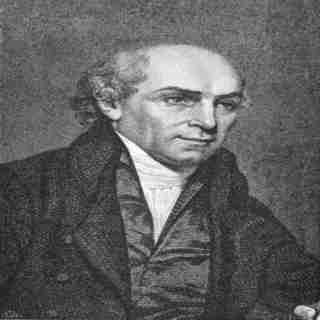 "Expect great things; attempt great things."
At a meeting of Baptist leaders in the late 1700s, a newly ordained minister stood to argue for the value of overseas missions. He was abruptly interrupted by an older minister who said, "Young man, sit down! You are an enthusiast. When God pleases to convert the heathen, he'll do it without consulting you or me."
That such an attitude is inconceivable today is largely due to the subsequent efforts of that young man, William Carey.
Plodder Carey was raised in the obscure, rural village of Paulerpury, in the middle of England. He apprenticed in a local cobbler's shop, where the nominal Anglican was converted. He enthusiastically took up the faith, and though little educated, the young convert borrowed a Greek grammar and proceeded to teach himself New Testament Greek.
When his master died, he took up shoemaking in nearby Hackleton, where he met and married Dorothy Plackett, who soon gave birth to a daughter. But the apprentice cobbler's life was hard—the child died at age 2—and his pay was insufficient. Carey's family sunk into poverty and stayed there even after he took over the business.
"I can plod," he wrote later, "I can persevere to any definite pursuit." All the while, he continued his language studies, adding Hebrew and Latin, and became a preacher with the Particular Baptists. He also continued pursuing his lifelong interest in international affairs, especially the religious life of other cultures.
Carey was impressed with early Moravian missionaries and was increasingly dismayed at his fellow Protestants' lack of missions interest. In response, he penned An Enquiry into the Obligations of Christians to Use Means for the Conversion of the Heathens. He argued that Jesus' Great Commission applied to all Christians of all times, and he castigated fellow believers of his day for ignoring it: "Multitudes sit at ease and give themselves no concern about the far greater part of their fellow sinners, who to this day, are lost in ignorance and idolatry."
Carey didn't stop there: in 1792 he organized a missionary society, and at its inaugural meeting preached a sermon with the call, "Expect great things from God; attempt great things for God!" Within a year, Carey, John Thomas (a former surgeon), and Carey's family (which now included three boys, and another child on the way) were on a ship headed for India.
Stranger in a strange land
Thomas and Carey had grossly underestimated what it would cost to live in India, and Carey's early years there were miserable. When Thomas deserted the enterprise, Carey was forced to move his family repeatedly as he sought employment that could sustain them. Illness racked the family, and loneliness and regret set it: "I am in a strange land," he wrote, "no Christian friend, a large family, and nothing to supply their wants." But he also retained hope: "Well, I have God, and his word is sure."
He learned Bengali with the help of a pundit, and in a few weeks began translating the Bible into Bengali and preaching to small gatherings.
When Carey himself contracted malaria, and then his 5-year-old Peter died of dysentery, it became too much for his wife, Dorothy, whose mental health deteriorated rapidly. She suffered delusions, accusing Carey of adultery and threatening him with a knife. She eventually had to be confined to a room and physically restrained.
"This is indeed the valley of the shadow of death to me," Carey wrote, though characteristically added, "But I rejoice that I am here notwithstanding; and God is here."
Gift of tongues
In October 1799, things finally turned. He was invited to locate in a Danish settlement in Serampore, near Calcutta. He was now under the protection of the Danes, who permitted him to preach legally (in the British-controlled areas of India, all of Carey's missionary work had been illegal).
Carey was joined by William Ward, a printer, and Joshua and Hanna Marshman, teachers. Mission finances increased considerably as Ward began securing government printing contracts, the Marshmans opened schools for children, and Carey began teaching at Fort William College in Calcutta.
In December 1800, after seven years of missionary labor, Carey baptized his first convert, Krishna Pal, and two months later, he published his first Bengali New Testament. With this and subsequent editions, Carey and his colleagues laid the foundation for the study of modern Bengali, which up to this time had been an "unsettled dialect."
Carey continued to expect great things; over the next 28 years, he and his pundits translated the entire Bible into India's major languages: Bengali, Oriya, Marathi, Hindi, Assamese, and Sanskrit and parts of 209 other languages and dialects.
He also sought social reform in India, including the abolition of infanticide, widow burning (sati), and assisted suicide. He and the Marshmans founded Serampore College in 1818, a divinity school for Indians, which today offers theological and liberal arts education for some 2,500 students.
By the time Carey died, he had spent 41 years in India without a furlough. His mission could count only some 700 converts in a nation of millions, but he had laid an impressive foundation of Bible translations, education, and social reform.
His greatest legacy was in the worldwide missionary movement of the nineteenth century that he inspired. Missionaries like Adoniram Judson, Hudson Taylor, and David Livingstone, among thousands of others, were impressed not only by Carey's example, but by his words "Expect great things; attempt great things." The history of nineteenth-century Protestant missions is in many ways an extended commentary on the phrase.
"Expect great things; attempt great things."
At a meeting of Baptist leaders in the late 1700s, a newly ordained minister stood to argue for the value of overseas missions. He was abruptly interrupted by an older minister who said, "Young man, sit down! You are an enthusiast. When God pleases to convert the heathen, he'll do it without consulting you or me."
That such an attitude is inconceivable today is largely due to the subsequent efforts of that young man, William Carey.
Plodder Carey was raised in the obscure, rural village of Paulerpury, in the middle of England. He apprenticed in a local cobbler's shop, where the nominal Anglican was converted. He enthusiastically took up the faith, and though little educated, the young convert borrowed a Greek grammar and proceeded to teach himself New Testament Greek.
When his master died, he took up shoemaking in nearby Hackleton, where he met and married Dorothy Plackett, who soon gave birth to a daughter. But the apprentice cobbler's life was hard—the child died at age 2—and his pay was insufficient. Carey's family sunk into poverty and stayed there even after he took over the business.
"I can plod," he wrote later, "I can persevere to any definite pursuit." All the while, he continued his language studies, adding Hebrew and Latin, and became a preacher with the Particular Baptists. He also continued pursuing his lifelong interest in international affairs, especially the religious life of other cultures.
Carey was impressed with early Moravian missionaries and was increasingly dismayed at his fellow Protestants' lack of missions interest. In response, he penned An Enquiry into the Obligations of Christians to Use Means for the Conversion of the Heathens. He argued that Jesus' Great Commission applied to all Christians of all times, and he castigated fellow believers of his day for ignoring it: "Multitudes sit at ease and give themselves no concern about the far greater part of their fellow sinners, who to this day, are lost in ignorance and idolatry."
Carey didn't stop there: in 1792 he organized a missionary society, and at its inaugural meeting preached a sermon with the call, "Expect great things from God; attempt great things for God!" Within a year, Carey, John Thomas (a former surgeon), and Carey's family (which now included three boys, and another child on the way) were on a ship headed for India.
Stranger in a strange land
Thomas and Carey had grossly underestimated what it would cost to live in India, and Carey's early years there were miserable. When Thomas deserted the enterprise, Carey was forced to move his family repeatedly as he sought employment that could sustain them. Illness racked the family, and loneliness and regret set it: "I am in a strange land," he wrote, "no Christian friend, a large family, and nothing to supply their wants." But he also retained hope: "Well, I have God, and his word is sure."
He learned Bengali with the help of a pundit, and in a few weeks began translating the Bible into Bengali and preaching to small gatherings.
When Carey himself contracted malaria, and then his 5-year-old Peter died of dysentery, it became too much for his wife, Dorothy, whose mental health deteriorated rapidly. She suffered delusions, accusing Carey of adultery and threatening him with a knife. She eventually had to be confined to a room and physically restrained.
"This is indeed the valley of the shadow of death to me," Carey wrote, though characteristically added, "But I rejoice that I am here notwithstanding; and God is here."
Gift of tongues
In October 1799, things finally turned. He was invited to locate in a Danish settlement in Serampore, near Calcutta. He was now under the protection of the Danes, who permitted him to preach legally (in the British-controlled areas of India, all of Carey's missionary work had been illegal).
Carey was joined by William Ward, a printer, and Joshua and Hanna Marshman, teachers. Mission finances increased considerably as Ward began securing government printing contracts, the Marshmans opened schools for children, and Carey began teaching at Fort William College in Calcutta.
In December 1800, after seven years of missionary labor, Carey baptized his first convert, Krishna Pal, and two months later, he published his first Bengali New Testament. With this and subsequent editions, Carey and his colleagues laid the foundation for the study of modern Bengali, which up to this time had been an "unsettled dialect."
Carey continued to expect great things; over the next 28 years, he and his pundits translated the entire Bible into India's major languages: Bengali, Oriya, Marathi, Hindi, Assamese, and Sanskrit and parts of 209 other languages and dialects.
He also sought social reform in India, including the abolition of infanticide, widow burning (sati), and assisted suicide. He and the Marshmans founded Serampore College in 1818, a divinity school for Indians, which today offers theological and liberal arts education for some 2,500 students.
By the time Carey died, he had spent 41 years in India without a furlough. His mission could count only some 700 converts in a nation of millions, but he had laid an impressive foundation of Bible translations, education, and social reform.
His greatest legacy was in the worldwide missionary movement of the nineteenth century that he inspired. Missionaries like Adoniram Judson, Hudson Taylor, and David Livingstone, among thousands of others, were impressed not only by Carey's example, but by his words "Expect great things; attempt great things." The history of nineteenth-century Protestant missions is in many ways an extended commentary on the phrase.
Where Does God Want Me to Work
How do I find God’s will for my life? It’s always a pressing question on the college campus, and especially in our day of unprecedented options. Like never before, in an anomaly in world history, students loosened from their community of origin, “going off” to college, now make decisions about their future with minimal influence or limitation from their adolescent context. “God wants to take you by the heart, not twist you by the arm.” Before asking, “Where is God calling me?” we would do well to first ponder, “Where has God already called me?” — not that your current callings won’t change or take a fresh direction in this formative season of life, but for a Christian, our objective calling from God always precedes our consciousness of it. If it is from him, he initiates. He makes the first move. This is true of our calling to salvation, and also true of any “vocational” assignment he gives us in the world. Consider Three Factors For the college student or young adult who may feel like a free agent — considering options and determining for yourself (and often by yourself) which direction to take — it’s important to acknowledge you are already moving in a direction, not standing still. You already have divine callings — as a Christian, as a church member, as a son or daughter, as a brother or sister, as a friend. And from within the matrix of those ongoing, already-active callings, you now seek God’s guidance for where to go from here. Given, then, that you are already embedded in a context, with concrete callings, how should you go about discerning God’s direction after graduation? Or how do you find God’s will for your work-life? Christians will want to keep three important factors in view. 1. What Kind of Work Do I Desire? First, we recognize, contrary to the suspicions that may linger in our unbelief, God is the happy God (1 Timothy 1:11), not a cosmic killjoy. In his Son, by his Spirit, he wants to shape and form our hearts to desire the work to which he’s calling us and, in some good sense, in this fallen world, actually enjoy the work. Sanctified, Spirit-given desire is not a liability, but an asset, to finding God’s will. The New Testament is clear that God means for pastors to aspire to the work of the pastoral ministry. And we can assume, as a starting point, that God wants the same for his children working outside the church. “Desire is a vital factor to consider, but in and of itself this doesn’t amount to a calling.” In 1 Peter 5:2, we find this remarkably good news about how God’s heart for our good and enduring joy stands behind his leading us vocationally. The text is about the pastoral calling, but we can see in it the God who calls us into any carefully appointed station. God wants pastors who labor “not under compulsion, but willingly, as God would have you.” How remarkable is it that working from aspiration and delight, not obligation and duty, would be “as God would have you.” This is the kind of God we have — the desiring (not dutiful) God, who wants workers who are desiring (not dutiful) workers. He wants his people, like their pastors, to do their work “with joy and not with groaning, for that would be of no advantage” to those whom they serve (Hebrews 13:17). So also, when the apostle Paul addresses the qualifications of pastors, he first mentions aspiration. “The saying is trustworthy: If anyone aspires to the office of overseer, he desires a noble task” (1 Timothy 3:1). God wants workers who want to do the work, not workers who do it simply out of a sense of duty. Behold your God, whose pattern is to take you by the heart, not twist you by the arm. Desire, though, does not make a calling on its own. It’s a common mistake to presume that seeming God-given desire is, on its own, a “calling.” Aspiration is a vital factor to consider, but in and of itself this doesn’t amount to a calling. Two additional factors remain in the affirmation of others and the God-given opportunity. 2. Do Others Affirm This Direction? The second question to ask, then, after the subjective one of desire, is the more objective one of ability. Have I seen evidence, small as it may be at first, that I can meet the needs of others by working in this field? And, even more important than my own self-assessment, do others who love me, and seem to be honest with me, confirm this direction? Do they think I’d be a good fit for the kind of work I’m desiring? Here the subjective desires of our hearts meet the concrete, real-world, objective needs of others. Our vocational labors in this world, whether in Christian ministry or not, are not for existential release or our own private satisfaction, but for meeting the actual needs of others. “You may feel called, and others may affirm you, but you are not yet fully called until God opens a door.” Our desires have their part to play, but our true “calling” is not mainly shaped by our internal heart. It is shaped by the world outside of us. We so often hear “follow your heart” and “don’t settle for anything less than your dreams” in society, and even in the church. What’s most important, contrary to what the prevailing cultural word may be, is not bringing the desires of your heart to bear on the world, but letting the real-life needs of others shape your heart. In seeking God’s will for us vocationally, we look for where our developing aspirations match up with our developing abilities to meet the actual needs of others. Over time, we seek to cultivate a kind of dialogue (with ourselves and with others) between what we desire to do and what we find ourselves good at doing for the benefit of others. Delight in certain kinds of labor typically grows as others affirm our efforts, and we see them receiving genuine help. 3. What Doors Has God Opened? Finally, and perhaps the most overlooked and forgotten factor in the discussions on calling, is the actual God-given, real-world open door. You may feel called, and others may affirm your abilities, but you are not yet fully called until God opens a door. Here we glory in the truth of God’s providence, not just hypothetically but tangibly. The real world in which we live, and various options as they are presented to us, are not random or coincidental. God rules over all things — from him, through him, to him (Romans 11:36). And so as real-life options (job offers) are presented that fulfill an aspiration in us, and are confirmed by the company of others, we can take these as confirmation of God’s “calling.” Not that such a calling will never change. But for now, when your own personal sense of God’s leading, and good perspective and guidance from others, align with a real-world opportunity in the form of an actual job offer in front of you, you have a calling from God. “It is finally God, not man who provides the job offer.” And we can say this calling is from him because God himself, in his hand of providence, has done the decisive work. He started the process by planting in us righteous desires to help others; and he affirmed the direction through our lived-out abilities and the affirmation of friends. Now, he confirms that sense of calling by swinging open the right door at the right time. It is finally God, not man who provides the job offer. God not only makes overseers (Acts 20:28) and gives pastors (Ephesians 4:11–12) and sends out laborers into his global harvest (Matthew 9:37–38) and sends preachers (Romans 10:15) and sets wise managers over his household (Luke 12:42), but he makes dentists and plumbers. In his common kindness, he gives school teachers and entrepreneurs and social workers for the just and unjust. He sends executives and service workers. He gives you to the world in the service of others. Article by David Mathis