
-480.webp)

God's Generals (Maria Woodworth) Order Printed Copy
- Author: Roberts Liardon
- Size: 397KB | 32 pages
- |
Others like god's generals (maria woodworth) Features >>
God's Generals: The Martyrs
God's Generals - The Revivalists
-160.webp)
God's Generals (William Branham)
God's Generals: The Missionaries

God's Generals: A. A. Allen
-160.webp)
God's Generals (Aimee Semple Mcpherson)
God's Generals: The Healing Evangelists

God's Generals: Jack Coe

God's Generals: The Roaring Reformers

God's Generals: Evan Roberts
About the Book
"God's Generals" by Roberts Liardon is a biographical look at the life and ministry of Maria Woodworth-Etter, a pioneering female evangelist known for her powerful preaching and healing ministry in the late 19th and early 20th centuries. The book details Woodworth-Etter's struggles, triumphs, and impact on the Pentecostal movement, highlighting her dedication to spreading the gospel and leading countless souls to faith in Christ.
Jack Coe
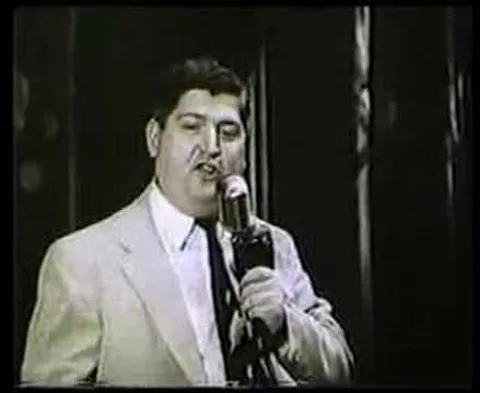 Jack G. Coe was born on March 11, 1918 in Oklahoma City, Oklahoma. His father, George, was a gambler and an alcoholic. His parents, although having been Christians, did not attend church. His grandparents, on his father's side were Christians but they were not able to influence their son's behavior. The couple had seven children in all. When Jack was five his father gambled away all their furniture and their house, leaving his mother Blanche destitute with seven children. They were devastated. His mother tried to make a new life by moving to Pennsylvania, but it was too hard. When Coe's father came to her house promising to change she agreed to reunite. The change did not last, however, and George went back to gambling.
Blanche left George for good, but only took her daughter with her this time. The boys were left with their father, which meant they were essentially left on their own. Often they did not have food to eat. Blanche did return to claim them, but could not care for them on her own. When Jack was nine he and his twelve year old brother was turned over to an orphanage. His older brother ran away, but was hit by a car and died. Jack struggled with rejection and abandonment. At seventeen he left the orphanage and began to drink, becoming an alcoholic like his father. He drank so much he had ulcers and his heart became enlarged. The doctor told him that if he didn't quit drinking he was going to die. Not knowing where else to go he moved to California to be near his mother. When he thought he was near death he promised God he would turn his life around and he was healed for a while. The family moved to Texas and he was drinking again. This time he heard God's voice "This is your last chance". The following Sunday he went to a Nazarene church and accepted Christ. He was radically changed. He went to church meetings almost every night, prayed, and read the Word constantly. After a year and a half he went to a Pentecostal meeting and was filled with the Holy Spirit and had a vision of Jesus.
Jack felt called to the ministry and went to and Assembly of God school called Southwestern Bible Institute, led by P.C. Nelson. He left in 1941 to join the army after the bombing of Pearl Harbor. He was so committed to God's purposes that he went to church every night. His sergeant sent him for psychiatric evaluation This happened several times while he was in the army. One day he was reading a book by P.C. Nelson on Healing when he fell asleep. He had a dream where he saw his sister close to death in a hospital but he saw a bright light come into her room and she was healed. He left immediately to see her and everything was as he'd seen it in a dream. She was healed and he was changed forever.
In 1944 Coe became ill with malaria. He was sent home because the doctors felt they could not help him. He sought the Lord who told him "preach the gospel". God healed him. He went out to preach and three people were saved. That year he was ordained as an Assembly of God minister. His healing experiences caused him to seek God about the gifts of healing. In 1945 he felt God called him to have a healing meeting. He went to Texas and announced in a church that God was going to heal the sick, cause the blind to see, and the deaf to hear. Those were bold words indeed! A woman received her sight that night. His ministry was launched. He began traveling over the country.
In 1946 God spoke to Coe and his wife Juanita to sell their house and start an itinerant ministry. They purchased a beat up truck and a ministry tent and began to live on the road. In 1948 God spoke to Coe to go to Redding, California. A woman, whose leg was about to be amputated, was healed and the news spread throughout the city. God blessed the couple and for the first time had enough money to be ahead on their finances. Healings and miracles regularly occurred in his meetings.
There were some very controversial things about Jack Coe. He believed that he should have a larger tent than other evangelists and went and measured Oral Roberts tent, then he ordered one larger. His style was dramatic and he often hit, slapped, or jerked people. He also would pull people out of wheelchairs. His speaking style was aggressive as he challenged people to believe God. He suggested that people who stood against him would be "struck dead by God". He was anti-medicine and told people not to go to doctors. He also encouraged interracial meetings.
In 1950 Coe began publishing the Herald of Healing magazine. Within six years it was being sent to over 350,000 people. God began to speak to Coe about opening an orphanage. He collected money for the project at every meeting. He sold his own home and began to build the children's home. His own family moved into the partially finished building so they would have a place to live. Coe eventually bought 200 acres outside of Dallas and built four dormitories and established a home farm. They could support 200 abandoned children.
In 1952 Coe began a radio ministry, which eventually was carried on over 100 radio stations. He also began having trouble with the Assembly of God organization. Although initially responsive to suggestions, he felt their goal was to limit the ministry. He suggested that the Assembly of God leadership had lost the belief in the miraculous and felt that they should be replaced. Needless to say this aggravated the situation. In 1953 Coe was expelled from the Assembly of God church. They felt that he was independent, extreme, prone to exaggeration, and they weren't sure about his ministry style. Coe felt that it was an attack against his success. He told people that "one of the officials made the remark to me that he would not rest until every man that was preaching divine healing in a deliverance ministry, separated from the General Council of the Assembly of God."
In 1953 Coe started his own church in Dallas. It was called the Dallas Revival Center. God spoke to him that it was important for those not getting healed to receive teaching about healing from the Word. In 1954 Coe opened a faith home, where people could stay for extended periods of time to receive prayer for healing. Teaching and prayer were given daily. 1956 was a pivotal year. While Coe was preaching in Miami he was arrested for practicing medicine without a license. This brought national attention to him and the ministry, both positive and negative. He was acquitted of practicing medicine without a license when the trial went to court.
At the end of 1956 Coe became ill. He had pushed himself night and day for years. He had poor eating habits and was overweight. He thought it was exhaustion but it was bulbar polio, a form of polio that affects the nerves. He became paralyzed, developed pneumonia, and died December 16, 1956.
Jack G. Coe was born on March 11, 1918 in Oklahoma City, Oklahoma. His father, George, was a gambler and an alcoholic. His parents, although having been Christians, did not attend church. His grandparents, on his father's side were Christians but they were not able to influence their son's behavior. The couple had seven children in all. When Jack was five his father gambled away all their furniture and their house, leaving his mother Blanche destitute with seven children. They were devastated. His mother tried to make a new life by moving to Pennsylvania, but it was too hard. When Coe's father came to her house promising to change she agreed to reunite. The change did not last, however, and George went back to gambling.
Blanche left George for good, but only took her daughter with her this time. The boys were left with their father, which meant they were essentially left on their own. Often they did not have food to eat. Blanche did return to claim them, but could not care for them on her own. When Jack was nine he and his twelve year old brother was turned over to an orphanage. His older brother ran away, but was hit by a car and died. Jack struggled with rejection and abandonment. At seventeen he left the orphanage and began to drink, becoming an alcoholic like his father. He drank so much he had ulcers and his heart became enlarged. The doctor told him that if he didn't quit drinking he was going to die. Not knowing where else to go he moved to California to be near his mother. When he thought he was near death he promised God he would turn his life around and he was healed for a while. The family moved to Texas and he was drinking again. This time he heard God's voice "This is your last chance". The following Sunday he went to a Nazarene church and accepted Christ. He was radically changed. He went to church meetings almost every night, prayed, and read the Word constantly. After a year and a half he went to a Pentecostal meeting and was filled with the Holy Spirit and had a vision of Jesus.
Jack felt called to the ministry and went to and Assembly of God school called Southwestern Bible Institute, led by P.C. Nelson. He left in 1941 to join the army after the bombing of Pearl Harbor. He was so committed to God's purposes that he went to church every night. His sergeant sent him for psychiatric evaluation This happened several times while he was in the army. One day he was reading a book by P.C. Nelson on Healing when he fell asleep. He had a dream where he saw his sister close to death in a hospital but he saw a bright light come into her room and she was healed. He left immediately to see her and everything was as he'd seen it in a dream. She was healed and he was changed forever.
In 1944 Coe became ill with malaria. He was sent home because the doctors felt they could not help him. He sought the Lord who told him "preach the gospel". God healed him. He went out to preach and three people were saved. That year he was ordained as an Assembly of God minister. His healing experiences caused him to seek God about the gifts of healing. In 1945 he felt God called him to have a healing meeting. He went to Texas and announced in a church that God was going to heal the sick, cause the blind to see, and the deaf to hear. Those were bold words indeed! A woman received her sight that night. His ministry was launched. He began traveling over the country.
In 1946 God spoke to Coe and his wife Juanita to sell their house and start an itinerant ministry. They purchased a beat up truck and a ministry tent and began to live on the road. In 1948 God spoke to Coe to go to Redding, California. A woman, whose leg was about to be amputated, was healed and the news spread throughout the city. God blessed the couple and for the first time had enough money to be ahead on their finances. Healings and miracles regularly occurred in his meetings.
There were some very controversial things about Jack Coe. He believed that he should have a larger tent than other evangelists and went and measured Oral Roberts tent, then he ordered one larger. His style was dramatic and he often hit, slapped, or jerked people. He also would pull people out of wheelchairs. His speaking style was aggressive as he challenged people to believe God. He suggested that people who stood against him would be "struck dead by God". He was anti-medicine and told people not to go to doctors. He also encouraged interracial meetings.
In 1950 Coe began publishing the Herald of Healing magazine. Within six years it was being sent to over 350,000 people. God began to speak to Coe about opening an orphanage. He collected money for the project at every meeting. He sold his own home and began to build the children's home. His own family moved into the partially finished building so they would have a place to live. Coe eventually bought 200 acres outside of Dallas and built four dormitories and established a home farm. They could support 200 abandoned children.
In 1952 Coe began a radio ministry, which eventually was carried on over 100 radio stations. He also began having trouble with the Assembly of God organization. Although initially responsive to suggestions, he felt their goal was to limit the ministry. He suggested that the Assembly of God leadership had lost the belief in the miraculous and felt that they should be replaced. Needless to say this aggravated the situation. In 1953 Coe was expelled from the Assembly of God church. They felt that he was independent, extreme, prone to exaggeration, and they weren't sure about his ministry style. Coe felt that it was an attack against his success. He told people that "one of the officials made the remark to me that he would not rest until every man that was preaching divine healing in a deliverance ministry, separated from the General Council of the Assembly of God."
In 1953 Coe started his own church in Dallas. It was called the Dallas Revival Center. God spoke to him that it was important for those not getting healed to receive teaching about healing from the Word. In 1954 Coe opened a faith home, where people could stay for extended periods of time to receive prayer for healing. Teaching and prayer were given daily. 1956 was a pivotal year. While Coe was preaching in Miami he was arrested for practicing medicine without a license. This brought national attention to him and the ministry, both positive and negative. He was acquitted of practicing medicine without a license when the trial went to court.
At the end of 1956 Coe became ill. He had pushed himself night and day for years. He had poor eating habits and was overweight. He thought it was exhaustion but it was bulbar polio, a form of polio that affects the nerves. He became paralyzed, developed pneumonia, and died December 16, 1956.
lean into the hill - a runner’s lesson for the christian life
Sometimes I wonder if the apostle Paul might have been a runner. Running is a curiously common theme in his sermons and letters. He refers to his own life and ministry as running (1 Corinthians 9:26; Galatians 2:2; Philippians 2:16) and describes the Galatians’ (past) faith in similar terms, “You were running well” (Galatians 5:7). He also asks the Thessalonians to pray for him, “that the word of the Lord may speed [run] ahead and be honored” (2 Thessalonians 3:1). He speaks of human effort and exertion (in contrast to divine mercy in election) as running (Romans 9:16 NASB). He preached in Antioch about John the Baptist “finishing his course” (Acts 13:25), expressed to the Ephesian elders his desire that “only I may finish my course” (Acts 20:24), and wrote in his final letter, “I have finished the race” (2 Timothy 4:7). While walking serves as his more common image of the Christian life (nearly thirty times in his letters), Paul’s theology had a place for speaking in more intense, even aggressive terms as well — of a kind of athletic capacity in the Christian life, as he wrote to the Corinthians, Do you not know that in a race all the runners run, but only one receives the prize? So run that you may obtain it. (1 Corinthians 9:24) Whether Paul was a runner or not, many Christians have testified (myself included) to finding the regular experience of pushing the body beyond comfort to be of value beyond just physical health. Paul, after all, asserts that “bodily training is of some value,” even as he emphasizes that “godliness is of value in every way” (1 Timothy 4:8). And bodily training is all the more valuable when it serves godliness — when lessons learned in pushing the body translate directly into the instincts of a healthy soul. Lean into the Hill We each face our own hills each day. It might begin with getting out of bed. It might be initiating a conversation we expect to be difficult. Or starting into work or schoolwork or yard work. We all encounter hills; some more, some less. And when we do, it takes more effort to keep putting one foot in front of the other. Again and again, we face challenges big and small. And when we do, what is our default? Will we keep stepping? Slow down? Stop all together? Or lean in? Fellow runners might know the feeling. You’re tired but continuing to strain toward the finish. You come upon a hill. Your natural response will be to slow down and slog through it. Stopping to walk can feel tempting. But another mentality is to lean in. Push yourself to get over it. Pummel your body for a purpose, as Paul did (1 Corinthians 9:27). Expend more energy first. Get over the hill sooner, then enjoy the down slope. Once a runner has learned what rewards lie on the other side of a hill, “leaning in” can become the new default, and become an instinct to develop in the rest of life — learning to press through resistance, rather than backing off as a reflex. Develop the Instinct It is human and modern to take the path of least resistance and avoid the hills in life we know we should be climbing each day. This is one reason we can be so easily distracted. It’s not just our latest devices and the savvy attention merchants tricking us into distraction. Deep down we want to be distracted. Humans have craved and found distractions for centuries; the digital avenues for it have simply made distraction even easier. We typically want to avoid what we know we really should be doing because the hills that matter most are the hardest ones to climb. “The hills that matter most are the hardest ones to climb.” Here’s where “bodily training” and exercise helps not only the body but the will. Physical exertion can help us develop the mentality to lean into tasks we resist instead of avoiding them and procrastinating — to “take resistance as a spur to action instead of avoidance” (Mark Forster, Get Everything Done , 152). Instead of automatically slowing down, or turning around, when we come to a hill, we can learn to lean in . Learn to see the right hills as opportunities for fruitfulness, for what really matters — for genuine “productivity” on God’s terms. Today we are surrounded by a wealth of technologies that condition our souls and bodies to expect comfort, and encourage our minds to go to work calculating easiest means rather than best outcomes . Without intentionality, we will be shaped by our flesh’s path of least resistance rather than the Spirit’s call to bear fruit. If we don’t take deliberate steps to rise above the increasingly low bars of discomfort in our society, we will be pulled down into the pit of lethargy around us. We will become (or remain) modern, soft, increasingly lazy, sedentary, and unproductive. But in Christ, we have cause to move in another direction — to “not be conformed to this world, but be transformed by the renewal of [our minds]” (Romans 12:2), and bodies. To present them as living sacrifices (Romans 12:1). When in doubt, we don’t want to default to what’s easiest. We want to pursue what’s most important, knowing that such things are typically the most mentally, emotionally, and physically demanding. Look Through the Hill One way to learn to “lean into the hill” is to learn to look to the reward. For the runner, it is “the eyes of faith” that fuel us to press harder, when part of us would rather slow down, because we’re looking beyond the hill in front of us. Just a few more minutes, and the hill will be behind me, and I will be happier for having leaned in rather than having given in. The more we learn to look to the reward on the other side of the hill, the more — strange as it may seem at first — we learn to taste joy even on the upside. Even now. The eyes of faith begin to realize , or taste , in seed form, in the moment of hardship, the joy that is to come. Faith is a tasting now, in the present and its discomforts, of the full reward to come. Whether Paul made a habit of running or not, he had learned how to lean in. When he met conflict in Philippi, he leaned in, and bade the church do so with him. “It has been granted to you that for the sake of Christ you should not only believe in him but also suffer for his sake, engaged in the same conflict that you saw I had and now hear that I still have” (Philippians 1:29–30). Resistance to the gospel challenged the apostle. But he didn’t back down. He engaged. He leaned in. He continued to run, and invited others to join him. So too in Thessalonica. Conflict came, and Paul leaned in. “Though we had already suffered and been shamefully treated at Philippi, as you know, we had boldness in our God to declare to you the gospel of God in the midst of much conflict” (1 Thessalonians 2:2). And yet, example though he is, Paul is not the supreme leaner, but his Lord. Jesus Leaned In Jesus “set his face to go to Jerusalem” (Luke 9:51). Why? “For it cannot be that a prophet should perish away from Jerusalem” (Luke 13:33). This was emphatically not the easiest path but the hardest. The greatest of hills. He would perish , he said, and in the worst possible way: on a cross. “Even as shame was set immediately before Jesus’s face, he looked to the joy on the far side, and leaned into the Hill.” When Hebrews exhorts us to “run with endurance the race that is set before us” (Hebrews 12:1), he also shows us how: “ looking to Jesus , the founder and perfecter of our faith,” who leaned in, himself looking to the reward — “who for the joy that was set before him endured the cross, despising the shame, and is seated at the right hand of the throne of God” (Hebrews 12:2). The resistance mentioned is not the one we might expect: shame. We cringe at even the thought of the physical anguish of the cross. And we should; it was literally excruciating. And yet what Hebrews highlights here is not the physical pain, horrible as it was, but the shame. It was a public, prolonged, naked execution at a crossroads. The unspeakable bodily pain of the cross would have been equaled, if not surpassed, by the shame. Yet such pain and shame didn’t send Jesus retreating. Rather, he saw the reward on the other side of the shame. Even as such barriers were set immediately before his face, he looked to the joy on the far side, and leaned into the Hill.
-480.webp)
-480.webp)