
-480.webp)

Others like god's generals (evan roberts) Features >>
God's Generals: Evan Roberts
-160.webp)
God's Generals (Jack Coe)

God’s Generals: John Alexander Dowie
God's Generals: A. A. Allen
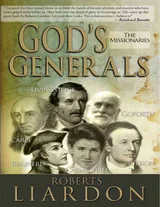
God's Generals: The Missionaries
God's Generals: Jack Coe
God's Generals: The Martyrs
-160.webp)
God's Generals (Smith Wigglesworth)
God's Generals: William Branham
-160.webp)
God's Generals (William J. Seymour)
About the Book
"God's Generals: Evan Roberts" by Roberts Liardon tells the story of the life and ministry of Evan Roberts, a Welsh revivalist known for his role in the Welsh Revival of 1904-1905. The book highlights Roberts' fervent faith, dedication to prayer, and impactful preaching that led to a powerful spiritual awakening in Wales. Roberts' life serves as an inspiring example of what can happen when individuals wholeheartedly pursue God and surrender to His will.
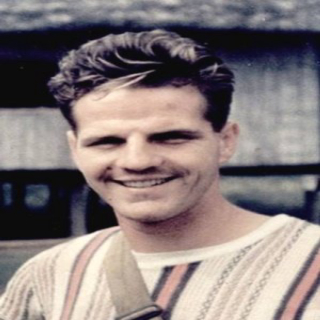
Jim Elliot
 EARLY LIFE
Jim Elliot began his life in Portland, Oregon in the USA. His mother, Clara, was a chiropractor and his father, Fred, was a minister. They married and settled in Seattle, WA where they welcomed their first son, Robert in 1921.
Later they relocated the family to Portland where Herbert arrived in 1924, Jim in 1927, and Jane in 1932.
Jim knew Christ from an early age and was never afraid to speak about Him to his friends. At age six Jim told his mother, “Now, mama, the Lord Jesus can come whenever He wants. He could take our whole family because I’m saved now, and Jane is too young to know Him yet.”
THE YEARS THAT CEMENTED HIS DESIRE TO SERVE THE LORD IN MISSIONS
Jim entered Benson Polytechnic High School in 1941. He carried a small Bible with him and, an excellent speaker; he was often found speaking out for Christ. He and his friends were not afraid to step out and find adventure. One thing Jim didn’t have time for in those early years were girls. He was once quoted as telling a friend, “Domesticated males aren’t much use for adventure.”
In 1945 Jim traveled to Wheaton, IL to attend Wheaton College. His main goal while there was to devote himself to God. He recognized the importance of discipline in pursuing this goal. He would start each morning with prayer and Bible study. In his journal he wrote, “None of it gets to be ‘old stuff’ for it is Christ in print, the Living Word. We wouldn’t think of rising in the morning without a face-wash, but we often neglect the purgative cleansing of the Word of the Lord. It wakes us up to our responsibility.”
Jim’s desire to serve God by taking His gospel to unreached people of the world began to grow while at Wheaton. The summer of 1947 found him in Mexico and that time influenced his decision to minister in Central America after he finished college.
Jim met Elisabeth Howard during his third year at Wheaton. He did ask her for a date which she accepted and then later cancelled. They spent the next years as friends and after she finished at Wheaton they continued to correspond. As they came to know each other there was an attraction, but Jim felt he needed to unencumbered by worldly concerns in order to devote himself completely to God.
In addition to his hope to one day travel to a foreign country to share Christ with the unchurched of the world, he also felt the need to share with people in the United States. On Sundays while at Wheaton he would often ride the train into Chicago and talk to people in the train station about Christ. He often felt ineffective in his work as the times of knowingly leading people to Christ were few. He once wrote, “No fruit yet. Why is that I’m so unproductive? I cannot recall leading more than one or two into the kingdom. Surely this is not the manifestation of the power of the Resurrection. I feel as Rachel, ‘Give me children, or else I die.’”
After college with no clear answer as to working for the Lord in a foreign country, Jim returned home to Portland. He continued his disciplined Bible study as well as correspondence with Elisabeth Howard whom he called Betty.
They both felt a strong attraction to each other during this time, but also felt that the Lord may have been calling them to be unmarried as they served Him.
In June of 1950 he travelled to Oklahoma to attend the Summer Institute of Linguistics. There he learned how to study unwritten languages. He was able to work with a missionary to the Quichuas of the Ecuadorian jungle. Because of these lessons he began to pray for guidance about going to Ecuador and later felt compelled to answer the call there.
Elisabeth Elliot wrote in Shadow of the Almighty:
“The breadth of Jim’s vision is suggested in this entry from the journal:
August 9. “God just now gave me faith to ask for another young man to go, perhaps not this fall, but soon, to join the ranks in the lowlands of eastern Ecuador. There we must learn: 1) Spanish and Quichua, 2) each other, 3) the jungle and independence, and 4) God and God’s way of approach to the highland Quichua. From thence, by His great hand, we must move to the Ecuadorian highlands with several young Indians each, and begin work among the 800,000 highlanders. If God tarries, the natives must be taught to spread southward with the message of the reigning Christ, establishing New Testament groups as they go. Thence the Word must go south into Peru and Bolivia. The Quichuas must be reached for God! Enough for policy. Now for prayer and practice.
THE ECUADOR YEARS
In February 1952 Jim finally left America to travel to Ecuador with Pete Fleming. In May Elisabeth moved to Quito and though they didn’t feel the need to get engaged she and Jim did begin a courtship.
In August Jim left Elisabeth in Quito and travelled with Pete to Shell Mera. At the Mission Aviation Fellowship headquarters in Shell Mera, Jim and Pete learned more about the Acua Indians, a people group that was largely unreached and very savage.
Leaving Shell Mera, Pete and Jim moved on to Shandia where Jim was captivated by the Quichua. He felt very strongly that this was exactly where God intended for him to work to spread the Gospel.
While Jim was in Shandia, Elisabeth was working to learn more about the Colorado Indians near Santa Domingo. In January of 1953 he went to Quito and she met him there and they were finally engaged. They married in October of that year and their only child Valerie was born in 1955.
They settled in Shandia and continued their work with the Quichua Indians. It was Jim’s desire to be able to reach the Waodoni tribe that lived deep in the jungles and had little contact with the outside world. A Waodoni woman who had left the tribe was taken in by the missionaries and helped them to learn the language.
Jim, along with Pete, Ed McCully, Roger Youderian, and their pilot Nate Saint began to search by plane in hopes of finding a way to contact the Waodoni. The found a sandbar in the middle of the Curaray River that worked as a landing strip for the plane and it was there that they first made contact with the Waodoni. They were elated to be able to finally be able to attempt to share the love of Christ with this people group.
After their first meeting, one of the tribe, a man they called George lied to the tribe about the men’s intentions. This lie led the Waodoni warriors to plan an attack for when the missionaries returned. The men did return on January 8, 1956 and were surprised by ten members of the tribe who massacred the missionaries.
Jim’s short life that was filled with the desire to share God’s love can be summed up by a quote that is attributed to him. “He is no fool who gives that which he cannot keep, to gain what he cannot lose.”
EARLY LIFE
Jim Elliot began his life in Portland, Oregon in the USA. His mother, Clara, was a chiropractor and his father, Fred, was a minister. They married and settled in Seattle, WA where they welcomed their first son, Robert in 1921.
Later they relocated the family to Portland where Herbert arrived in 1924, Jim in 1927, and Jane in 1932.
Jim knew Christ from an early age and was never afraid to speak about Him to his friends. At age six Jim told his mother, “Now, mama, the Lord Jesus can come whenever He wants. He could take our whole family because I’m saved now, and Jane is too young to know Him yet.”
THE YEARS THAT CEMENTED HIS DESIRE TO SERVE THE LORD IN MISSIONS
Jim entered Benson Polytechnic High School in 1941. He carried a small Bible with him and, an excellent speaker; he was often found speaking out for Christ. He and his friends were not afraid to step out and find adventure. One thing Jim didn’t have time for in those early years were girls. He was once quoted as telling a friend, “Domesticated males aren’t much use for adventure.”
In 1945 Jim traveled to Wheaton, IL to attend Wheaton College. His main goal while there was to devote himself to God. He recognized the importance of discipline in pursuing this goal. He would start each morning with prayer and Bible study. In his journal he wrote, “None of it gets to be ‘old stuff’ for it is Christ in print, the Living Word. We wouldn’t think of rising in the morning without a face-wash, but we often neglect the purgative cleansing of the Word of the Lord. It wakes us up to our responsibility.”
Jim’s desire to serve God by taking His gospel to unreached people of the world began to grow while at Wheaton. The summer of 1947 found him in Mexico and that time influenced his decision to minister in Central America after he finished college.
Jim met Elisabeth Howard during his third year at Wheaton. He did ask her for a date which she accepted and then later cancelled. They spent the next years as friends and after she finished at Wheaton they continued to correspond. As they came to know each other there was an attraction, but Jim felt he needed to unencumbered by worldly concerns in order to devote himself completely to God.
In addition to his hope to one day travel to a foreign country to share Christ with the unchurched of the world, he also felt the need to share with people in the United States. On Sundays while at Wheaton he would often ride the train into Chicago and talk to people in the train station about Christ. He often felt ineffective in his work as the times of knowingly leading people to Christ were few. He once wrote, “No fruit yet. Why is that I’m so unproductive? I cannot recall leading more than one or two into the kingdom. Surely this is not the manifestation of the power of the Resurrection. I feel as Rachel, ‘Give me children, or else I die.’”
After college with no clear answer as to working for the Lord in a foreign country, Jim returned home to Portland. He continued his disciplined Bible study as well as correspondence with Elisabeth Howard whom he called Betty.
They both felt a strong attraction to each other during this time, but also felt that the Lord may have been calling them to be unmarried as they served Him.
In June of 1950 he travelled to Oklahoma to attend the Summer Institute of Linguistics. There he learned how to study unwritten languages. He was able to work with a missionary to the Quichuas of the Ecuadorian jungle. Because of these lessons he began to pray for guidance about going to Ecuador and later felt compelled to answer the call there.
Elisabeth Elliot wrote in Shadow of the Almighty:
“The breadth of Jim’s vision is suggested in this entry from the journal:
August 9. “God just now gave me faith to ask for another young man to go, perhaps not this fall, but soon, to join the ranks in the lowlands of eastern Ecuador. There we must learn: 1) Spanish and Quichua, 2) each other, 3) the jungle and independence, and 4) God and God’s way of approach to the highland Quichua. From thence, by His great hand, we must move to the Ecuadorian highlands with several young Indians each, and begin work among the 800,000 highlanders. If God tarries, the natives must be taught to spread southward with the message of the reigning Christ, establishing New Testament groups as they go. Thence the Word must go south into Peru and Bolivia. The Quichuas must be reached for God! Enough for policy. Now for prayer and practice.
THE ECUADOR YEARS
In February 1952 Jim finally left America to travel to Ecuador with Pete Fleming. In May Elisabeth moved to Quito and though they didn’t feel the need to get engaged she and Jim did begin a courtship.
In August Jim left Elisabeth in Quito and travelled with Pete to Shell Mera. At the Mission Aviation Fellowship headquarters in Shell Mera, Jim and Pete learned more about the Acua Indians, a people group that was largely unreached and very savage.
Leaving Shell Mera, Pete and Jim moved on to Shandia where Jim was captivated by the Quichua. He felt very strongly that this was exactly where God intended for him to work to spread the Gospel.
While Jim was in Shandia, Elisabeth was working to learn more about the Colorado Indians near Santa Domingo. In January of 1953 he went to Quito and she met him there and they were finally engaged. They married in October of that year and their only child Valerie was born in 1955.
They settled in Shandia and continued their work with the Quichua Indians. It was Jim’s desire to be able to reach the Waodoni tribe that lived deep in the jungles and had little contact with the outside world. A Waodoni woman who had left the tribe was taken in by the missionaries and helped them to learn the language.
Jim, along with Pete, Ed McCully, Roger Youderian, and their pilot Nate Saint began to search by plane in hopes of finding a way to contact the Waodoni. The found a sandbar in the middle of the Curaray River that worked as a landing strip for the plane and it was there that they first made contact with the Waodoni. They were elated to be able to finally be able to attempt to share the love of Christ with this people group.
After their first meeting, one of the tribe, a man they called George lied to the tribe about the men’s intentions. This lie led the Waodoni warriors to plan an attack for when the missionaries returned. The men did return on January 8, 1956 and were surprised by ten members of the tribe who massacred the missionaries.
Jim’s short life that was filled with the desire to share God’s love can be summed up by a quote that is attributed to him. “He is no fool who gives that which he cannot keep, to gain what he cannot lose.”
God Always Sets the Table
Perhaps no act of divine provision comes and goes so quietly, so predictably, so almost imperceptibly, like our next meal. Now, for millions of people around the world, the weighty miracle is felt and revered. Unlike many of us, when they pray, “Give us this day our daily bread” (Matthew 6:11), they truly do not know if and how that bread will come. They wait for food like many of us never have. When they lie down at night, having eaten enough to quiet their aching stomachs, they marvel that they did not starve today — that God fed them enough to sustain them for another 24 long hours. How slow the rest of us can be to marvel while we eat. We forget to eat. We sometimes think of meals as interruptions to an otherwise productive day. We miss the wonder, like watching three blazing sunrises every day, that the God of heaven and earth feeds us. He Brings Forth Food Psalm 104 does not miss the dumbfounding beauty of daily bread: You cause the grass to grow for the livestock and plants for man to cultivate, that he may bring forth food from the earth and wine to gladden the heart of man, oil to make his face shine and bread to strengthen man’s heart. (Psalm 104:14–15) You, O God, stretch out the infinite heavens as if it were just a tent (Psalm 104:2). You set the layers of the earth on its foundations, carefully wrapping core with mantle, and mantle with 25,000 miles of crust (Psalm 104:5). You lift the mountains with your hands, some of them 20,000 feet high, and you carve out the depths and crevices of all the valleys (Psalm 104:8). And you feed us. Our next meal stands there right alongside Mount Everest, the Grand Canyon, and the Andromeda Galaxy, among the most breathtaking wonders anywhere in creation. Have you, like me, missed the spectacular mystery laid on the plate before you? Food Is No Footnote Jesus sees what the psalmist saw, the God-sized wonder baked into life-sustaining bread. When he teaches his disciples to pray, he says, Pray then like this: “Our Father in heaven, hallowed be your name. Your kingdom come, your will be done, on earth as it is in heaven. Give us this day our daily bread . . .” (Matthew 6:9–11) Our Lord moves seamlessly from the reaches of heaven, and the ends of the earth, to the wheat on our plate. The transition is not jarring from the cosmos to the kitchen, even in his extremely concise prayer, because he sees how powerfully God must act in both. “God bakes something of himself — his worth, his mouthwatering glory — into everything we eat.” When we pause to pray and give thanks for the food before us, we have to resist thinking that these moments are trivial, peripheral, forgettable. Every meal, God sets the table. He is hallowing his name, extending his kingdom, and doing his will (among other ways) by providing his people with food. What we eat is not a footnote or afterthought for Jesus. Because he wants his Father to be glorified, he does not take his (or our) daily bread for granted. Two Great Ingredients God mixes at least two great ingredients into mealtime worship: First, he bakes something of himself — his worth, his mouthwatering glory — into everything we eat. Nothing we consume is silent about God. Every bite beckons us to enjoy something sweeter, more satisfying, more soul-sustaining: him. “The creation of food, tongues, and the human digestive system is the product of infinite wisdom knitting the world together in a harmonious whole,” writes Joe Rigney. “The variety of tastes creates categories and gives us edible images of divine things” ( The Things of Earth , 81). Second, when God prepares our food for us, he nourishes and strengthens us to do his will — to eat or drink, or whatever we do, to his glory (1 Corinthians 10:31). Man does not live by bread alone, but he will not live long without bread. God chooses us from among all the people of the earth, despite how little we deserved his love, and makes us his witnesses to the ends of the earth, and — wonder of wonders — he sustains us each and every day, hour by hour, by bringing food forth from the earth. As Rigney goes on to say, “Yes, food is given to us for our enjoyment, to enlarge our categories for knowing God. But food is also God’s way of providing us with energy and strength for the work” (85). If you have lost your sense of the mystery of your meals, remember that this food did not come ultimately from the pantry or the fridge, the grocery store or the farmer’s market, from the butcher or the harvest, but from the mind and heart of God. And he did not entrust us with mouths and meals simply to survive. He wants us to eat for more of him — to experience and enjoy more of him ourselves, and to share more of him in and for the world. My Portion Forever We will not truly wonder at our daily supply of food if we do not treasure God more than food. “My flesh and my heart may fail” — my water may dry up and my bread may not come — “but God is the strength of my heart and my portion forever” (Psalms 73:26). He is my portion — three full meals (and more) for hundreds of thousands of years (and more). Rigney writes, Our sense of hunger and thirst are divinely designed to highlight the soul’s hunger for spiritual food. . . . Apart from our experience of empty stomachs and parched throats, of full bellies, quenched thirsts, and the incredible variety of taste, our spiritual lives would be impoverished, and we would have no real vocabulary for spiritual desire, no mental and emotional framework for engaging with God. (81) God wants what we eat to make us hungry for him . We often eat just to make our hunger go away. What if we ate, instead, to try to taste and see and enjoy the God who feeds us? “Slow down and savor the majesty in your next meal.” Our God came, took on our flesh, and ate among us, saying, “I am the bread of life; whoever comes to me shall not hunger, and whoever believes in me shall never thirst” (John 6:35). Then the bread of life was broken on the cross, spilling the wine of his precious blood for us — the hungry, the ungrateful, the wandering — to bring us into his new covenant (1 Corinthians 11:24–26), and secure a seat for us at “the marriage supper of the Lamb” (Revelation 19:9). Slow down and savor the majesty in your next meal. However incidental it may feel, the food is pointing to the Provider, telling his story, and anticipating the forever feast we will enjoy with him.
-480.webp)
-480.webp)