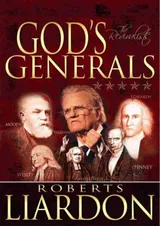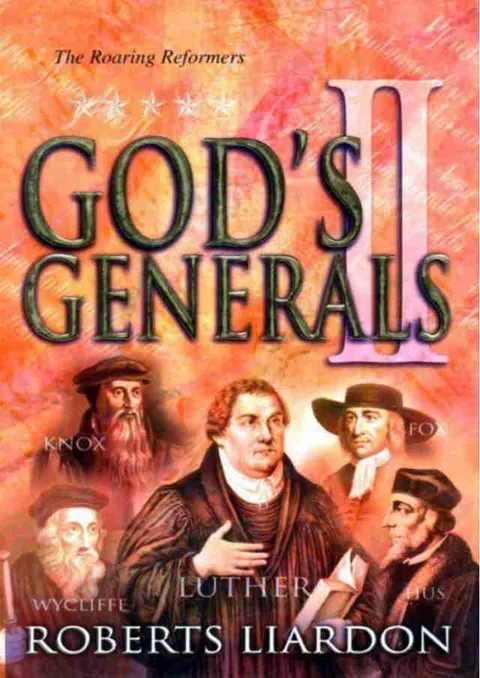

God's Generals: The Roaring Reformers Order Printed Copy
- Author: Roberts Liardon
- Size: 6.04MB | 441 pages
- |
Others like god's generals: the roaring reformers Features >>
God's Generals (Jack Coe)
God's Generals (Evan Roberts)
God's Generals (Smith Wigglesworth)
God's Generals: The Revivalists
God's Generals - The Martyrs
God's Generals (Aimee Semple Mcpherson)
God's Generals (A. A. Allen)
God's Generals: A. A. Allen
God's Generals: The Missionaries
God's Generals - The Revivalists
About the Book
"God's Generals: The Roaring Reformers" by Roberts Liardon provides an insightful look into the lives of influential Christian leaders who played key roles in the Reformation movement, including Martin Luther, John Calvin, and John Knox. Liardon highlights their contributions to the church and their impact on Christianity throughout history.
Charles Colson
F Scott Fitzgerald once said: "There are no second acts in American lives." Charles Colson might have caused him to reconsider. In 1972, Colson, who has died aged 80, boasted to his colleagues in Richard Nixon's White House that he would "walk over my own grandmother" to get Nixon re-elected. His path led not over his grandmother, but through the Watergate scandal to prison, and then to a remarkable transformation into an evangelical Christian leader, bestselling writer and prison reformer.
"Chuck" Colson called himself Nixon's "hatchet man", and it was in this role that he drew up the president's famous "enemies list". High on that list was Daniel Ellsberg, the US military analyst who leaked the Pentagon Papers to the New York Times in 1971. The papers were a series of secret reports commissioned by John F Kennedy's defence secretary Robert McNamara which contradicted the public policy statements of three American administrations over the Vietnam war. Nixon assigned Colson to discredit Ellsberg.
Colson, armed with a budget of $250,000 from the Committee for the Re-Election of the President, had already hired his former college classmate E Howard Hunt to create the White House unit known as "the plumbers", as they were intended to stop embarrassing leaks. Hunt's team burgled the offices of Ellsberg's psychiatrist, and made plans to have Ellsberg beaten, while Colson leaked smears to the press.
In early 1972, Colson got White House approval for a plan concocted by Hunt and G Gordon Liddy, another of the plumbers, to "gather intelligence" for the upcoming election. Hunt's burglars were caught by a sharp-eyed security guard inside the Democratic party's headquarters at the Watergate complex in Washington. An address book found on one of them led back to the White House, but the scandal failed to have an impact on the election, which Nixon won. Colson joked with Hunt that Watergate would be remembered as a brilliantly conceived escapade to "divert the Democrats' attention from the real issues, and therefore permit us to win a landslide we probably wouldn't have won otherwise". Without realising it, Colson had created the template which now dominates modern politics.
But after the election, the Watergate investigations persisted. As Nixon's aides toppled one by one, Colson led the effort to smear those testifying, including another White House lawyer, John Dean, whose evidence against Nixon was particularly damning. Finally, Colson, too, resigned, in March 1973. A year later, he was indicted for his part in the cover-up. Facing an impeachment trial, Nixon resigned on 9 August 1974.
Colson's religious conversion began while he was awaiting trial. Thomas Phillips, chairman of the defence contractor Raytheon, gave him a copy of CS Lewis's Mere Christianity, and he joined a congressional prayer group. When the 60 Minutes interviewer Mike Wallace challenged his sincerity, Colson decided to atone. Colson's lawyers negotiated a plea bargain of guilty to one count of obstruction of justice relating to the Ellsberg break-in. Sentenced in 1974 to one to three years, he served seven months in federal prison and was released in January 1975. Ellsberg himself said that he doubted the conversion, noting that Colson continued to deny more serious crimes.
Colson was born in Boston. His father, Wendell, worked for the Securities and Exchange Commission. Colson attended Browne & Nichols, an elite school in Cambridge, Massachusetts, and then went to Brown University in Providence, Rhode Island, on a naval reserve programme. After graduation, he served in the marine corps, then became an aide to the Massachusetts senator Leverett Saltonstall. Through Saltonstall, he met Nixon, then US vice-president, and in his own words, instantly became "a Nixon fanatic".
After getting his law degree from George Washington University, he worked on Saltonstall's successful 1960 re-election campaign, before founding a law firm which became influential. In 1964 he wrote a memo to Nixon, who had lost the California gubernatorial election, outlining his plan to return Nixon to prominence; and in 1968 he joined Nixon's campaign. Nixon won the presidency in 1969 and appointed Colson his special counsel.
In prison, Colson embraced born-again Christianity. In his biography Charles W Colson: A Life Redeemed (2005), the former Tory cabinet minister Jonathan Aitken says that Colson "transferred his huge drive, intellect, and maniacal energy from the service of Richard Nixon to the service of Jesus Christ". After prison, Colson wrote a bestselling memoir, Born Again (1976), which was filmed in 1978.
He also founded a series of non-profit organisations, such as Prison Fellowship Ministries, which aimed to convert the convicted. Colson wrote more than 30 books, channelling the royalties into his ministries, to which he also donated the $1.1m Templeton prize, for promoting religion, which he won in 1993.
In 2000, the Florida governor Jeb Bush reinstated Colson's voting rights (in that state, a convicted felon may not vote), saying: "I think it's time to move on. I know him, he's a great guy." In 2002 Colson joined fellow evangelicals in signing the Land Letter, urging President George W Bush to pursue a "just war" in Iraq. In 2008 he received the Presidential Citizens medal from Bush.
Colson is survived by his second wife, Patricia, and by two sons, Wendell and Christian, and a daughter, Emily, from his first marriage, which ended in divorce.
Charles Wendell Colson, political aide and prison reformer, born 16 October 1931; died 21 April 2012
Did We Kiss Purity Goodbye
Not long ago, purity was something all Christians seemed to admire, and want, without qualification. Now, many professing believers associate the pursuit of personal purity with the scandal of “purity culture.” Christian pleas for purity, some claim, have spread fear, guilt, and shame instead. I encountered these concerns again as I researched and published a fresh plea for sexual purity. Some reformation was warranted. In some circles, the concerted effort for sexual purity in the nineties was a desperate effort to stem the tide of teenage pregnancy, AIDS and other sexually transmitted diseases, and abortion. In the eyes of many, sexual sin and temptation were the hordes outside the gate, and we needed extraordinary measures to hold them back. So they held rallies, published books, printed cards, and fashioned rings. And also (in the eyes of some, anyway) mass-produced shame, even as untold numbers made admirable resolves and were spared great miseries. Some, it seems, came away thinking of purity mainly as a means to marriage, to health, to earthly happiness, even to salvation, and not mainly as fruit of knowing and enjoying Jesus. Purity was not the final solution to AIDS, pornography, or teenage pregnancy; worship was. Purity wasn’t the ultimate key to a better marriage or better sex; worship was. But teenagers weren’t angsty about worship; they were angsty about marriage, sex, pregnancy, and disease, so that’s where the messaging often went (or at least what many kids came away with). Therefore, while teenage pregnancy and STDs did decline over the next couple decades (truly amazing when you think about it), many testified to experiencing more shame than freedom, more disillusionment than worship, more self than Jesus. And, in the process, some (certainly not all) missed the gift and peace of true purity. They may not have dated young or kissed someone before marriage, but they didn’t get to taste what God means by purity either. Lies That Spread in Purity Culture Calls for sexual purity were (and are) biblical and needed. Even in the midst of the good that was done through lots of preaching and discipleship during those years, several lies seemed to spread in the renewed emphasis on purity — each laced with enough truth to be taken seriously and yet with enough deceit to lead some astray. Lie 1: Sexual purity guarantees a happy marriage. Some heard, If you want to get married to a great guy (or girl), have a great marriage, and enjoy a great sex life, then abstain from any sexual sin. One commentator has called this “the sexual prosperity gospel.” It is true that sexual purity before marriage does guard and bless our future marriage, and it may improve our chances of marrying well and enjoying a healthy and happy sex life. But it doesn’t guarantee a great marriage. Sexual purity does not guarantee we will marry, or that our spouse will be wonderful and faithful, or that sex will easy or satisfying. Marriage is not a reward for purity in singleness, and prolonged singleness is not a curse for sexual sin. Sexual purity before marriage is a profound way to love your future spouse (if God brings you a spouse). More than that, though, it’s a profound way to honor God and experience more of his presence and power. “Blessed are the pure in heart,” Jesus says, “for they shall see God” (Matthew 5:8). Lie 2: Virginity is what makes someone desirable. Some heard, If I want a godly guy (or girl) to want to marry me, then I should abstain from sexual sin. They went away thinking that virginity was the greatest gift anyone could give a future spouse and that those who kept their virginity would, again, receive marriage as a reward for their waiting. “Virginity is not the greatest gift anyone can give a future spouse; a genuine faith in Jesus is.” Virginity is a precious gift to give a spouse. Perhaps my greatest regret as a husband, a father, as a man, is that I did not practice the love and self-control of waiting for the marriage bed. Virginity, however, is not the greatest gift anyone can give a future spouse; a genuine faith in Jesus is. Make no mistake, your sexual history (or lack thereof) will affect your marriage for better or worse, if God gives you a spouse, but the effect will not compare to your lived-out love for Christ (or lack thereof). Virginity is not at the top of a godly man’s or woman’s priorities; Jesus is. Whatever the history, he or she is now most committed to marrying in the Lord (1 Corinthians 7:39). That means sexual sinners are not ruined for happy marriages if we turn from our sin and commit to pursuing purity in Christ. Lie 3: Girls are why men sin. Some pushback against “purity culture” has come from women who felt the burden was unfairly laid on them to keep men from sinning. Lust is every young man’s battle, and they’re tempted and fall because women dress and act immodestly. As a result, some women may have carried shame and guilt over the sins of their brothers — and some men may have left thinking they experienced lust mainly because women dressed inappropriately. Jesus did not diagnose lust this way. He pointed first to our own hearts: “For out of the heart come evil thoughts, murder, adultery, sexual immorality, theft, false witness, slander. These are what defile a person” (Matthew 15:19–20). This doesn’t discount God’s real call to modesty, that women “adorn themselves in respectable apparel, with modesty and self-control” (1 Timothy 2:9); nor does it dismiss that immodesty can feed sexual temptation and lust. But Jesus does not lay a man’s sin chiefly at the feet of women. A man’s sexual immorality comes first and foremost from within him. How Does God Motivate Sexual Purity? If these untruths compromised the cause for purity, how does God inspire purity? What kinds of realities does he rely on to kindle a grace-filled, Christ-exalting, joyful pursuit of purity, especially sexual purity? A good place to start would be 1 Thessalonians 4:1–8, and especially verse 3: >This is the will of God, your sanctification: that you abstain from sexual immorality. Do you want to know God’s will for you? (Everyone, of course, does, and especially young people trying to figure out their lives.) This verse says God’s will for you is your sexual purity. In the wrong hands, the verse could become a prooftext for distorted teaching on purity, but I believe this passage still holds the cure for an ailing purity culture — and the catalyst for a new one. So how does Paul motivate sexual purity in 1 Thessalonians 4? In at least five profound ways. 1. Do you want to be free from lust? Again, beginning in verse 3, “This is the will of God, your sanctification: that you abstain from sexual immorality; that each one of you know how to control his own body in holiness and honor, not in the passion of lust like the Gentiles who do not know God” (1 Thessalonians 4:3–5). Paul is preaching freedom from the tyranny of the passions of the flesh. Those who don’t know God are enslaved to their cravings. They do what their body tells them to do — and their body consistently tells them to defy the living God. And so they forfeit fullness of joy and pleasures forevermore — and their very lives — for fractions of joy and moments of pleasure. But those who know God realize that sexual immorality is not freedom; it is slavery. And sexual purity is not slavery; it is a truer, longer-lasting freedom (Romans 6:6–7). 2. Do you want to experience the power of God? God not only calls us to sexual purity; he promises to work that purity in us. “God has not called us for impurity, but in holiness. Therefore whoever disregards this, disregards not man but God, who gives his Holy Spirit to you” (1 Thessalonians 4:7–8). With the command — abstain from sexual immorality — he also gives himself. I will work in you that which is pleasing in my sight, God says, as you work out your salvation with fear and trembling (Philippians 2:13–14). The soul successfully pursuing sexual purity in Christ is a soul coursing with the power of God — with the presence and help of the Holy Spirit. 3. Do you want to avoid the wrath to come? First Thessalonians 4:1–8 is a weighty passage. It’s not “Come as you are, and stay as you are.” It’s filled with warning. The Lord is an avenger in all these things, as we told you beforehand and solemnly warned you. For God has not called us for impurity, but in holiness. Therefore whoever disregards this, disregards not man but God. (1 Thessalonians 4:6–8) Faithful teaching on sexual purity will sound severe warnings. Those warnings, however, will harmonize with the melody of God’s grace to sinners — and they will focus most not on temporary, earthly consequences, but on spiritual, eternal ones. To be sure, there’s a place to warn about sexually transmitted diseases, teenage pregnancy, unwanted singleness, and marital dysfunction, but the weight of the church’s warnings about sex should land on God. And God makes himself clear: Do not be deceived: neither the sexually immoral, nor idolaters, nor adulterers, nor men who practice homosexuality, nor thieves, nor the greedy, nor drunkards, nor revilers, nor swindlers will inherit the kingdom of God. (1 Corinthians 6:9–10) 4. Do you want to guard the ones you love? Satan wants us to think that sexual sin is secret and private. That no one has to know. That we’re the only ones who suffer for our lack of self-control. The testimony of Scripture, however, is that our sexual sin always harms more than ourselves. That means sexual purity is an act of love. “This is the will of God, your sanctification: that you abstain from sexual immorality . . . that no one transgress and wrong his brother in this matter” (1 Thessalonians 4:3–6). “The consequences of sexual sin always injure others, and especially those we love.” There may have been particular ways the Thessalonians were using sex against one another, but the principle applies much more broadly: the consequences of sexual sin always injure others, and especially those we love. Sexual sin treats people as objects, and fuels sex slavery around the world. Sexual sin corrupts leadership, in the home and in the church, and it ruins ministries. Sexual sin destroys marriages and wounds children. Because God has given sex such unusual power for good in marriage, it has unusual power for destruction everywhere else. So, abstain from sexual immorality as an act of earnest love. 5. Do you want to feel the smile of God? Finally, a great reason to practice sexual purity in our pornographic age is that our purity pleases God. In Christ, by the power of the Spirit, we now have the profound ability to make the King of heaven smile. Finally, then, brothers, we ask and urge you in the Lord Jesus, that as you received from us how you ought to walk and to please God, just as you are doing, that you do so more and more. (1 Thessalonians 4:1) This does not mean God only loves those who kept their virginity before marriage. It does mean that when his chosen, forgiven, imperfect children choose purity, it pleases him. It makes him happy. Paul prays elsewhere, “that you may be filled with the knowledge of his will in all spiritual wisdom and understanding, so as to walk in a manner worthy of the Lord, fully pleasing to him, bearing fruit in every good work and increasing in the knowledge of God” (Colossians 1:9–10). Our God is the happiest being in the universe (1 Timothy 1:11), and one of his great pleasures is seeing his people overcome sin and temptation by his grace. Do you want a reason to resist sexual sin? Your purity pleases the Father. And your purity allows you to see and enjoy more of God (Matthew 5:8). Those who live to please him experience deeper, more enduring pleasure than this world can offer. Purity Is Greater Than Sex We likely won’t get to read many articles about the men and women who signed cards and wore rings out of a real, burning love for Jesus. The New York Times likely won’t cover the countless stories of those who credit the movement for helping them make Christian resolves against peer pressure and fight the good fight for purity in days when many weren’t. Where purity culture erred or was unclear, it wasn’t because Christian leaders called for sexual purity, but because sex and marriage threatened to become bigger than God. Wherever the messaging downplayed grace, or relied disproportionately on fear, or reduced purity to sexual ethics, it plundered the riveting and appealing beauty of purity in Christ — and, ironically, robbed purity of its power to overcome temptation. As purity becomes smaller and more human, it also becomes more burdensome — and less Christian. Christian purity is rooted in the bigness and goodness of God — his grace, his power, his love, his worth. The pursuit of purity (then and now) is not mainly about rejecting sexual temptation, but about receiving and embracing the heart of God. Yes, God calls us to walk in purity, but the only path to true purity is covered in blood and leads us to him.