


Others like god's generals: a. a. allen Features >>

God's Generals: Why They Succeeded And Why Some Failed
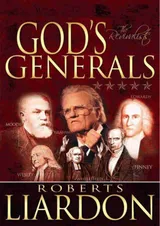
God's Generals - The Revivalists
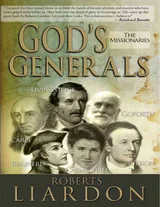
God's Generals: The Missionaries
-160.webp)
God's Generals (Aimee Semple Mcpherson)
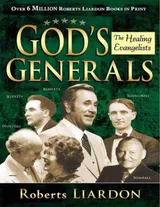
God's Generals: The Healing Evangelists
God's Generals: The Revivalists
-160.webp)
God's Generals (Charles F. Parham)
-160.webp)
God's Generals (Maria Woodworth)
-160.webp)
God's Generals (A. A. Allen)
-160.webp)
God's Generals (Jack Coe)
About the Book
"God's Generals: A. A. Allen" by Roberts Liardon provides a detailed account of the life and ministry of A. A. Allen, a prominent American evangelist known for his healing and deliverance services. The book highlights Allen's passion for spreading the gospel and his impact on the Christian community through his powerful messages and miraculous healing crusades.
J.C. Ryle
The Ordinary People God Chose - Learning to Love the Local Church
I’m not athletic. I’m not competitive. I don’t like to sweat. I have trouble remembering the rules of games. The only organized sport on my life’s résumé is two years of collegiate synchronized swimming — a singular exception that only proves the rule. But for someone who doesn’t like sporting events, I end up watching a lot of them. I’ve shivered on wooden bleachers during snowy college football games. I’ve sunburned in the outfield at minor (and major) league baseball games. I’ve covered my ears during deafening basketball games. I’ve flinched and winced at ice hockey games. I’ve arrived early for batting practice, and I’ve stayed late for the fireworks. And I don’t just watch. I wear the team colors. I sing the team song. I bite my fingernails in the bottom of the ninth. When we win, I rejoice. When we lose, I’m genuinely disappointed. My surprising conduct has an explanation: I love people who love sports. The people in my family delight in goals and strikes and penalty shots, and so, over time, I’ve learned to take pleasure in those things too. What they love, I want to love. At times, the local church can seem to us like a sporting event to a non-athlete, or a baking show to a microwave cook, or a book club to someone who doesn’t like to read. It can seem like a big fuss over something insignificant and lots of work with unimpressive results. Week after week, the unremarkable people of our local congregations gather to do the same things in the same way, followed by stale coffee served at plastic tables in a damp basement. We may wonder, Why bother? The answer requires us to look beyond our own experiences and inclinations — it requires us to look to God himself. Having been redeemed by the blood of Christ and changed by the work of the Spirit, we love God. What God loves, we therefore want to love. And God loves the church. Our First Love We didn’t always love God, of course. To begin with, we hated him. The Bible describes us as enemies (Romans 5:10), strangers (Ephesians 2:12), rebels (Ezekiel 20:38), and haters (Romans 1:30); impure (Ephesians 5:5), disobedient (Ephesians 2:2), hopeless (Ephesians 2:12), and ignorant (Romans 10:3). Our sins justly placed us under his wrath and displeasure (Ephesians 2:3). We rejected God, despised his authority, and ignored his good law. We were neither lovely nor loving. But he loved us. In the counsels of eternity, he set his love on us, and in time, he sent his beloved Son to die for us so that we might enter into a loving relationship with him. He brought us out of slavery into the joyful circle of his family and made us his privileged children. Because he loved us, we now love him. Our love for God is comprehensive: involving heart, soul, mind, and strength (Mark 12:30). It controls us (2 Corinthians 5:14), and it compels us (John 14:15). Our days and hours and minutes are taken up with this love. Like the psalmist, we look around us and proclaim that there is nothing in all the earth we desire apart from God (Psalm 73:25). He is our first love, and he is our great love. God’s Great Love It’s appropriate, then, that we would ask ourselves, What does God love? For anyone who has ever sat in the creaking pews — or folding chairs — of a local congregation on Sunday morning, the answer might be surprising: God loves the church. Listen to what Paul tells the Ephesians: Christ loved the church and gave himself up for her, that he might sanctify her, having cleansed her by the washing of water with the word, so that he might present the church to himself in splendor, without spot or wrinkle or any such thing, that she might be holy and without blemish. (Ephesians 5:25–27) The glorious purpose of God’s eternal plan of redemption is the gathering and perfecting of his people. Jesus came for the sake of the church. More than thirty times in the New Testament, the church is called “beloved.” This is not because the ordinary and sometimes awkward people who gather on Sundays are themselves lovely, but because they are bound to someone who is. Christ is the one whom the Father “loved . . . before the foundation of the world” (John 17:24). He is the beloved Son. And as people who were created in him, redeemed by him, united to him, and given to him, we find our identity in him. Christ is the beloved, and in him, the church is beloved too. Loving the People God Loves Of all the games I watch, the sporting events where I have the greatest investment are the ones where my own kids are playing. When I’m in the bleachers at their basketball games or beside the dugout at their baseball games, I can’t take my eyes off the action. It might be Saturday morning T-ball, but it’s always the big game to me. When someone I love is on the team, I’m all in. Likewise, if the one our soul loves has committed himself to the church, it changes everything about our own commitment. “Beloved,” writes John, “if God so loved us, we also ought to love one another” (1 John 4:11). This means that we will seek to make God’s great love for the church our own. We begin on Sunday by regularly showing up to worship together (Hebrews 10:24). It’s our highest privilege to gather with the people of God before the face of God. In the church, we also work to promote one another’s holiness, to show affection for one another, to bear one another’s needs, to encourage one another’s gifts, and to join in the cause of the gospel together. The people of our church are often outwardly unremarkable, but in the mutual love of the local church, we affirm the love that God has for us. Thankfully, we don’t have to muster up love for the church on our own strength. Before he went to the cross to redeem his people, Christ prayed for the church. He petitioned the Father “that the love with which you have loved me may be in them, and I in them” (John 17:26). Surrounded by the ordinary and yet extraordinary, sinful and yet holy, weak and yet ultimately triumphant people of God, we look for the Father’s gracious answer to the Son’s request. And when the God who is love (1 John 4:8) dwells in us by his Spirit, we have everything we need to love the church. Article by Megan Hill
-480.webp)