
Others like don't be offended Features >>
Overcoming The Storms Of Life

What Is The Fear Of The Lord

How To Resist The Devil
Developing Faith For The Working Of Miracles
Holiness
4th Dimensional Living In A 3d World
The Release Of Spirit

A Heart Ablaze
-160.webp)
God's Medicine Of Faith: The Word

Beautiful Outlaw: Experiencing The Playful, Disruptive, Extravagant Personality Of Jesus
About the Book
"Don't Be Offended" by Billy Joe Daugherty is a practical guide on how to overcome offense and live a life of freedom and joy. The book encourages readers to let go of bitterness, forgive others, and choose love instead of offense. Daugherty provides biblical principles and practical tips to help readers navigate relationships and maintain emotional health.
John Alexander Dowie
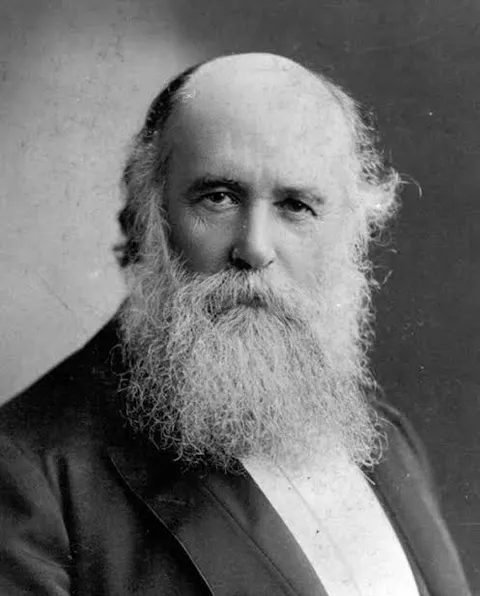 By John Alexander Dowie (1847 – 1907)
I sat in my study in the parsonage of the Congregational Church at Newtown, a suburb of the beautiful city of Sydney, Australia. My heart was very heavy, for I had visited the sick and dying beds of more than thirty of my flock, and I had cast the dust to its kindred dust into more than forty graves within a few weeks. Where, oh where, was He Who used to heal His suffering children? No prayer for healing seemed to reach His ear, and yet I knew His hand had not been shortened. Still it did not save from death even those for whom there was so much in life to live for God and others. Strong men, fathers, good citizens, and more than all, true Christians sickened with a putrid fever, suffered nameless agonies, passed into delirium, sometimes with convulsions, and then died.
Oh, what aching voids were left in many a widowed or orphaned heart. There were many homes where, one by one, the little children, the youths and the maidens lay stricken, and after a hard struggle with the foul disease, they too, lay cold and dead. It seemed sometimes as if I could almost hear the triumphant mockery of evil ringing in my ear whilst I spoke to the bereaved ones the words of Christian hope and consolation. Disease, the foul offspring of its father, Satan, and its mother Sin, was defiling and destroying the earthly temples of God’s children and there was no deliverance.
There I sat with sorrow-bowed head for my afflicted people, until the bitter tears came to relieve my burning heart. Then I prayed for some message, and oh, how I longed to hear some words from Him Who wept and sorrowed for the suffering long ago, a Man of Sorrows and Sympathies. The words of the Holy Ghost inspired In Acts 10:38, stood before me all radiant with light, revealing Satan as the Defiler, and Christ as the Healer. My tears were wiped away, my heart strong, I saw the way of healing, and the door thereto was opened wide, so I said, “God help me now to preach the Word to all the dying around, and tell them how Satan still defiles, and Jesus still delivers, for He is just the same today.”
A loud ring and several raps at the outer door, a rush of feet, and there at my door stood two panting messengers who said, “Oh, come at once, Mary is dying; come and pray. “With just a feeling as a shepherd has who hears that his sheep are being torn from the fold by a cruel wolf, I rushed from my house, ran without my hat down the street, and entered the room of the dying maiden. There she lay groaning and grinding her clenched teeth in the agony of the conflict with the destroyer. The white froth, mingled with her blood, oozing from her pale and distorted mouth. I looked at her and then my anger burned. “Oh,” I thought, “for some sharp sword of heavenly temper keen to slay this cruel foe who is strangling that lovely maiden like an invisible serpent, tightening his deadly coils for a final victory.”
In a strange way, It came to pass; I found the sword I needed was in my hands, and in my hand I hold it still and never will I lay It down. The doctor, a good Christian man, was quietly walking up and down the room, sharing the mother’s pain and grief. Presently he stood at my side and said, “Sir, are not God’s ways mysterious?” Instantly the sword was flashed in my hand, the Spirit’s sword, the Word of God. “God’s way?!” I said, pointing to the scene of conflict, “How dare you call that God’s way of bringing His children home from earth to Heaven? No sir, that is the devil’s work and it is time we called on Him Who came to destroy the work of the devil, to slay that deadly foul destroyer, and to save this child. Can you pray, Doctor, can you pray the prayer of faith that saves the sick?” At once, offended at my words, my friend was changed, and saying,” You are too much excited, sir, it is best to say ‘God’s will be done,’” and he left the room.
Excited?! The word was quite inadequate for I was almost frenzied with divinely imparted anger and hatred of that foul destroyer, disease, which was doing Satan’s will. “It is not so,” I exclaimed, “no will of God sends such cruelty, and I shall never say ‘God’s will be done’ to Satan’s works, which God’s own Son came to destroy, and this is one of them.” Oh, how the Word of God was burning in my heart: “Jesus of Nazareth went about doing good, and healing all that were oppressed of the devil; for God was with Him.” And was not God with me? And was not Jesus there and all His promises true? I felt that it was even so, and turning to the mother I inquired,” Why did you send for me?” To which she answered, “Do pray, oh pray for her that God may raise her up.” So we prayed.
What did I say? It may be that I cannot recall the words without mistake, but words are in themselves of small importance. The prayer of faith may be a voiceless prayer, a simple heartfelt look of confidence into the face of Christ. At such moment, words are few, but they mean much, for God is looking at the heart. Still, I can remember much of that prayer unto this day, and asking God to aid, I will attempt to recall it. I cried, “Our Father, help! and Holy Spirit, teach me how to pray. Plead Thou for us, oh, Jesus, Savior, Healer, Friend, our Advocate with God the Father. Hear and heal, Eternal One! From all disease and death, deliver this sweet child of yours. I rest upon the Word. We claim the promise now. The Word is true, ‘I am the Lord that heals thee.’ Then heal her now. The Word is true, ‘I am the Lord, I change not.’ Unchanging God, then prove Yourself the healer now. The Word is true. ‘These signs shall follow them that believe in My Name, they shall lay hands on the sick, and they shall recover.’ And I believe and I lay hands in Jesus’ Name on her and claim this promise now. Your Word is true. ‘The prayer of faith shall save the sick. Trusting in You alone. I cry. Oh, save her now, for Jesus’ sake. Amen!”
Then, the maid lay in sleep so deep and sweet that the mother asked in a low whisper, “Is she dead?” “No,” I answered, in a whisper lower still. “Mary will live; the fever is gone. She is perfectly well and sleeping as an infant sleeps.” I was smoothing the long dark hair from her now peaceful brow, and feeling the steady pulsation of her heart and cool moist hands. I saw that Christ had heard, and that once more, as long ago in Peter’s house, “He touched her and the fever left her.” Turning to the nurse, I said, “Get me at once, please, a cup of cocoa and several slices of bread and butter.” Beside the sleeping maid we sat quietly and almost silently until the nurse returned, and then I bent over her and snapping my fingers called, “Mary!”
Instantly she woke, smiled and said, “Oh, sir, when did you come? I have slept so long;” then stretching her arms out to meet her mother’s embrace, she said, “Mother, I feel so well.” “And hungry, too?” I asked, pouring some of the cocoa in a saucer and offering it to her when cooled by my breath. “Yes, hungry too,” she answered with a little laugh, and drank and ate again, and yet again until all was gone. In a few minutes, she fell asleep, breathing easily and softly. Quietly thanking God. We left her bed and went to the next room where her brother and sister also lay sick of the same fever. With these two, we prayed and they were healed too. The following day all three were well and in a week or so they brought me a little letter and a gift of gold, two sleeve links with my monogram, which I wore for many years. As I went away from the home where Christ as the Healer had been victorious, I could not but have somewhat in my heart of the triumphant song that rang through Heaven, and yet I was not a little amazed at my own strange doings, and still more at my discovery that He is just the same today.
Excerpt from the Sermons of John Alexander Dowie Champions of Faith by Gordon Lindsay
By John Alexander Dowie (1847 – 1907)
I sat in my study in the parsonage of the Congregational Church at Newtown, a suburb of the beautiful city of Sydney, Australia. My heart was very heavy, for I had visited the sick and dying beds of more than thirty of my flock, and I had cast the dust to its kindred dust into more than forty graves within a few weeks. Where, oh where, was He Who used to heal His suffering children? No prayer for healing seemed to reach His ear, and yet I knew His hand had not been shortened. Still it did not save from death even those for whom there was so much in life to live for God and others. Strong men, fathers, good citizens, and more than all, true Christians sickened with a putrid fever, suffered nameless agonies, passed into delirium, sometimes with convulsions, and then died.
Oh, what aching voids were left in many a widowed or orphaned heart. There were many homes where, one by one, the little children, the youths and the maidens lay stricken, and after a hard struggle with the foul disease, they too, lay cold and dead. It seemed sometimes as if I could almost hear the triumphant mockery of evil ringing in my ear whilst I spoke to the bereaved ones the words of Christian hope and consolation. Disease, the foul offspring of its father, Satan, and its mother Sin, was defiling and destroying the earthly temples of God’s children and there was no deliverance.
There I sat with sorrow-bowed head for my afflicted people, until the bitter tears came to relieve my burning heart. Then I prayed for some message, and oh, how I longed to hear some words from Him Who wept and sorrowed for the suffering long ago, a Man of Sorrows and Sympathies. The words of the Holy Ghost inspired In Acts 10:38, stood before me all radiant with light, revealing Satan as the Defiler, and Christ as the Healer. My tears were wiped away, my heart strong, I saw the way of healing, and the door thereto was opened wide, so I said, “God help me now to preach the Word to all the dying around, and tell them how Satan still defiles, and Jesus still delivers, for He is just the same today.”
A loud ring and several raps at the outer door, a rush of feet, and there at my door stood two panting messengers who said, “Oh, come at once, Mary is dying; come and pray. “With just a feeling as a shepherd has who hears that his sheep are being torn from the fold by a cruel wolf, I rushed from my house, ran without my hat down the street, and entered the room of the dying maiden. There she lay groaning and grinding her clenched teeth in the agony of the conflict with the destroyer. The white froth, mingled with her blood, oozing from her pale and distorted mouth. I looked at her and then my anger burned. “Oh,” I thought, “for some sharp sword of heavenly temper keen to slay this cruel foe who is strangling that lovely maiden like an invisible serpent, tightening his deadly coils for a final victory.”
In a strange way, It came to pass; I found the sword I needed was in my hands, and in my hand I hold it still and never will I lay It down. The doctor, a good Christian man, was quietly walking up and down the room, sharing the mother’s pain and grief. Presently he stood at my side and said, “Sir, are not God’s ways mysterious?” Instantly the sword was flashed in my hand, the Spirit’s sword, the Word of God. “God’s way?!” I said, pointing to the scene of conflict, “How dare you call that God’s way of bringing His children home from earth to Heaven? No sir, that is the devil’s work and it is time we called on Him Who came to destroy the work of the devil, to slay that deadly foul destroyer, and to save this child. Can you pray, Doctor, can you pray the prayer of faith that saves the sick?” At once, offended at my words, my friend was changed, and saying,” You are too much excited, sir, it is best to say ‘God’s will be done,’” and he left the room.
Excited?! The word was quite inadequate for I was almost frenzied with divinely imparted anger and hatred of that foul destroyer, disease, which was doing Satan’s will. “It is not so,” I exclaimed, “no will of God sends such cruelty, and I shall never say ‘God’s will be done’ to Satan’s works, which God’s own Son came to destroy, and this is one of them.” Oh, how the Word of God was burning in my heart: “Jesus of Nazareth went about doing good, and healing all that were oppressed of the devil; for God was with Him.” And was not God with me? And was not Jesus there and all His promises true? I felt that it was even so, and turning to the mother I inquired,” Why did you send for me?” To which she answered, “Do pray, oh pray for her that God may raise her up.” So we prayed.
What did I say? It may be that I cannot recall the words without mistake, but words are in themselves of small importance. The prayer of faith may be a voiceless prayer, a simple heartfelt look of confidence into the face of Christ. At such moment, words are few, but they mean much, for God is looking at the heart. Still, I can remember much of that prayer unto this day, and asking God to aid, I will attempt to recall it. I cried, “Our Father, help! and Holy Spirit, teach me how to pray. Plead Thou for us, oh, Jesus, Savior, Healer, Friend, our Advocate with God the Father. Hear and heal, Eternal One! From all disease and death, deliver this sweet child of yours. I rest upon the Word. We claim the promise now. The Word is true, ‘I am the Lord that heals thee.’ Then heal her now. The Word is true, ‘I am the Lord, I change not.’ Unchanging God, then prove Yourself the healer now. The Word is true. ‘These signs shall follow them that believe in My Name, they shall lay hands on the sick, and they shall recover.’ And I believe and I lay hands in Jesus’ Name on her and claim this promise now. Your Word is true. ‘The prayer of faith shall save the sick. Trusting in You alone. I cry. Oh, save her now, for Jesus’ sake. Amen!”
Then, the maid lay in sleep so deep and sweet that the mother asked in a low whisper, “Is she dead?” “No,” I answered, in a whisper lower still. “Mary will live; the fever is gone. She is perfectly well and sleeping as an infant sleeps.” I was smoothing the long dark hair from her now peaceful brow, and feeling the steady pulsation of her heart and cool moist hands. I saw that Christ had heard, and that once more, as long ago in Peter’s house, “He touched her and the fever left her.” Turning to the nurse, I said, “Get me at once, please, a cup of cocoa and several slices of bread and butter.” Beside the sleeping maid we sat quietly and almost silently until the nurse returned, and then I bent over her and snapping my fingers called, “Mary!”
Instantly she woke, smiled and said, “Oh, sir, when did you come? I have slept so long;” then stretching her arms out to meet her mother’s embrace, she said, “Mother, I feel so well.” “And hungry, too?” I asked, pouring some of the cocoa in a saucer and offering it to her when cooled by my breath. “Yes, hungry too,” she answered with a little laugh, and drank and ate again, and yet again until all was gone. In a few minutes, she fell asleep, breathing easily and softly. Quietly thanking God. We left her bed and went to the next room where her brother and sister also lay sick of the same fever. With these two, we prayed and they were healed too. The following day all three were well and in a week or so they brought me a little letter and a gift of gold, two sleeve links with my monogram, which I wore for many years. As I went away from the home where Christ as the Healer had been victorious, I could not but have somewhat in my heart of the triumphant song that rang through Heaven, and yet I was not a little amazed at my own strange doings, and still more at my discovery that He is just the same today.
Excerpt from the Sermons of John Alexander Dowie Champions of Faith by Gordon Lindsay
A Great Marriage-Wrecking Lie
I met my aunt Margaret for the first time when I was ten. She was in a wheelchair in the middle of the front room, drooling uncontrollably, unaware of my presence, incontinent, and unable to take care of herself. And yet my uncle Gale cared for her, and he did so tenderly. They were high school sweethearts, but now she was dying of brain cancer after only fifteen years together. My uncle didn’t abandon her. He didn’t get a mistress. No, he had publicly vowed, “in sickness and in health, till death do us part” — and he was faithful to his word. A few years later, she died. This is a biblical picture of marriage: joy through servanthood, faithfulness, and self-denial. But times have changed. Our societal expectations for marriage have gone through a radical transformation, and those changes have affected many in the church. Changing Expectations One commentator describes the transformation this way: “The old attitude was that one must work for the marriage. The new attitude is that the marriage had better work for me” (Jonah Goldberg, Suicide of the West, 267). My uncle worked for his marriage. He was willing to forgo short-term pleasure for the sake of his wife, his children, and the glory of God. He believed that keeping his marriage vows would enhance his joy in this life and in the world to come. But those who expect marriage to “work for me” often assume that “God just wants me to be happy” in the thin and predictable ways. Their focus is on me and my immediate needs. They will most likely bail when any significant, protracted marital trouble comes. Here is how University of Virginia sociologist W. Bradford Wilcox sums up our new marital expectations: Prior to the late 1960s, Americans were more likely to look at marriage and family through the prisms of duty, obligation, and sacrifice. . . . But the psychological revolution’s focus on individual fulfillment and personal growth changed all that. Increasingly, marriage was seen as a vehicle for a self-oriented ethic of romance, intimacy, and fulfillment. In this new psychological approach to married life, one’s primary obligation was not to one’s family but to oneself; hence, marital success was defined not by successfully meeting obligations to one’s spouse and children but by a strong sense of subjective happiness in marriage — usually to be found in and through an intense, emotional relationship with one’s spouse. The 1970s marked the period when, for many Americans, a more institutional model of marriage gave way to the “soul-mate model” of marriage. Professor Wilcox’s “soul-mate model” is a fruit of expressive individualism. The assumptions behind this model are a moral solvent, dissolving the covenant bond of marriage. At its center is a potent, marriage-wrecking lie: God just wants me to be happy — and that is “happiness” as I choose to define it. Couples have used this lie to justify abortion, divorce, adultery, abandonment, and all kinds of selfishness. “God wants couples to pursue a greater long-term marital happiness through Christlike self-denial.” The problem with this lie is that it twists an important truth. God does want us to be happy, but he defines the terms, and immediate happiness is not God’s primary goal. God wants couples to pursue a greater long-term marital happiness through Christlike self-denial. God expects us to deny self — to defer immediate marital gratification — in order to experience greater long-term happiness. There are times in marriage when such self-denial takes great faith. Beneath the Lie This lie is a deeply rooted cultural assumption, and assumptions can be difficult to address because they are often subconscious. They seep into us through television, movies, literature, media, music, and our educational system. For instance, one way they rise to the surface and become visible is through consumer advertising. Ad agencies get paid to identify the assumptions that motivate us. Here are some examples — each, if internalized a certain way, could be devastating to a marriage: Outback Steakhouse invites us to eat at their restaurants because there are “No rules. Just right.” McDonalds tells us to buy French fries because “You deserve a break today.” Reebok urges us to buy their running shoes “Because you’re worth it.” And Nike, throwing all restraint to the wind, urges us to “Just do it!” The assumptions expressed by the mind of Christ, however, are strikingly different. Do we “deserve a break today”? Are we really “worth it”? And above all, should we give into sinful passion and “just do it”? No, we live by a deeper logic that counters the selfishness and presumption of the world around us: the logic of the cross. We deserved eternal death, but Christ humbled himself and died so that we might experience the full and abundant life. “Jesus found joy through self-denial, and so will husbands and wives.” The deepest marital happiness comes through self-denial, humility, unselfishness, patience, kindness, and the crucifixion of our me mentality. Ultimately, the wise Christian couple pursuing a happy, God-glorifying union will model their marriage on Christ and him crucified. Jesus found joy through self-denial (Hebrews 12:2), and so will husbands and wives. Deny Yourself for Her Again and again, Scripture gives us glimpses into the mind of Christ. After predicting his death and resurrection, Jesus turns to his disciples and says, If anyone would come after me, let him deny himself and take up his cross and follow me. For whoever would save his life will lose it, but whoever loses his life for my sake will find it. (Matthew 16:24–25) “Take up a cross? Are you kidding?” The cross was an instrument of torture, death, suffering, and shame. But Jesus urges us to save our lives by doing just that — taking up our cross. We save our marriages through denying ourselves — making our spouse’s happiness as important as our own. We apply the principle of the cross. We do this with the conviction that happiness deferred in patient obedience to God is much greater than happiness immediately gratified. Whoever would be great among you must be your servant, and whoever would be first among you must be your slave, even as the Son of Man came not to be served but to serve, and to give his life as a ransom for many. (Matthew 20:26–28) Happy, fruitful marriages do not think mainly in terms of rights. They think from the mind of Christ. Jesus died to his rights to give us ours before God. Husbands and wives who follow him do the same. Do nothing from selfishness or vain conceit, but in humility consider others more significant [or important] than yourself. (Philippians 2:3) The closest “other” in your life is your spouse — the person that sleeps with you, eats with you, worships with you, and raises your children with you. Applying this principle gets really practical. The Lie’s Fruit As the lie proliferates in North America and beyond, the fruits are painfully obvious. Self-denial is an indispensable part of the glue that makes the marital covenant work. Without a willingness to deny self, people are less willing to marry, or they don’t stay married. In 1970, about 70 percent of Americans over age 18 were married. Today, for the first time in U.S. history, that number is 50 percent and falling. “Marriage isn’t changing,” notes sociologist Mark Regnerus. “It’s receding. In an era of increasing options, technology, gender equality, ‘cheap’ sex, and secularization, fewer people — including fewer practicing Christians — actually want what marriage is. That’s the bottom line.” Collapsing marriage also means collapsing fertility. We are not producing enough children to replace ourselves. Were it not for immigration, the population in North America would be shrinking. Thankfully, fertility rates in the evangelical church are better than the national average. Rejecting the Lie What can we do to reject the lie? We can start with the assumption that we don’t deserve to be happy. As we have already noted, the cross shows each of us what we deserve — death, and that is the bottom line. Therefore, no matter how bad our marital circumstances, we are always getting better than we deserve. Those who believe this can continually thank God for his kindness, in spite of their marital problems. We can also reject the lie by believing that holy people are happy people, and marriage is one of God’s primary tools to produce personal holiness. “To be holy as he is holy,” notes Bruce Milne, “is the prescription for true and endless happiness. To be holy is to be happy . . . there is no joy like that of holiness” (The Message of Heaven and Hell, 52). I have found it helpful to think of marriage as a spiritual gymnasium in which I strengthen personal holiness. Marriage toughens the muscle of forgiveness. It strengthens the willingness to love an enemy. It enhances the ability to humble myself and receive criticism. Marriage also teaches the crucial words, “I’m sorry. Would you please forgive me?” In the marital gym, I also strengthen the crucial muscle of perseverance. Most marriages face a moment when the couple would like to call it quits but, if they persevere, almost always later admit that would have been a mistake. Focus on the Family once did a study of couples who persevered through the desire to divorce, only to find that five years later, most of those who persevered now described themselves as happy in their marriage. Persevering when the going gets tough requires self-denial, but it often solves many lesser problems. Two Slaves Become One Ambrose Bierce, a nineteenth-century short-story writer, not known for being a Christian, nevertheless summed up marriage with these insightful words: “Marriage is a community consisting of a master, a mistress, and two slaves, making in all, one person.” My insightful wife sums up the mind of Christ in marriage this way: “Every fruitful, happy marriage begins with two funerals.” This is how the mind of Christ thinks. It thinks like my uncle Gale. Reject the lie that immediate happiness is the goal. Yes, God does want us to be happy, but the deepest, most lasting happiness comes only to those who deny themselves and take up their cross daily. They serve unselfishly, consider their spouse more significant than themselves, persevere through marital troubles, practice forgiveness, and grow in humility. These are the marriages that maximize long-term happiness, and in such a way that God gets the glory. Article by William Farley
-480.webp)